

Don't Break the Bank or the Heart with a 1 Carat Solitaire
The Most Romantic Ring You Can Buy Without Overpaying

A 1 carat heart shaped diamond solitaire ring is one of the most expressive engagement ring choices you can make — and one of the most misunderstood when it comes to buying smart.
Here's a quick answer to what most people want to know:
| Question | Quick Answer |
|---|---|
| What is it? | A single heart-cut diamond, ~1ct, set alone on a band |
| Typical price range | ~$980 to $8,200+ depending on quality and retailer |
| Best metal choices | Platinum, 14K/18K white gold, rose gold |
| Key quality factors | Symmetry, G-H color, VS1-VS2 clarity |
| Lab-grown option? | Yes — significant savings for same visual quality |
| Certification to look for | GIA or IGI certified |
The heart shape has carried deep meaning for centuries. As far back as the 16th century, royalty exchanged heart-shaped diamonds as symbols of devotion — Mary Queen of Scots famously sent one to Queen Elizabeth I as a token of friendship in 1562. Today, that same symbolism makes the heart cut a deeply personal choice, picked not for tradition but for meaning.
But buying one without the right guidance? That's where couples often overpay — or end up with a stone that doesn't live up to its romantic promise.
I'm Morgan Price, a backlink outreach and content specialist who has spent years working alongside gemologists and jewelry experts to research what makes a 1 carat heart shaped diamond solitaire ring truly worth buying. In this guide, I'll walk you through everything — from cut quality and settings to pricing and where to shop — so you can make a confident, informed decision.
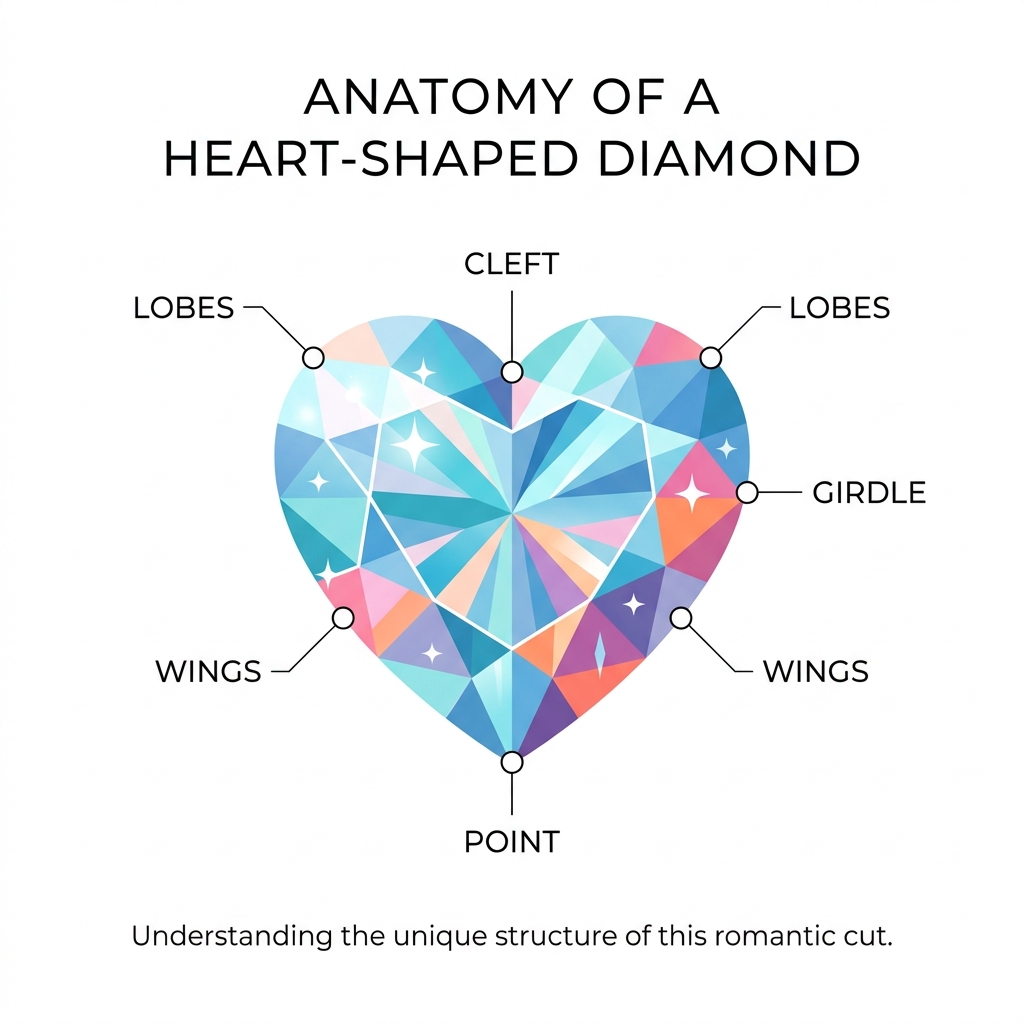
Why Choose a Heart Shaped Diamond Solitaire?
Choosing a 1 carat heart shaped diamond solitaire ring is a bold move that prioritizes emotional significance over standard trends. While round diamonds are the "safe" choice, the heart shape is for the romantic who wants their jewelry to tell a story of passion and devotion. The unique silhouette of the heart is instantly recognizable, making it a conversation starter and a deeply personal emblem of your relationship.
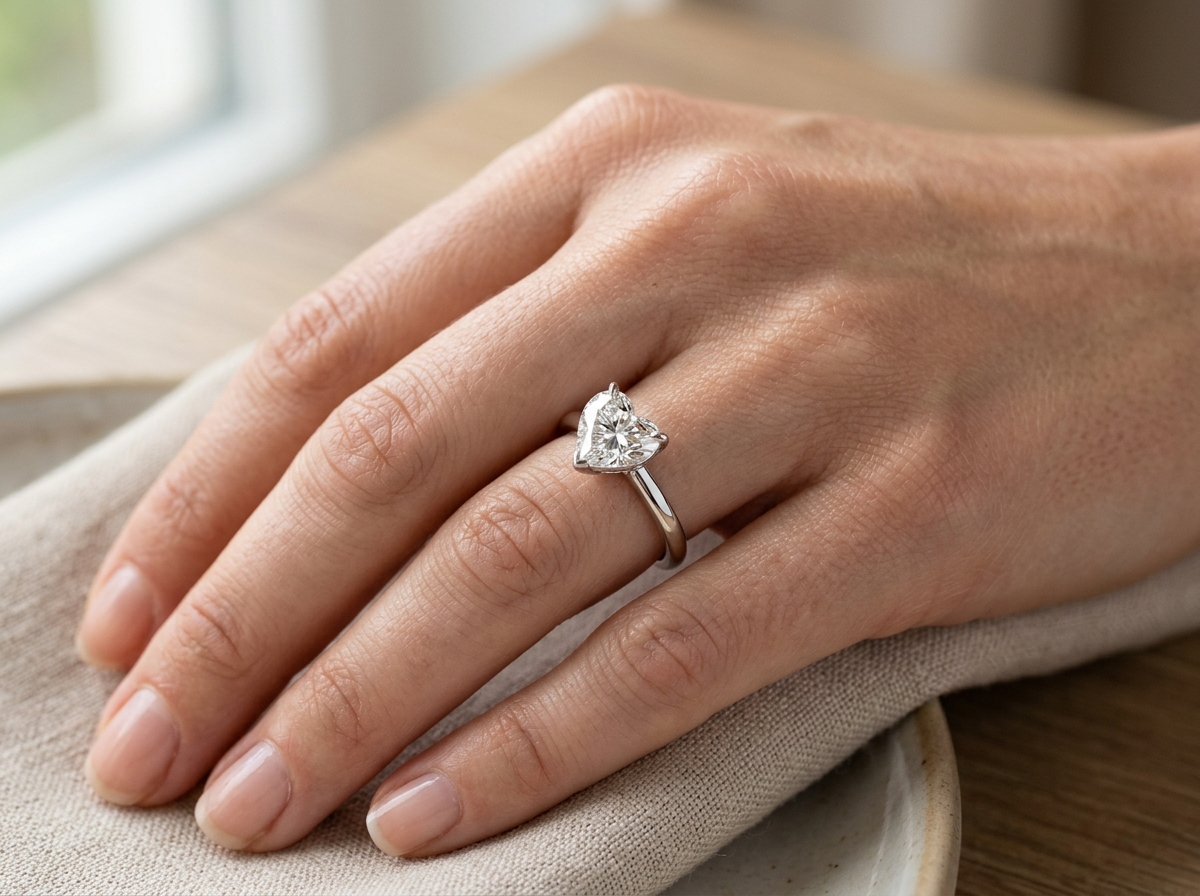
The solitaire setting is the ultimate way to showcase this specific cut. By stripping away side stones and busy halos, you allow the complex geometry of the heart to take center stage. This simplicity ensures the ring remains timeless, even as jewelry trends shift. If you are just starting your journey, we recommend reading our guide on how to start engagement ring shopping to get your bearings.
The heart shape also has a glamorous side. Many celebrity engagement rings have featured heart-shaped stones, such as Lady Gaga’s famous 6-carat heart-shaped diamond from Taylor Kinney. While 6 carats is a Hollywood dream, a 1-carat stone offers a perfect balance of size and wearable elegance for everyday life in Scottsdale or Phoenix.
The Symbolism of the Heart Cut
The heart is the universal symbol of love, but its history in diamonds is surprisingly regal. Beyond the 16th-century exchange between Mary Queen of Scots and Queen Elizabeth, the "Heart of the Cullinan"—cut from the largest diamond ever found—remains one of the most famous examples of this shape.
In modern times, choosing a heart shape represents an uncommon love: finding your perfect unique engagement ring. It suggests that the wearer isn't afraid to be different and values the expressive nature of the cut over the traditional round brilliant.
Comparing the Heart to Round and Oval Shapes
When you compare a heart shape to a round or oval diamond, you are essentially weighing brilliance against meaning. The heart is technically a "modified brilliant cut," meaning it is designed to sparkle significantly, similar to a round stone. However, because of its complex shape—with a dip (cleft) at the top and a point at the bottom—it won't ever have the mathematical "perfect" light return of a round brilliant.
While an oval diamond is known for elongating the finger, the heart shape provides a wider visual impact. For a deeper look at how these styles differ, check out our princess perfect: a deep dive into engagement ring styles.
Mastering the 4Cs for a 1 Carat Heart Shaped Diamond
Buying a heart-shaped diamond requires a slightly different approach to the 4Cs than buying a round one. Because the shape is so technically demanding to cut, you cannot simply look at a "Cut Grade" on a certificate (most labs only provide a cut grade for round diamonds).
| Feature | Recommended Range for 1ct Heart | Why? |
|---|---|---|
| Carat | 1.00ct - 1.05ct | Hearts can look smaller than rounds; 1ct ensures the shape is clear. |
| Color | G - H | Balances an "icy white" look with better value. |
| Clarity | VS1 - VS2 | Ensures the stone is "eye-clean" without paying for invisible perfection. |
| Symmetry | Excellent | Crucial for the two lobes to look identical. |
To understand the basics of these metrics, we suggest reviewing what is diamond carat size, what diamond clarity is best, and what is diamond color.
Prioritizing Symmetry and Cut Quality
Symmetry is the single most important factor for a 1 carat heart shaped diamond solitaire ring. If one lobe is larger than the other, or if the "wings" are too flat or too bulged, the diamond will look distorted.
- L/W Ratio: The ideal length-to-width ratio for a heart is 1.00 (a perfect square). Anything between 0.90 and 1.10 is generally acceptable, but 1.00 is the "sweet spot" for that classic heart look.
- The Cleft: This should be sharp and distinct. If it's too shallow, the diamond starts to look like a pear shape.
- The Bow-Tie Effect: Like ovals and marquise cuts, hearts can have a dark shadow across the center. A well-cut stone minimizes this to ensure maximum brilliance.
Finding Value in Color and Clarity
You don't need a Flawless, D-color diamond to have a stunning ring. In fact, we often advise our clients in Scottsdale and Phoenix to look at the G-H color range. These stones appear colorless to the naked eye but cost significantly less than D-F stones.
For clarity, VS1 or VS2 is usually the "value" winner. These diamonds are "eye-clean," meaning you won't see any inclusions without a microscope. This allows you to put more of your budget toward a better cut or a slightly higher carat weight.
Selecting the Perfect Setting for Your 1 Carat Heart Shaped Diamond Solitaire Ring
The setting is what protects your investment and defines the ring's style. For a heart shape, the setting isn't just about aesthetics; it's about structural integrity.
When deciding, consider the how to choose a diamond ring setting guide for technical details. Most of our clients prefer platinum or 14K/18K white gold for heart shapes to maintain that "icy" look, though rose gold is a beautiful, romantic alternative that complements the heart's symbolism.
Popular Solitaire Styles: Cathedral, Knife Edge, and Low Base
- Cathedral Setting: This style uses "arches" of metal to hold the diamond higher. It gives the ring a more substantial, architectural look and can make the 1-carat stone appear slightly larger.
- Knife Edge: This band has a slanted edge that meets at a point around the circumference. It reflects light in a way that makes the band look thinner, emphasizing the diamond.
- Low Base/Basket: If you have an active lifestyle, a low-profile basket setting keeps the diamond closer to the finger, reducing the risk of snagging.
Many modern designs use a 2mm comfort-fit band, which is thin enough to look elegant but thick enough to be durable for daily wear. Keep an eye on current engagement ring trends to see which styles are currently peaking.
Protecting the Delicate Point of a Heart Shaped Diamond
The most vulnerable part of a heart-shaped diamond is its bottom point. If left exposed, it can chip if struck against a hard surface.
- V-Prongs: A specialized V-shaped prong "wraps" around the point, offering the best protection while maintaining the heart's silhouette.
- Bezel Settings: A thin rim of metal surrounds the entire diamond. While this hides more of the stone than prongs, it is the absolute "gold standard" for protection.
Lab-Grown vs. Natural Heart Diamonds
One of the biggest decisions you'll make is choosing between a natural or lab-grown diamond. At The Diamond Guys, we specialize in both, and we believe in complete price transparency.
Lab-grown diamonds are chemically, physically, and optically identical to natural diamonds. The primary difference is the price and the origin. A 1-carat lab-grown heart diamond can often be purchased for a fraction of the cost of a natural one, allowing you to perhaps upgrade to a 2-carat stone for the same budget. For a deep dive, read lab diamonds vs real diamonds and should I buy a lab grown diamond engagement ring.
Customizing Your 1 carat heart shaped diamond solitaire ring
We take pride in our personalized shopping experience. Whether you choose natural or lab-grown, we can help you with crafting your legacy: the art of designing a custom lab diamond ring.
From selecting the specific loose stone to choosing the metal and adding a personalized engraving, we walk you through the process from vision to vow: how to create your custom engagement ring. This ensures that your ring isn't just a piece of jewelry, but a custom-built symbol of your specific love story.
Frequently Asked Questions about Heart Solitaires
What is the best metal for a heart shaped solitaire?
Platinum is the most durable and is naturally white, so it won't ever "yellow" over time. However, 14K white gold is a fantastic, more affordable alternative that is actually slightly harder than platinum. For those wanting a vintage or extra-romantic feel, 18K rose gold is an excellent choice.
How much does a 1 carat heart shaped diamond solitaire ring cost?
Prices vary wildly based on quality. A budget-friendly option with lower clarity (like I1/I2) might start around $2,800 at big-box retailers. High-end brands often start their heart-shaped platinum rings at $8,200. By working with a custom jeweler like us, you can often find a high-quality, eye-clean 1-carat natural diamond ring for somewhere in the middle, or significantly less if you opt for lab-grown.
Which certification is best for heart shaped diamonds?
Always look for GIA (Gemological Institute of America) or IGI (International Gemological Institute) certification. These labs are the industry standard for accuracy. Because hearts are "fancy shapes," the certificate will be your best tool for verifying symmetry and polish, which are vital for the stone's sparkle.
Conclusion
A 1 carat heart shaped diamond solitaire ring is more than just an engagement ring; it's a statement of romantic devotion that stands out from the crowd. By focusing on symmetry, choosing the right setting to protect the diamond's point, and deciding between the value of lab-grown or the tradition of natural stones, you can find a ring that fits both your heart and your budget.
At The Diamond Guys, we are committed to providing expert guidance and ethical sourcing to our clients in Scottsdale, Phoenix, and Los Angeles. We don't just sell rings; we provide a personalized experience that helps you navigate the complexities of diamond buying with ease.
Ready to find your perfect stone? Check out our Lab Diamond Jewelry Store Guide or visit us in-store to start your custom journey today.


