

From $390 to $15,000: Understanding 1 and 2 Carat Lab Diamond Pricing
Why Understanding Lab Diamond Pricing Matters for Your Purchase
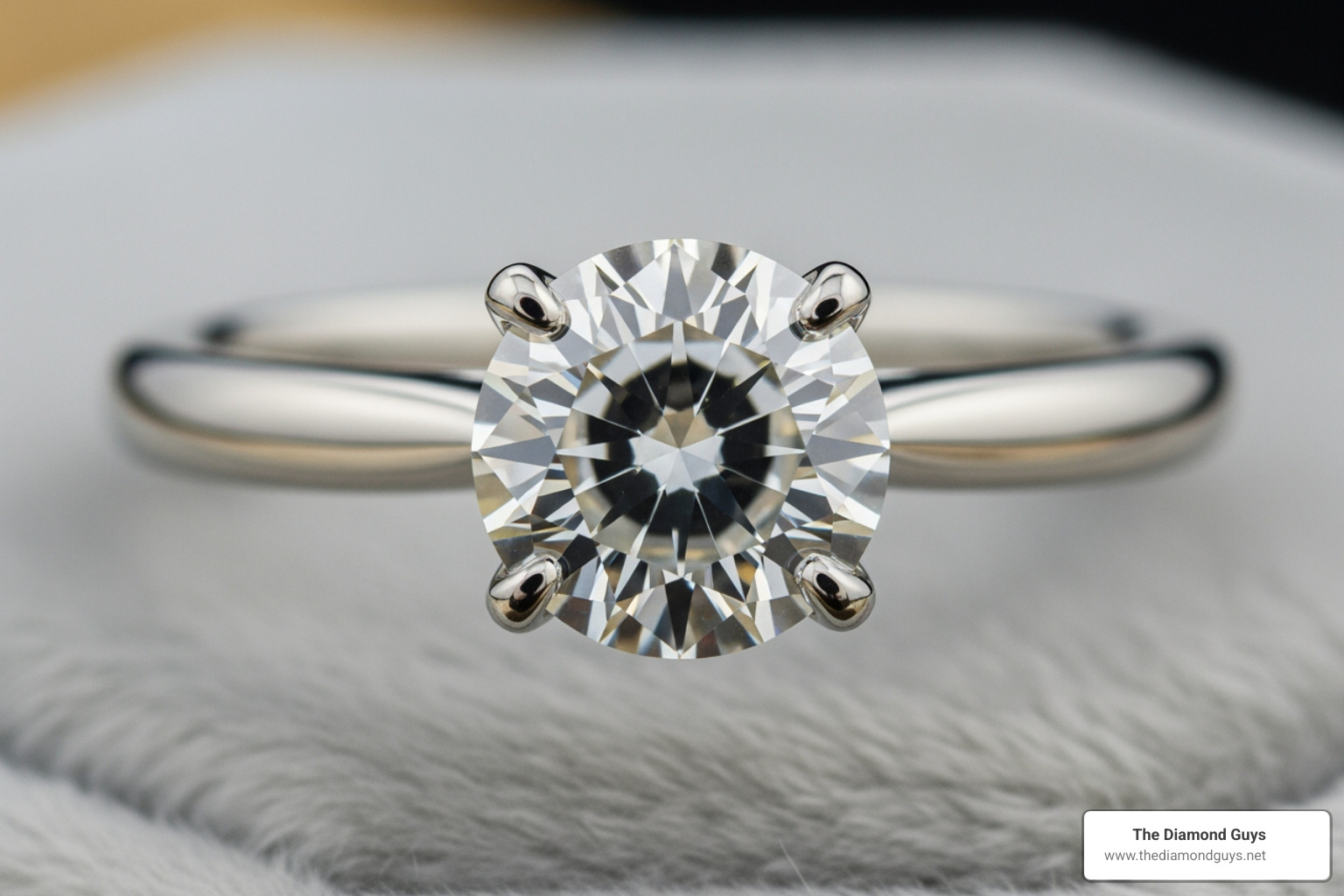
1 carat man made diamond price ranges from approximately $700 to $4,800 depending on quality factors. Here's what you need to know:
- High Color & Clarity (D-F, VVS-VS): $1,200 - $4,800
- Midrange Quality (G-H, VS-SI): $1,100 - $3,200
- Lower Quality (I-K, SI-I): $700 - $2,500
- Lab diamonds cost 30-50% less than natural diamonds with identical appearance
Sometimes it's tricky to know if you're getting a good deal. And we're on the side of getting more bang for your buck around here!
The price of a 1 carat lab-grown diamond can vary by thousands of dollars based on just a few quality factors. Whether you're shopping for an engagement ring or a special piece of jewelry, understanding these price differences helps you make a smart choice that fits your budget and values.
Lab-grown diamonds are real diamonds - they have the same chemical makeup, appearance, and durability as natural diamonds. The only difference? They're created in a lab over weeks instead of deep underground over millions of years. This difference in origin is why you can get a stunning 1 carat diamond for a fraction of what you'd pay for a natural stone.
The key factors affecting price are the 4Cs: Cut, Color, Clarity, and Carat weight. A diamond with excellent cut, colorless grade (D-F), and high clarity (VVS-VS) will cost significantly more than one with good cut, near-colorless grade (G-H), and moderate clarity (SI). But here's the secret: many of these differences are invisible to the naked eye. If you want to go deeper into how diamonds are evaluated worldwide, you can also review the Gemological Institute of America's overview of the 4Cs, which explains the standard grading terminology used across the industry.
I'm Morgan Price, and I've spent years researching 1 carat man made diamond price trends to help buyers steer this market and secure the best value. My focus on ethical sourcing and transparent pricing has helped countless couples find stunning diamonds without overpaying.
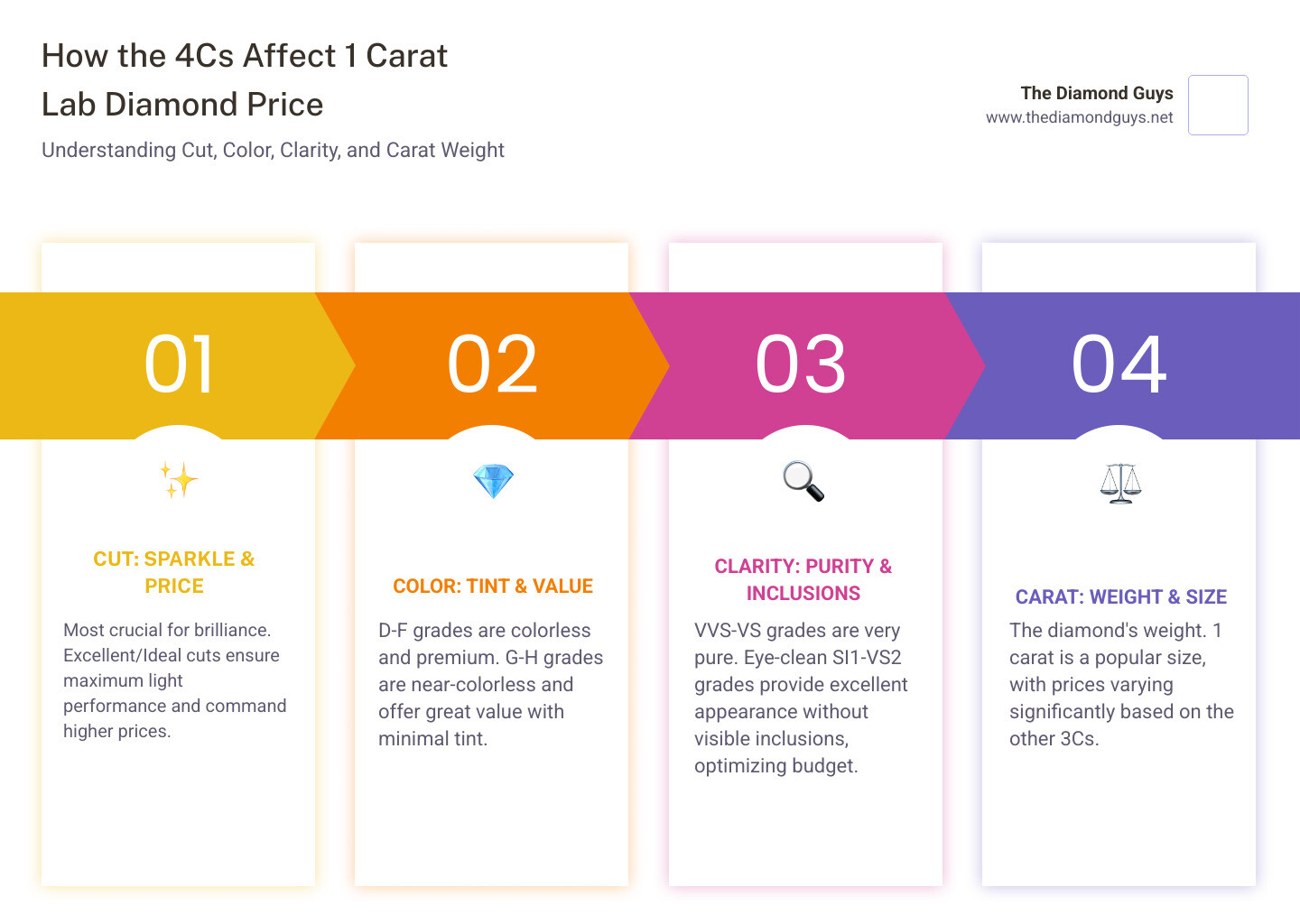
Quick 1 carat man made diamond price terms:
What is the Average Price for a 1 Carat Lab-Grown Diamond?
When we talk about the 1 carat man made diamond price, it's important to understand that there isn't a single, fixed number. Instead, we see a range that fluctuates based on various quality factors and market trends. As of February 2022, the market for lab-grown diamonds showed distinct price brackets depending on the diamond's characteristics. This period reflects a good benchmark for understanding the general pricing structure.
For a 1-carat lab-grown diamond, the average price range can be quite broad, starting from as low as $700 and going up to $4,800 or more. This significant spread is primarily due to the 4Cs – cut, color, clarity, and carat weight – which we'll dive into more deeply. These factors determine the diamond's overall beauty and, consequently, its cost.
The good news is that lab-grown diamonds generally offer incredible value. They are typically between 30 and 50 percent cheaper than earth-grown diamonds of comparable size and quality. This means you can often achieve a larger, more stunning diamond within your budget by opting for a lab-grown stone.
Understanding these price dynamics is crucial for making an informed purchase, especially given that lab-grown diamonds are chemically and physically identical to their natural counterparts. As we often say, "Are Lab-Grown Diamonds Real Diamonds"? Absolutely! They are real diamonds, just with a different origin story.
Price Range for High Color and Clarity
If you're aiming for the crème de la crème, a 1-carat lab-grown diamond with high color and clarity will command a higher price. These are the diamonds that sparkle with exceptional brilliance and appear utterly colorless and flawless to the naked eye.
Typically, for diamonds falling into the D-F color grades (colorless) and VVS1-VS2 clarity grades (very very slightly included to very slightly included), you can expect the 1 carat man made diamond price to range from $1,200 to $4,800. These diamonds are considered premium, offering top-tier aesthetics for those who prioritize perfection. They are often sought after for their investment-grade appearance, even though the traditional investment value of lab diamonds differs from natural diamonds.
Price Range for Midrange Color and Clarity
For many of our clients in Scottsdale, AZ, and Los Angeles, CA, the sweet spot for value and beauty lies in the midrange color and clarity grades. These diamonds offer a fantastic balance, providing dazzling appearance without the premium price tag of the highest grades.
A 1-carat lab-grown diamond with midrange color (G-H, near-colorless) and clarity (VS1-SI1, very slightly included to slightly included) usually falls within the $1,100 to $3,200 price range. The key here is often to find an "eye-clean" diamond – one where any inclusions aren't visible to the naked eye. This allows you to save money without compromising on the diamond's visual appeal. Many of our clients find that G-H colors are perfectly stunning, especially when set in white gold or platinum, and VS2 or SI1 clarity can be indistinguishable from higher grades without magnification.
Price Range for Lower Color and Clarity
If your budget is a primary concern, or if you plan to set your diamond in yellow or rose gold, exploring the lower color and clarity grades can offer excellent value. These diamonds are still beautiful and real, but their prices are significantly more accessible.
For a 1-carat lab-grown diamond with lower color (I-K, faint yellow) and clarity (SI1-I1, slightly included to included), the 1 carat man made diamond price can range from $700 to $2,500. While these diamonds might exhibit a slight yellow tint or have inclusions visible under close inspection, they still offer remarkable sparkle, especially with a well-chosen cut. For instance, an I-color diamond set in yellow gold can look just as vibrant as a colorless diamond, as the metal naturally complements the diamond's warmer tones. Our expert guidance ensures you always find the best choice for your budget and style.
The 4Cs of Value: How Quality Affects the 1 Carat Man Made Diamond Price
Understanding the 4Cs – Cut, Color, Clarity, and Carat – is like having a secret weapon in your diamond-buying arsenal. These are the universal standards by which all diamonds, natural or lab-grown, are graded, and they are the primary drivers of the 1 carat man made diamond price. While all four contribute, some have a more significant impact on a diamond's visual appeal and cost than others. We always guide our clients through these factors, ensuring they make informed decisions. For a deeper dive into these characteristics, check out our Lab-Grown Diamonds: The Ultimate Guide.
Cut: The Source of Sparkle
If we had to pick one "C" that holds the most sway over a diamond's beauty, it would be Cut. This isn't about the diamond's shape (like round or princess) but rather how well the diamond's facets interact with light. A superior cut maximizes a diamond's brilliance, fire, and scintillation – in other words, its sparkle!
A 1-carat lab-grown diamond with an excellent or ideal cut will always be more expensive than one with a good or fair cut, even if all other factors are equal. Why? Because a masterfully cut diamond reflects almost all light entering it, creating that captivating dance of light that diamonds are famous for. This is often reflected in a high "Cut Score" from analytical tools, which measure the diamond's unique dimensions to determine how perfectly it's cut.
When buying a 1-carat lab-grown diamond, we recommend prioritizing cut above almost everything else. Look for grades like "Excellent" or "Ideal" (or "Hearts & Arrows" for round brilliants). These cuts ensure the diamond's proportions, symmetry, and polish are optimized for maximum light performance, making your diamond truly shine.
Color: The Absence of Tint
Diamond color refers to the absence of color within the stone, not the light it reflects. The GIA color grading scale ranges from D (colorless) to Z (light yellow or brown). For a 1-carat lab-grown diamond, the closer you get to D, the higher the 1 carat man made diamond price.
Colorless grades (D-F) are considered premium, and they are indeed beautiful. However, near-colorless grades (G-J) still appear white to the naked eye, especially when mounted. The faint yellow in G-H color diamonds is often undetectable without comparison to a D-F diamond. This is a fantastic area to find value.
Interestingly, lab-grown diamonds can sometimes undergo post-growth treatments. For instance, HPHT (High-Pressure, High-Temperature) treatment can be used as a post-growth process for CVD (Chemical Vapor Deposition) diamonds to alleviate or improve their color. This means a diamond that might have started as a K or L color could be improved to a G or H, making it more visually appealing and often more affordable than a naturally colorless stone of the same grade. This process makes lab diamonds even more accessible. If you're pondering "Should You Buy a Lab-Grown Diamond," understanding these color nuances is key to getting the best value.
Clarity: The Purity of the Stone
Clarity refers to the presence or absence of inclusions (internal flaws) and blemishes (external imperfections) within a diamond. The clarity scale ranges from Flawless (FL) to Included (I3), with grades like VVS1, VVS2, VS1, VS2, SI1, and SI2 in between. For a 1-carat lab-grown diamond, higher clarity grades mean a higher 1 carat man made diamond price.
However, here's where we often find opportunities for smart savings. Many inclusions are microscopic and not visible to the naked eye. This is where the concept of an "eye-clean" diamond comes in. An eye-clean diamond might be graded VS2 or SI1, meaning it has minor inclusions, but these are not apparent without magnification.
We recommend focusing on finding a 1-carat lab-grown diamond that is eye-clean rather than paying a premium for a Flawless or VVS stone whose perfection can only be appreciated under a jeweler's loupe. This is a crucial strategy for maximizing your budget without sacrificing visual appeal. And no, these inclusions won't make your lab-grown diamond "cloudy" over time; that's a common misconception. For more on this, read our article: "Do Lab-Grown Diamonds Get Cloudy".
Carat Weight and Shape
Carat is often mistakenly thought of as size, but it's actually a unit of weight. One carat equals 200 milligrams. However, for a 1-carat lab-grown diamond, how that weight is distributed and the diamond's shape can significantly impact its apparent size and, of course, its price.
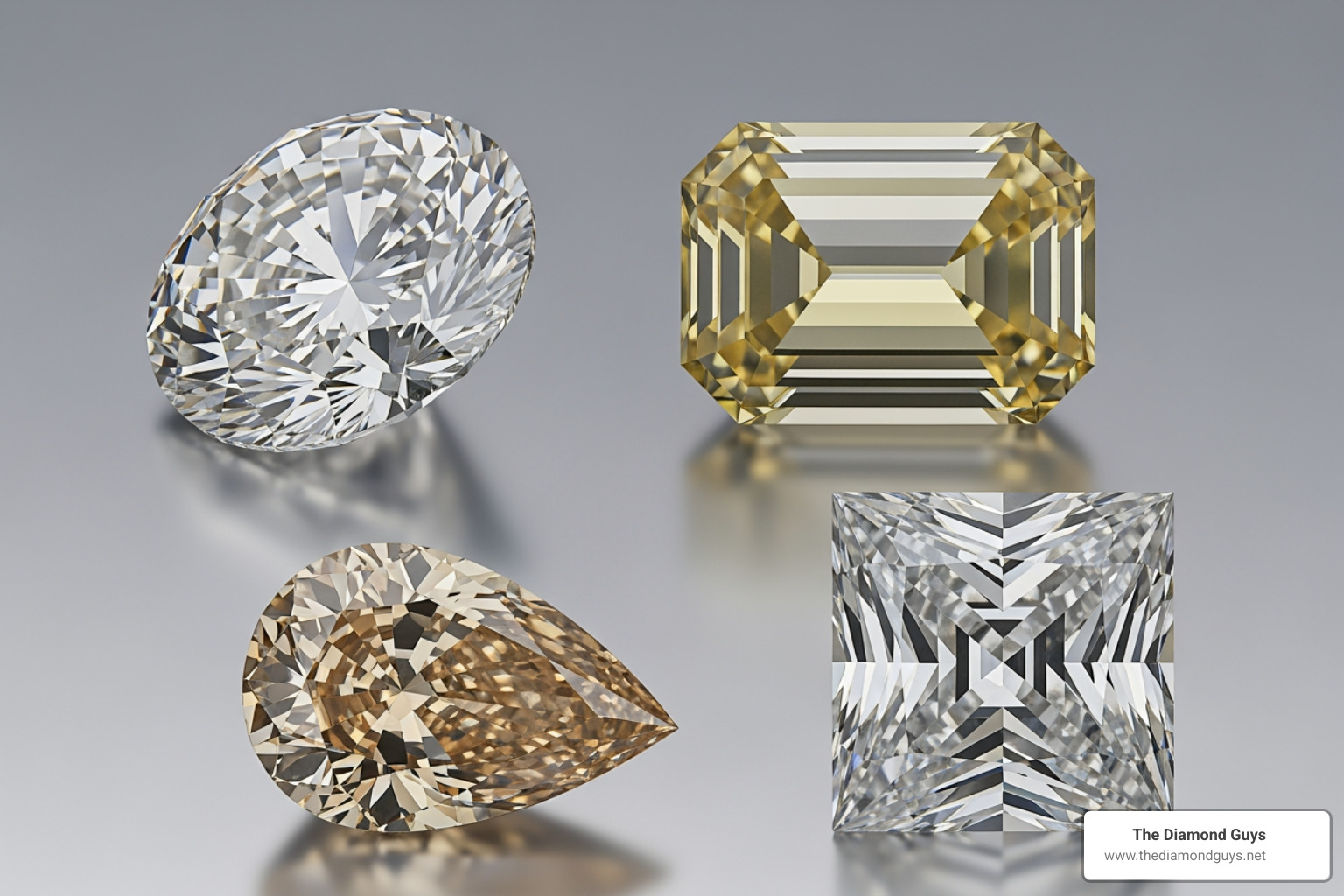
The round brilliant cut is by far the most popular diamond shape due to its exceptional sparkle and timeless appeal. It's also typically the most expensive shape per carat because of the rough diamond material lost during cutting and the skill required. For this reason, a 1-carat round brilliant lab-grown diamond will generally have a higher 1 carat man made diamond price than other "fancy" shapes like oval, princess, or pear, even if their carat weights are identical.
While 1.00 carat is the most popular diamond size, offering a significant presence on the hand, fancy shapes can sometimes appear larger than a round brilliant of the same carat weight due to their elongated dimensions. For tips on making your diamond shine, see "Beyond the Bling: What Makes a Lab-Grown Solitaire Shine". Choosing a slightly less popular shape can sometimes offer a larger-looking stone for a more attractive price point.
Lab-Grown vs. Natural Diamonds: A Price Comparison
One of the most compelling reasons our clients in Scottsdale and Los Angeles choose lab-grown diamonds is the significant price difference compared to natural diamonds. While both are chemically and visually identical, their origin stories lead to vastly different price tags.
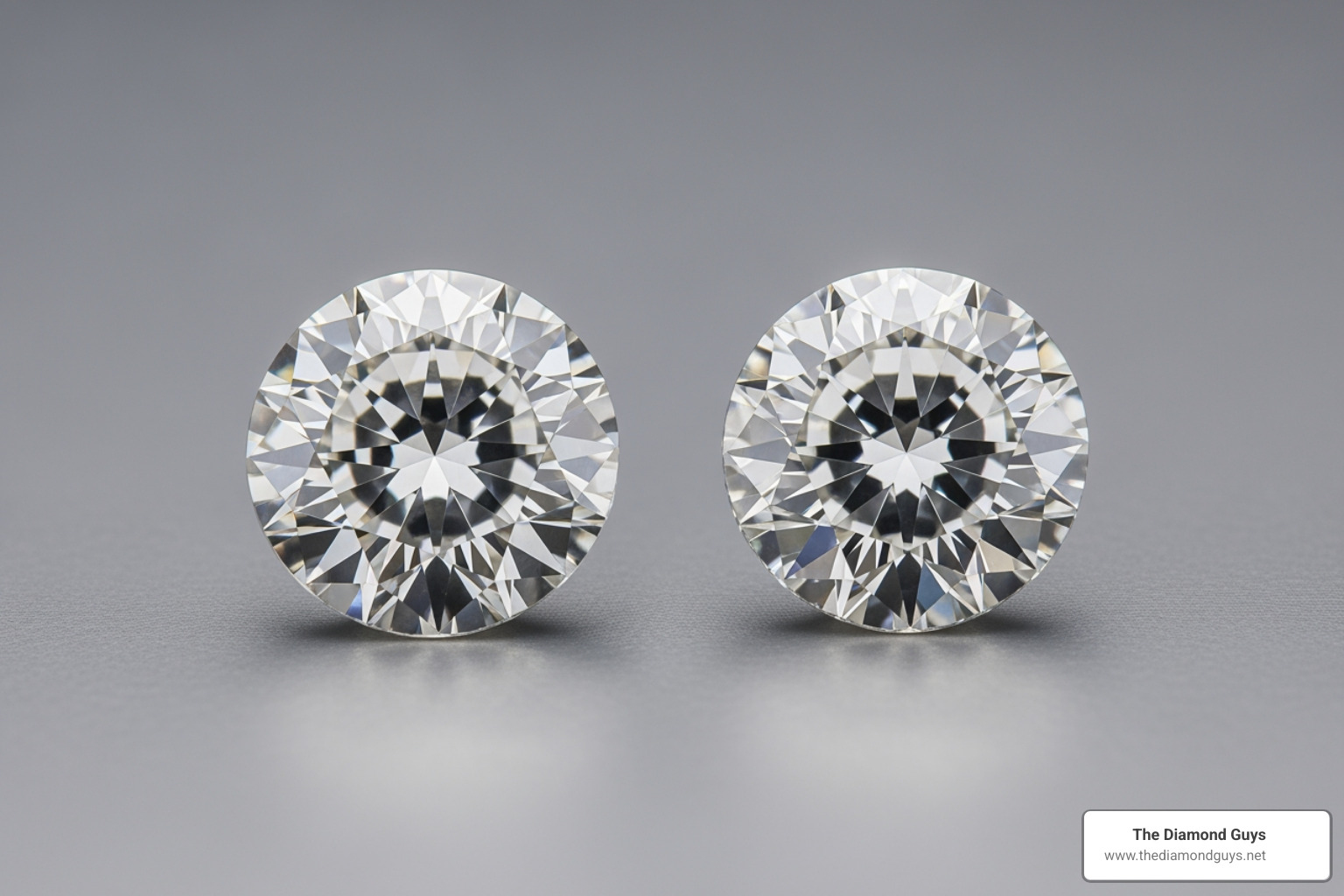
Lab-grown diamonds are typically 30% to 50% cheaper than earth-grown diamonds of comparable quality. This means that for the same budget, you can often afford a much larger or higher-quality lab-grown diamond than you could a natural one. To put it simply, you get a lot more sparkle for your buck! For a comprehensive breakdown of these differences, explore our guide on "Lab Diamonds vs Real Diamonds".
Let's look at an example. While a 1-carat round natural diamond (G/VS2) might range from approximately $4,000 to $7,000 (with an average closer to $5,063 as of our data), a similar 1-carat round lab-grown diamond (G/VS2) could be found for $1,100 to $3,200. The difference is substantial.
Understanding the Value Proposition
The value proposition of lab-grown diamonds is clear: you get a beautiful, real diamond with identical physical, chemical, and optical properties to a natural diamond, but at a significantly lower cost. This allows for what we affectionately call "more bang for your buck."
With the money saved on the diamond itself, our clients often choose to:
- Opt for a larger carat weight: Imagine getting a 1.5 or 2-carat lab diamond for the price of a 1-carat natural diamond.
- Invest in a more elaborate setting: A custom-designed ring with intricate details or additional accent stones becomes more feasible.
- Allocate funds to other aspects of their life: Perhaps a larger wedding budget, a down payment on a home, or a dream honeymoon.
Beyond the financial savings, many of our clients appreciate the ethical considerations. Lab-grown diamonds offer a conflict-free and environmentally conscious choice, aligning with modern values. This makes the decision to choose a lab-grown diamond not just financially smart, but also personally meaningful. If you're still weighing your options, our article "Should I Buy a Lab-Grown Diamond Engagement Ring" can provide further insights.
How the 1 carat man made diamond price compares to natural
To illustrate the stark contrast, let's consider the average price points for 1-carat round diamonds. The research indicates that 1-carat round natural diamond prices typically range from $1,289 to $12,611, with an average price of $5,063. Compare this to the 1 carat man made diamond price range of $700 to $4,800. The average price for a comparable lab-grown stone is significantly lower.
Here's a simplified comparison:
| Diamond Type | Carat | Color | Clarity | Average Price Range |
|---|---|---|---|---|
| Lab-Grown | 1 | G | VS2 | $1,100 - $3,200 |
| Natural | 1 | G | VS2 | $4,000 - $7,000 |
(Note: Natural diamond prices can vary widely based on market conditions, certification, and specific characteristics.)
While natural diamond prices can be subject to market volatility and have historically been seen as holding their value, lab-grown diamonds offer consistent quality at a more predictable and accessible price point. The resale value of lab-grown diamonds is a topic of ongoing discussion, with prices generally reflecting the manufacturing cost rather than a speculative market. However, the initial savings are undeniable, allowing for a magnificent diamond that might otherwise be out of reach.
How to Get the Best Value on Your 1 Carat Diamond
Finding the perfect 1-carat lab-grown diamond doesn't have to be overwhelming. With a bit of knowledge and the right approach, you can secure an absolutely stunning stone that offers incredible value. At The Diamond Guys, we empower our clients in Arizona and California with the insights needed for smart shopping, ensuring they feel confident in their choice.
One of the best ways to steer the market is by leveraging tools and resources designed to help you. Many online platforms offer price estimators or analysis tools that check a diamond's characteristics against current market prices to determine if it's a good deal. These tools can be invaluable for assessing whether a particular 1 carat man made diamond price is fair. They help determine if you're getting "more bang for your buck" by comparing thousands of diamonds to find the best deals. For more guidance on where to find these gems, explore our "Beyond the Bling: Uncovering the Best Lab Diamond Ring Retailers".
Focusing on "Eye-Clean" Clarity
As we discussed earlier, clarity refers to the presence of inclusions. For a 1-carat lab-grown diamond, it's easy to get caught up in chasing the highest clarity grades (FL, VVS). However, this often leads to overpaying for something that isn't visible to the naked eye.
Our best advice for maximizing your budget and getting the best value is to focus on "eye-clean" diamonds. An eye-clean diamond means that any inclusions are too small or too strategically placed to be seen without magnification. Often, diamonds graded VS2 (Very Slightly Included 2) or SI1 (Slightly Included 1) will be eye-clean. By choosing an eye-clean VS2 or SI1 diamond over a VVS or FL diamond, you can save hundreds, if not thousands, of dollars, without compromising on the diamond's visual appeal. It's a smart way to ensure your 1 carat man made diamond price is optimized for visible beauty.
Finding the Sweet Spot for Color
Similar to clarity, there's a "sweet spot" for diamond color that offers exceptional beauty without the top-tier price tag. For a 1-carat lab-grown diamond, we generally recommend looking at the G-H color grades (near-colorless). These diamonds appear colorless to the naked eye, especially when viewed face-up, and offer a significant cost saving compared to D-F colorless grades.
The choice of metal setting can also play a role. If you're opting for a white metal like platinum or white gold, a G or H color diamond will blend seamlessly, appearing bright and white. If you're considering a yellow or rose gold setting, you can even go a bit lower to an I or J color, as the warmer tones of the metal will naturally complement any faint yellow tint in the diamond, making it appear whiter. This strategic choice helps you manage the 1 carat man made diamond price effectively. For inspiration on designing your perfect ring, see "Crafting Your Legacy: The Art of Designing a Custom Lab Diamond Ring".
Why the 1 carat man made diamond price makes it a smart buy
The accessibility of the 1 carat man made diamond price fundamentally changes the diamond-buying landscape. It transforms what might have been an aspirational purchase into an achievable dream for many. The significant savings (30-50% compared to natural diamonds) mean you don't have to compromise on size or quality to stay within your budget.
This allows for:
- Opportunity for better settings: With more budget freed up, you can choose a more intricate, custom, or higher-quality metal setting, further enhancing the beauty of your diamond.
- Customization potential: Whether it's a unique design or adding accent stones, lab diamonds open up a world of possibilities for personalized jewelry.
- Peace of mind: Knowing you've chosen an ethically sourced diamond that offers incredible value brings an extra layer of satisfaction to your purchase.
Furthermore, lab-grown diamonds are insurable just like natural diamonds, protecting your investment. Curious about this? Read our article: "Can You Insure Lab-Grown Diamonds". The combination of affordability, beauty, and ethical sourcing makes a 1-carat lab-grown diamond an undeniably smart and emotionally rewarding choice.
Conclusion
Navigating diamond pricing can feel like a maze, but when it comes to the 1 carat man made diamond price, we hope this guide has illuminated the path to smart, informed decisions. Lab-grown diamonds offer an exceptional opportunity to acquire a stunning, real diamond at a fraction of the cost of its natural counterpart, without compromising on beauty, durability, or sparkle.
Our key takeaways for you are:
- Prioritize Cut: This is the most crucial factor for a diamond's sparkle. Always aim for an "Excellent" or "Ideal" cut.
- Choose Eye-Clean Clarity: Don't overpay for microscopic perfection. A VS2 or SI1 diamond that is eye-clean offers incredible value.
- Find Your Color Sweet Spot: G-H color grades provide a near-colorless appearance that looks brilliant, especially when paired with the right metal.
- Leverage Price Tools: Use online estimators and deal scores to ensure you're getting a fair 1 carat man made diamond price.
Lab diamonds represent a superior value proposition, allowing you to get more "carat for your cash" and potentially a more elaborate setting or a larger stone within your budget. At The Diamond Guys, whether you visit us in Scottsdale, AZ, or Los Angeles, CA, we pride ourselves on providing expert guidance and a personalized shopping experience. We’re here to help you find that perfect diamond that not only impresss but also aligns with your values and budget.
Ready to explore the possibilities? Explore the differences between lab and real diamonds in our detailed guide and start your journey with confidence.


