

Everything You Need to Know About Buying 1 Ounce of Silver
Why 1 Ounce of Silver Matters for Investors and Collectors
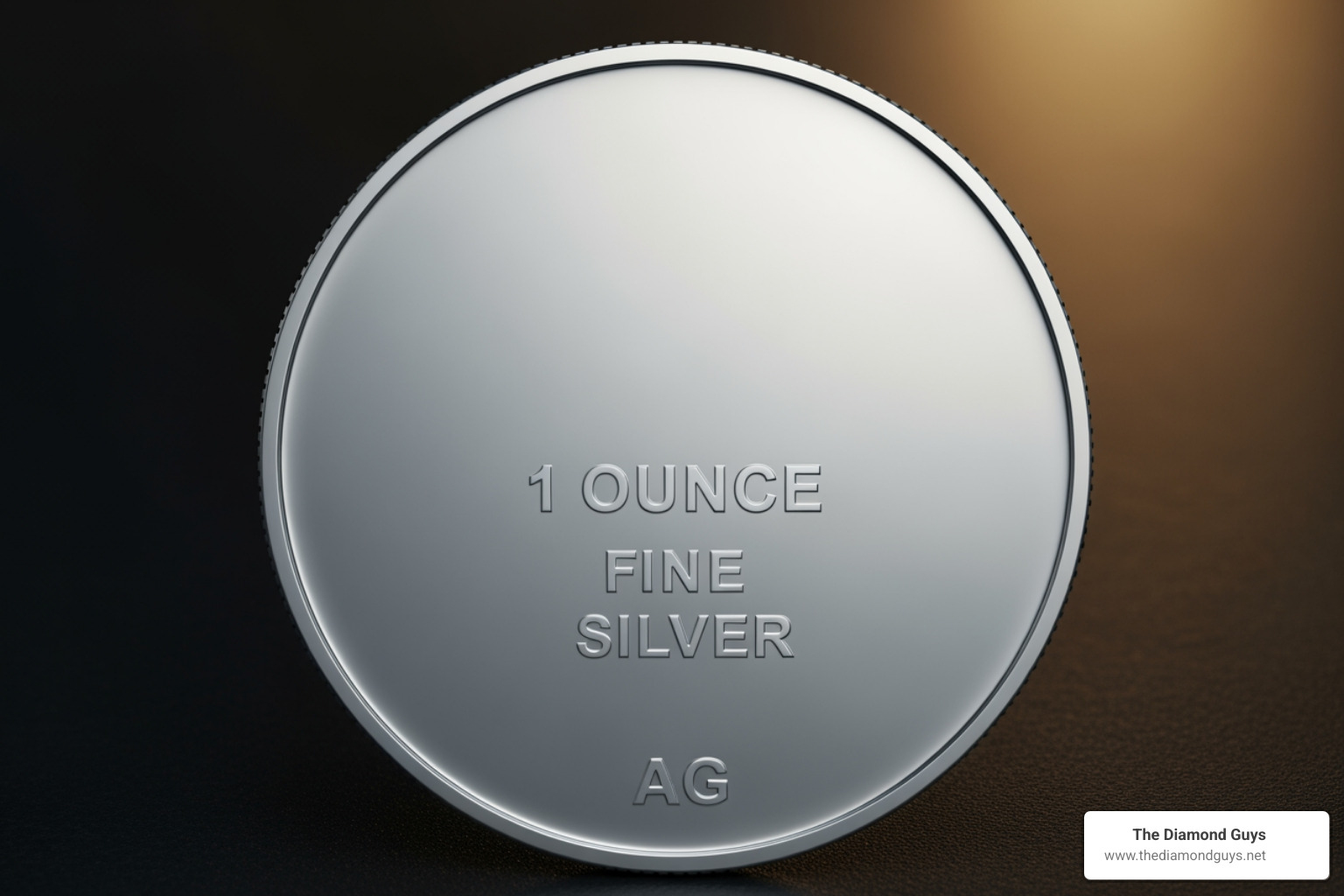
1 ounce of silver is the most popular and liquid form of physical silver bullion, offering an accessible entry point for both new and experienced precious metals investors. Whether you're tracking prices for investment purposes, diversifying your portfolio, or exploring tangible assets, understanding this standard unit of measurement is essential.
Quick Silver Price Reference:
- Current Spot Price: Silver trades at approximately $78-84 per troy ounce (fluctuates 24/7)
- 1 Troy Ounce = 31.1035 grams (about 10% heavier than a standard kitchen ounce)
- Physical Silver Price: Spot price + premiums (typically $2-15+ per ounce)
- Common Forms: Coins, bars, and rounds from government and private mints
The spot price of silver updates constantly based on global futures exchanges like COMEX and LBMA. This price reflects immediate delivery value, but physical silver always includes additional premiums to cover refining, manufacturing, and dealer costs.
Silver's recent price surge—reaching a nominal all-time high of $117.75 per ounce in January 2026—has renewed interest from investors seeking protection against inflation and economic uncertainty. The metal's dual role as both an industrial commodity and a store of wealth makes it uniquely positioned in today's market.
Industrial demand continues to grow, particularly in solar panels and electric vehicles. Solar applications alone consumed 232 million ounces in 2024, while EVs use approximately 1 troy ounce of silver per vehicle—double that of traditional combustion engines.
I'm Morgan Price, and I've spent years helping clients navigate precious metals markets, including understanding the value and acquisition of 1 ounce of silver as both an investment vehicle and a tangible asset. While The Diamond Guys specializes in fine jewelry and ethically sourced diamonds, we also recognize that many clients appreciate guidance across all precious metals investments.
Understanding the Value of 1 Ounce of Silver
When we talk about the value of silver, we have to start with the unit of measurement. In precious metals, an "ounce" isn't the same as the ounce you use to measure flour in your kitchen. We use the troy ounce, which is exactly 31.1035 grams. For comparison, a standard (avoirdupois) ounce is only about 28.35 grams. This means when you buy 1 ounce of silver, you’re getting about 10% more metal than you might expect!
The baseline for silver value is the Silver Price per Ounce, commonly referred to as the "spot price." This price is the current market rate at which silver is trading for immediate delivery. It is derived primarily from the COMEX (Commodity Exchange) in New York and the LBMA.
Because silver is a global commodity, it is traded 24 hours a day across major exchanges in London, New York, Hong Kong, Tokyo, and Zurich. This constant activity ensures high market liquidity, meaning you can generally buy or sell 1 ounce of silver quickly at a price close to the current Silver Spot Price. However, you will always encounter a "bid-ask spread"—the difference between what a dealer will pay you (bid) and what they will charge you (ask).
How the Spot Price of 1 Ounce of Silver is Determined
The spot price isn't just a number pulled out of thin air; it’s determined through a complex, continuous auction process involving silver futures contracts. These are legal agreements to buy or sell silver at a specific price on a future date.
Several factors influence this "price discovery" process:
- Economic Indicators: Inflation rates, interest rates, and the strength of the U.S. dollar are massive drivers. Since silver is dollar-denominated, a weaker dollar often leads to a higher silver price.
- Market Sentiment: Investor fear or optimism can cause rapid price swings.
- Geopolitical Events: Conflicts or trade tensions in major silver-producing regions like Mexico or Peru can tighten supply and drive up the price of 1 ounce of silver.
Why You Can’t Buy Physical Silver at Spot Price
One of the most common questions we hear is: "If the spot price is $83.45, why is this coin $95?" The answer lies in premiums.
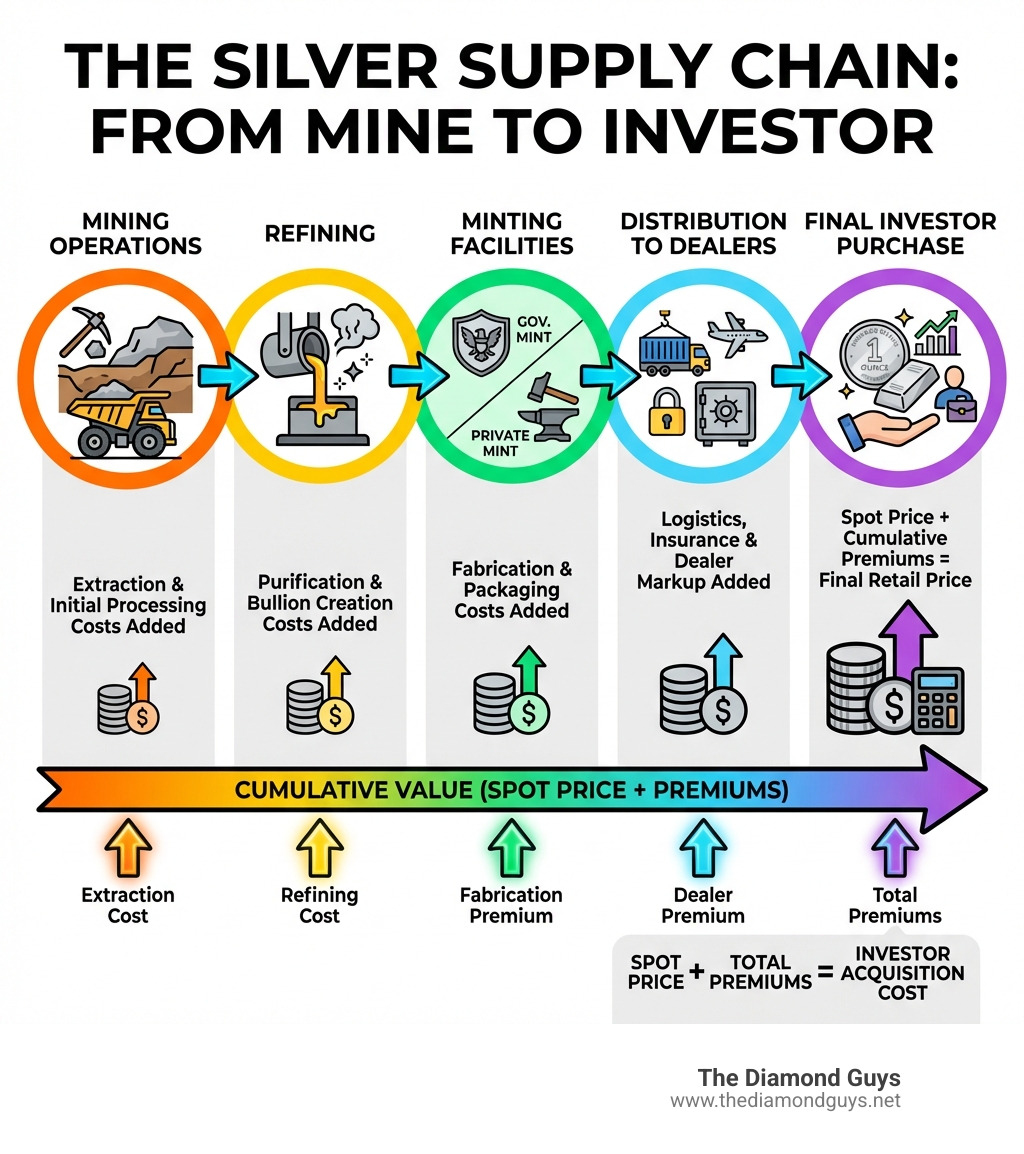
The spot price represents "paper silver" or massive 5,000-ounce commercial bars. To get 1 ounce of silver into your hand, it has to go through a long supply chain. This involves:
- Refining: Purifying the raw silver to .999 fineness.
- Manufacturing/Minting: Turning that silver into a beautiful coin or bar.
- Distribution: Shipping heavy, high-value metal securely.
- Dealer Overhead: Rent, insurance, and labor costs for the shop where you buy it.
Typically, premiums range from 2% to 15% or more over spot. During times of high demand or supply chain disruptions, these premiums can spike significantly.
Popular Forms of Physical Silver for Investors

If you’re looking to add 1 ounce of silver to your safe, you have three primary choices: coins, bars, and rounds. All reputable bullion products should meet the industry standard of .999 fine silver (99.9% purity).
- Silver coins: These are minted by sovereign governments (like the U.S. Mint) and carry a face value. They are legal tender, though their silver content is worth far more than the $1 or $2 stamped on them.
- Silver bars: Produced by both government and private mints, bars are often the most cost-effective way to buy silver. They are easy to stack and store.
- Generic Rounds: These look like coins but have no face value and aren't legal tender. They are produced by private mints and usually carry the lowest premiums.
Comparing 1 Ounce Silver Bars vs. 1 Ounce Silver Coins
Choosing between a bar and a coin depends on your goals. Coins offer the security of government backing and potential numismatic (collectible) value, but they come with higher premiums. Bars focus purely on the metal content.
| Feature | 1 oz Silver Coin | 1 oz Silver Bar |
|---|---|---|
| Issuer | Sovereign Government | Private or Govt Mint |
| Legal Tender | Yes | No |
| Premium | Higher | Lower |
| Liquidity | Extremely High | High |
| Stackability | Moderate | Excellent |
| Recognition | Global | High (if reputable mint) |
Silver in Fine Jewelry and Accessories
While bullion is for the safe, silver jewelry is for the world. In jewelry, we use Sterling Silver, which is 92.5% silver and 7.5% copper (marked as "925"). This alloy is necessary because pure silver is too soft for daily wear.
At The Diamond Guys, we see silver as a fantastic canvas for high-end men's accessories. The cool tone of silver perfectly complements both natural and lab-grown diamonds.
- Silver diamond earrings for men: A classic way to add a touch of brilliance.
- Men's silver tennis bracelets: A sophisticated statement piece that balances weight and shine.
- Silver diamond hoop earrings: Modern and bold, these pieces highlight the craftsmanship that goes into working with precious metals.
Market Drivers and Historical Price Trends
Silver has had a wild ride over the decades. To understand where we are, we have to look back.
- The 1980 Spike: The Hunt Brothers famously tried to corner the market, driving silver to a nominal high of $49.45. Adjusted for inflation, that would be nearly $200 today!
- The 2011 Peak: Following the 2008 financial crisis, silver hit $48.70 as investors sought a safe haven.
- The 2026 ATH: On January 26, 2026, silver set a new nominal all-time high of $117.75 per troy ounce.
One of the best tools for timing your purchase is the gold to silver ratio. This ratio tells you how many ounces of silver it takes to buy one ounce of gold. Historically, the ratio sits between 40:1 and 60:1. When the ratio is high (e.g., 80:1 or 100:1), silver is considered "cheap" relative to gold, often signaling a buying opportunity. Currently, the ratio is hovering around 50:1.
Industrial Demand and the Green Revolution
Unlike gold, which is mostly held as an investment, silver is an essential industrial metal. It has the highest electrical and thermal conductivity of any element.
- Solar Power: Silver is a key component in photovoltaics. In 2024, solar demand hit a staggering 232 million ounces.
- Electric Vehicles (EVs): An EV uses about 1 ounce of silver, which is double the amount used in a traditional internal combustion engine.
- The Supply Deficit: The silver market has been in a supply deficit for the last six years, meaning we are using more silver than we are mining.
This massive industrial "sink" is why some pundits ask, "Could Silver Reach $1,000?" While $1,000 is highly speculative, the fundamental supply-demand imbalance provides a strong "floor" for silver's value.
Global Economic and Geopolitical Influences
Silver prices are sensitive to the "big picture." When inflation rises, the purchasing power of fiat currency drops, making tangible assets like 1 ounce of silver more attractive. Similarly, when central banks lower interest rates, silver often rallies because the "opportunity cost" of holding a non-yielding asset decreases.
Geopolitics also play a role. For example, in 2025, tariff threats led U.S. companies to stockpile over 500 million ounces of silver domestically to avoid supply chain disruptions. Such events can cause localized price spikes and increased premiums.
Practical Considerations for Silver Buyers
Buying 1 ounce of silver is only the first step. You also need to think about:
- Storage and Security: While a few ounces can fit in a sock drawer, a growing "stack" requires a secure home safe or a third-party vault.
- Insurance: Check if your homeowner's insurance covers precious metals. Often, you need a specific rider for high-value collections.
- Tax Implications: In the U.S., precious metals are often taxed as "collectibles" for capital gains purposes. However, sales tax varies by state. In Arizona and California, there are specific exemptions for certain types and amounts of bullion—always consult a tax professional in Scottsdale or Los Angeles.
- Authenticity: Only buy from reputable dealers. To verify a bar or coin, you can use a magnet test (silver is non-magnetic), check its weight and dimensions, or use a professional Sigma Metalytics tester.
Frequently Asked Questions about 1 Ounce of Silver
What is the difference between a troy ounce and a standard ounce?
A troy ounce (31.1 grams) is the international standard for weighing precious metals. A standard "kitchen" ounce (avoirdupois) is only 28.35 grams. If you try to sell silver based on kitchen ounces, you’ll be short-changing yourself!
Is 1 ounce of silver a good investment for beginners?
Absolutely. With a much lower entry cost than gold, silver allows you to start small. It is a tangible asset that you can hold in your hand, offering a sense of security that digital stocks cannot provide. However, be prepared for more price volatility than gold.
How do I verify the authenticity of a 1 ounce silver bar?
Start with the "hallmark" or mint mark stamped on the bar. It should clearly state the weight and purity (.999 Fine Silver). You can also perform a "ping test" (silver has a specific high-pitched ring when tapped) or a weight/dimension check with a digital caliper. If in doubt, bring it to a professional for a non-destructive ultrasound or XRF test.
Conclusion
Whether you are looking to hedge against inflation, bet on the green energy revolution, or simply find a beautiful piece of jewelry, 1 ounce of silver is a versatile and essential asset. At The Diamond Guys, we pride ourselves on providing expert guidance and a personalized shopping experience for our clients in Scottsdale and Los Angeles.
While we specialize in custom engagement rings and ethically sourced diamonds, we believe a balanced portfolio includes various tangible assets. If you're looking to upgrade your collection or sell your precious metals, our team is here to offer the transparency and expertise you deserve. Silver isn't just a metal; it's a piece of history and a bridge to a high-tech future. Happy stacking!


