

Everything You Need to Know Before Buying a 10mm Wedding Band
Is a 10mm Wedding Band Right for You?

A 10mm wedding band is an extra-wide ring. It covers more of your finger than a common 6mm or 8mm band, giving it a bold look. If you like that look, try one on before buying: the added width can change how the ring feels when you bend your finger. A rounded, comfort-fit interior may help.
Your best choice depends on fit, material, and daily wear. Gold can often be resized, while tungsten carbide resists scratches but usually cannot be resized. The guide below will help you weigh those trade-offs without losing sight of the style you love.
I'm Morgan Price. My research and editorial work on topics such as the 10mm wedding band focuses on making product claims easier to check, so let's start with what the width means in practice.
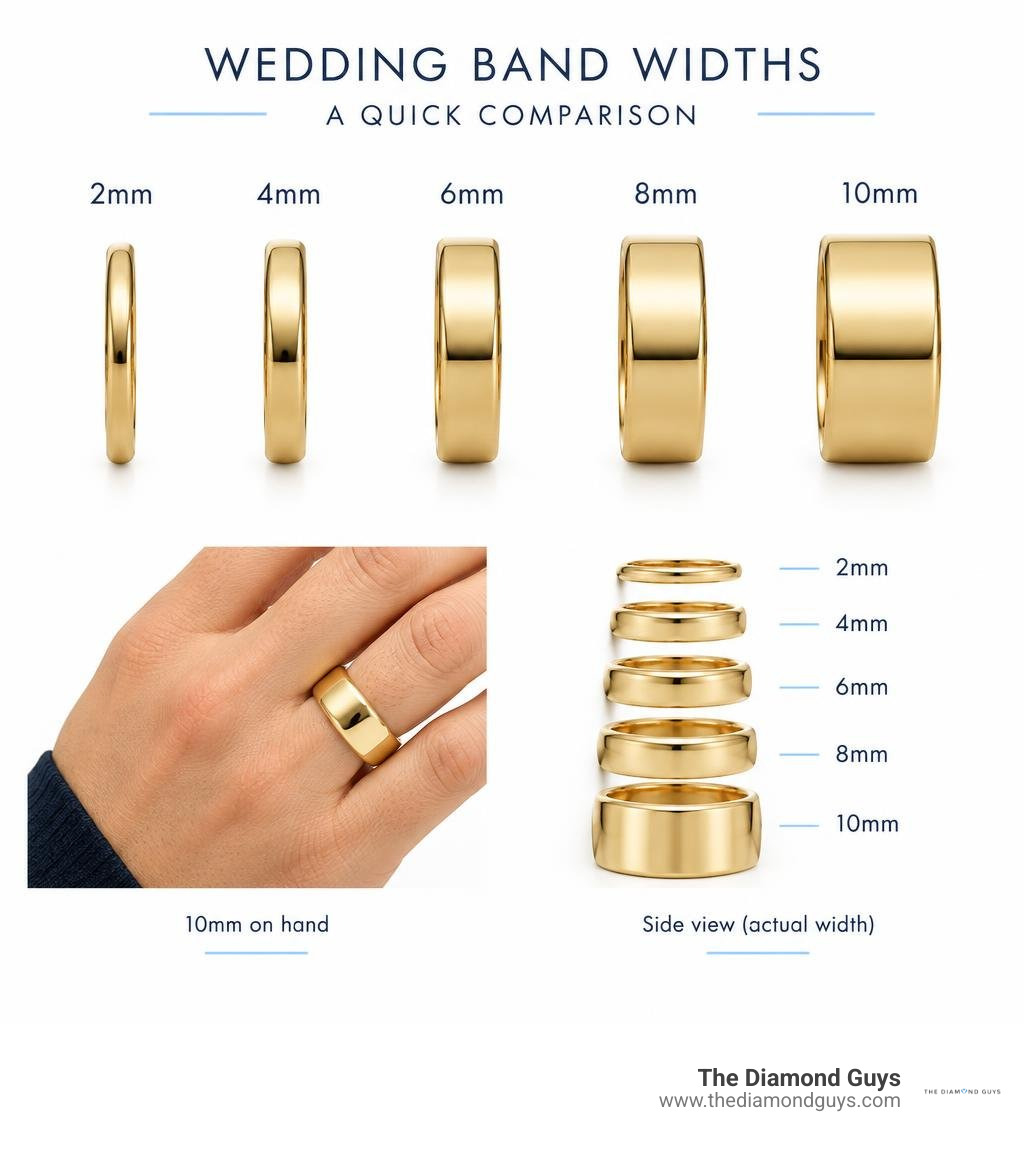
10mm wedding band terms simplified:
For additional context on how ring width affects comfort and proportion, the GIA offers educational resources on jewelry metals and design considerations.
What Is a 10mm Wedding Band and How Does It Compare to Standard Widths?
When choosing wedding jewelry, width establishes both the visual presence and physical feel of the ring. Most traditional men's rings fall between 4mm and 8mm, with 6mm and 8mm serving as the industry standard. A 10mm ring sits in the extra-wide category.
At a full centimeter across, a 10mm band covers significant surface area between your base knuckle and middle joint. This gives the ring substantial visual weight and makes it an immediate statement piece on the hand. Rather than resting quietly in the background, an extra-wide band draws attention and highlights the textures, metal tones, and artistic details embedded in its surface.
Standard vs. Extra-Wide Ring Width Comparison
Understanding how widths compare side by side helps you determine if an extra-wide style matches your aesthetic. Exploring a comprehensive collection of men's wedding bands provides a clear sense of these varying proportions.
| Width (mm) | Category | Visual Presence | Best Suited For |
|---|---|---|---|
| 4mm | Classic / Slim | Understated, lightweight | Smaller hands, slender fingers, stackable sets |
| 6mm | Traditional Standard | Balanced, timeless | Average hand sizes (sizes 8–10), subtle elegance |
| 8mm | Contemporary Wide | Prominent, bold | Broader fingers (sizes 10+), modern patterns |
| 10mm | Extra-Wide Statement | Maximum coverage, commanding | Large hands, long fingers, intricate custom inlays |
An extra-wide ring provides expansive real estate for intricate designs, multi-metal pairings, and textured carvings that would look crowded on a standard 4mm or 6mm band.
Popular Materials and Metal Options for Wide Bands
Because a 10mm ring uses more material by volume than a standard band, the metal you select impacts weight, long-term durability, maintenance requirements, and hypoallergenic comfort.
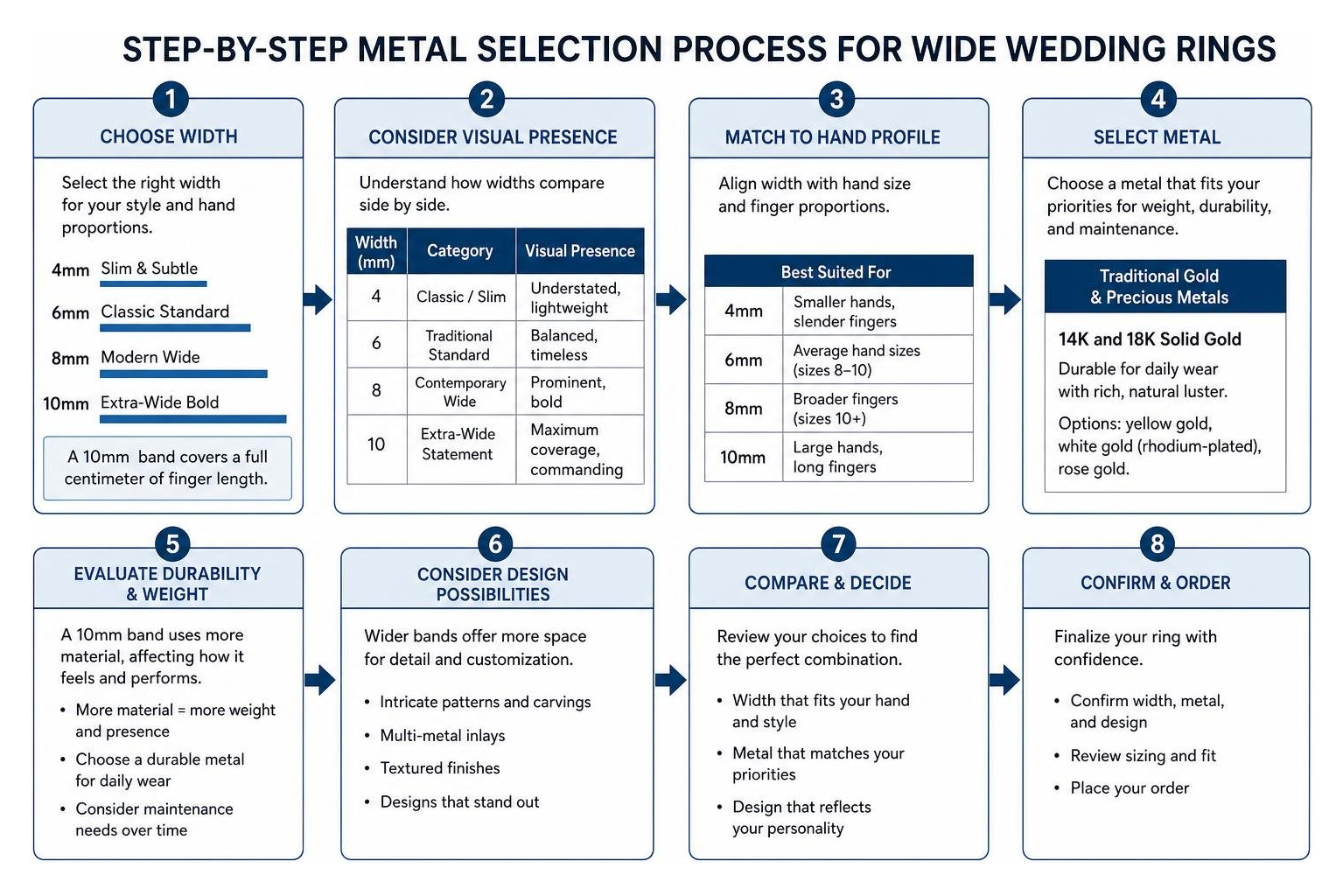
Traditional Gold and Precious Metals
Precious metals deliver classic warmth, natural luster, and proven long-term value. In a 10mm width, gold has noticeable heft on the finger.
- 14K and 18K Solid Gold: Offering an ideal blend of purity and scratch resistance, 14K and 18K gold alloys are durable enough for daily wear while retaining rich coloration. Choose from classic yellow gold, bright rhodium-plated white gold, or warm copper-infused rose gold. Reviewing our detailed 10k wedding band guide offers additional insight into alloy hardness across different karat levels.
- Density and Heft: Solid gold bands in wide profiles weigh between 10 and 14 grams or more, providing a luxurious, grounding presence on the hand. For those who appreciate classic aesthetics, timeless gold wedding bands showcase how clean, unadorned surfaces highlight the natural beauty of precious metal.
- Platinum: The most durable and densest precious metal. Platinum is naturally hypoallergenic, does not require replating, and develops a rich patina over decades of wear.
Modern Alternative Metals and Alloys
Contemporary alternative metals offer distinct aesthetics, scratch resistance, and modern engineering. To better understand how these alloys function, consult our complete overview of men's wedding band materials.
- Tantalum: A dense, dark-gray metal that is ductile, shatterproof, and naturally hypoallergenic. Unlike tungsten, tantalum can be cut and resized by experienced jewelers. Combining metals creates striking contrast, as seen in tantalum and gold wedding bands.
- Tungsten Carbide: Ranking around 9 on the Mohs scale, tungsten carbide is scratch-resistant and holds its polished or brushed luster for decades. However, its extreme hardness makes it rigid; it cannot be resized and can crack under extreme impact.
- Titanium: Lightweight and exceptionally strong, titanium is an excellent option for those who want a bold 10mm visual profile without heavy physical weight. Our curated selection of men's titanium bands highlights how comfortable ultra-light designs feel during daily wear.
- Damascus Steel & Cobalt Chrome: Damascus steel features swirling, layered patterns reminiscent of ancient sword forging, while cobalt chrome provides a bright white luster identical to platinum with superior scratch resistance.
Sizing, Fit, and Everyday Wearability
Wider rings fit more snugly than narrower bands of the identical size because they cover more skin and create greater internal friction against the finger.
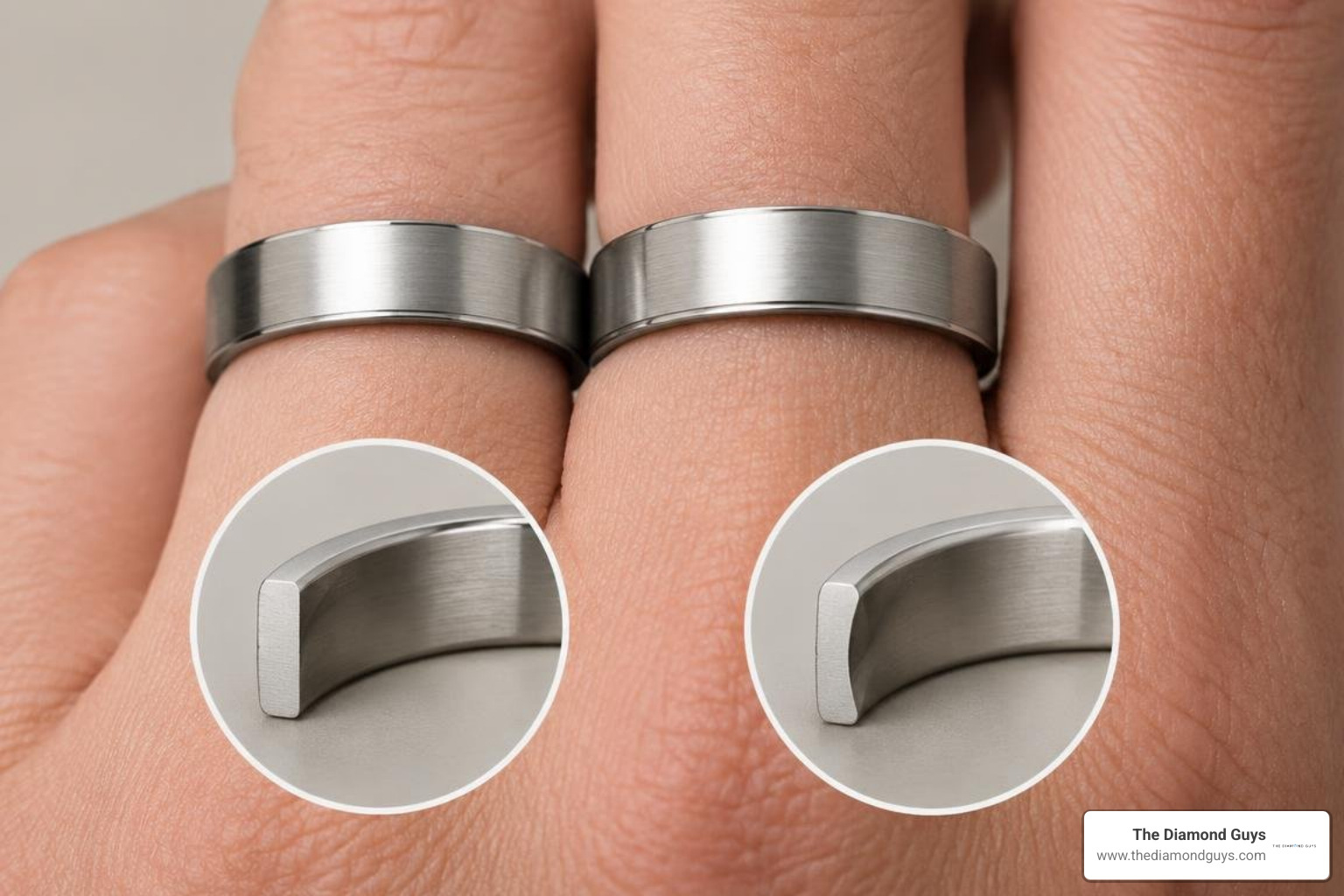
The Role of Comfort-Fit Profiling
For any ring measuring 8mm or wider, choosing a comfort-fit profile is essential.
- Curved Interior Geometry: Standard rings have a flat interior profile that sits flush against the skin across the entire width. Comfort-fit bands feature a domed interior, reducing surface friction and sliding smoothly over knuckles.
- Skin Breathability & Moisture Control: Wide rings trap soap and moisture against the skin if fitted improperly. A domed interior allows better airflow and easier cleaning.
- Pressure Reduction: When closing your hand into a fist, a flat band can pinch the skin. The tapered edges of a comfort-fit interior distribute pressure evenly. To learn more about how internal geometry affects wearability, read about the benefits of a comfort-fit wedding band.
Choosing the Right 10mm Wedding Band for Your Hand Size
A 10mm ring is well-proportioned for broader hands, larger knuckles, and longer fingers (typically ring sizes 9.5 through 14+). On smaller hands or shorter fingers, a 10mm band can dominate the space between joints and limit finger mobility.
When sizing for a 10mm band, we recommend using wide sizing gauges (at least 8mm to 10mm wide) rather than standard thin sizing rings. As a rule of thumb, most people go up by half a size (0.5 US size) from their standard narrow ring measurement to achieve an ideal fit.
Styles, Textures, and Inlay Designs
The broad surface of an extra-wide band provides an ideal canvas for custom artistic textures, contrasting metal finishes, and rare organic inlays.
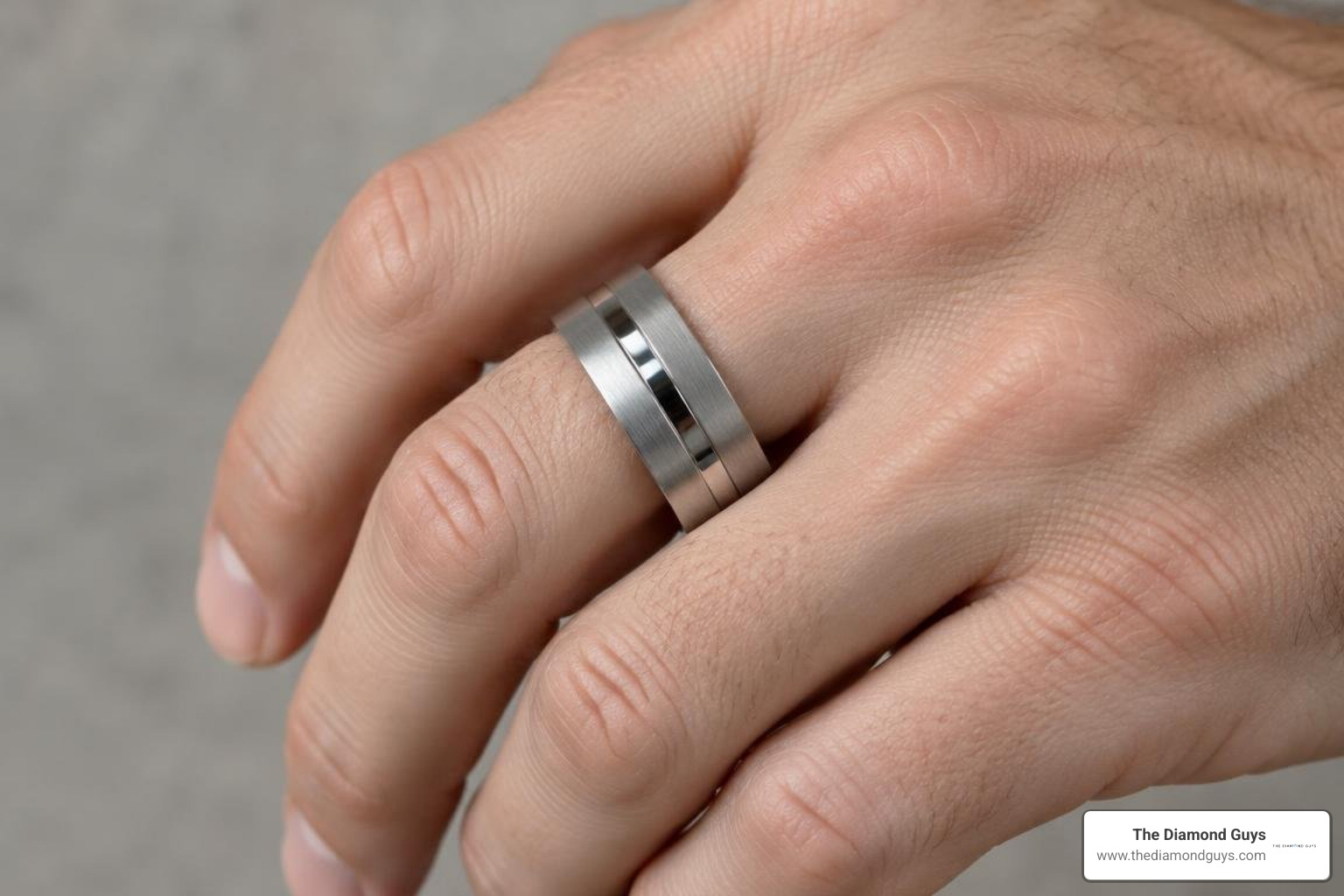
Textures, Contrasts, and Surface Finishes
A 10mm surface allows you to combine multiple finishes on a single ring without visual clutter:
- Satin and Brushed Textures: Satin and brushed finishes soften the reflective glare of wide metal surfaces, disguising minor daily scuffs and creating a contemporary matte appearance.
- Multi-Tone Combinations: Pairing warm rose or yellow gold with cool white metals adds visual depth, exemplified by distinctive two-tone wedding bands.
- Carved Patterns & Textures: Geometric grooves, step-down edges, and hand-carved channels add architectural structure. Explore contemporary carved gold designs or tactile sandpaper and diamond brush finishes to see how dynamic textures elevate wide band profiles.
Customization Options for a 10mm Wedding Band
Customizing an extra-wide band transforms a wedding ring into a personal heirloom:
- Natural & Rare Inlays: The 10mm width easily accommodates solid inlays such as exotic woods (like Hawaiian Koa or Macassar Ebony), Gibeon meteorite, carbon fiber, and ethically sourced deer antler.
- Gemstone Accents: Subtly recessed gemstones provide refined sparkle. Choosing subtle diamond wedding bands or flush-set black diamonds adds distinction while maintaining a clean, low-profile exterior.
- Laser & Hand Engraving: With substantial inner and outer surface area, wide rings accommodate detailed interior laser engravings—including personal handwriting, coordinates, or significant dates—with up to 25 characters fitting comfortably.
Pricing, Maintenance, and Resizing Realities
Because wide rings require more raw material and specialized fabrication, pricing and care differ from narrower bands.
Price Considerations
- Material Volume: A 10mm ring in 14K or 18K solid gold uses significantly more raw precious metal than a 4mm band. As a result, solid gold and platinum options generally range between $1,200 and $3,500+, depending on gold market rates and finger size.
- Alternative Metal Value: Alternative metals such as tungsten, titanium, and cobalt chrome provide broad aesthetic coverage at accessible price points, typically ranging from $150 to $600.
- Custom Craftsmanship: Exotic inlays (such as genuine meteorite or multi-layered Damascus steel) require specialized artisan labor, with bespoke designs ranging from $800 to $4,000+.
Maintenance and Cleaning
- Routine Cleaning: Wash your band weekly using warm water, mild dish soap, and a soft-bristle toothbrush to prevent soap and lotion buildup along the interior edges.
- Inlay Protection: If your band contains organic inlays such as wood or antler, avoid prolonged water submersion, steam cleaners, and harsh chemical cleaners to preserve protective resin seals.
- Polishing: Solid gold and platinum can be professionally polished to remove surface wear, whereas alternative metals require only periodic home cleaning.
Frequently Asked Questions About Extra-Wide Rings
Are 10mm wedding bands comfortable for everyday wear?
Yes, provided they feature a comfort-fit interior and are properly sized. Because wide bands cover more skin, sizing up by approximately half a size prevents tight pinching and accommodates natural finger swelling throughout the day.
Can a 10mm wedding band be resized later?
It depends on the metal. Solid gold, platinum, and tantalum bands can typically be resized by skilled jewelers. However, rings crafted from tungsten carbide, titanium, ceramic, or rings featuring continuous organic inlays (such as wood or meteorite) cannot be resized using traditional techniques and must be replaced under a size-exchange program if your finger size changes.
How much does a solid 10mm wedding band cost?
A solid gold or platinum 10mm band generally costs between $1,200 and $3,500 due to the high volume of precious metal required. Alternative metal bands (such as titanium or tungsten) generally range from $150 to $600, while custom artisan bands featuring rare inlays range from $800 to over $4,000.
Conclusion
A 10mm wedding band offers a bold, modern look with room for custom engravings and mixed-metal designs. Prioritizing a comfort-fit interior ensures that your ring feels natural and comfortable through decades of daily wear.
At The Diamond Guys, we specialize in guiding you toward jewelry that matches your lifestyle and aesthetic. Whether you are exploring solid precious golds, high-performance tantalum, or fully custom multi-metal designs, our team provides ethical sourcing, expert craftsmanship, and a tailored shopping experience.
For complete assistance in selecting your ideal ring profile, consult our expert guide to choosing men's wedding rings or visit our showroom to try on extra-wide bands in person.


