

How Much Do 18k Diamond Earrings Cost
Key Factors That Determine 18k Diamond Earrings Price
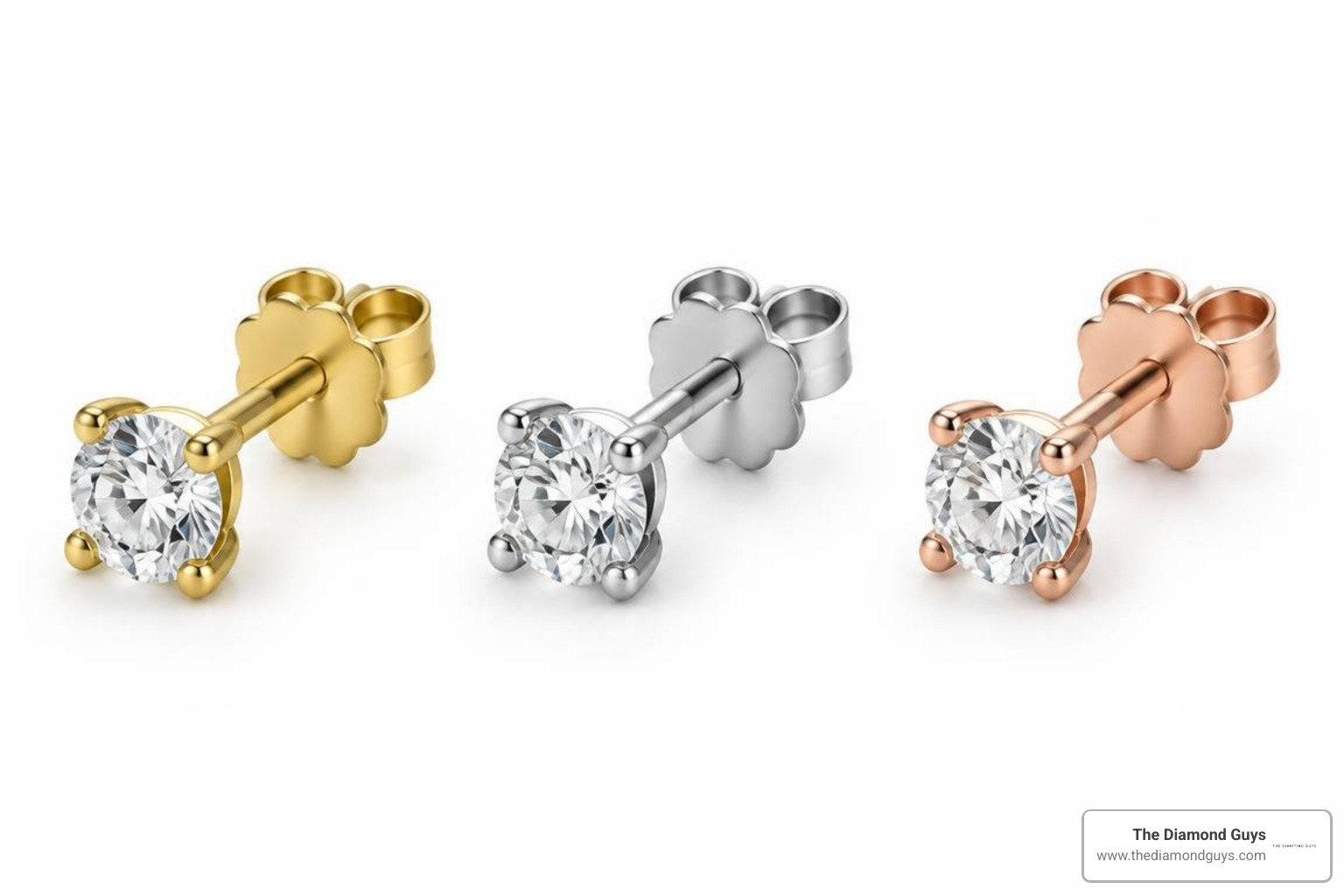
In practical terms, 18k diamond earrings price generally ranges from about $500 for modest solitaire studs up to $12,000 or more for elaborate multi-carat hoop and drop designs. The final cost depends on the gold weight, diamond quality, and setting complexity. When assessing what shapes the price tag of fine jewelry, the choice of metal is the foundation of the piece. Karatage measures the ratio of pure gold to other alloy metals on a 24-part scale. Pure 24k gold is naturally soft, making it unsuitable for securing precious stones on its own.
To create durable, everyday wearable jewelry, gold is alloyed with stabilizing metals such as copper, silver, nickel, or zinc. In an 18-karat piece, 18 out of 24 parts—or exactly 75%—are pure gold, with the remaining 25% consisting of alloy metals. By comparison, 14k gold contains 58.3% pure gold, and 10k gold holds 41.7%.
Because 18k gold contains significantly more pure gold per gram than lower purities, the underlying raw material cost is inherently higher. Precious metal spot prices directly dictate the baseline cost to cast a pair of earring mountings. Heavier designs, such as wide-band hoops or solid bezel mountings, require more grams of gold, which naturally elevates the total price relative to minimalist four-prong mountings.
Beyond raw gold weight, standard foundry labor, casting, finishing, and metal markups contribute to the overall setting cost.
How Diamond 4Cs Impact 18k Diamond Earrings Price
While the gold provides structural integrity and rich color, the diamonds themselves typically account for the largest portion of the total cost. Diamond valuation revolves around the globally recognized 4Cs:
- Carat Weight: Diamond pricing does not scale in a simple straight line; it jumps exponentially at key milestone weights (such as 0.50 ct, 1.00 ct, and 1.50 ct). Earring weights are usually listed as Carat Total Weight (ctw), which combines the weight of both earrings. A 1.00 ctw pair features two 0.50 ct diamonds. Because larger individual rough diamonds are much rarer in nature, two 0.50 ct stones cost noticeably less than a single 1.00 ct stone of identical grade.
- Cut Quality: Cut is the single most important factor determining a diamond's sparkle and visual fire. An Excellent or Ideal cut maximizes light return, making the stone appear brighter and often visually larger. Poorly cut diamonds lose light through the bottom or sides, appearing dull even if they have high color and clarity. Precision cutting requires more raw diamond material to be polished away, commanding a modest price premium that yields massive aesthetic dividends.
- Color Grade: Graded on an alphabetical scale from D (colorless) to Z (light color), diamonds become increasingly rare the closer they are to D. For earrings, near-colorless grades (G through J) offer exceptional value because slight tinting is nearly impossible to detect when worn on the ear, especially when set in rich 18k yellow or rose gold.
- Clarity: Clarity evaluates internal inclusions and surface blemishes from Flawless (FL) down to Included (I1-I3). Since earrings are generally viewed from a conversational distance rather than under a 10x jeweler's loupe, eye-clean stones in the VS1 to SI1 ranges deliver beautiful visual performance without the steep price premiums of VVS or Flawless diamonds.
Independent diamond grading certification (such as from GIA or IGI) ensures you receive the exact specifications you pay for. Additionally, the choice between natural and lab-grown diamonds provides significant flexibility. Lab-grown diamonds share identical optical, chemical, and physical properties with mined diamonds but are produced via advanced technological processes, allowing shoppers to secure larger stones or higher 4C grades at accessible price tiers.
Craftsmanship, Setting Types, and Metal Color Variations
The craftsmanship and engineering behind the setting also play a key role in the final price:
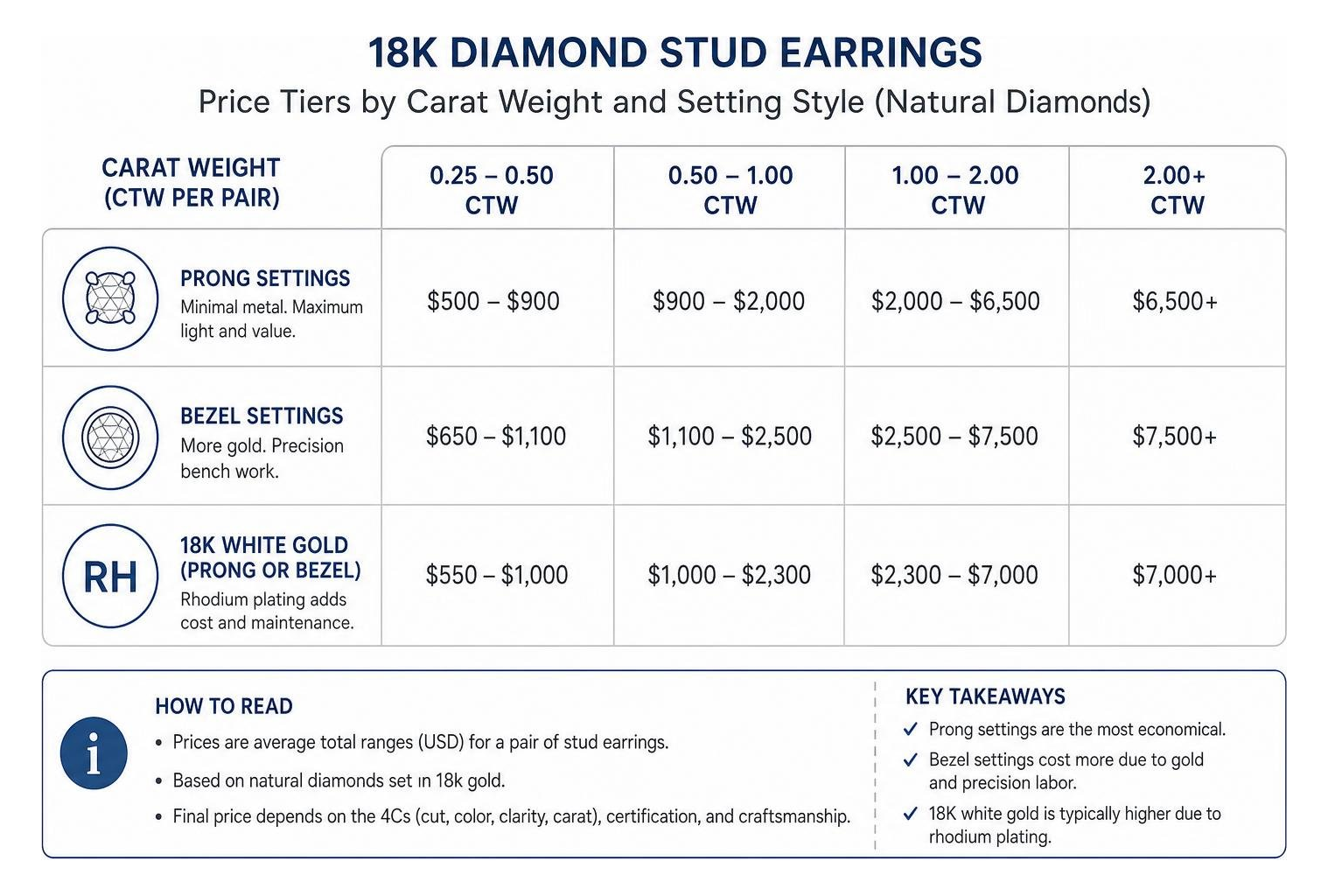
- Prong Settings: Classic three-prong (martini) and four-prong settings use minimal metal, allowing maximum light into the diamond while keeping labor and metal costs economical.
- Bezel Settings: A bezel wraps a complete or semi-complete rim of 18k gold around the perimeter of the diamond. This style requires precise bench labor to seat the stone flush and uses more precious metal, resulting in higher production costs.
- Rhodium Plating for White Gold: 18k white gold is an alloy of pure yellow gold mixed with white metals such as nickel, silver, or palladium. To achieve a bright mirror-white finish, it is electroplated with rhodium, an extremely rare and valuable platinum-group metal. This extra manufacturing step—and its periodic re-plating maintenance over time—often makes 18k white gold slightly more expensive than standard yellow gold.
If you are exploring classic styles, these 18k white gold diamond stud earrings showcase timeless prong architecture, while decorative designs like these 18k yellow gold flower diamond stud earrings illustrate how detailed artisanal metalwork shapes the final piece.
Average Cost Breakdown by Popular Earring Styles
Earring designs range from subtle everyday essentials to elaborate statement pieces. Understanding typical price expectations across various styles helps establish a clear budget.
Explore our broader diamond earrings collection to compare different silhouettes, or reference the general pricing benchmarks below for natural diamonds set in 18k gold:
| Earring Style | Typical Total Carat Weight (ctw) | Average Price Range (USD) | Key Price Influences |
|---|---|---|---|
| Solitaire Studs | 0.25 ctw – 2.00+ ctw | $500 – $6,500+ | 4Cs of the two center stones, cut precision, certification |
| Cluster & Halo Studs | 0.30 ctw – 1.50 ctw | $600 – $2,800 | Number of accent stones, setting labor, design intricacy |
| Diamond Huggies | 0.15 ctw – 0.75 ctw | $650 – $2,200 | Mechanism precision, channel or pavé setting work, gold weight |
| Inside-Out Hoops | 1.00 ctw – 5.00+ ctw | $1,800 – $12,000+ | Large stone count, dual-surface stone setting, structural gold volume |
| Drop & Dangle Earrings | 0.50 ctw – 3.00+ ctw | $1,200 – $8,500+ | Articulation, custom fabrication, multiple diamond shapes |
Diamond Studs and Cluster Earrings
Studs remain the most popular style due to their versatility and clean lines. Solitaire studs feature a single diamond resting in each ear. A petite 0.50 ctw pair typically ranges between $800 and $1,500, while a larger 2.00 ctw pair can range from $5,000 to well over $15,000 depending on color, clarity, and natural diamond origin.
Cluster earrings offer an attractive alternative for shoppers seeking expansive visual surface area. By arranging multiple smaller diamonds closely together, designs like halo mountings or three-stone arrangements mimic the look of a larger single stone at a fraction of the cost.
To explore versatile stud styles, browse our curated diamond stud earrings collection or view the multi-stone geometry of these 18k white gold three stone diamond cluster stud earrings.
Diamond Hoops and Huggies
Hoops and huggies incorporate diamonds along curved bands of gold, requiring precise stone matching so every diamond shares consistent color, clarity, and dimensions.
Huggies fit closely around the earlobe, making them durable options for everyday wear. You can explore a variety of close-fitting designs in our diamond huggie hoop earrings collection. For a sleek, snag-free channel design, consider these 18k white gold channel set diamond hoop earrings.
When expanding to larger hoop diameters, inside-out designs represent the peak of craftsmanship. These mount diamonds facing forward on both the exterior front and interior back curves, ensuring continuous brilliance from every angle. Pieces like these 18k white gold diamond inside outside hoop earrings command higher prices due to the sheer number of matched stones and substantial gold framework required.
Evaluating Market Value, Buying Channels, and Hidden Costs
Beyond the physical materials, where and how you purchase diamond earrings influences the total investment.
- Retail vs. Online Markups: Traditional big-box brick-and-mortar jewelers frequently carry significant overhead costs—such as expensive mall leases and extensive retail staffing—which can translate into retail markups of 100% to 300%. Specialized private jewelers operating efficient studio showrooms balance personalized, one-on-one expert guidance with fair, transparent pricing.
- Sales Tax: Depending on your state and local tax regulations, sales tax can add 5% to 10% to the checkout total.
- Independent Appraisals: An official insurance appraisal document from a credentialed gemologist (confirming replacement value, diamond weights, and metal purity) is essential for personal property insurance policies.
- Insurance Coverage: Comprehensive jewelry insurance typically costs roughly 1% to 2% of the appraised value annually, protecting against loss, theft, or damage.
- Secure Shipping: Insured, signature-required delivery ensures peace of mind when purchasing fine jewelry.
Understanding New vs. Pre-Owned 18k Diamond Earrings Price
Purchasing pre-owned or estate diamond earrings can offer noticeable upfront savings, but several factors determine their true secondary market value:
- Intrinsic Material Value: Pre-owned standard commercial earrings are often priced close to their scrap gold melt value plus wholesale diamond pricing, resulting in a 30% to 60% discount compared to brand-new retail pieces.
- Condition and Refurbishment: Estate pieces may have worn prong tips, loose settings, bent posts, or surface scratches that require bench repair, ultrasonic cleaning, and fresh rhodium plating.
- Vintage and Heritage Premiums: Rare antique items (such as authentic Art Deco or Victorian earrings) or pieces from iconic heritage design houses frequently retain or increase their value over time, commanding collector premiums well above their raw material worth.
Frequently Asked Questions About 18k Diamond Earring Costs
Why are 18k white gold diamond earrings sometimes more expensive than yellow gold?
18k white gold earrings often carry a 10% to 20% premium compared to yellow gold. This difference stems from the complex alloying process required to bleach yellow gold white, as well as the final electroplating bath in liquid rhodium. Rhodium is an exceptionally scarce precious metal, and this specialized finishing process adds production labor and material cost.
What is the typical starting price for a 1-carat pair of 18k diamond studs?
A 1.00 ctw pair of 18k natural diamond studs (featuring two 0.50 ct diamonds) generally starts around $1,800 to $2,500 for commercial eye-clean grades (I1-I2 clarity, I-J color). For premium certified stones (VS clarity, F-G color, Excellent cut), prices typically range from $3,000 to $4,500. Choosing lab-grown diamonds can significantly reduce the entry price for a 1.00 ctw pair while maintaining high color and clarity grades.
Does 18k gold hold its value better than 14k gold for earrings?
Yes, from a pure precious metal perspective. Because 18k gold contains 75% pure gold compared to 14k gold's 58.3%, its underlying scrap and melt value is consistently higher on global commodities markets. While jewelry should primarily be purchased for wear and enjoyment rather than pure metal speculation, 18k gold provides higher intrinsic gold equity over the long term.
Conclusion
Determining the right price for 18k diamond earrings comes down to balancing metal purity, diamond quality, design complexity, and honest retailer margins. Prioritizing diamond cut quality ensures maximum brilliance, while selecting near-colorless, eye-clean stones allows you to optimize your budget effectively.
At The Diamond Guys, our 5-star rated team in Scottsdale, AZ, is committed to providing transparent education, ethical sourcing, and custom design expertise without high-pressure sales tactics. Whether you are searching for timeless daily studs or custom hoops, our specialists can guide you toward the perfect pair. To learn more about selecting the right size, setting, and proportions, explore our essential guide to choosing diamond earrings.


