

3ct Diamond Tennis Bracelets: From Lab-Grown to Classic Luxury
The Best 3ct Diamond Tennis Bracelets in 2026: Quick Picks
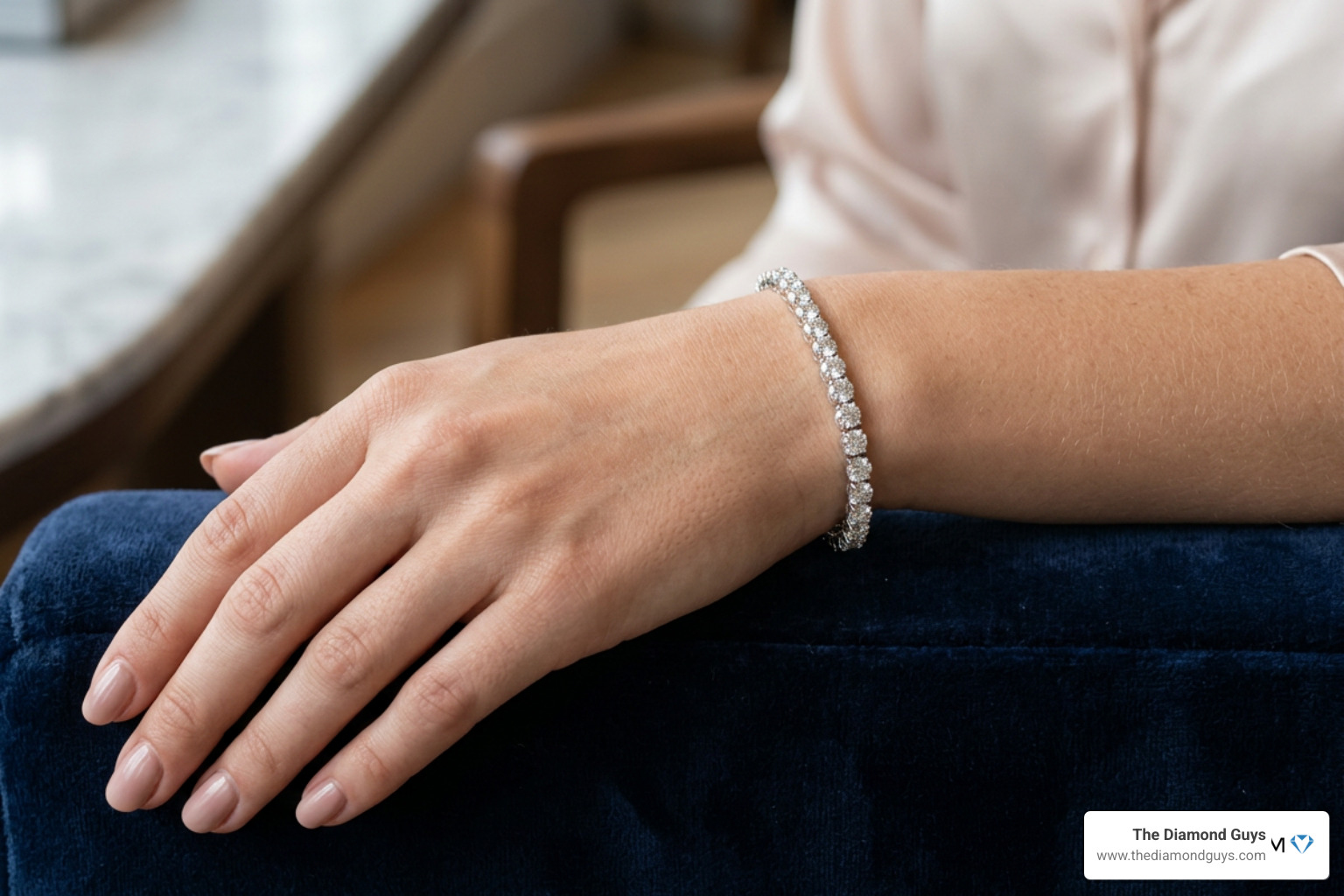
If you want a quick answer before diving deeper, here's what you need to know about buying a 3ct diamond tennis bracelet:
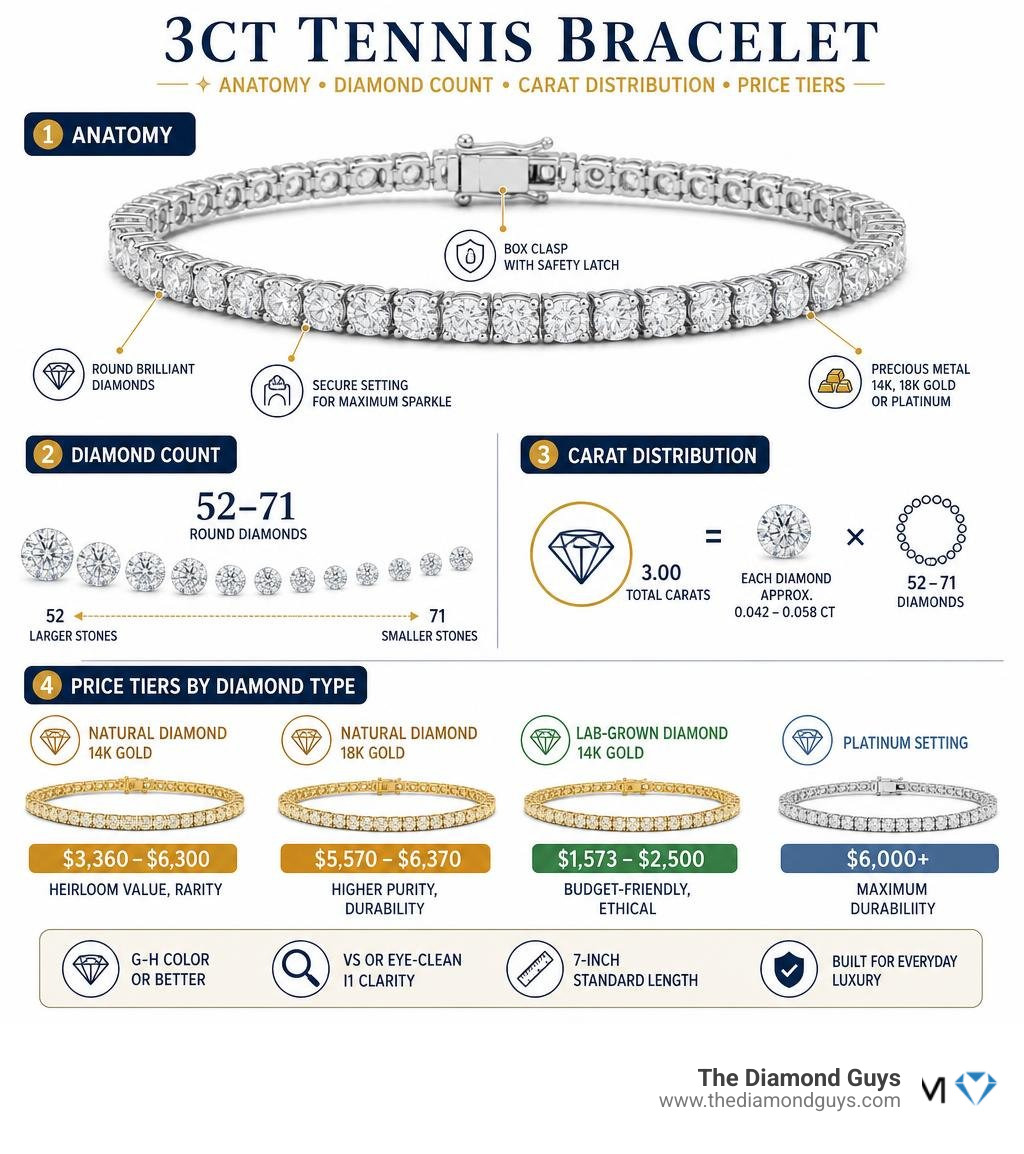
| Type | Price Range | Best For |
|---|---|---|
| Natural diamond, 14k gold | $3,360 – $6,300 | Heirloom value, rarity |
| Natural diamond, 18k gold | $5,570 – $6,370 | Higher purity, durability |
| Lab-grown diamond, 14k gold | $1,573 – $2,500 | Budget-friendly, ethical |
| Platinum setting | $6,000+ | Maximum durability |
Key specs to look for:
- 52–71 round brilliant diamonds
- G-H color or better
- VS or eye-clean I1 clarity
- Box clasp with safety latch
- 7-inch standard length
Few pieces of fine jewelry balance everyday wearability with genuine luxury the way a 3ct diamond tennis bracelet does. Whether you're drawn to the icy shimmer of white gold, the warmth of yellow gold, or the budget-friendly appeal of lab-grown stones, this is a purchase that rewards careful research — and the stakes are high enough that getting it right really matters.
There's a wide gap between a $1,500 lab-grown option and a $6,000+ natural diamond bracelet in 18k gold. Understanding why that gap exists — and which side of it makes sense for you — is exactly what this guide is here to help with.
I'm Morgan Price, a backlink and content strategy specialist with hands-on experience evaluating fine jewelry sources and researching the 3ct diamond tennis bracelet market across dozens of retailers and product tiers. Let's walk through everything you need to make a confident, informed purchase.
Related content about 3ct tennis bracelet diamond:
What is a 3ct Tennis Bracelet Diamond and Why is It a Classic?
To understand the enduring appeal of the 3ct tennis bracelet diamond, we first have to look at what that "3ct" actually means. In a tennis bracelet, the 3-carat designation refers to the total carat weight (tcw) of all the diamonds combined, rather than a single, massive stone.
Because the weight is distributed evenly across the entire length of the wrist, a standard 7-inch 3ct tennis bracelet diamond typically features anywhere from 52 to 71 individual round brilliant diamonds. Each individual diamond weighs roughly 0.04 to 0.06 carats. This uniform distribution creates a continuous, unbroken line of brilliant light that wraps gracefully around your wrist.
Most classic designs utilize a four-prong setting to cradle each individual stone. This style maximizes the amount of light entering the sides of the diamonds, which is what gives the bracelet its signature fire and brilliance.
Historically, this style was known simply as a "line bracelet." However, its place in pop culture was cemented during the 1978 US Open, when tennis champion Chris Evert paused a match to search for her dropped diamond line bracelet. The incident forever linked the sporty, active lifestyle with high-end diamond elegance, renaming the piece the "tennis bracelet."
Today, the 3ct option is widely considered the absolute sweet spot of diamond bracelets. It is substantial enough to catch the eye from across a room, yet delicate enough to wear comfortably to the office, the tennis court, or a formal gala. Its sheer versatility is why it remains an essential staple in any modern jewelry collection.
Natural vs. Lab-Grown Diamonds: Price and Quality Comparison
When shopping for a 3ct tennis bracelet diamond in 2026, one of the most important decisions you will make is choosing between natural (mined) diamonds and lab-grown diamonds. Both options offer stunning beauty, but they serve different budgets, values, and long-term goals.
| Feature | Natural 3ct Diamond Tennis Bracelet | Lab-Grown 3ct Diamond Tennis Bracelet |
|---|---|---|
| Average Price | $3,360 – $6,300 | $1,500 – $2,500 |
| Chemical Composition | 100% Carbon (Crystalline) | 100% Carbon (Crystalline) |
| Standard Quality | G-H Color, I1 to VS Clarity | E-F Color, VS Clarity |
| Origin | Earth-mined over billions of years | Cultured in high-tech laboratories |
| Heirloom Value | High; retains long-term rarity value | Low; value is driven by wearability |
At The Diamond Guys, we help clients navigate this choice daily at our Scottsdale, AZ and Los Angeles, CA showrooms. Let’s break down these two paths so you can decide which fits your lifestyle.
Choosing a Lab-Grown 3ct Tennis Bracelet Diamond
Lab-grown diamonds are chemically, physically, and optically identical to natural earth-mined diamonds. They exhibit the exact same fire, brilliance, and hardness (10 on the Mohs scale). The primary difference lies in how they are made—and what they cost.
Opting for a lab-grown 3ct tennis bracelet diamond offers massive cost savings. For example, a high-quality 3ct lab-grown bracelet in 14k white gold is widely available for around $1,572.99. Because lab-grown stones are less expensive to produce, manufacturers can afford to use incredibly high-quality diamonds in these bracelets. It is common to find lab-grown tennis bracelets featuring colorless E-F color and flawless-to-the-naked-eye VS clarity diamonds at a fraction of the cost of their natural counterparts.
For the modern, budget-conscious buyer who wants maximum sparkle and a pristine appearance without the luxury price markup, a lab-grown tennis bracelet is an incredibly smart choice.
Selecting a Natural 3ct Tennis Bracelet Diamond
For many, the appeal of a diamond lies in its story. Natural diamonds were formed deep within the earth over billions of years under immense heat and pressure. This finite, natural origin gives mined diamonds an inherent rarity and long-term heirloom value that lab-grown alternatives simply cannot replicate.
Natural 3ct diamond tennis bracelets are commonly priced between $3,360 and $5,500 in 14k yellow or white gold. Depending on the retailer and the specific quality of the stones, some premium versions can reach up to $6,300. A standard commercial-grade natural bracelet might feature average G-H color and I1 clarity diamonds.
While natural diamonds require a larger upfront investment, they carry a sense of history and permanence. If you are purchasing a piece of jewelry to mark a major life milestone—like a milestone wedding anniversary—and you plan to pass it down through generations, natural diamonds are the classic choice.
Key Factors That Influence the Price of a 3ct Tennis Bracelet
While carat weight is a major factor, two bracelets that both weigh exactly 3 carats can have vastly different price tags. Understanding the underlying factors that influence pricing will help you spot a genuine deal and avoid overpaying.
Beyond the raw materials, retail markups play a significant role. Traditional brick-and-mortar jewelry stores often have multiple layers of middle-men, whereas direct-to-consumer models or boutique custom jewelers can offer more competitive pricing. Additionally, the diamond count matters: a bracelet made of 52 slightly larger diamonds requires more valuable individual stones than a bracelet made of 71 smaller diamonds, even though both total 3 carats. Craftsmanship, setting style, and customization also play heavily into the final cost.
Diamond Quality: Cut, Color, and Clarity Standards
The "Four Cs" (Cut, Color, Clarity, and Carat Weight) apply to tennis bracelets just as they do to engagement rings. However, because a tennis bracelet features dozens of small stones rather than one large centerpiece, the standards are applied slightly differently.
- Cut: This is the most critical factor for a tennis bracelet. Round brilliant cut diamonds must be cut with precise proportions to maximize light return. If the cut is poor, the bracelet will look dull and lifeless, regardless of its color or clarity.
- Color: Color grades for tennis bracelets typically range from colorless (D-F) to near-colorless (G-I). In a 3ct tennis bracelet diamond, G-H color is the industry standard sweet spot. It looks bright white to the naked eye when set in white gold or platinum, without the steep price premium of D-F color grades.
- Clarity: Clarity refers to the presence of internal inclusions. While VS clarity is ideal and completely eye-clean, many natural 3ct bracelets use SI1 or I1 clarity diamonds to keep prices accessible. Because the individual diamonds are small, minor inclusions are rarely visible to the naked eye without a jeweler's loupe.
Metal Settings: Gold vs. Platinum Options
The metal you choose holds the diamonds in place and forms the backbone of your bracelet. The most common options are yellow gold, white gold, rose gold, and platinum.
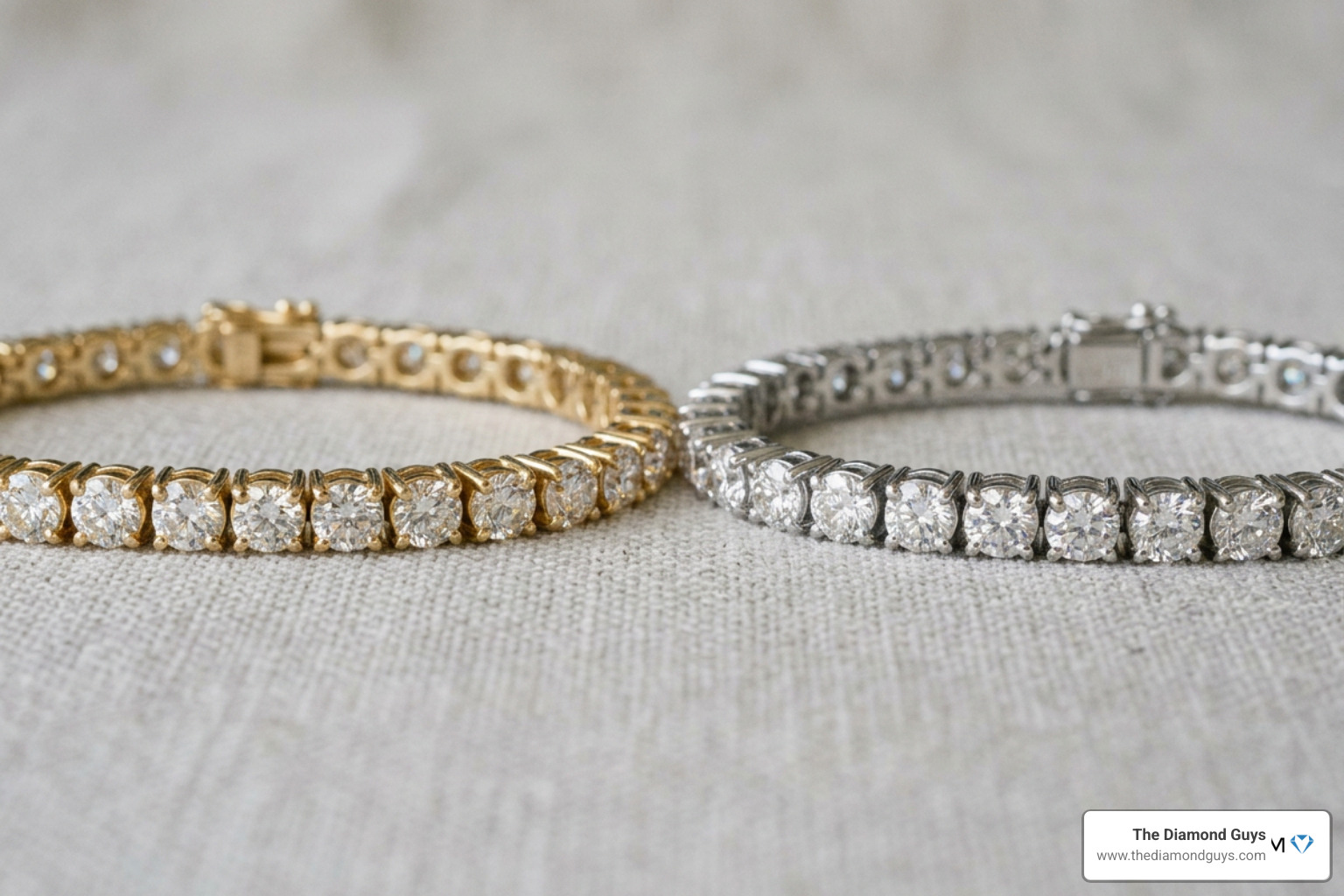
- 14k Gold: Composed of 58.3% pure gold mixed with durable alloy metals, 14k gold (available in yellow, white, and rose) is the most popular choice. It offers excellent durability for daily wear and holds prongs securely.
- 18k Gold: Containing 75% pure gold, 18k gold is highly prized for its rich, warm color and natural tarnish resistance. It is slightly softer than 14k gold, making it a luxurious option for special occasion wear.
- Platinum: Platinum is a naturally white, dense, and hypoallergenic metal. It does not require rhodium plating to maintain its white shine (unlike white gold) and is incredibly secure. However, it is heavier and carries a price premium.
For a classic look, you can explore options like the 14k White Gold Natural Diamond Tennis Bracelet 3 ct. tw. at The Diamond Guys.
Clasp Types and Safety Features
A tennis bracelet is only as good as its clasp. Because these bracelets are worn on the wrist—an area prone to bumping against desks, doors, and steering wheels—security is paramount.
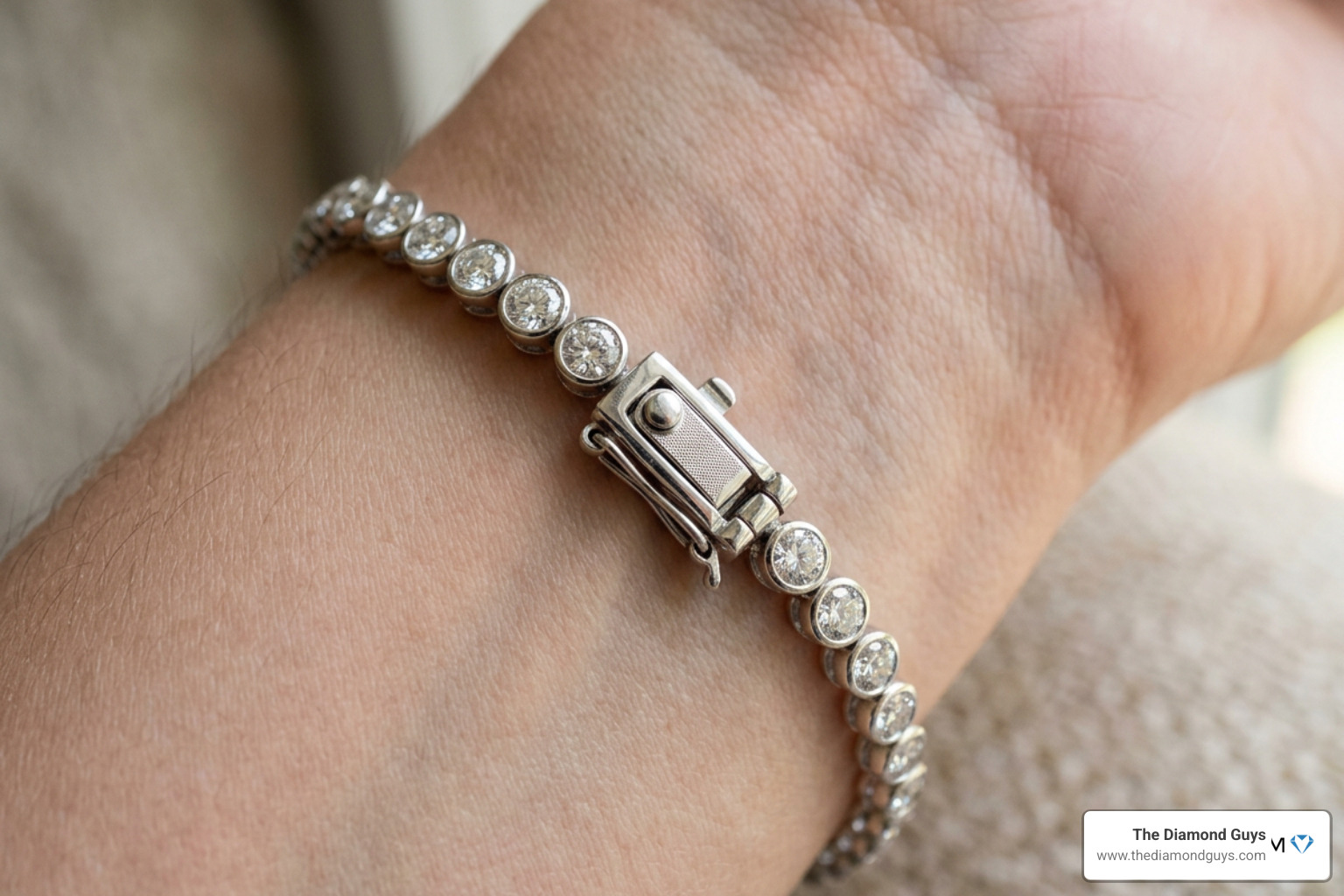
The most secure and visually seamless option is the box clasp with a hidden safety latch. The tongue of the clasp clicks firmly into the box, while one or two wire safety latches clip over the side for secondary security. Other styles include the push lock and custom S-link designs that integrate the clasp directly into the flow of the diamonds. Always ensure your bracelet has a secondary safety feature before wearing it out.
Sizing, Authenticity, and Buying Guide
Buying a piece of fine jewelry should be an exciting, stress-free experience. To ensure you get the perfect piece, you need to focus on three practical steps: sizing, verification, and understanding store policies.
How to Measure and Find the Perfect Fit
Getting the right fit is crucial for both comfort and security. A tennis bracelet that is too tight will pinch and strain the links, while one that is too loose risks snagging or sliding off your hand.
To find your size, wrap a flexible measuring tape around your wrist bone. Add 1 to 2 centimeters (or about 0.5 to 0.75 inches) to your measurement to find your ideal bracelet length.
- Standard fit: The standard length for women's tennis bracelets is 7 inches.
- The "Drape" Test: A perfectly fitted tennis bracelet should drape gently on the top of your hand. You should be able to comfortably slip one finger between the bracelet and your wrist.
If you need a custom length, many jewelers can shorten a standard bracelet by removing links, though adding links later is much more difficult. For more tips, check out the Tennis Bracelet Sizing Guide at The Diamond Guys.
Verifying Authenticity and Diamond Certification
When buying a 3ct tennis bracelet diamond, you must verify that the diamonds are authentic and match the jeweler's claims.
For high-end natural or lab-grown bracelets, look for independent grading reports from respected gemological laboratories like the GIA (Gemological Institute of America) or the IGI (International Gemological Institute). While individual grading reports for every single tiny diamond in a tennis bracelet are rare (as it would dramatically drive up the cost), reputable jewelers will provide a master appraisal certificate detailing the total carat weight, average color, average clarity, and metal purity.
Additionally, ensure your jeweler sources natural diamonds in compliance with the Kimberley Process, guaranteeing they are conflict-free. To see a wide variety of certified styles, you can browse the collections at The Diamond Guys.
Frequently Asked Questions About 3ct Diamond Tennis Bracelets
What is the average price of a 3ct diamond tennis bracelet?
The average price of a natural 3ct diamond tennis bracelet typically ranges from $3,360 to $5,500 in 14k gold. Premium natural versions with higher clarity (VS) and color (F-G) can range from $5,500 to $6,300+. Meanwhile, high-quality lab-grown 3ct diamond tennis bracelets are much more affordable, usually priced between $1,500 and $2,500.
Can a 3ct tennis bracelet be resized?
Yes, a 3ct tennis bracelet can be resized. Shortening a bracelet is a straightforward process where a jeweler removes one or more diamond links to match your wrist size. (Note: many jewelers charge a small fee for this, and the removed links are returned to you). Lengthening a bracelet is much more difficult and costly, as the jeweler must source matching diamonds and gold links to seamlessly blend into the existing design.
What is the best daily wear metal for a tennis bracelet?
For daily wear, 14k white gold or 14k yellow gold is widely considered the best choice. It offers the perfect balance of gold purity and structural hardness, making it highly resistant to scratches and everyday wear. Platinum is also an outstanding option for daily wear due to its strength and hypoallergenic properties, though it is heavier and more expensive.
Conclusion
A 3ct tennis bracelet diamond is more than just a piece of jewelry; it is a timeless investment in style, elegance, and personal expression. Whether you choose the modern value of lab-grown diamonds or the historic rarity of natural, earth-mined stones, the key is to shop with a jeweler you can trust.
At The Diamond Guys, we pride ourselves on offering a personalized, five-star shopping experience. From our showrooms in Scottsdale, AZ and Los Angeles, CA, we provide expert guidance, ethical sourcing, and custom design services to help you find or create the perfect piece of jewelry. We don't believe in high-pressure sales tactics—just honest education and beautiful craftsmanship.
Ready to explore your options or design a custom tennis bracelet? Visit us in-store or browse The Diamond Guys News & Blog for more expert advice, jewelry trends, and buying guides.


