

The Modern Buyer's Guide to 50 Carat Diamond Earrings
What "50 Carat Diamond Earrings" Usually Means

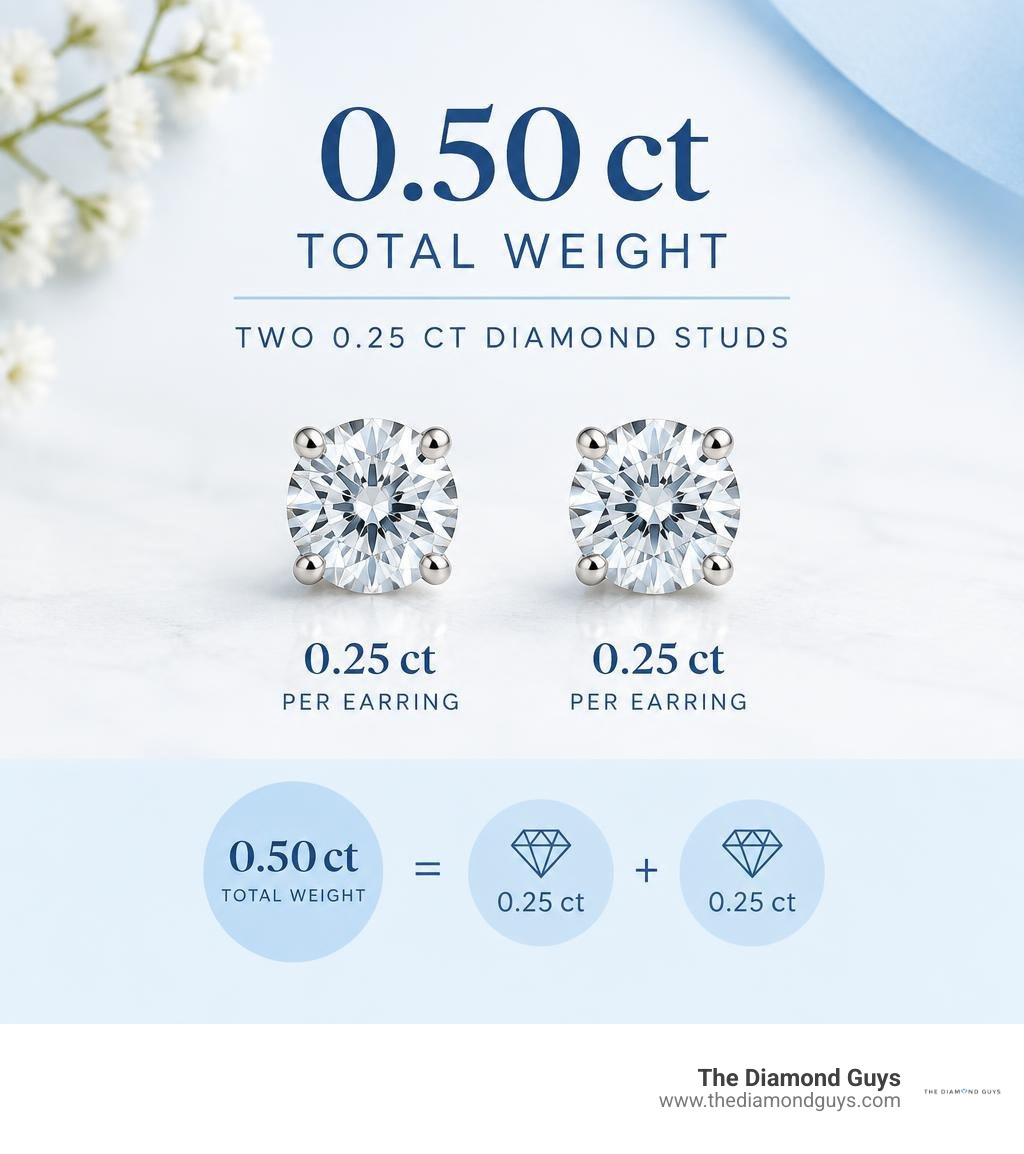
If you are searching for 50 carat diamond earrings, you may mean 0.50 carat total weight (ct. tw.) diamond studs. That is the common half-carat pair: about 0.25 carats in each earring. True 50-carat earrings are exceptionally rare, far larger, and priced in an entirely different category.
For everyday diamond studs, compare these details first:
- Total weight: 0.50 ct. tw. usually means 0.25 ct. per ear.
- Quality: G-H color and SI2 to VS clarity can offer a strong balance of appearance and budget.
- Setting and security: Four-prong baskets in 14k white or yellow gold are classic; screw backs add more security than standard push backs.
- Diamond origin: Natural and lab-grown diamonds look alike chemically and visually, but often differ in price and long-term resale expectations.
I’m Morgan Price, a strategic backlink outreach specialist who turns careful product and market research into useful, trustworthy buying content, including guides on 50 carat diamond earrings and half-carat studs. My work focuses on clear details that help readers compare options without sales pressure.
Important 50 carat diamond earrings terms:
Understanding Total Weight and Size in 50 Carat Diamond Earrings
When shopping for diamond earrings, understanding carat weight terminology is essential. In the fine jewelry trade, jewelers frequently write "0.50 ct. tw." or "50 points" to describe a matched pair of earrings that collectively weigh one-half of a carat. Unless a listing explicitly specifies "0.50 ct. each," the stated number represents the combined carat weight of both stones.
Carat weight measures mass, not physical dimensions, but cut geometry directly dictates a stone's face-up millimeter measurement. A round brilliant natural diamond weighing 0.25 carats (half of a 0.50 ct. tw. pair) typically measures approximately 4.0 to 4.1 mm in diameter. By comparison, a single stone weighing a full 0.50 carats measures roughly 5.0 to 5.2 mm.
Because diamonds are three-dimensional crystals with depth, doubling the carat weight does not double the surface diameter. Instead, a 0.25 ct individual diamond delivers roughly 65% of the visual surface area of a 0.50 ct stone while costing significantly less per carat due to the natural rarity of larger rough gems.
| Measurement Parameter | 0.50 ct. tw. Pair (0.25 ct. per ear) | Single 0.50 ct. Diamond (1.00 ct. tw. pair) |
|---|---|---|
| Typical Round Diameter | ~4.0 mm – 4.1 mm | ~5.0 mm – 5.2 mm |
| Typical Princess Cut Dimensions | ~3.5 mm x 3.5 mm | ~4.4 mm x 4.4 mm |
| Surface Area per Stud | ~13.2 mm² | ~20.4 mm² |
| Visual Lobe Presence | Subtle, balanced, everyday profile | Noticeable, pronounced focal point |
| Total Diamond Weight | 0.50 ct. combined | 0.50 ct. single (1.00 ct. total) |
In fine jewelry manufacturing, a minor tolerance is standard. Total weight can vary by up to 0.05 to 0.10 carat across matched sets without diminishing visual symmetry or structural integrity.
Comparing Natural vs. Lab-Grown Diamonds
Buyers selecting half-carat diamond earrings can choose between natural earth-mined diamonds and lab-grown stones. Both varieties share identical chemical, physical, and optical properties:
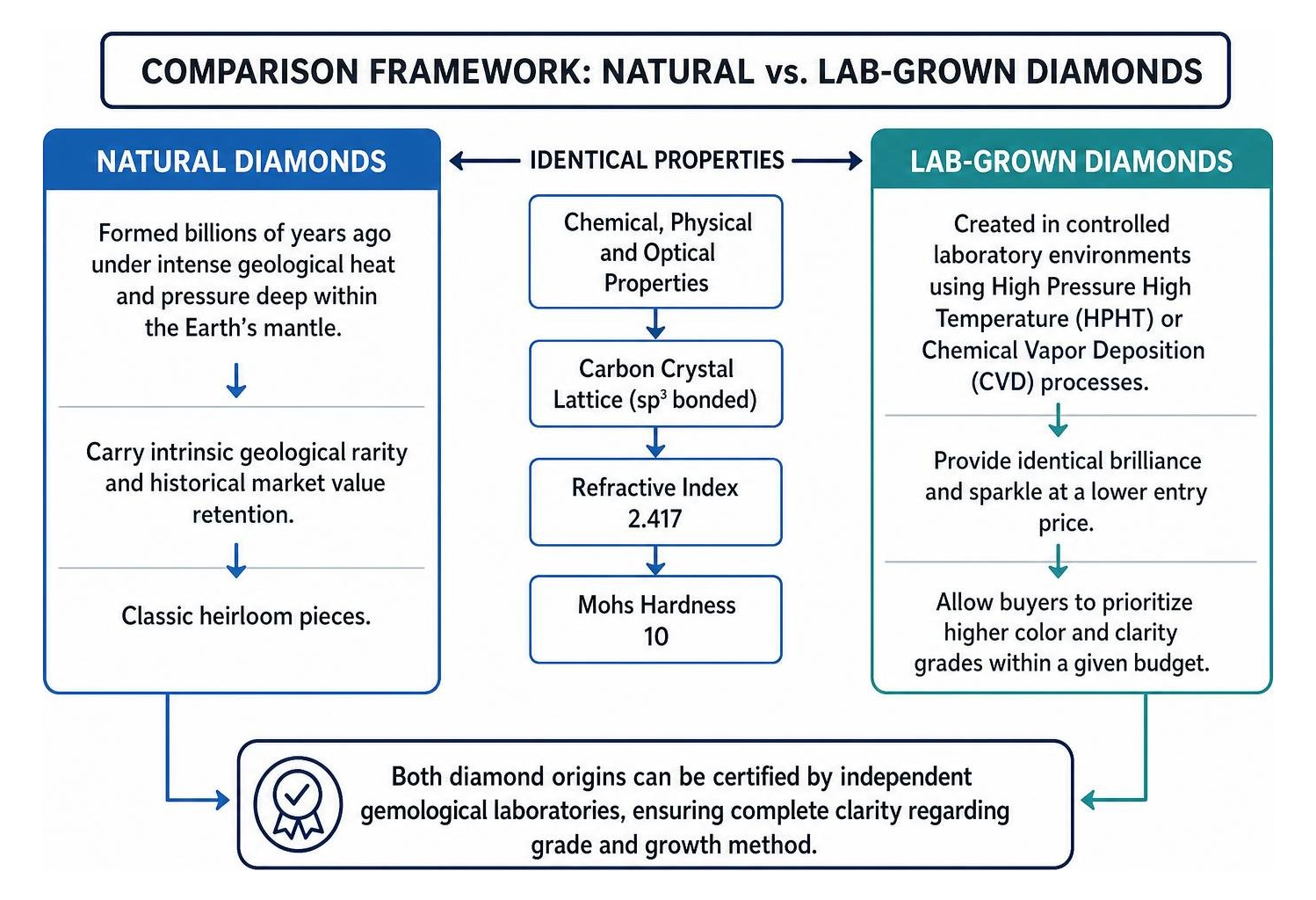
- Natural Diamonds: Formed billions of years ago under intense geological heat and pressure deep within the Earth's mantle. Natural stones carry intrinsic geological rarity and historical market value retention, making them classic heirloom pieces.
- Lab-Grown Diamonds: Created in controlled laboratory environments using High Pressure High Temperature (HPHT) or Chemical Vapor Deposition (CVD) processes. They provide identical brilliance and sparkle at a lower entry price, allowing buyers to prioritize higher color and clarity grades within a given budget.
Both diamond origins can be certified by independent gemological laboratories, ensuring complete clarity regarding grade and growth method.
Diamond Quality Guide: Evaluating the 4Cs for Stud Earrings
Selecting the best balance of the 4Cs (Cut, Color, Clarity, and Carat) for stud earrings requires a slightly different approach than buying a solitaire engagement ring. Because earrings are viewed from conversational distances and in continuous motion, certain factors influence performance more than others.
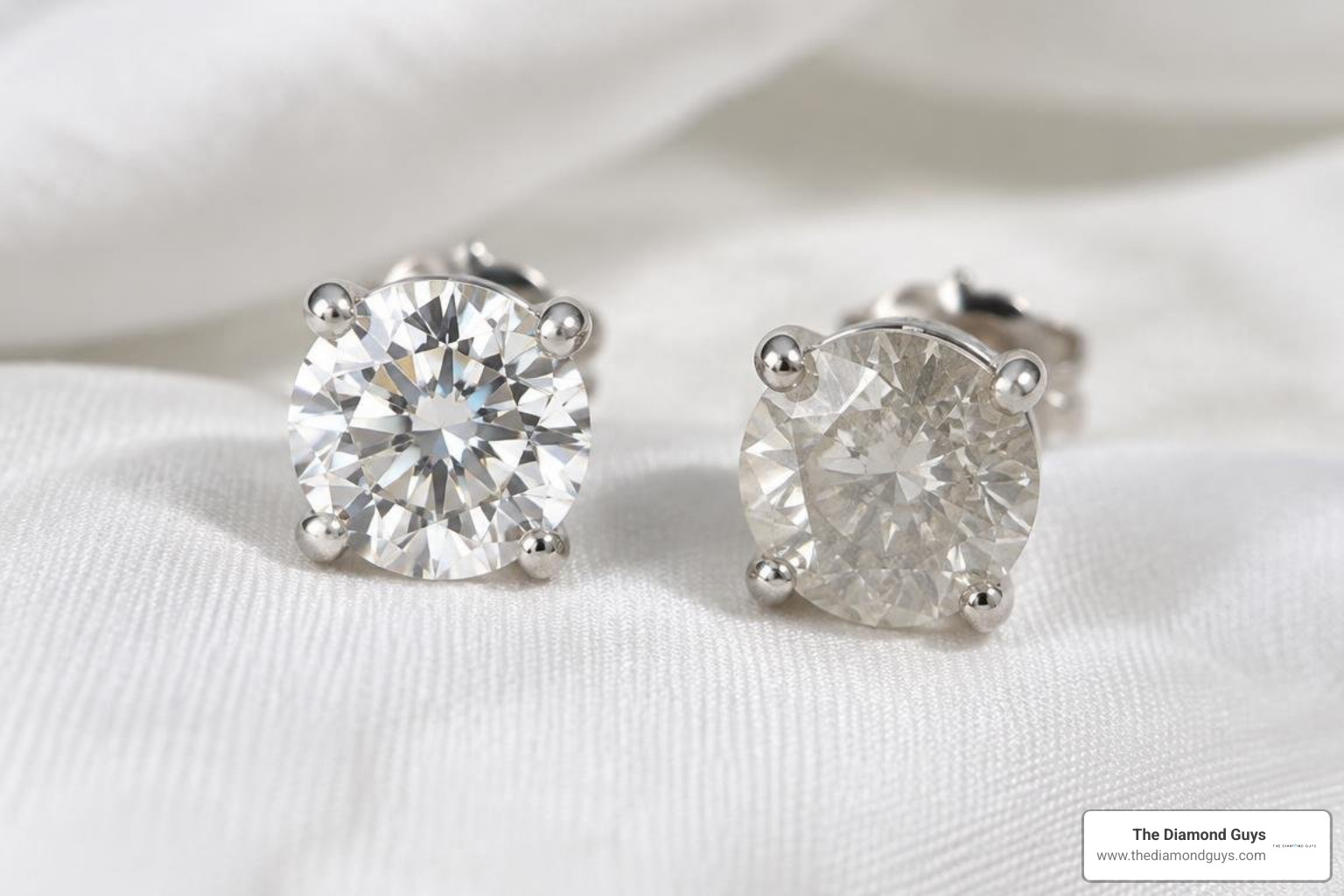
- Cut: Cut is the single most important factor determining sparkle and fire. An Excellent or Ideal cut maximizes light return through the crown facets, ensuring that even a modest 0.25 ct individual stone reflects vivid light across a room. A poorly cut stone will look dark or glassy regardless of its clarity.
- Color: For white metal settings like 14k white gold or platinum, near-colorless diamonds graded G-H provide an icy, bright appearance to the naked eye without the premium price tag of D-F colorless stones. If set in yellow gold, even I-J color diamonds appear bright white against the warm metal backdrop.
- Clarity: For 0.25 ct individual stones, inclusions are tiny and difficult to discern without a 10x jeweler's loupe. Diamonds with VS (Very Slightly Included) clarity are completely eye-clean, showing no visible imperfections. Stones graded SI2 (Slightly Included 2) offer exceptional value; when properly selected, their natural inclusions remain invisible from conversational distance while keeping prices accessible.
Choosing Settings for 50 Carat Diamond Earrings
The mounting holds the gems securely while controlling how much light enters the pavilion facets:
- Four-Prong Basket: The industry standard for round and princess-cut diamonds. Four prongs secure the stone at four distinct compass points while sitting flat against the earlobe.
- Three-Prong Martini: Shaped like a cone, this style allows the diamond to sit deeply into the piercing for a flush, low-profile look that minimizes drooping.
- Bezel Settings: A smooth rim of precious metal encircles the perimeter of the diamond. Bezel settings protect the diamond's girdle from impacts and make the stone appear slightly larger by adding a reflective metallic border.
Metal selection complements your diamond's natural tone. While 14k white gold delivers a sleek, contemporary aesthetic, warm 14k yellow gold paired with princess-cut VS clarity diamonds creates classic visual warmth and dimension.
Backing Types and Daily Wear Security
Selecting the right backing ensures your earrings remain safe during workouts, workdays, and travel:
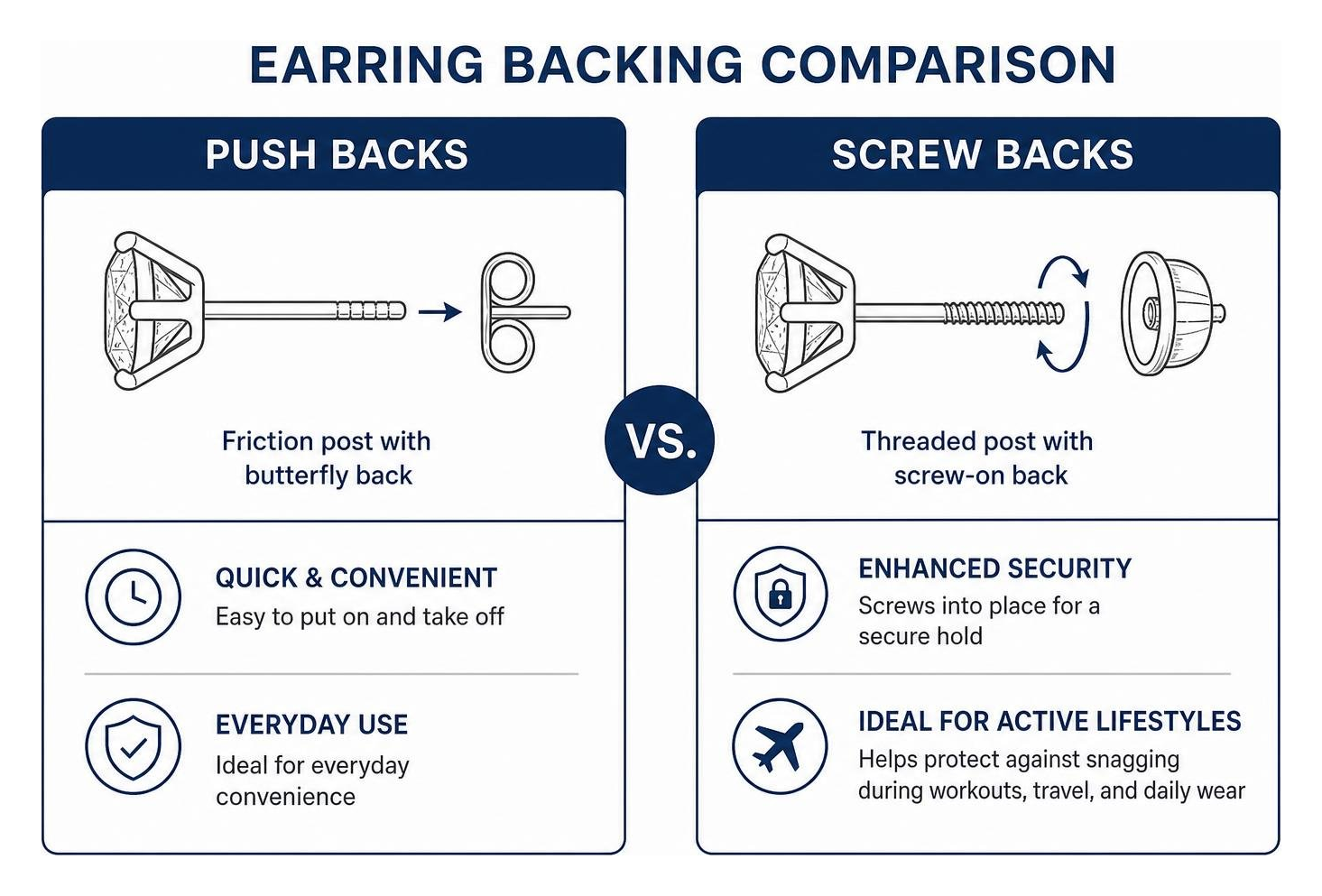
- Standard Push-Backs (Friction Posts): Feature small notches on the post that friction-fit into tension butterflies. They are quick to put on and take off, making them ideal for everyday convenience.
- Screw-Backs: Feature threaded posts where the backing screws into place. Screw-backs provide enhanced mechanical security against snagging on clothing, scarves, or activewear, making them a preferred choice for travel.
- Guardian / La Pousette Backs: Utilize spring-loaded locking mechanisms that grip a specialized grooved post, providing secure protection with the ease of a push mechanism.
Pricing Breakdown and Value Considerations
The retail price for half-carat diamond earrings varies depending on diamond origin, 4C grades, metal purity, and market discounts.
In the natural diamond market, a 0.50 ct. tw. pair set in 14k white gold featuring G-H color and SI2 clarity typically retails around $1,199, with promotional or seasonal discounts bringing market rates to roughly $839 to $900. Estate pieces featuring higher clarity grades (such as princess-cut VS clarity diamonds in 14k yellow gold) often retail near $2,495, frequently trading on the secondary and estate market between $1,200 and $1,300 depending on condition and provenance.
Lab-grown alternatives in equivalent 0.50 ct. tw. configurations often start at lower price points, allowing collectors to optimize stone size or metal selection.
Pricing Factors for 50 Carat Diamond Earrings
- Metal Purity and Weight: 14k gold contains 58.3% pure gold alloyed with durable metals, offering structural resilience for prongs. Upgrading to 18k gold or platinum increases raw material cost due to higher precious metal density and purity.
- Diamond Cutting Precision: Finely proportioned stones cut to exacting symmetry require greater diamond rough removal during cutting, commanding higher market premiums.
- Independent Certification: Laboratory verification from reputable gemological institutes ensures grade accuracy and influences secondary market valuation.
Essential Maintenance and Certification Standards
Proper maintenance preserves the brilliance of diamond earrings over decades of regular wear:
- At-Home Cleaning: Soak your earrings weekly in warm water mixed with a few drops of mild dish soap. Gently brush behind the setting and under the diamond pavilion using an ultra-soft toothbrush to dislodge body oils, lotions, and hairspray residue. Rinse thoroughly under warm running water with the drain closed, then dry with a lint-free cloth.
- Professional Inspection: Have prongs inspected annually by a professional jeweler. Daily friction can gradually wear down gold prongs or loosen tension on stones.
- Certification and Appraisal: When investing in natural or lab-grown diamond earrings, request documentation from an established authority such as the Gemological Institute of America (GIA) or International Gemological Institute (IGI), along with an insurance appraisal from a GIA Graduate Gemologist verifying replacement value.
Frequently Asked Questions About Half-Carat Diamond Earrings
Does 50 carat mean total weight or per earring?
In retail jewelry terminology, "0.50 carat earrings" or "50 point studs" almost always refers to total carat weight (ct. tw.). This means the combined weight of both diamonds equals 0.50 carats, with each individual earring weighing approximately 0.25 carats. When earrings feature 0.50 carats in each ear, they are designated as 1.00 ct. tw.
Which diamond shape appears largest in half-carat studs?
Round brilliant diamonds generally offer the highest light return, but shapes with broad face-up dimensions (like oval cuts or bezel-set princess cuts) can create an illusion of greater surface coverage on the earlobe relative to their carat weight.
What earring backs offer the best protection?
Threaded screw-backs and positive-locking clutch backs (such as La Pousette or Guardian backs) provide the greatest security against accidental loss, particularly for active wearers or frequent travelers.
Conclusion
A pair of 0.50 ct. tw. diamond earrings offers an ideal balance of timeless sparkle, comfortable scale, and everyday versatility. By understanding the relationship between total carat weight, diamond origin, cut precision, and setting security, you can select a pair that delivers enduring beauty and value.
At The Diamond Guys, our locations in Scottsdale and Los Angeles help clients navigate fine jewelry with ethical sourcing, custom designs, and personalized gemological guidance. Explore our complete styling guide for diamond stud earrings to find the perfect setting, cut, and precious metal for your collection.


