

Sparkle Smarter: Your Guide to the Best Lab Diamond Retailers
Why Lab-Grown Diamonds Are Revolutionizing Fine Jewelry

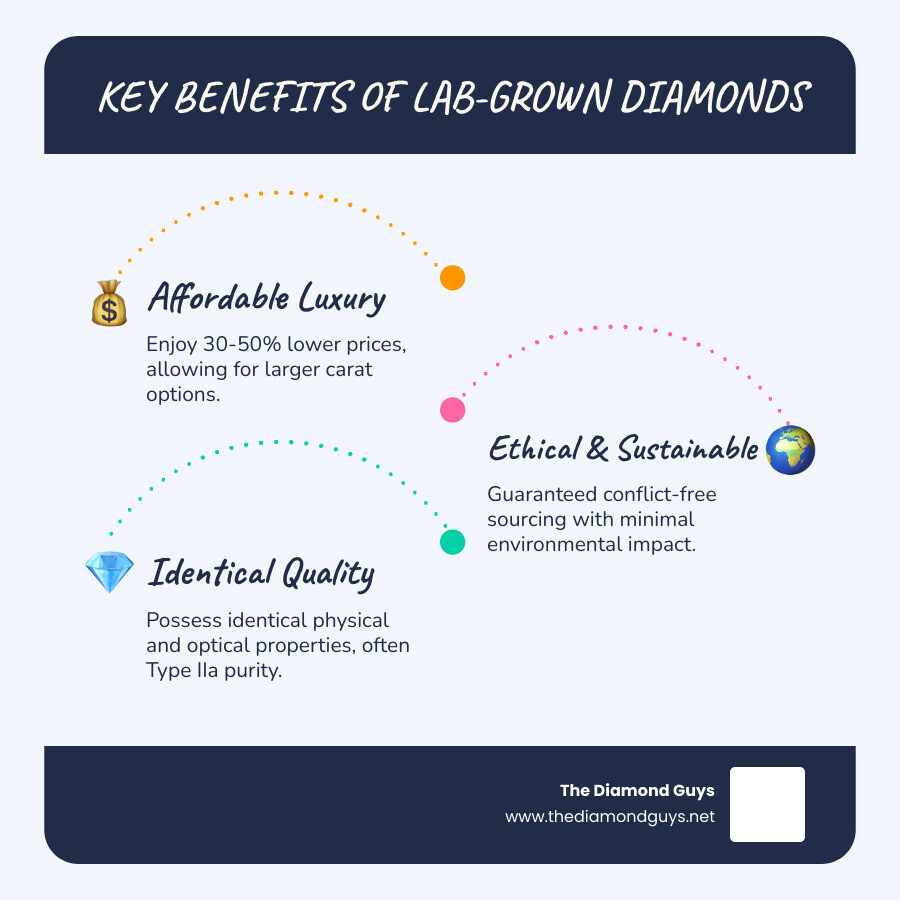
Best man made diamonds are changing how couples approach engagement rings and fine jewelry. These lab-created gems offer the same brilliance and durability as mined diamonds, but at 30-50% lower prices, with guaranteed ethical sourcing and minimal environmental impact.
Quick Answer: What Are the Best Man-Made Diamonds?
The best lab-grown diamonds share these characteristics:
- Type IIa purity: Chemically pure with exceptional brilliance (only 1-2% of natural diamonds reach this quality)
- CVD or HPHT creation: Professional production methods ensuring consistent quality
- Third-party certification: GIA or IGI grading reports confirming authenticity
- Excellent cut grade: Maximizing sparkle and light performance
- Ethical transparency: Renewable energy production and traceable sourcing
Lab-grown diamonds are real diamonds—chemically, physically, and optically identical to mined stones. The only difference is their origin: a controlled laboratory environment versus millions of years underground. This guide cuts through the marketing noise to help you find retailers offering genuine quality, transparent pricing, and expert service.
I'm Morgan Price, and I've spent years evaluating the lab-grown diamond market to help couples make informed decisions. Understanding what makes best man made diamonds truly exceptional—from Type IIa purity to proper certification—is key to finding a stone that delivers both value and lasting beauty.
What Exactly Are Man-Made Diamonds?
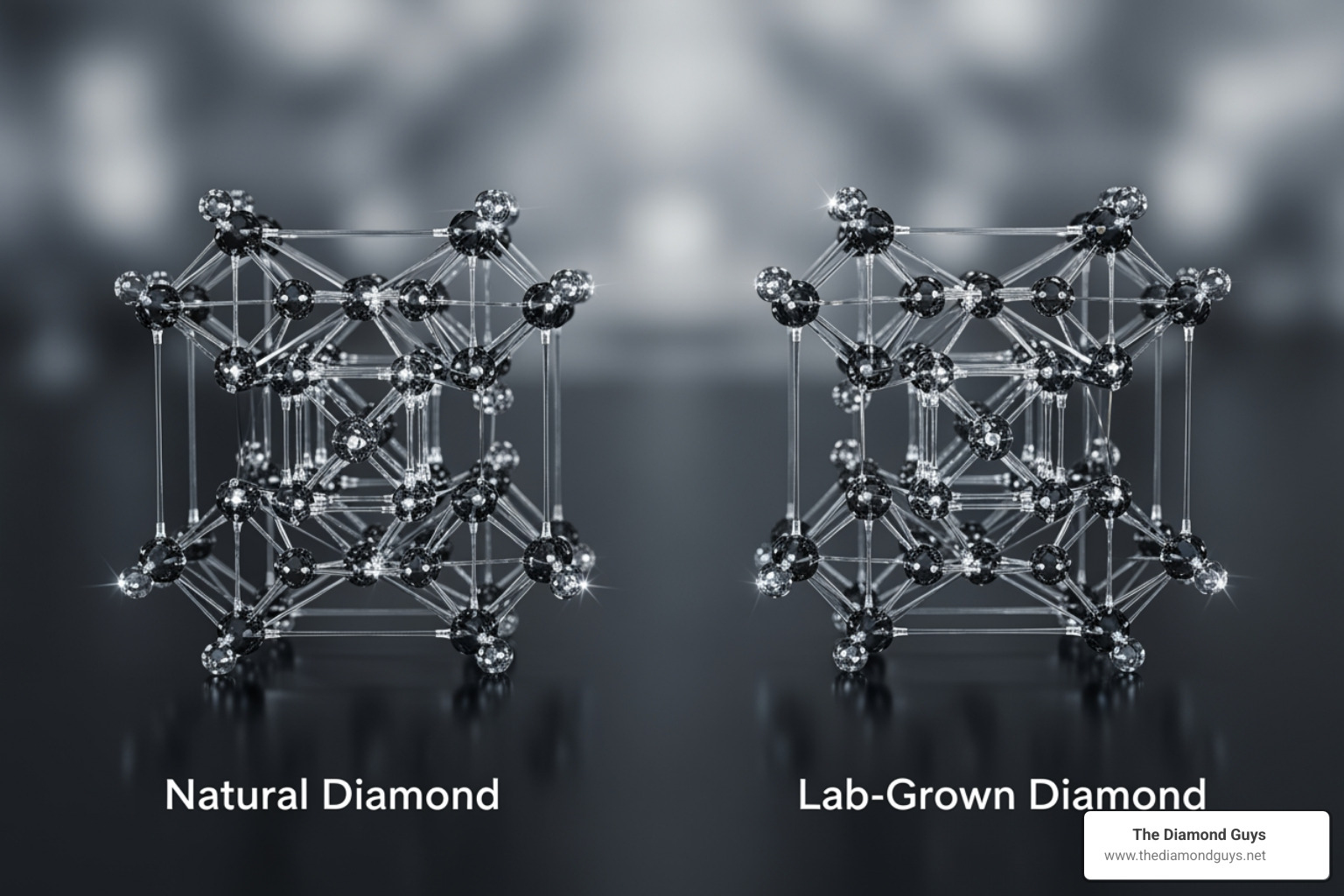
When we talk about best man made diamonds, we're not talking about fakes or imitations. We're talking about real diamonds, grown in a laboratory, that share the exact same chemical, physical, and optical properties as their earth-mined counterparts. Think of it like this: ice from your freezer is still ice, just like ice from a glacier. Both are H2O, regardless of their origin. Lab-grown diamonds are pure carbon, just like natural diamonds, with the only distinction being where they formed.
They are 100% pure crystallized carbon, cut, polished, and graded with the same scrutiny as mined diamonds. This means when you look at a lab-grown diamond, you're seeing genuine sparkle, hardness, and durability. The term "man-made" simply refers to their origin in a controlled laboratory environment, rather than deep within the Earth.
To learn more about what makes these gems truly diamonds, check out our detailed guide: Are Lab-Grown Diamonds Real Diamonds.
The Science of Sparkle: How Lab Diamonds Are Made
The creation of best man made diamonds is a marvel of modern science, replicating the geological processes that form natural diamonds, but in a fraction of the time. There are two primary methods used to grow these beautiful gems: High Pressure, High Temperature (HPHT) and Chemical Vapor Deposition (CVD).
The HPHT method mimics the extreme conditions found deep within the Earth. A tiny diamond seed is placed in a growth chamber, surrounded by carbon and a metal catalyst. This chamber is then subjected to immense pressure (over 870,000 pounds per square inch) and high temperatures (between 1300-1600 °C). Under these conditions, the carbon melts and crystallizes around the seed, forming a rough diamond over a few days. This process has been used since General Electric successfully synthesized diamonds in 1955, though early versions were too small for jewelry.
The CVD method involves placing a diamond seed in a sealed chamber, which is then heated to very high temperatures. Carbon-rich gases are introduced into the chamber, and a plasma ball is formed using electrical energy. This causes carbon molecules to "rain down" and attach to the diamond seed, layer by layer, crystallizing into a rough diamond over a period of weeks (typically 6-12 weeks for a sizable stone). CVD diamonds often start brown or yellow but can be treated post-growth to achieve colorless or fancy colors.
Both methods produce diamonds that are chemically and physically identical to natural diamonds. For a deeper dive into their fascinating journey from lab to luster, explore the History of Lab-Grown Diamonds: How Long Have Lab-Grown Diamonds Been Around and Lab-Grown Diamond Jewelry: What are Synthetic Diamonds? .
Lab-Grown vs. Diamond Simulants: Know the Difference
Lab-grown diamonds are not the same as diamond simulants. This is a common point of confusion. Diamond simulants look like diamonds but are made of entirely different materials with distinct chemical and physical properties.
The most common diamond simulants you'll encounter are:
- Moissanite: This is silicon carbide, a naturally occurring mineral that is incredibly rare but can be synthesized in a lab. Moissanite is very hard (9 ¼ on the Mohs scale, compared to diamond's 10) and exhibits a unique brilliance with more fire (rainbow flashes) than a diamond. However, its chemical composition is different, and a trained eye or gemological equipment can easily distinguish it from a diamond. Want to know more? Read our article Is Moissanite a Lab-Grown Diamond.
- Cubic Zirconia (CZ): This is a synthetic crystalline substance that is much softer than a diamond (Mohs 8-8.5). While it can mimic a diamond's sparkle, it tends to scratch easily, dull over time, and can even yellow. It's an affordable alternative but lacks the durability and lasting beauty of a real diamond, lab-grown or natural.
- White Sapphire and Colorless Zircon: These are natural gemstones that can simulate a diamond's appearance. Colorless sapphire has a hardness of 9 on the Mohs scale, while zircon is 6-7.5. They lack the brilliance and fire of a diamond but can be used as alternatives.
Lab-grown diamonds, on the other hand, are diamonds through and through. They pass diamond testers and share the same durability (Mohs 10) and optical properties, making them indistinguishable from natural diamonds without specialized equipment. If you're curious about the distinctions, our guide Are Lab-Grown Diamonds and Moissanite the Same offers further clarity.
Lab-Grown vs. Natural Diamonds: A Head-to-Head Comparison
Choosing between a lab-grown and a natural diamond often comes down to personal values, budget, and priorities. We understand that both options hold significant meaning, but it's important to have all the facts. Here’s a clear comparison to help you weigh your options:
| Feature | Lab-Grown Diamonds | Natural Diamonds |
|---|---|---|
| Origin | Created in a controlled laboratory environment | Formed deep within the Earth over millions to billions of years |
| Chemical Comp. | Pure carbon (C) | Pure carbon (C) |
| Physical Prop. | Identical to natural diamonds | Identical to lab-grown diamonds |
| Optical Prop. | Identical to natural diamonds (brilliance, fire, scint.) | Identical to lab-grown diamonds (brilliance, fire, scint.) |
| Price | 20-50% less expensive than equivalent natural diamonds | Significantly higher due to rarity, mining costs, and complex supply chain |
| Environmental Impact | Generally lower, with potential for carbon-neutral or carbon-negative production | High, involving extensive earth moving, habitat disruption, and fossil fuel use |
| Ethics | Guaranteed conflict-free, traceable origin | Potential for conflict sourcing, though industry efforts (Kimberly Process) exist |
| Value (Resale) | Generally lower resale value, prices are decreasing | Historically seen as holding value, but resale markets often see significant loss |
As you can see, the core difference lies in their origin and the implications that follow for price, environmental footprint, and ethical sourcing. For a comprehensive look at how they stack up, refer to our guide: Lab Diamonds vs. Real Diamonds.
The Smart Choice: Key Advantages of Lab-Grown Diamonds
Lab-grown diamonds offer compelling advantages, making them a smart choice for modern consumers in Scottsdale, Los Angeles, and beyond.
Unbeatable Price Advantage: This is often the first thing that catches people's attention. Lab-grown diamonds typically cost significantly less than their naturally mined counterparts—we’re talking about 20-50% cheaper, depending on the stone. This means you can get a larger, higher-quality diamond for the same budget. Imagine upgrading from a 1.5-carat mined diamond to a stunning 2-carat lab-grown diamond, all while staying within your financial comfort zone! This affordability makes luxury more accessible.
Larger Carat for Your Budget: Following the price advantage, the ability to maximize carat weight without breaking the bank is a huge draw. For the same investment, you can often acquire a lab-grown diamond that is noticeably larger and possesses superior color and clarity grades compared to a natural diamond. This allows for truly breathtaking pieces that might otherwise be out of reach.
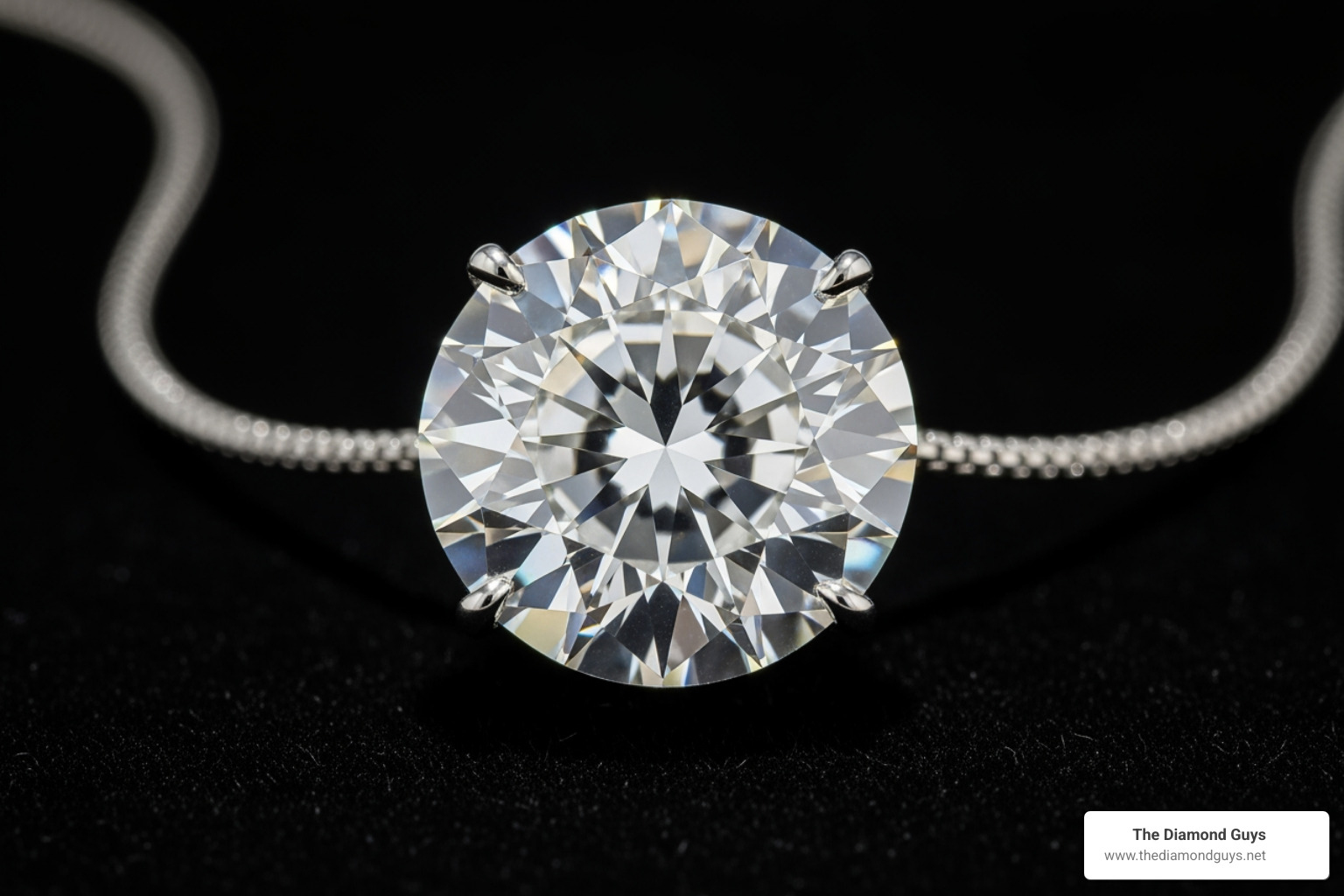
Guaranteed Conflict-Free and Ethical Sourcing: For many of our clients, the ethical considerations are paramount. Lab-grown diamonds offer peace of mind, as their origin is completely traceable and guaranteed to be conflict-free. There are no questions about potential human rights abuses or funding of conflicts, which can sometimes be associated with natural diamond mining, despite industry efforts. This transparency aligns with a more conscious consumer mindset.
Sustainability and Reduced Environmental Impact: The environmental footprint of lab-grown diamonds is considerably smaller than that of traditional mining. Diamond mining involves extensive earth displacement, significant energy consumption, and can lead to habitat destruction. Lab-grown production, while requiring energy, can be managed with renewable sources, leading to a much more sustainable and eco-friendly product. Some companies are even pioneering carbon-negative diamonds, created from air!
These advantages make lab-grown diamonds a compelling option for anyone seeking beauty, value, and ethical integrity in their jewelry. If you're still contemplating, our article Should You Buy a Lab-Grown Diamond digs deeper into this decision.
The Value Question: Do Lab-Grown Diamonds Hold Their Value?
A frequent question about best man made diamonds is their value retention. The short answer is that, like most consumer goods, they generally don't hold significant resale value. However, the same is often true for natural diamonds.
It’s a common misconception that natural diamonds are a strong investment. The resale market for those bought at retail often sees a significant loss in value due to substantial markups. So, if you're hoping your diamond will be your 401k, whether it's mined or lab-grown, you might be in for a surprise.
For lab-grown diamonds, the market is relatively new, and prices have been decreasing as technology improves and production scales up. As more companies enter the market and efficiency increases, the cost to produce these diamonds continues to fall, which in turn affects their potential resale value. This trend makes them even more accessible to consumers, which is great for affordability but less so for investment.
We believe a diamond is an emotional and sentimental purchase, not a financial investment. Its true value lies in the joy it brings and the memories it represents. While the monetary resale value might not appreciate, the sentimental value endures forever. We encourage our clients to choose a gem that suits their style and budget, rather than viewing it as a store of wealth.
How to Judge Quality: Grading the Best Man-Made Diamonds
Selecting the best man made diamonds uses the same universally recognized standards as natural diamonds: the 4 Cs – Cut, Color, Clarity, and Carat. These factors determine a diamond's beauty and overall quality. Understanding them is key to making an informed choice, and we work closely with our clients in Arizona and California to explain how each "C" impacts the diamond you choose.
Third-party grading reports from reputable gemological institutes like the GIA (Gemological Institute of America) or IGI (International Gemological Institute) are essential. These reports provide an unbiased assessment of a diamond's quality, giving you confidence in your purchase. Importantly, GIA issues distinct reports for lab-grown diamonds, clearly identifying them as "laboratory-grown" and often laser inscribing this on the diamond's girdle to prevent any confusion.
Understanding the 4 Cs for Lab Diamonds
Let's break down how the 4 Cs apply to the best man made diamonds:
- Cut: This is arguably the most critical factor for a diamond's sparkle. A diamond's cut refers not to its shape (like round or oval), but to how well its facets interact with light. An excellent cut maximizes brilliance (white light reflection), fire (rainbow flashes), and scintillation (sparkle). Lab-grown diamonds often benefit from superior cuts because growers can optimize the rough diamond for cutting without the constraints of natural inclusions or maximizing yield from rare rough. We always emphasize prioritizing cut for maximum visual impact.
- Color: Diamond color is graded on a scale from D (colorless) to Z (light yellow or brown). The less color a diamond has, the rarer and more valuable it typically is. Lab-grown diamonds are available in a full range of colors, including stunning colorless D, E, and F grades. While some lab-grown diamonds may initially have a yellowish or brownish tint, advanced post-growth treatments can improve their color.
- Clarity: Clarity measures the presence and visibility of internal characteristics (inclusions) and external blemishes. Grades range from Flawless (FL) to Included (I3). Most natural diamonds fall into the VS2 to SI1 clarity range. Interestingly, many colorless CVD lab-grown diamonds tend to have slightly higher clarity, often in the VVS2 to VS1 range, due to the controlled growth environment.
- Carat: Carat refers to a diamond's weight, not its size. One carat equals 200 milligrams. As we've discussed, one of the significant advantages of lab-grown diamonds is the ability to achieve a larger carat weight for the same budget compared to natural diamonds.
For a comprehensive dive into comparing these factors, explore our guide A Comprehensive Guide to Comparing Lab-Grown Diamonds. You can also learn more about how GIA specifically grades these gems through their GIA Laboratory-Grown Diamond reports.
Beyond the 4 Cs: The Purity of Type IIa Diamonds
While the 4 Cs are fundamental, there's another crucial factor that sets some of the best man made diamonds apart: their Type. Diamonds are classified into types based on the presence and aggregation of nitrogen impurities.
- Type Ia diamonds contain detectable nitrogen atoms, which are typically clustered. These represent the vast majority (98-99%) of all natural diamonds.
- Type IIa diamonds are the purest form of diamond. They contain virtually no measurable nitrogen impurities, making them chemically purer and structurally more perfect. This rarity in nature (only 1-2% of mined diamonds are Type IIa) makes them highly coveted. Famous examples include the Elizabeth Taylor Diamond and the Hope Diamond.
Why does this matter for lab-grown diamonds? Because many advanced lab-grown diamonds, particularly those grown using the CVD method, are Type IIa. This means they possess exceptional optical transparency and brilliance, often appearing "whiter" and brighter than Type Ia diamonds of similar color grades. When seeking the best man made diamonds, looking for Type IIa certification is a strong indicator of superior quality and brilliance. This level of purity, once reserved for the rarest natural diamonds, is now readily accessible in the lab-grown market.
Finding Your Perfect Stone: What to Look for in a Lab Diamond Retailer
Finding the best man made diamonds is also about choosing the right retailer. The right jeweler can make all the difference, offering expert guidance, a wide selection, and a trustworthy purchase. For our clients in Scottsdale, Los Angeles, and Phoenix, we emphasize a personalized approach that you won't find at every jewelry store.
Here’s what we believe makes a retailer stand out when you're looking for lab-grown diamonds:
- Expert Guidance: You need a jeweler who truly understands lab-grown diamonds, from their creation methods to their grading nuances. Our team provides professional, dependable, and trusted advice to help you steer your options.
- Inventory Variety: A good retailer should offer a diverse selection of shapes, sizes, and quality grades in lab-grown diamonds. This ensures you have ample choices to find a stone that perfectly matches your vision and budget.
- Customization Options: The ability to create a bespoke piece of jewelry, from engagement rings to unique pendants, is a huge advantage. Look for jewelers who specialize in custom design, allowing you to select your preferred metal, setting, and finishes.
- Ethical Transparency: Beyond the inherent ethical benefits of lab-grown diamonds, the retailer should be transparent about their sourcing, ensuring their lab diamonds come from reputable labs that adhere to ethical and sustainable practices.
- Certification Proof: Always ensure the diamonds come with independent grading reports from recognized gemological labs like GIA or IGI. This verifies the stone's quality.
- Exceptional Customer Service: A personalized shopping experience, whether online or in person, with clear communication and support, is invaluable.
For a deeper dive into choosing a reputable dealer, our Lab Diamond Jewelry Store Guide offers more insights.
Key Factors for Choosing the best man made diamonds
Beyond the basics, a few specific factors can lift your experience when choosing the best man made diamonds:
- Advanced Viewing Technology: When shopping online, look for retailers who offer 360° imagery, high-resolution videos, and even virtual try-on tools. These technologies allow you to inspect the diamond closely from every angle, making an informed decision even if you can't see it in person right away. In our showrooms in Scottsdale and Sherman Oaks, we provide an immersive experience with expert guidance.
- Clear Return Policies: A transparent and fair return policy is a sign of a confident and customer-focused retailer. This gives you peace of mind, knowing that if the diamond isn't exactly what you envisioned, you have options.
- Insurance Options: While lab-grown diamonds are durable, protecting your investment is still wise. A good retailer will be able to advise you on insuring your lab-grown diamond jewelry. Did you know you can insure them? Our article Can You Insure a Lab-Grown Diamond explains how.
When you choose us, you're not just buying a diamond; you're gaining a partner who will help you find a piece that truly reflects your unique story and style. We believe in taking the time to educate you and ensure you feel confident and excited about your choice.
The Power of Customization for the best man made diamonds
One of the most exciting aspects of shopping for the best man made diamonds is the incredible potential for customization. Because lab-grown diamonds offer more flexibility in terms of size and quality for your budget, they open up a world of possibilities for bespoke jewelry.
We specialize in custom diamond jewelry in Scottsdale, Phoenix, and Los Angeles, understanding that your jewelry should be as unique as you are. With lab-grown diamonds, you can truly craft your legacy:
- Bespoke Rings: Design an engagement ring that perfectly encapsulates your love story. Choose a unique setting style, from classic solitaires to intricate vintage-inspired designs. With a larger lab-grown diamond, your custom piece will truly stand out.
- Setting Styles: Whether you prefer a modern bezel, a delicate pavé, or a bold three-stone design, the options are limitless. Our expert jewelers can guide you through various setting styles to complement your chosen lab diamond.
- Metal Choices: Personalize your jewelry further by selecting the perfect metal. Options include classic yellow gold, neat white gold, romantic rose gold, or durable platinum. You can even combine different metals for a distinctive look.
- Personal Touch: From engraving a special date to incorporating unique design elements, customization allows you to infuse your personality into every detail. This ensures your jewelry isn't just beautiful, but deeply meaningful.
Our passion is helping you create gorgeous custom handmade diamond jewelry that lasts for generations. Explore how we bring your vision to life in our articles: Crafting Your Legacy: The Art of Designing a Custom Lab Diamond Ring and Lab Diamond Custom Jewelry.
Frequently Asked Questions about Man-Made Diamonds
We often get a lot of questions about lab-grown diamonds, and we're always happy to provide clear, straightforward answers. Here are some of the most common inquiries we receive in our Scottsdale and Los Angeles showrooms:
Are lab-grown diamonds real diamonds?
Yes, absolutely! This is the most important takeaway. Lab-grown diamonds are real diamonds. They are not simulants or fakes. They possess the exact same chemical composition, crystal structure, and optical properties as natural diamonds. The only difference is their origin: one is grown in a laboratory, and the other is formed beneath the Earth's surface. Because they are chemically identical, they will pass a diamond tester just like a natural diamond. Our article Do Lab-Grown Diamonds Pass a Diamond Tester provides more detail.
Why are lab-grown diamonds so much cheaper?
The lower price of lab-grown diamonds is primarily due to a more streamlined and efficient supply chain, rather than any compromise in quality.
- Shorter Supply Chain: Natural diamonds typically go through many hands and travel across multiple countries, from mine to cutter, polisher, wholesaler, and finally, retailer. Each step adds cost. Lab-grown diamonds have a much shorter and more direct path from the lab to the jeweler.
- Efficient Production: While the technology is sophisticated and expensive, creating a diamond in a lab is ultimately more controlled and efficient than the unpredictable, labor-intensive, and resource-heavy process of mining.
- No Mining Costs: The massive costs associated with exploring, extracting, and processing natural diamonds from the Earth are eliminated. This includes heavy machinery, fuel, and extensive logistics.
These factors allow lab-grown diamonds to be offered at significantly lower price points—often 30-50% less than a comparable natural diamond—making them more accessible to a wider range of budgets.
Should I buy a lab-grown diamond engagement ring?
The decision to buy a lab-grown diamond engagement ring is a personal one, but we believe it's an excellent choice for many reasons.
- Value Proposition: If you're looking for a larger, higher-quality diamond within a specific budget, a lab-grown diamond offers unparalleled value. You can get more sparkle for your dollar.
- Ethical Considerations: For those who prioritize ethical sourcing and a minimal environmental footprint, lab-grown diamonds provide complete peace of mind.
- Durability and Beauty: A lab-grown diamond is just as hard, durable, and brilliant as a natural diamond. It will last forever and maintain its stunning appearance for generations.
- Personal Choice: The "best" diamond is the one that speaks to you and your partner. If the idea of a beautiful, ethical, and more affordable diamond resonates, then a lab-grown engagement ring is an ideal choice.
We encourage you to explore all the facets of this decision in our dedicated article: Should I Buy a Lab-Grown Diamond Engagement Ring.
Conclusion
Choosing the best man made diamonds means making a smart, informed decision that aligns with your values and budget. These extraordinary gems offer all the brilliance, durability, and beauty of natural diamonds, but with distinct advantages in affordability, ethical sourcing, and environmental impact.
We’ve explored how lab-grown diamonds are real diamonds, how they’re made, and how they differ from simulants. We’ve highlighted their key advantages—from getting a larger stone for your money to ensuring a conflict-free origin—and addressed the common question of value retention. Most importantly, we’ve guided you through the critical steps of judging quality using the 4 Cs and understanding the purity of Type IIa diamonds, as well as what to look for in a reputable retailer.
At The Diamond Guys, whether you visit us in Scottsdale, Arizona, or Sherman Oaks, Los Angeles, we pride ourselves on providing expert guidance and a personalized shopping experience. We’re here to help you find a diamond that doesn’t just meet your expectations, but exceeds them, ensuring your chosen piece is a true reflection of your unique story.
For a deeper dive into how these gems stack up, read our complete guide on lab diamonds vs. real diamonds.


