

Ethically Sourced Diamond Studs Are Redefining Modern Fine Jewelry
How to Choose Conflict-Free Diamond Studs
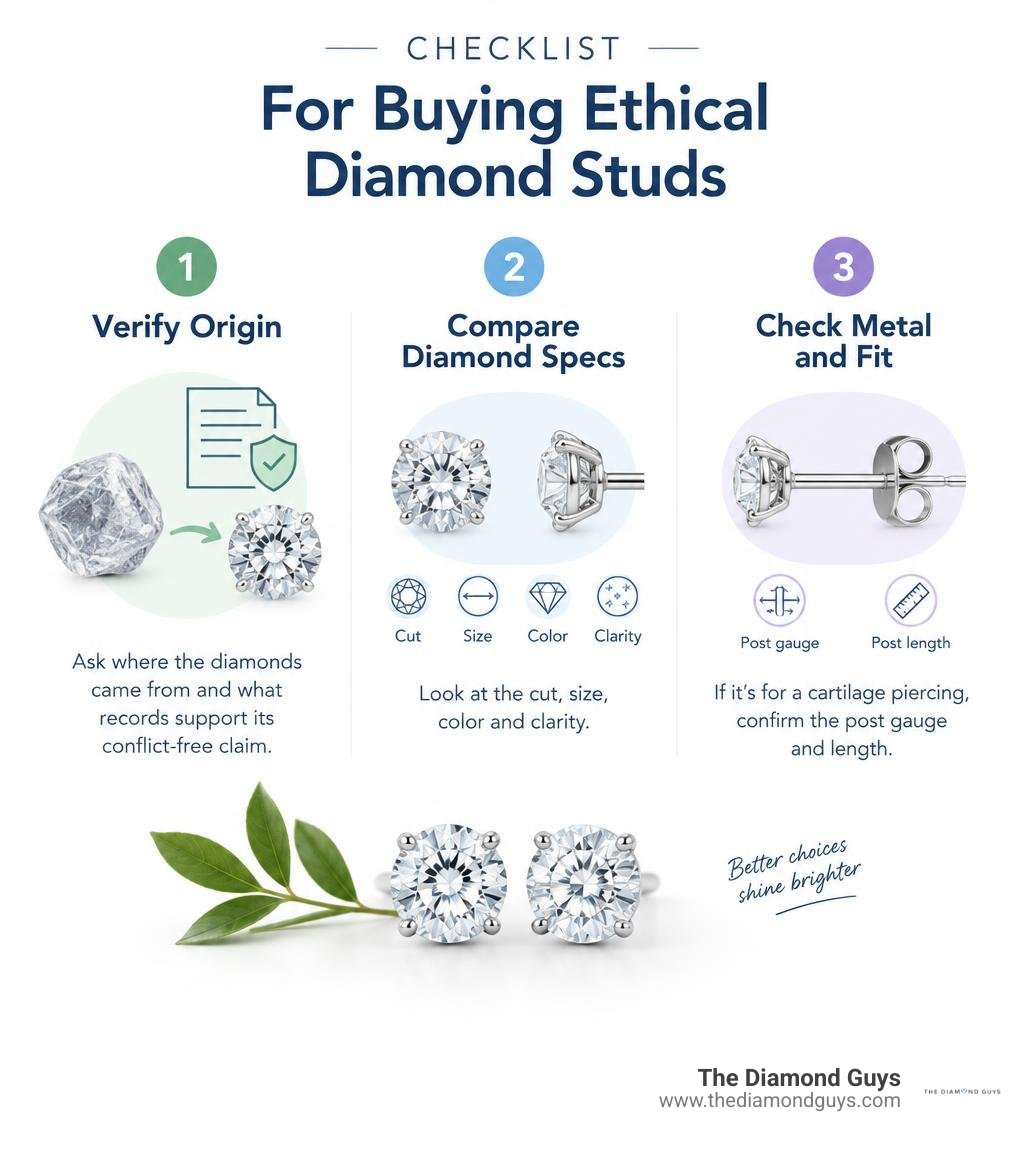
Start with the source, then check the fit. Ask the retailer where the diamonds came from and what records support its conflict-free claim. For natural diamonds, ask how the rough stones entered the supply chain; for lab-grown diamonds, ask for a grading report that identifies them as lab-grown. Then compare the diamonds' cut, size, color, and clarity. If the studs are for a cartilage piercing, confirm the post gauge and length before buying.
Conflict-free is a useful starting point, but it does not tell you everything about labor or environmental practices. A good retailer should welcome questions about both the stones and the metal settings.
I'm Morgan Price. My work in ethical, research-led content has taught me to check sourcing claims closely; here, I'll use that approach to help you shop for conflict free diamond studs with more confidence.
Discover more about conflict free diamond studs:
Understanding Ethical Origins: What Makes Diamonds Truly Conflict-Free?
To appreciate why ethically sourced jewelry matters, we need to understand the history behind the movement. Historically, the term "blood diamond" or "conflict diamond" referred to rough stones mined in war zones and sold to finance armed insurgencies, rebel factions, or warlords aiming to undermine legitimate governments. The United Nations defines conflict diamonds as stones whose trade funds these violent conflicts.

In contrast, a diamond certified as conflict-free is mined, cut, and shipped without funding illicit violence or civil conflict. Today, consumer demand has elevated the definition of ethics beyond basic non-violence. When shoppers look for ethical studs, they seek complete supply chain transparency—from fair labor conditions and artisan protections to low-impact mining methods and verified origins.
The Kimberley Process and Global Standards
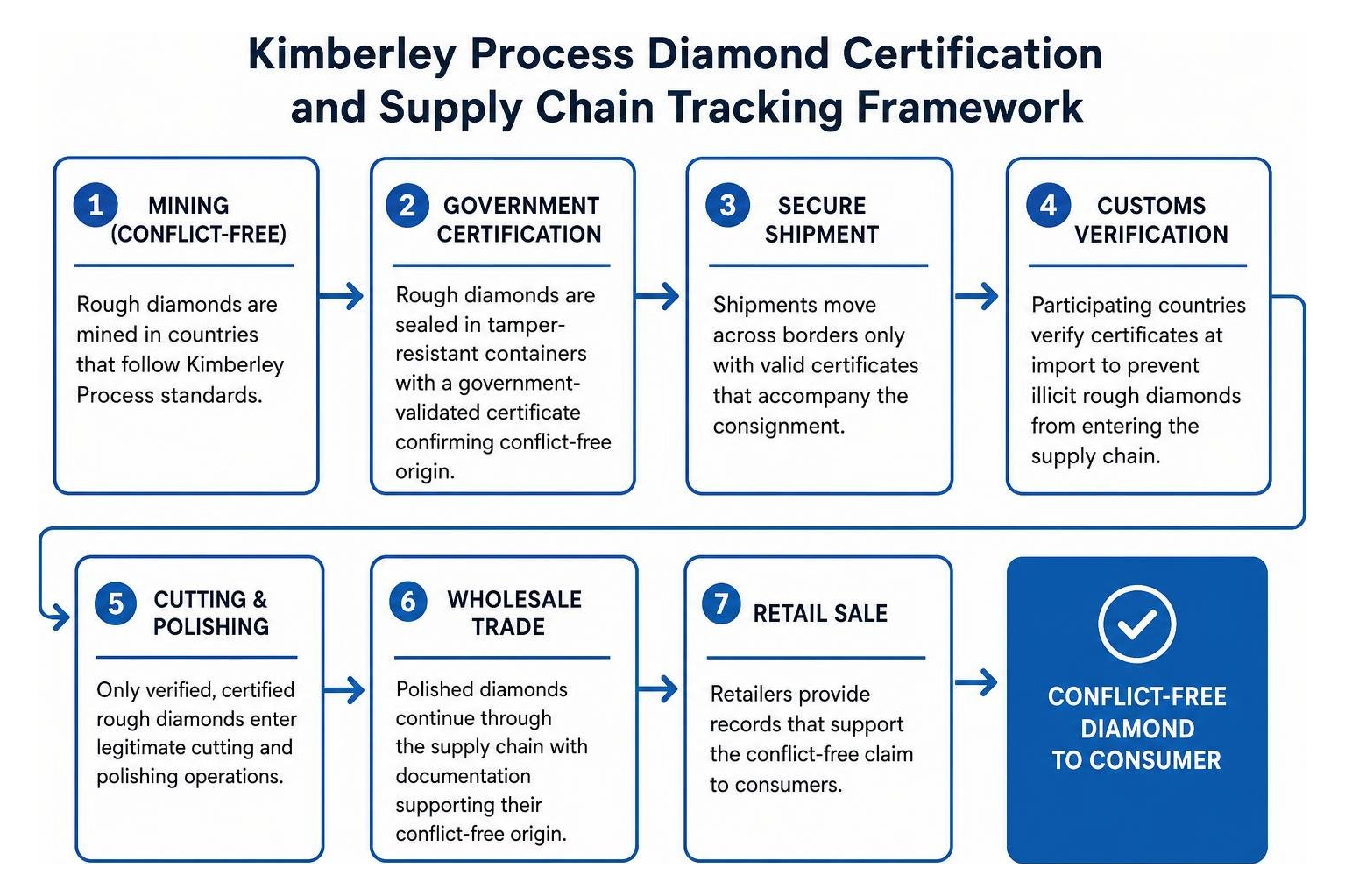
Established by the United Nations, the Kimberley Process Certification Scheme (KPCS) sets strict regulatory standards across international borders. Today, over 70 participating countries enforce these regulations to prevent illicit rough diamonds from entering mainstream channels. Under this framework, rough diamonds must travel in tamper-resistant containers accompanied by government-validated certificates showing they originate from conflict-free zones.
While the Kimberley Process serves as an essential global baseline, modern jewelry standards often go further. Organizations such as the Responsible Jewellery Council (RJC) audit supply chains to guarantee not only conflict-free origins, but also fair workplace wages, community development, and robust environmental stewardship from mine to market.
Lab-Grown vs. Natural Diamonds in Ethical Jewelry
For buyers seeking complete transparency with zero terrestrial disruption, laboratory-created stones have transformed the fine jewelry landscape. Many clients ask, are lab-grown diamonds real diamonds? The short answer is yes. They possess the exact same physical, chemical, and optical properties as mined gems—they are pure carbon crystallized under high temperature and pressure.
When deciding should you buy a lab-grown diamond, consider your personal values and budget:
- Origin Transparency: Lab-grown gems bypass the global mining pipeline entirely, offering an unbroken chain of custody.
- Value: Lab diamonds generally cost significantly less than natural stones of identical cut, clarity, and carat weight, allowing you to maximize diamond size or opt for higher clarity grades.
- Ecological Footprint: Advanced laboratories increasingly utilize renewable energy sources to craft brilliant stones with minimal land use.
Whether you prefer natural stones certified through rigorous global frameworks or modern laboratory gems, ethical sourcing guarantees that your luxury piece aligns with your conscience.
How to Evaluate Conflict Free Diamond Studs by Specs and Price
A common misconception is that purchasing ethical jewelry carries an unfair premium. In reality, legitimate conflict-free diamonds adhere to universal international trading rules, meaning standard market pricing applies equally across verified inventory.
When selecting diamond earrings studs, pair your ethical stones with solid precious metals. Responsibly sourced 14k gold (yellow, white, or rose) and platinum provide lasting durability, hypoallergenic protection, and corrosion resistance for everyday wear.
Key Specifications to Evaluate in Conflict Free Diamond Studs
Diamond studs are viewed from a conversational distance rather than under a jeweler's loupe, allowing you to balance the traditional 4Cs (Cut, Color, Clarity, Carat Weight) strategically to maximize brilliance within your budget.
| Diamond Type & Carat (Total Weight) | Color Grade Range | Clarity Grade Range | Common Setting Style | Best Suited For |
|---|---|---|---|---|
| 0.05 - 0.10 ct. t.w. (Cartilage) | G – I | SI1 – I2 | 14K Gold Bezel / Tube | Tragus, Helix, Conch |
| 0.50 - 1.00 ct. t.w. (Everyday Petite) | F – H | VS2 – SI1 | 3-Prong or 4-Prong Basket | Daily Lobe Wear, Stacking |
| 1.50 - 2.00 ct. t.w. (Classic Statement) | E – G | VVS2 – VS2 | Low-Profile Martini | Primary Lobe Solitaire |
| 3.00+ ct. t.w. (Luxury Showcase) | D – F | VVS1 – VS1 | Heavy 4-Prong / Platinum | Evening Wear & Black Tie |
Cut quality is paramount. An Excellent or Ideal cut maximizes internal light reflection and sparkle, often making a modestly sized stone appear larger and brighter than a poorly cut gem with technically higher clarity.
Finding the Right Setting and Profile
The structure holding your diamond dictates both safety and how comfortably the earring sits against your ear:
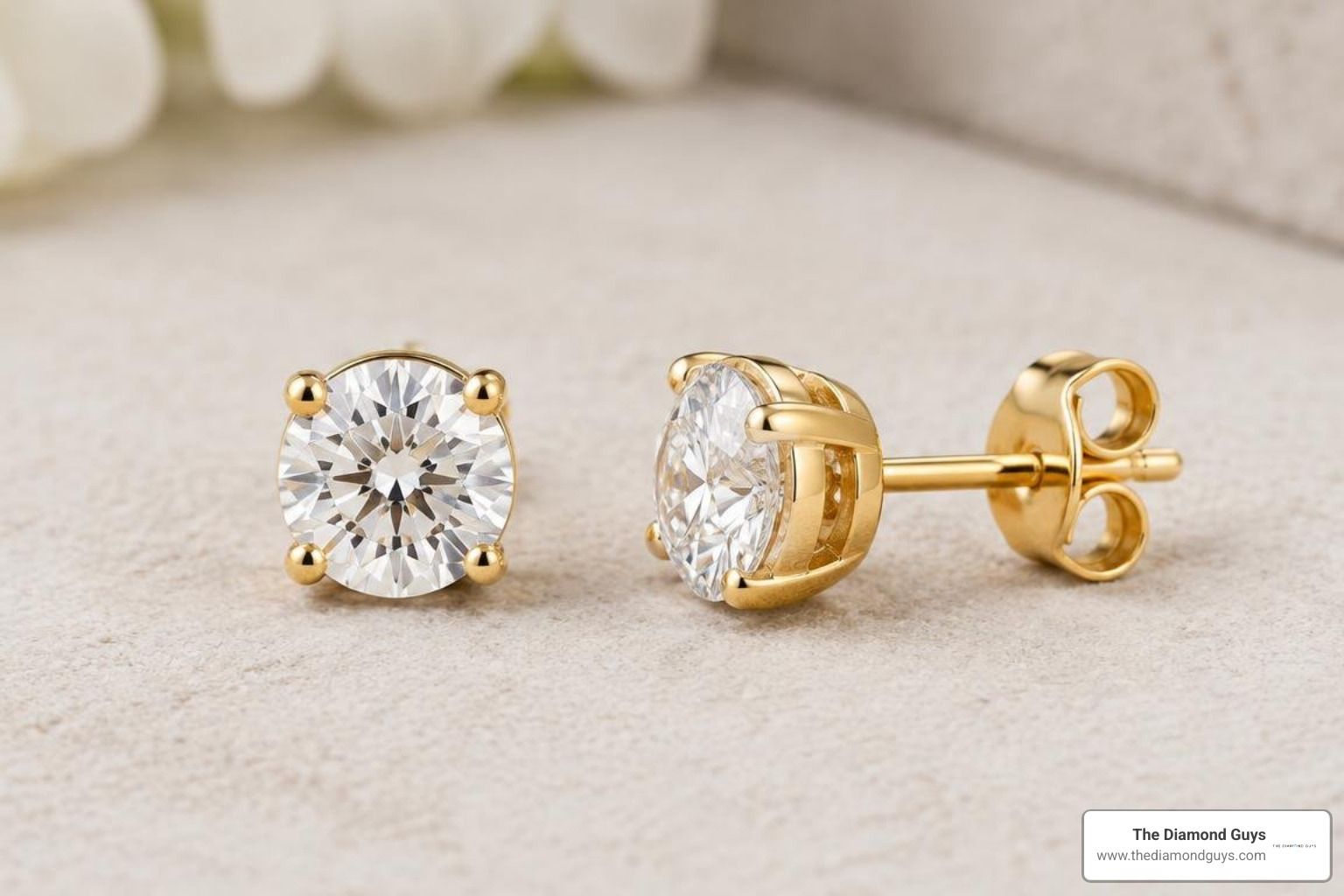
- Martini Settings: Designed in a distinctive V-shape, martini diamond stud earrings rest flush against the earlobe. By pulling the stone closer to the ear, this setting prevents drooping, even with larger carat weights.
- Basket Settings: Featuring a flat bottom, classic 4-prong baskets provide a traditional, elevated look, though they may project slightly outward from the lobe.
- Bezel and Tube Settings: Encircling the diamond in a solid rim of gold, bezels offer snag-free security, protecting stone edges from accidental impacts during active daily routines.
How to Style and Wear Ethical Diamond Studs for Every Occasion
Fine diamond studs provide versatile wearability, effortlessly bridging the gap between casual streetwear and formal attire. For individuals curating an intentional wardrobe, studs serve as the ultimate foundation piece.
When building an accessory collection, you will encounter the distinction between fine jewelry (crafted from solid gold or platinum with genuine gems) and demi-fine jewelry (often made with vermeil or silver). For everyday studs, solid 14k gold ensures that skin oils, water, and daily wear never cause tarnishing or irritation. Exploring classic diamond stud earrings for women provides a dependable staple that can be worn solo or paired with hoops and ear cuffs.
Styling Conflict Free Diamond Studs for Daily Wear and Cartilage Piercings
Ear styling has evolved beyond single lobe studs into curated ear stacks featuring varied textures and placements:
- Cartilage Placements: Petite diamond studs (ranging from 1/20 ct. to 1/10 ct.) make striking accents for upper helix, tragus, conch, and flat piercings.
- Post Specifications: Standard cartilage piercings typically utilize an 18-gauge (18G) post with a comfortable 5/16" length. Flat-back or internally threaded labret studs prevent pinching during sleep or phone use.
- Graduated Ear Stacks: Arrange your studs by descending size, positioning your largest solitaire diamond in the primary lobe, followed by smaller diamonds, bezel accents, or huggies ascending the ear rim.
Modern Diamond Styling for Men
Modern aesthetics have embraced diamond earrings as a standard style signature. Clean, geometric silhouettes emphasize refined luxury without unnecessary ornamentation.
For men exploring fine jewelry, men wearing diamond studs often choose low-profile martini or secure screw-back settings in white gold or platinum. Solitaire round-brilliant or princess-cut diamonds offer understated elegance. For a comprehensive review of proportions, metal options, and styling choices, consult our men lab diamond earrings guide 2026.
How to Verify Authenticity and Ethical Sourcing Before You Buy
Assessing provenance requires looking beyond broad marketing claims to inspect documentation. Protect your investment by following this verification process:
- Review Independent Grading Reports: Natural and lab-grown stones above significant carat sizes should come accompanied by grading certificates from reputable gemological laboratories like the IGI or GIA.
- Inspect Metal Hallmarks: Check the posts and earring backings for authentic fineness stamps (such as "14K", "585", "18K", or "PLAT").
- Examine Chain-of-Custody Policies: Inquire directly about the seller's sourcing standards. Transparent jewelers readily articulate how their stones are procured, cut, and set.
- Explore High-Clarity Lab Alternatives: Discover our collection of lab-grown diamond stud earrings for verified ethical provenance and brilliant optical fire.
If you are located in Arizona, visit our specialists to view loose stones and settings in person, or review our regional guide to lab-grown diamonds in Phoenix AZ for localized shopping insights.
Frequently Asked Questions About Ethical Diamond Studs
Are conflict-free diamonds more expensive than standard diamonds?
No. Because universal international compliance frameworks (like the Kimberley Process) apply to legitimate diamond suppliers globally, conflict-free certification is standard across reputable fine jewelers. Choosing ethically sourced natural diamonds does not inflate retail costs.
Can you wear diamond studs in fresh cartilage piercings?
It is best to wait until a cartilage piercing is fully healed before swapping in standard prong-set earrings. However, you can be pierced directly with an implant-grade or 14k gold bezel stud featuring an 18-gauge post, provided the post length accommodates initial swelling and has a flat-back closure.
What is the difference between demi-fine and fine diamond jewelry?
Fine jewelry uses solid precious metals (such as 14k/18k gold or platinum) paired with genuine natural or lab-created diamonds, designed to last generations without tarnishing. Demi-fine jewelry typically uses gold vermeil (gold-plated sterling silver) or lower-karat alloys. While demi-fine pieces are budget-friendly, solid 14k gold fine jewelry provides superior durability for continuous, everyday wear.
Conclusion
Ethically sourced diamond studs bring together classic style, responsible manufacturing, and enduring value. By prioritizing documented supply chains, verified cut quality, and skin-safe precious metals, you invest in jewelry that looks exceptional and reflects your personal standards.
At The Diamond Guys, we combine personalized guidance with uncompromising ethical sourcing. Whether you are selecting everyday cartilage accents, building an ear stack, or designing custom studs, our experts are ready to assist you. Explore our complete curated collection of diamond earrings to find your ideal pair today.


