

The Ultimate Guide to Tennis Bracelet Cuts: Cushion, Emerald, and Princess
Why the Cut You Choose Defines Your Tennis Bracelet

A cushion cut bracelet is one of the most sought-after styles in fine jewelry right now — and for good reason. With their soft, rounded corners and pillow-like shape, cushion cut stones deliver a warm, romantic brilliance that feels both vintage and completely current. Tennis bracelets featuring cushion cut stones have seen a 25% year-over-year sales increase among U.S. retailers as of 2026, reflecting just how much buyers are drawn to that classic-meets-modern aesthetic.
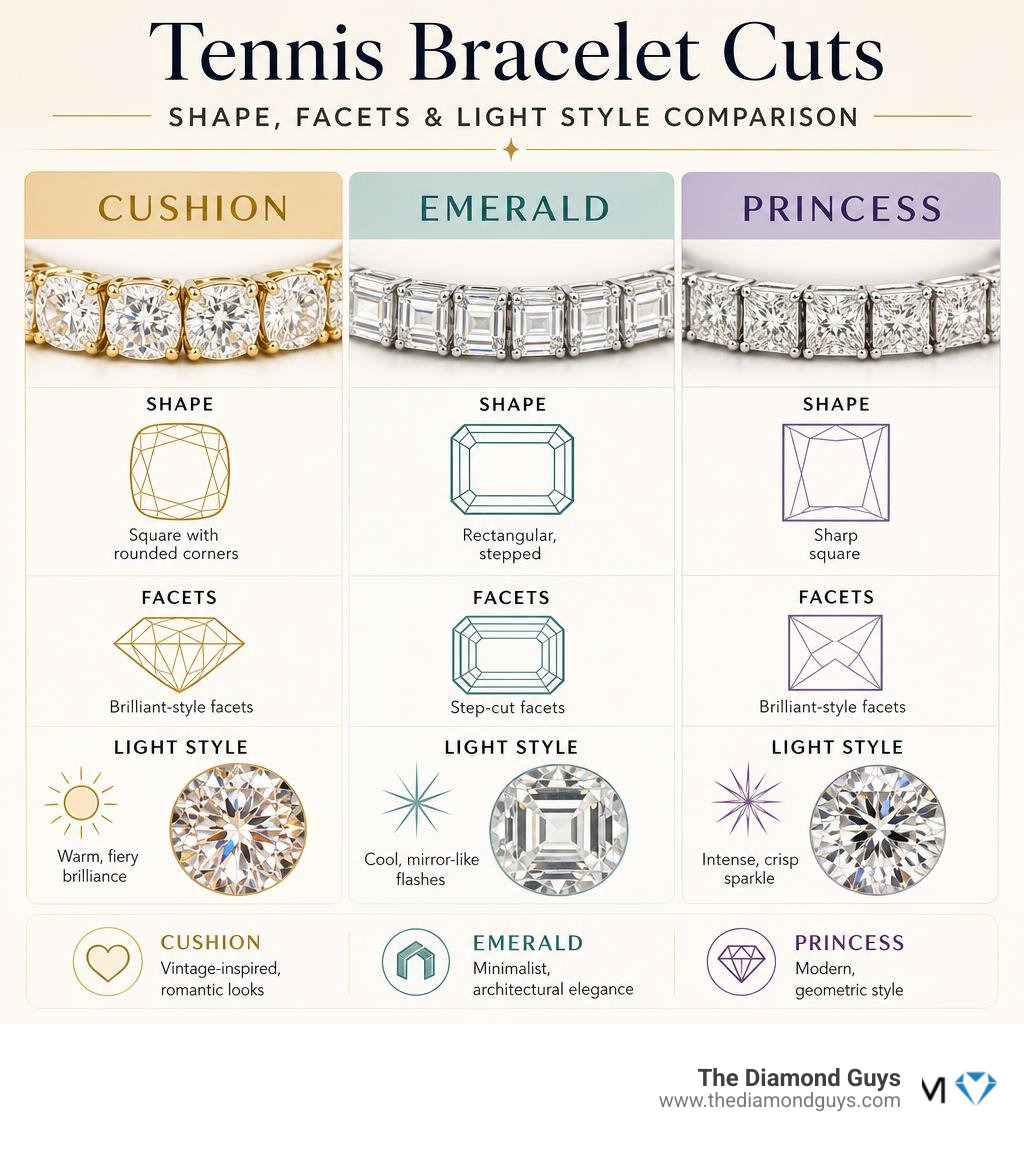
But cushion isn't the only option. If you're comparing tennis bracelet cuts, here's a quick snapshot of how the three most popular choices stack up:
| Cut | Shape | Light Style | Best For |
|---|---|---|---|
| Cushion | Square with rounded corners | Warm, fiery brilliance | Vintage-inspired, romantic looks |
| Emerald | Rectangular, stepped | Cool, mirror-like flashes | Minimalist, architectural elegance |
| Princess | Sharp square | Intense, crisp sparkle | Modern, geometric style |
Each cut creates a completely different look on the wrist — even when set in the same metal with the same carat weight. The right choice comes down to your personal style, how you want the bracelet to catch light, and what occasions you'll be wearing it for.
This guide walks you through everything you need to know to make a confident, informed decision.
I'm Morgan Price, a jewelry content strategist with hands-on experience researching the fine jewelry market — including the growing world of cushion cut bracelet styles, ethical sourcing, and lab-grown diamond options. I'll make sure everything here is practical, honest, and easy to act on.
Cushion cut bracelet terms to learn:
Understanding the Cushion Cut Bracelet and Its Unique Appeal
When you first lay eyes on a cushion cut bracelet, the immediate feeling is one of soft, luxurious warmth. But what exactly is a cushion cut, and why does it stand out so dramatically in a crowded jewelry case?
To understand its appeal, we have to look at how the stone is built. A cushion cut diamond blends a square silhouette with gently rounded corners, mimicking the plush look of a pillow (which is where it gets its comfortable, inviting name). Typically cut with 58 facets, the cushion cut shares a similar facet arrangement with the round brilliant cut. However, because of the way those facets are proportioned and distributed, it reflects light in a distinctly different pattern.

Instead of the intense, laser-sharp flashes of a round or princess cut, a cushion cut stone produces a softer, broader dispersion of light known as "fire." This refers to those colorful, rainbow-like flashes that seem to dance within the heart of the stone. It is a romantic, vintage-inspired glow that feels incredibly elegant on the wrist.
In the United States, cushion-cut diamonds are incredibly popular, accounting for approximately 15-20% of all diamond sales in the engagement and fine jewelry market. When arranged in a continuous, articulated line around your wrist, these stones create a breathtaking halo of light. If you want to dive deeper into the anatomy of this beautiful shape, check out our comprehensive guide on what is a cushion cut diamond.
The History and Evolution of the Cushion Cut Bracelet
The cushion cut is not a newcomer to the jewelry world; in fact, it is one of the oldest diamond shapes still in existence. Its ancestry dates back to the 1700s, when the "old mine cut" was the de facto standard for diamonds. For over a century, nearly all major diamonds were cut into this rounded-square shape because it maximized weight retention from the rough crystal and sparkled beautifully under candlelight.
As diamond-cutting technology evolved in the 20th and 21st centuries, the antique cushion cut underwent a transformation. Modern gemologists introduced the "modified cushion cut," adding an extra row of facets below the girdle. This modern alteration gave the stone a "crushed ice" look, increasing its brilliance and bringing its light performance closer to modern standards while preserving that beloved vintage pillow shape.
When you wear a modern cushion cut bracelet, you are wearing a piece of jewelry history that has been refined for 2026 tastes. It bridges the gap between the antique romance of the past and the clean, high-performance durability of modern engineering.
Comparing the Big Three: Cushion, Emerald, and Princess Cuts
Choosing the perfect tennis bracelet often comes down to a battle between three iconic shapes: the Cushion, the Emerald, and the Princess cut. Each shape communicates a completely different personality, and understanding their optical differences is the key to finding your perfect match.
To start, we have to look at the two primary families of diamond cuts: brilliant cuts and step cuts.
- Brilliant Cuts (Cushion and Princess): These cuts feature triangular and kite-shaped facets designed to reflect the maximum amount of light back to the eye. They are all about sparkle, fire, and hiding minor inclusions.
- Step Cuts (Emerald): These cuts feature parallel, rectangular facets that look like a flight of stairs. Instead of a sparkling firework show, step cuts offer clean, mirror-like flashes of light and prioritize clarity over raw sparkle.
If you are wondering how these shapes compare in terms of visual impact, you might want to read our article on what diamond shape looks the biggest to see how face-up surface area varies across different cuts.
To make your decision easier, let's look at how these three popular shapes compare side-by-side:
| Feature | Cushion Cut | Emerald Cut | Princess Cut |
|---|---|---|---|
| Facet Style | Brilliant (58 facets) | Step Cut | Brilliant (50-58 facets) |
| Light Performance | High fire, soft sparkle | Mirror-like flashes, high clarity | Intense, sharp brilliance |
| Corner Type | Rounded (low snag risk) | Blocked/Truncated | Sharp 90-degree corners |
| Overall Vibe | Romantic, vintage, soft | Architectural, art deco, sleek | Modern, geometric, bold |
If you love vintage elegance, you might find inspiration in classic jewelry design trends, exploring how the cushion shape pairs beautifully with different metal bands to create a timeless look.
For those looking for a sleek, hall-of-mirrors effect, an emerald cut tennis bracelet offers unparalleled sophistication. Meanwhile, the princess cut remains the go-to for those who love clean lines and maximum, uninterrupted brilliance. You can explore a wide variety of these styles to find the perfect match for your personal aesthetic.
Key Features and Customization Options for Fine Jewelry
When designing or purchasing a cushion cut bracelet, there is no one-size-fits-all formula. Because a tennis bracelet is an investment piece meant to be worn for decades, understanding your customization options is essential.
First, consider the carat weight and stone size. In a tennis bracelet, the carat weight listed is the Total Carat Weight (TCW or CTW), representing the combined weight of all the stones in the band. For example, a delicate everyday bracelet might feature a total of 2.0 to 4.0 carats, while a show-stopping statement piece can easily exceed 20 carats of fancy yellow cushion-cut diamonds.
Second, pay close attention to bracelet length and fit. A classic tennis bracelet should drape gently on the wrist without being so loose that it snags, or so tight that it pinches. The standard length for women's bracelets is 7 inches, but we always recommend measuring your wrist and adding half an inch for the perfect, comfortable drape.
If you are looking for a more relaxed, spaced-out diamond design rather than a continuous line of stones, you might want to explore our guide to diamonds by the yard from necklaces to bracelets. This style offers a lighter, everyday look that pairs beautifully with other bracelets. You can also read more about this minimalist aesthetic in our articles on diamonds by the yard necklaces: a dazzling collection and how to complete your collection with diamonds by the yard jewelry for every occasion.
For a truly unique look, some designs incorporate colorful, vibrant stones or modern simulated options. Multicolor cushion gemstone bracelets, mixed-shape layouts, and custom diamond accents can create an antique-inspired feel while still being tailored to your preferred budget and wearability. If you want an everyday, affordable alternative, a sterling silver cushion cut tennis bracelet or a radiant cushion halo moissanite bracelet offers great versatility without the premium price tag of solid gold and natural diamonds.
Selecting the Perfect Metal and Setting for Your Cushion Cut Bracelet
The metal and setting style you select will define the overall durability and personality of your bracelet.
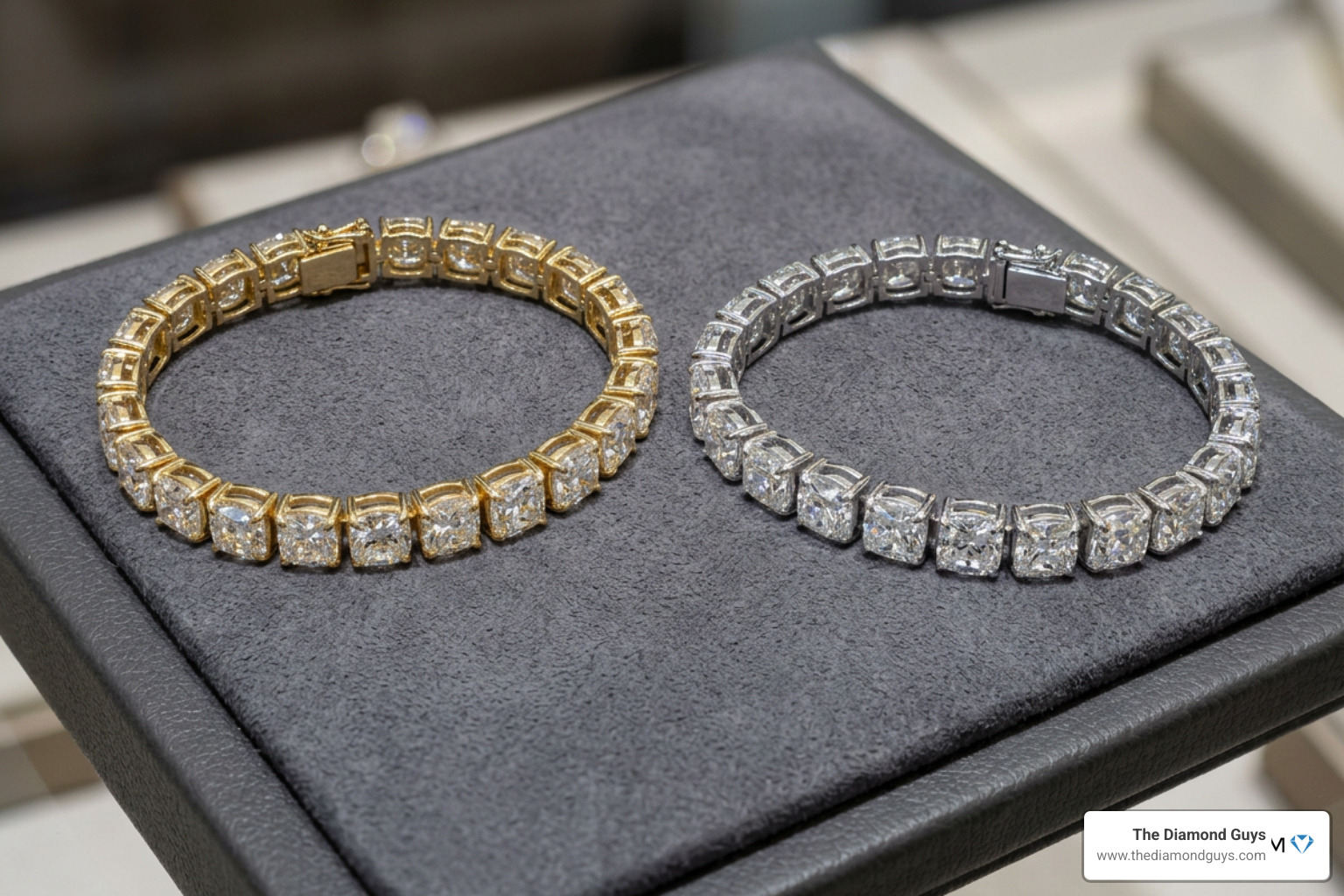
Here are the most common setting and metal options for cushion-cut stones:
- Prong Settings: This is the classic choice. A four-prong setting holds each cushion-cut stone securely at its rounded corners, allowing the maximum amount of light to enter the sides of the diamond. This maximizes both brilliance and fire.
- Bezel Settings: A bezel setting wraps a thin collar of metal entirely around the perimeter of each stone. This is the ultimate choice for protection, preventing the stones from chipping and offering a sleek, modern, almost industrial look.
- Halo Settings: For those who want maximum visual impact, a halo design surrounds each cushion-cut stone with a border of tiny round brilliant diamonds. This makes each individual link look significantly larger and adds an extra layer of shimmering light.
When it comes to metals, 18k white gold and platinum are the most popular choices for white diamonds because their neutral tone allows the colorlessness of the stones to shine without interference. However, if you love a warm, classic look, setting your cushion-cut diamonds in 18k yellow gold or rose gold can highlight the romantic, vintage charm of the cut.
Buying Guide: Natural vs. Lab-Grown Diamonds
One of the most important decisions modern jewelry buyers face in 2026 is choosing between natural diamonds and lab-grown diamonds. Both options offer incredible beauty, but they cater to very different budgets and personal values.
To help you decide, let's look at the key differences between these two options:
- Natural Diamonds: Formed deep within the Earth over billions of years, natural diamonds are rare, precious, and carry a timeless heirloom value. For many, the knowledge that their bracelet features a natural work of art is a primary buying driver.
- Lab-Grown Diamonds: Created in highly controlled laboratory environments that mimic the Earth's natural heat and pressure, lab-grown diamonds are chemically, physically, and optically identical to natural diamonds.
The growth of the lab-grown market has been astronomical. Today, lab-grown cushion-cut diamonds represent over 30% of total lab-grown diamond jewelry sales. This surge is heavily driven by demand for ethical, sustainable, and affordable luxury, with over 60% of cushion-cut diamond jewelry buyers citing "ethical sourcing" as their primary purchase driver.
The most dramatic difference between the two lies in the pricing. The average price of a 2-carat cushion-cut lab-grown diamond tennis bracelet ranges from $1,300 to $2,300, whereas an equivalent natural diamond version can easily cost $10,000 or more. This price gap allows buyers to opt for significantly larger carat weights or higher clarity grades within their budget.
Whether you choose natural or lab-grown, we always recommend prioritizing high-quality cuts and secure clasps. To learn more about selecting a secure, high-performing design, check out our guide on game set match: discovering the best tennis bracelets. If you are shopping for a partner, you might also find our exploration of the ultimate men's silver tennis bracelet collection helpful for finding masculine-leaning styles.
Frequently Asked Questions about Tennis Bracelets
How does a cushion cut compare to an Asscher cut?
While both shapes feature square silhouettes, they belong to completely different diamond families. The cushion cut is a brilliant cut with rounded corners, designed to maximize sparkle and fire. The Asscher cut, on the other hand, is a step cut with cropped corners, featuring parallel, rectangular facets that create a mesmerizing "hall of mirrors" effect. For a detailed comparison of step-cut square options, take a look at our article on the Asscher cut bracelet.
What is the average price of a high-quality tennis bracelet?
The price of a high-quality tennis bracelet varies wildly based on the materials used. A sterling silver bracelet featuring cubic zirconia or moissanite can range from $150 to $500. A solid 14k gold lab-grown diamond tennis bracelet typically ranges from $1,500 to $5,000 depending on the carat weight. For natural diamonds set in 18k gold or platinum, prices generally start around $6,000 and can easily climb to $50,000+ for premium clarity, color, and larger stone sizes.
How do I care for and maintain my diamond jewelry?
To keep your cushion cut bracelet sparkling like new, we recommend cleaning it regularly at home. Soak the bracelet in warm water mixed with a few drops of mild dish soap for 10 to 15 minutes, then gently scrub the stones with a soft-bristled toothbrush to remove everyday oils, lotions, and dirt. Rinse thoroughly with clean water and pat dry with a lint-free cloth.
Additionally, we advise bringing your bracelet to a professional jeweler at least once a year to inspect the integrity of the prongs, the security of the clasp, and to perform a deep ultrasonic cleaning.
Conclusion
Choosing a cushion cut bracelet is an investment in timeless elegance, romantic fire, and historical charm. Whether you are drawn to the soft, pillowy silhouette of the cushion cut, the architectural lines of the emerald cut, or the modern brilliance of the princess cut, the right bracelet should reflect your unique personality and lifestyle.
At The Diamond Guys, we specialize in helping you navigate these choices with confidence. From our physical showrooms in Scottsdale, AZ, and Los Angeles, CA, we offer expert, pressure-free guidance, a commitment to ethical sourcing, and a highly personalized shopping experience that you simply won't find at big-box retailers. Whether you are looking for a natural heirloom piece or a stunning modern lab-grown design, we are here to bring your vision to life.
Ready to find your perfect spark? Explore more expert jewelry advice and design inspiration on The Diamond Guys Blog, or book a personalized consultation with us today!


