

Elegance Suspended: A Guide to Diamond Dangle Earrings and Necklaces
How to Choose Gold Diamond Dangle Earrings
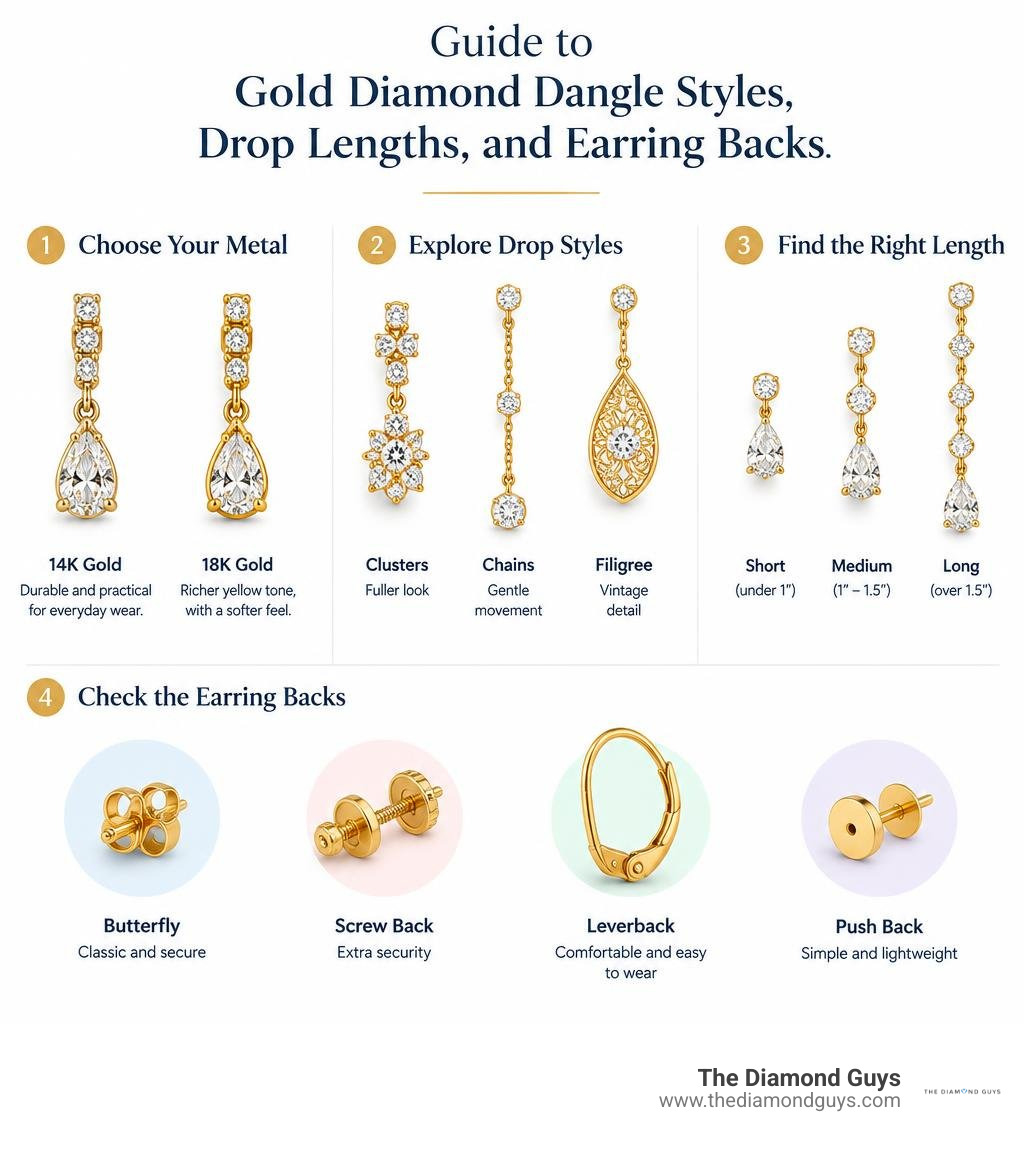
When choosing gold diamond dangle earrings, start with the metal, then the shape of the drop. Solid 14K gold is a practical choice for frequent wear; 18K gold has a richer yellow tone but can show wear more easily. Choose clusters for a fuller look, chain drops for gentle movement, or filigree for vintage detail. Check the earrings' length, weight, and backs before buying, especially if you plan to wear them all day.
A matching diamond necklace can tie the look together, but it does not need to copy the earrings. Let one piece be the focus. For broader context on how diamond quality affects brilliance, the Gemological Institute of America offers independent educational resources on the 4Cs.
I'm Morgan Price, a jewelry and style specialist who uses careful source research to explore fine gold diamond dangle earrings. I work with content teams to make guides clear and useful.
Explore related styles and guides:
Precious Metal Selection: Solid Gold vs. Gold-Plated Settings
Choosing the right metal foundation is the most critical decision when curating dangling earrings. The metal alloy determines not only the visual warmth and luster of the piece but also its longevity, structural integrity, and how comfortable it feels against sensitive skin throughout a long evening.
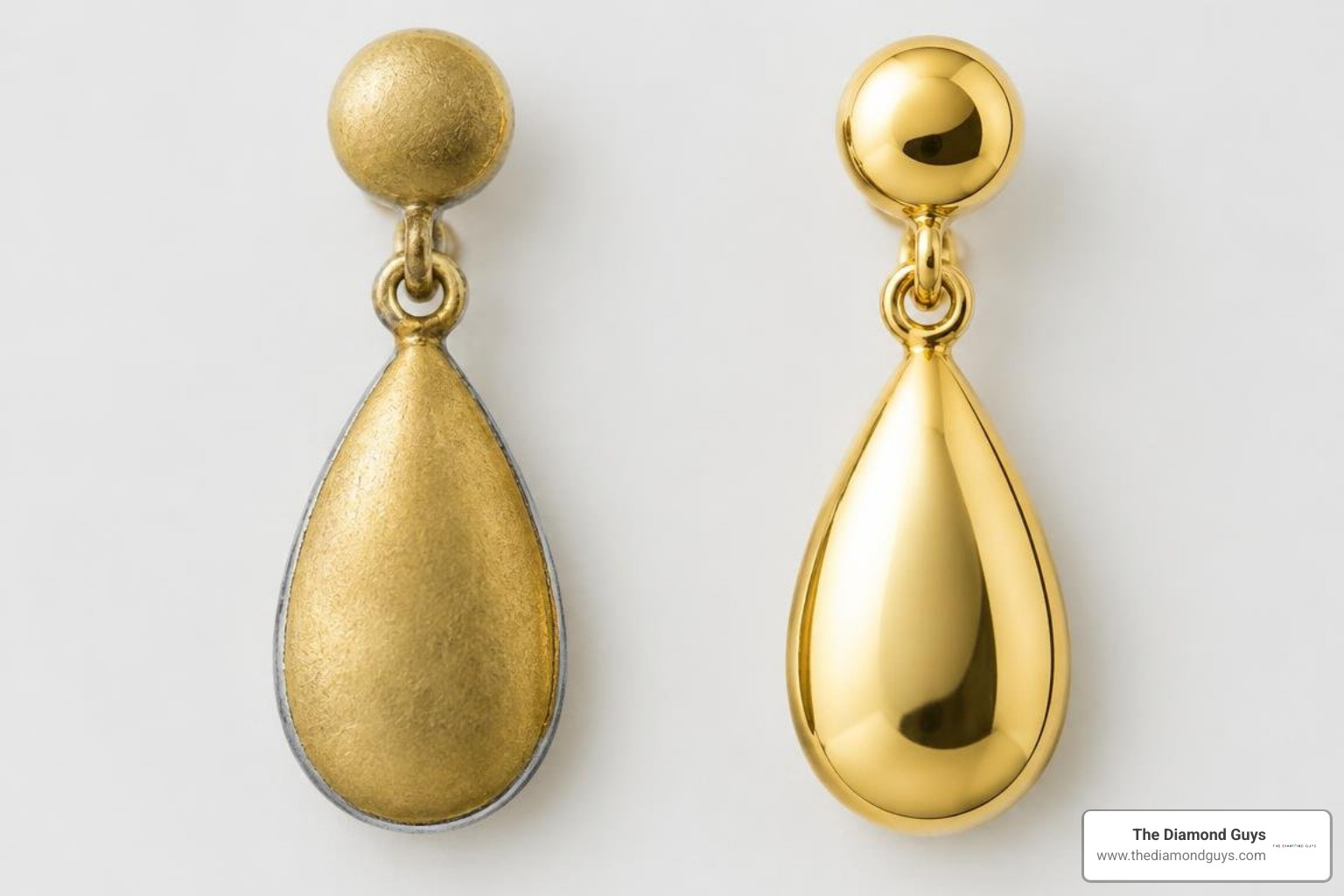
Solid gold alloys blend pure elemental gold with durable metals like copper, silver, zinc, or nickel to provide strength. In contrast, gold-plated jewelry relies on an electrochemically applied micro-layer of gold over a base metal core, such as brass or .925 sterling silver. While plated options offer an entry-level price point, solid gold ensures heirloom longevity and enduring value.
| Metal Type | Gold Purity (%) | Durability Level | Maintenance Needs | Long-Term Value Retention |
|---|---|---|---|---|
| 10K Solid Gold | 41.7% | Exceptional (Highly scratch-resistant) | Minimal; occasional gentle polish | High (Retains scrap and intrinsic metal value) |
| 14K Solid Gold | 58.3% | Great (Optimal balance of hardness and purity) | Low; routine warm water cleaning | High (Industry standard fine jewelry benchmark) |
| 18K Solid Gold | 75.0% | Moderate (Richer color, softer alloy) | Moderate; periodic professional polishing | Very High (Substantial precious metal content) |
| Gold-Plated Silver | Micron layer | Low (Surface plating wears down over time) | High; requires replating to prevent base tarnish | Minimal (Value tied purely to silver substrate) |
Karat Purity: 10K, 14K, and 18K Gold
The purity of solid gold is measured in karats, with 24 karats representing 100% pure gold. Because pure gold is too malleable to hold delicate gemstones securely in kinetic settings, it is alloyed to achieve various balances of beauty and durability:
- 10K Gold (41.7% Pure Gold): Containing a higher percentage of alloy metals, 10K gold is exceptionally hard and scratch-resistant. It represents a budget-friendly, rugged choice for lightweight dangle earrings intended for frequent wear.
- 14K Gold (58.3% Pure Gold): Widely regarded as the industry sweet spot, 14K gold offers a warm glow paired with outstanding tensile strength. It holds delicate prongs firmly in place and resists everyday knocks and scuffs.
- 18K Gold (75.0% Pure Gold): Offering a rich, buttery yellow saturation, 18K gold contains a high proportion of pure gold. It provides a luxurious look and natural hypoallergenic qualities, though its relative softness calls for mindful handling during active wear.
Plated Silver and Composite Bases
Gold-plated jewelry features a thin exterior skin—often measured in single microns—deposited over a secondary metal substrate. A common configuration includes 18K yellow gold plated over .925 sterling silver.
While these pieces deliver the visual appeal of warm gold at a fraction of the cost, friction and skin oils will gradually erode the surface plating over time. For statement dangles that experience kinetic motion against clothing or hair, solid gold remains the premier investment for lifelong wear without the worry of peeling or base metal exposure.
Evaluating Stone Quality in Gold Diamond Dangle Earrings
Unlike stationary studs, gold diamond dangle earrings sway with every step, turning and catching ambient light across multiple angles. This kinetic movement amplifies scintillation, making diamond grading and stone architecture central to the overall brilliance of the piece.
Color, Clarity, and Carat Weight Dynamics
Understanding the 4Cs helps you maximize aesthetic impact while maintaining your target budget:
- Diamond Color: In yellow gold settings, stones graded in the near-colorless range (such as G-H or I-J) perform exceptionally well. The natural warmth of the gold prongs complements the subtle body tone of I-J diamonds, allowing them to appear bright and vibrant without requiring the premium price of D-F colorless grades.
- Diamond Clarity: Eye-clean clarity grades such as VS (Very Slightly Included) and SI (Slightly Included) offer brilliant light dispersion free of visible imperfections. While lower clarity tiers (such as I1-I2) feature inclusions that can diffuse sparkle under close inspection, well-faceted cluster arrangements can effectively mask minor internal traits across moving dangles.
- Carat Weight (cttw): Total diamond weight is distributed across both earrings and their articulated links. A 1.0 cttw earring pair provides substantial presence, while subtle 0.25 to 0.65 cttw drops offer delicate refinement suitable for daytime professional wear.
Diamond Composites vs. Lab-Grown and Natural Diamonds
The composition of your diamond drops impacts both pricing structure and optical brilliance:
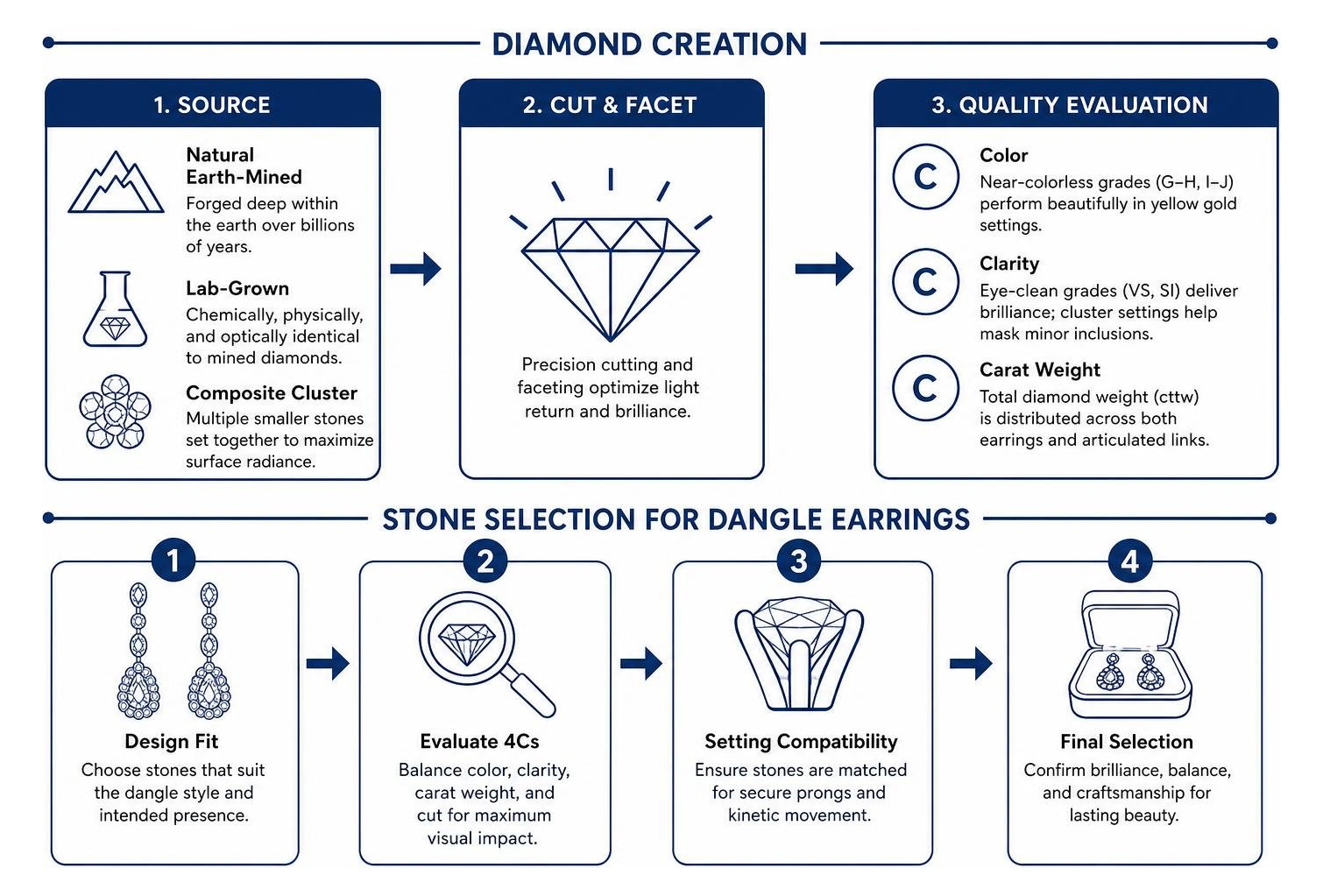
- Natural Earth-Mined Diamonds: Forged deep within the earth over billions of years, natural diamonds represent classic luxury and lasting heirloom value.
- Lab-Grown Diamonds: Chemically, physically, and optically identical to mined diamonds, lab-created diamonds offer superior clarity and carat size at an accessible price point, pairing pristine brilliance with modern sustainability.
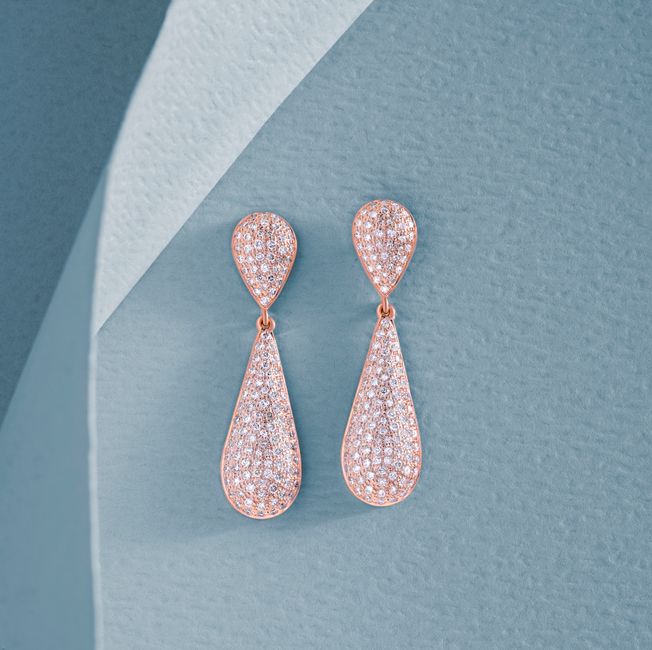
- Composite Diamond Clusters: Rather than relying on a single large solitaire, composite cluster settings assemble multiple smaller, precision-cut round or baguette stones tightly together in seamless prongs. This design technique—seen in stunning pieces like these 14k white gold teardrop cluster earrings—maximizes surface radiance and offers the visual spread of a multi-carat solitaire at significant cost savings.
Design Architecture, Accents, and Secure Findings
The design of gold diamond dangle earrings dictates how they move, catch the eye, and rest on the earlobe. From modern architectural drops to fluid chain links, thoughtful engineering balances dramatic beauty with everyday wearable comfort.
Popular Design Features in Gold Diamond Dangle Earrings
Modern jewelry designers incorporate diverse aesthetic styles to accentuate kinetic sparkle:
- Cluster Settings: Groupings of petite round brilliants create high-impact reflective surfaces that shimmer from every vantage point.
- Linear Chain Drops: Delicately suspended gold links hold bezel-set or prong-set diamonds, delivering continuous, rhythmic movement that elongates the neck.
- Vintage Filigree and Milgrain: Intricate open metalwork, scroll motifs, and beaded milgrain borders introduce antique romance to yellow and white gold dangles.
- Gemstone Accents: Pairing diamonds with vibrant colored gemstones adds regal contrast. For a fresh pop of color, explore styles like these 18k white gold diamond sapphire flower dangle earrings or the geometric Art Deco styling found in 18k white gold diamond baguette earrings.
Finding Mechanisms: Push Backs, Screw Backs, and Leverbacks
Because dangle earrings carry more weight and movement than flush studs, choosing the right closure mechanism is essential to prevent accidental loss and avoid lobe fatigue.
| Finding Mechanism | Security Level | Ease of Use | Comfort on Lobe | Best Suited For |
|---|---|---|---|---|
| Post & Friction Push Back | Standard | Very Easy | High | Lightweight drops, smaller cluster dangles |
| Threaded Screw-On Back | Exceptional | Moderate (Requires threading) | High | High-value stones, active evening wear |
| Hinged Leverback | Excellent | Easy | Exceptional | Medium-to-heavy dangles, all-day comfort |
| French Wire / Hook | Fair (Without stopper) | Instant | Very High | Casual, lightweight chain drops |
Coordinating Dangles with Complementary Jewelry
When styling statement drop earrings, balance is key to achieving a cohesive silhouette. If your earrings feature fluid chain movement and dramatic sparkle, pair them with subtle, clean neckwear or complementary wristwear rather than competing statement collars.
For multi-pierced ears, balance long drops in your first piercing with minimalist accents higher up the lobe. You might pair primary dangles with 18k white gold mixed shape hoop earrings or anchor an adjacent ear stack with petite 18k white gold three stone cluster studs for balanced brilliance.
Pricing Dynamics, Authenticity, and Care
Understanding market valuations, hallmark verifications, and essential maintenance practices ensures your fine gold jewelry retains its brilliance and monetary value for decades to come.
Price Ranges and Valuations for Gold Diamond Dangle Earrings
The fine jewelry marketplace offers gold diamond dangle earrings across multiple price tiers, influenced by gold karat weight, total diamond carat weight, craftsmanship complexity, and brand provenance:
- Accessible Fine Jewelry ($500 – $900): Pieces in this tier typically feature 10K or 14K solid gold paired with diamond-cut accents or 0.20 to 0.35 cttw diamond clusters, delivering noticeable sparkle at an approachable price.
- Mid-Tier Luxury ($1,000 – $2,500): Solid 14K or 18K yellow and white gold settings featuring 0.50 to 1.0 cttw natural or lab-grown diamonds, organic golden South Sea pearls, or intricate artisan chain drops.
- High-End & Antique Provenance ($3,000 – $10,000+): Rare vintage pieces, such as antique 18K yellow gold filigree earrings set with high-clarity VS diamonds, custom master-crafted suites, and large-carat natural diamond dangles carrying premium independent certifications.
Verifying Authenticity and Hallmarks
When investing in fine jewelry, always verify the authenticity of the precious metals and gemstones:
- Inspect Official Hallmarks: Legitimate gold pieces feature crisp laser or stamped purity hallmarks inside the finding or post. Look for 10K (.417), 14K (.585), or 18K (.750). Plated pieces are typically marked .925 or GP/HGE.
- Diamond Certification: Fine diamond dangles should be accompanied by gemological documentation verifying stone clarity, color grade, and metal purity.
- Buy from Established Jewelers: Choose reputable jewelers who provide transparent sourcing details, documented appraisals, and clear return policies.
Cleaning and Maintenance Best Practices
Articulated joints, prong channels, and filigree scrollwork in dangle earrings can collect skin oils, cosmetic sprays, and dust over time. Maintain their original fire with these straightforward care habits:
- Warm Soapy Soaks: Soak your earrings for 15 minutes in a bowl of warm water mixed with a few drops of mild dish soap.
- Soft-Bristle Brushing: Gently clean behind the stones and around the moving chain links using an extra-soft baby toothbrush.
- Rinse and Dry: Rinse thoroughly in clean lukewarm water and pat dry with a lint-free microfiber polishing cloth.
- Mindful Storage: Store dangle earrings flat inside individual felt-lined compartments or on padded hanging trees to prevent delicate chains from tangling or scratching softer 18K gold surfaces.
Frequently Asked Questions About Diamond Dangle Earrings
How do I choose between 14K and 18K gold for dangle earrings?
Choose 14K gold if your priority is daily durability, lower scratch susceptibility, and a balanced price point. Opt for 18K gold if you prefer a deeper, more saturated yellow gold color and higher precious metal purity for formal events or sensitive skin.
Are screw-on backs better than push backs for diamond dangles?
Threaded screw-on backs offer far greater security than standard friction push backs. Because dangle earrings move continuously and can catch on hair or high collars, screw backs eliminate the risk of the backing slipping off during active wear.
Can diamond dangle earrings be worn comfortably for everyday occasions?
Yes. Look for lightweight designs (under 2 grams per pair) with shorter drop lengths (between 0.75 and 1.25 inches). Sleek bezel or low-profile cluster settings prevent snags on knitwear and provide effortless daytime comfort.
Conclusion
Diamond dangle earrings in gold capture movement, light, and timeless style in a single elegant design. Whether you are drawn to the fiery brilliance of modern cluster drops, the fluid motion of delicate chain links, or the romantic craftsmanship of vintage filigree, selecting the right metal purity and secure findings ensures a lifetime of joyful wear.
At The Diamond Guys, we pride ourselves on providing 5-star personalized guidance, transparent education, and ethically sourced natural and lab-grown diamonds across our Scottsdale, AZ, Phoenix, AZ, and Los Angeles, CA studios. For more inspiration on curating your fine jewelry wardrobe, explore custom styling tips in our diamond stud earrings guide.


