

The Ultimate Shopping Guide for 4 and 5 Carat Lab Grown Diamonds
Why Diamonds That Are Man Made Are Revolutionizing Fine Jewelry
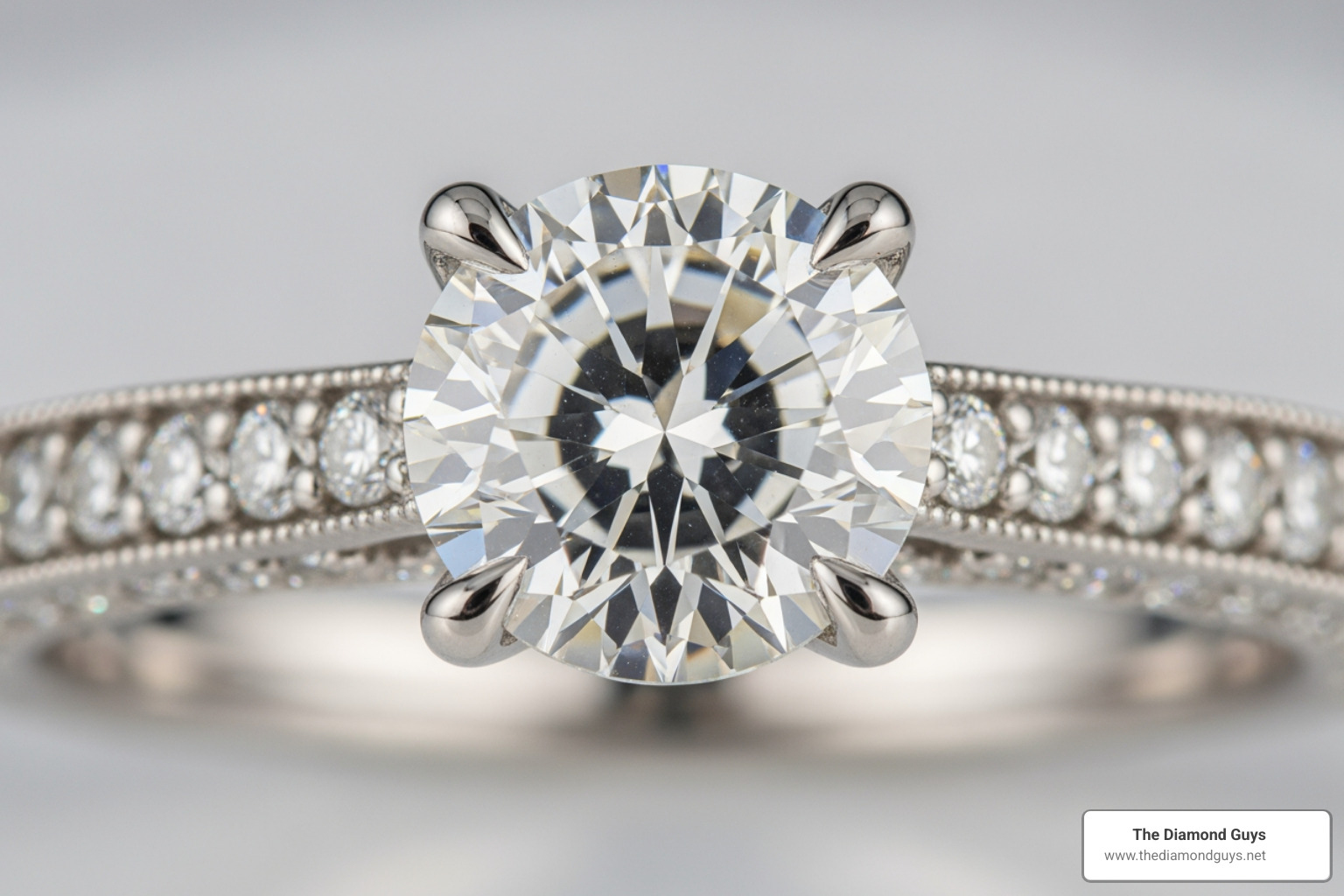
Diamonds that are man made are changing the jewelry landscape, offering couples a smarter way to get more diamond for their money. Here's what you need to know:
Quick Answer:
- What they are: Real diamonds created in a lab, chemically and physically identical to mined diamonds
- Key benefit: 30-70% less expensive than natural diamonds of the same quality
- Same properties: Hardness (10 on Mohs scale), brilliance, fire, and durability
- How they're made: Two primary methods - HPHT (High Pressure/High Temperature) and CVD (Chemical Vapor Deposition)
- Graded the same: Evaluated using the same 4Cs (Cut, Color, Clarity, Carat) as natural diamonds
Lab-grown diamonds aren't imitations or simulants like cubic zirconia. They're genuine diamonds with the same carbon crystal structure as stones formed deep in the Earth. The only difference? They're created in a matter of weeks instead of billions of years.
This matters because you can get a stunning 4 or 5 carat diamond for a fraction of what you'd pay for a natural stone. A 2-carat lab-grown diamond might cost around $5,000, while a comparable mined diamond could run $20,000 or more. That's a savings of $15,000 you could put toward your honeymoon, wedding, or a custom setting.
The market has shifted dramatically. In 2023, lab-grown diamonds represented 17% of the diamond jewelry market, up from just 2% in 2013. Major retailers now offer them alongside natural diamonds, and certification labs like GIA and IGI grade them using the same rigorous standards.
I'm Morgan Price, and I've spent years helping couples steer diamonds that are man made, ensuring they get exceptional quality and value for their investment. Let me guide you through what makes large lab-grown diamonds such a compelling choice for your engagement ring or special jewelry piece.

What Exactly Are Lab-Grown Diamonds?
When we talk about diamonds that are man made, we're not talking about imitations. We're talking about genuine diamonds. These marvels of modern science are chemically, physically, and optically identical to their natural counterparts. They possess the same crystalline structure, the same sparkle, and the same incredible durability that has made diamonds revered for centuries. The only fundamental difference lies in their origin: one is formed deep within the Earth, and the other is cultivated in a controlled laboratory environment.
The debate about whether lab-grown diamonds are "real" diamonds was settled definitively by the Federal Trade Commission (FTC) in 2018. The FTC ruled that "A diamond is a diamond no matter whether it is grown in a lab or comes out of the ground." This official stance underscores the fact that the material itself is diamond, regardless of how it was created. This means that when you choose a lab-grown diamond, you are choosing a real diamond.
Just like natural diamonds, lab-grown diamonds are rigorously evaluated and graded based on the universal "4Cs": Cut, Color, Clarity, and Carat weight. This standardized system ensures that you can compare the quality of a lab-grown diamond with that of a natural diamond, making your shopping experience transparent and informed.
How Lab-Grown Diamonds Compare to Natural Diamonds
To truly appreciate diamonds that are man made, it helps to see how they stack up against natural diamonds. While their origin story differs, their essential characteristics are remarkably similar.
| Feature | Lab-Grown Diamonds | Natural Diamonds |
|---|---|---|
| Origin | Created in a laboratory | Formed deep within the Earth |
| Chemical Composition | Pure Carbon | Pure Carbon |
| Physical Properties | Identical (Hardness, Density, Refractive Index) | Identical (Hardness, Density, Refractive Index) |
| Optical Properties | Identical (Brilliance, Fire, Scintillation) | Identical (Brilliance, Fire, Scintillation) |
| Formation Time | Weeks | Millions to Billions of Years |
| Price | 30-70% less than comparable natural diamonds | Significantly higher due to rarity and mining costs |
| Environmental Impact | Significantly lower energy and water usage | Higher energy and water usage from mining |
| Ethical Sourcing | Guaranteed conflict-free | Potential for ethical concerns (conflict diamonds) |
| Resale Value | Less historical data, generally lower resale value | Traditionally holds more resale value, though not an investment |
One of the most defining characteristics of any diamond, whether natural or lab-grown, is its incredible hardness. Both types register a perfect 10 on the Mohs scale, making them the hardest known natural substance. This inherent hardness makes them exceptionally durable and resistant to scratching, ensuring your diamond will stand the test of time.
Beyond hardness, diamonds that are man made also share the same excellent thermal conductivity as natural diamonds. In fact, isotopically pure diamond boasts the highest thermal conductivity of any known solid, reaching 30 W/cm·K at room temperature, which is 7.5 times higher than copper. This property is why diamonds are so valuable in industrial applications, which we'll explore later.
Just like natural diamonds, lab-grown diamonds can also exhibit inclusions and fluorescence. Inclusions are tiny imperfections or traces of non-diamond material trapped within the crystal during growth. Fluorescence is a glow some diamonds emit when exposed to ultraviolet light. These characteristics are unique to each stone and are part of what makes every diamond, whether from the earth or the lab, a one-of-a-kind treasure.
Understanding the Value of Diamonds That Are Man Made
The most compelling aspect for many of our clients in Scottsdale and Los Angeles when considering diamonds that are man made is the significant value they offer. These diamonds typically cost 30-70% less than natural diamonds of comparable quality and size. This isn't because they are inferior; it's a reflection of the controlled production environment and the absence of the immense costs associated with mining, exploration, and the traditional diamond supply chain.
The dramatic reduction in production costs has also played a huge role in making lab-grown diamonds more accessible. In 2008, the cost to produce a single lab-grown diamond was around $4,000. Today, thanks to technological advancements and increased efficiency, that cost has plummeted to $200-$300 per stone and continues to fall. This efficiency directly translates into savings for you, the consumer.
While the resale value of natural diamonds has historically been higher, it's crucial to understand that diamonds, in general, are not typically considered financial investments. As one expert humorously put it, "Purchasing a diamond (natural or lab grown) is like buying a new car and driving it off the lot." The value you get is in the beauty, symbolism, and enjoyment of wearing a stunning piece of jewelry. The sentimental value, after all, is priceless.
To illustrate the incredible savings, consider this: a 2-carat lab-created round diamond might cost approximately $5,000. For a natural diamond of similar quality, you could expect to pay around $20,000. That's a difference of $15,000. Imagine what you could do with those savings – perhaps a more elaborate custom setting, a dream honeymoon, or even a down payment on something else meaningful. The choice is yours, and it's a powerful one.
The Science and History of Diamonds That Are Man Made
The journey to create diamonds that are man made is a fascinating tale of scientific perseverance and innovation, stretching back centuries. Early attempts to synthesize diamonds were more akin to alchemical dreams, with scientists like Smithson Tennant proving in 1797 that diamonds were pure carbon. J.B. Hannay and Henri Moissan made notable but often unreproducible claims in the late 19th century, with Sir Charles Algernon Parsons reportedly spending 40 years and a fortune trying to replicate these experiments.
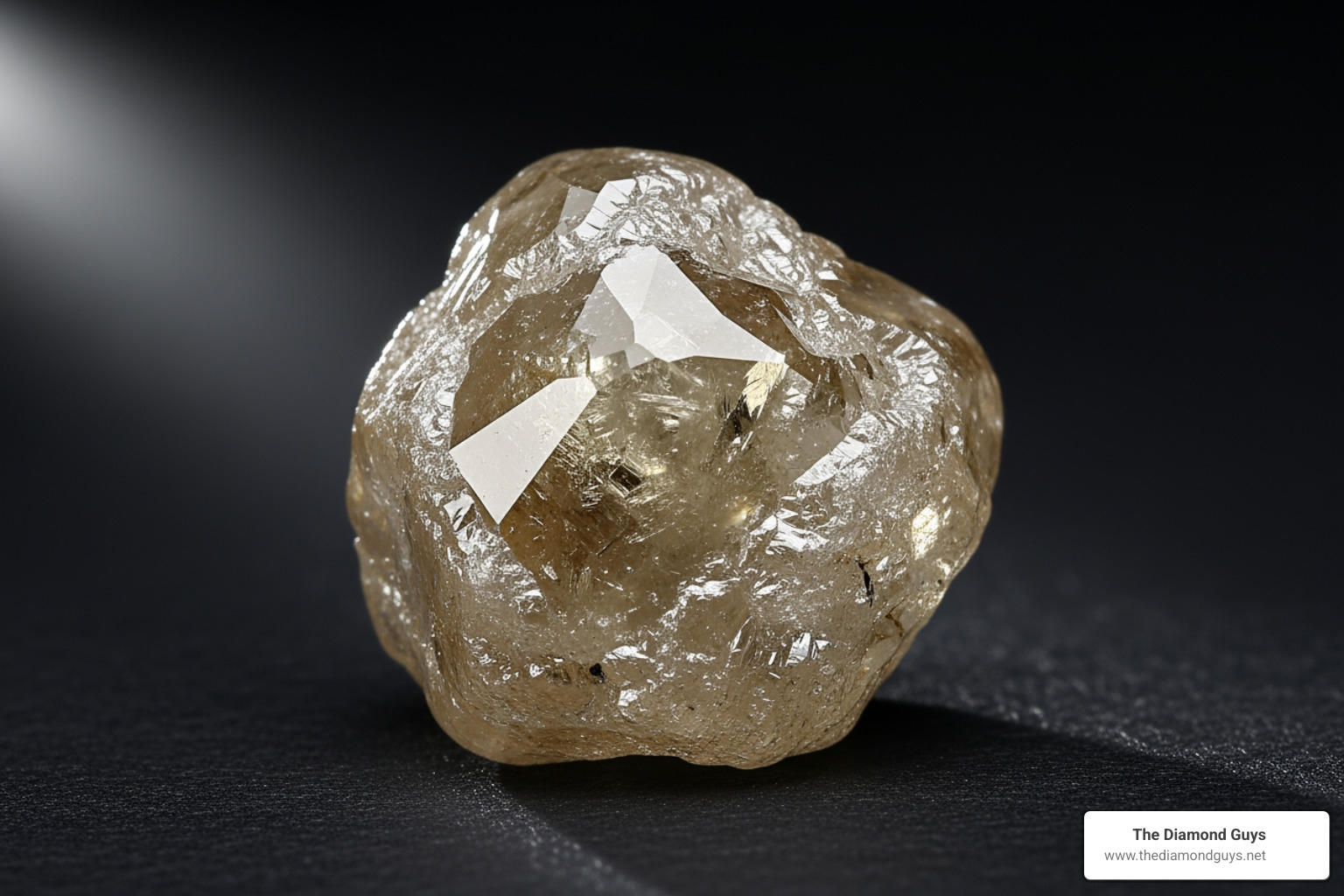
The real breakthrough came in the mid-20th century. The first proven synthetic diamonds were made by GE in 1954, under a top-secret initiative codenamed "Project Superpressure." A team of brilliant scientists, including Herbert Strong and Howard Tracy Hall, successfully subjected carbonaceous materials to immense heat and pressure. Their success was dramatically confirmed when the resulting material, possessing a Mohs hardness of 10, broke their cutting tools. This was a monumental achievement, though these early diamonds were primarily for industrial use.
How Are Lab-Grown Diamonds Created?
Today, two primary methods dominate the production of gem-quality diamonds that are man made: High Pressure/High Temperature (HPHT) and Chemical Vapor Deposition (CVD). Both processes are designed to replicate the natural conditions under which diamonds form, albeit in a matter of weeks rather than eons.
High Pressure/High Temperature (HPHT): This method directly mimics the high pressure, high temperature conditions that create natural diamonds deep within the Earth. A small diamond seed crystal is placed in a growth chamber along with a carbon source (often graphite) and a metal flux catalyst. This setup is then subjected to extreme temperatures (1300-1600 °C) and pressures (above 870,000 pounds per square inch). Under these conditions, the metal flux melts the carbon, which then crystallizes around the seed, growing into a larger diamond. HPHT-grown diamonds often exhibit flat bases and a combination of octahedral and cubic faces, distinguishing them from the typically octahedral shape of natural diamonds.
Chemical Vapor Deposition (CVD): This more recent method involves placing a thin slice of diamond seed in a vacuum chamber. The chamber is then heated to temperatures around 900-1200 °C and filled with carbon-rich gases (like methane) and hydrogen. Microwaves or other energy sources break down the gas molecules, releasing carbon atoms that "rain" down and crystallize onto the diamond seed layer by layer. CVD-grown diamonds typically have a tabular shape and can sometimes show banded strain patterns. While many CVD diamonds initially have a brownish tint, they can be treated with HPHT annealing to achieve desirable colorless or fancy colors.
Both methods produce diamonds with the exact same chemical composition and physical properties as natural diamonds. The key is in the precise control of the environment, allowing us to cultivate beautiful, real diamonds in our labs.
From Industrial Grit to Gem-Quality Jewels
The history of diamonds that are man made began not in luxury jewelry, but in the demanding world of industry. The first proven synthesis in the 1950s by GE yielded small, often yellowish, and imperfect crystals that were perfect for industrial applications like abrasives, cutting tools, and drill bits. Indeed, even today, an estimated 98% of industrial-grade diamond demand is supplied by synthetic diamonds due to their superior performance and cost-effectiveness.
However, scientists' ambitions extended beyond industrial grit. GE continued its research, and by 1971, they successfully produced gem-quality crystals. These early stones were small, typically between 0.26 and 0.30 carats, and often had a yellowish tint due to nitrogen impurities. But this marked a pivotal moment: the birth of the gem-quality lab-grown diamond.
Over the decades, technology rapidly advanced. Before 2010, most synthetic diamonds were smaller than half a carat. But continuous innovation led to significant improvements in size and clarity. By 2015, a record was set for an HPHT colorless diamond at 10.02 carats. And the progress hasn't stopped: by 2022, gem-quality diamonds of 16-20 carats were being produced, with projections for synthetic diamonds up to 125 carats by 2025. What was once only possible in nature over billions of years can now be achieved in weeks, yielding stunning, large diamonds that are man made that are indistinguishable from their mined counterparts without specialized equipment.
Shopping for Your 4 or 5 Carat Lab-Grown Diamond
For those seeking truly impressive size and sparkle, exploring 4 or 5 carat diamonds that are man made opens up a world of possibilities without the prohibitive price tag of natural diamonds. At The Diamond Guys in Scottsdale and Los Angeles, we specialize in helping you find or create the perfect large lab-grown diamond piece.
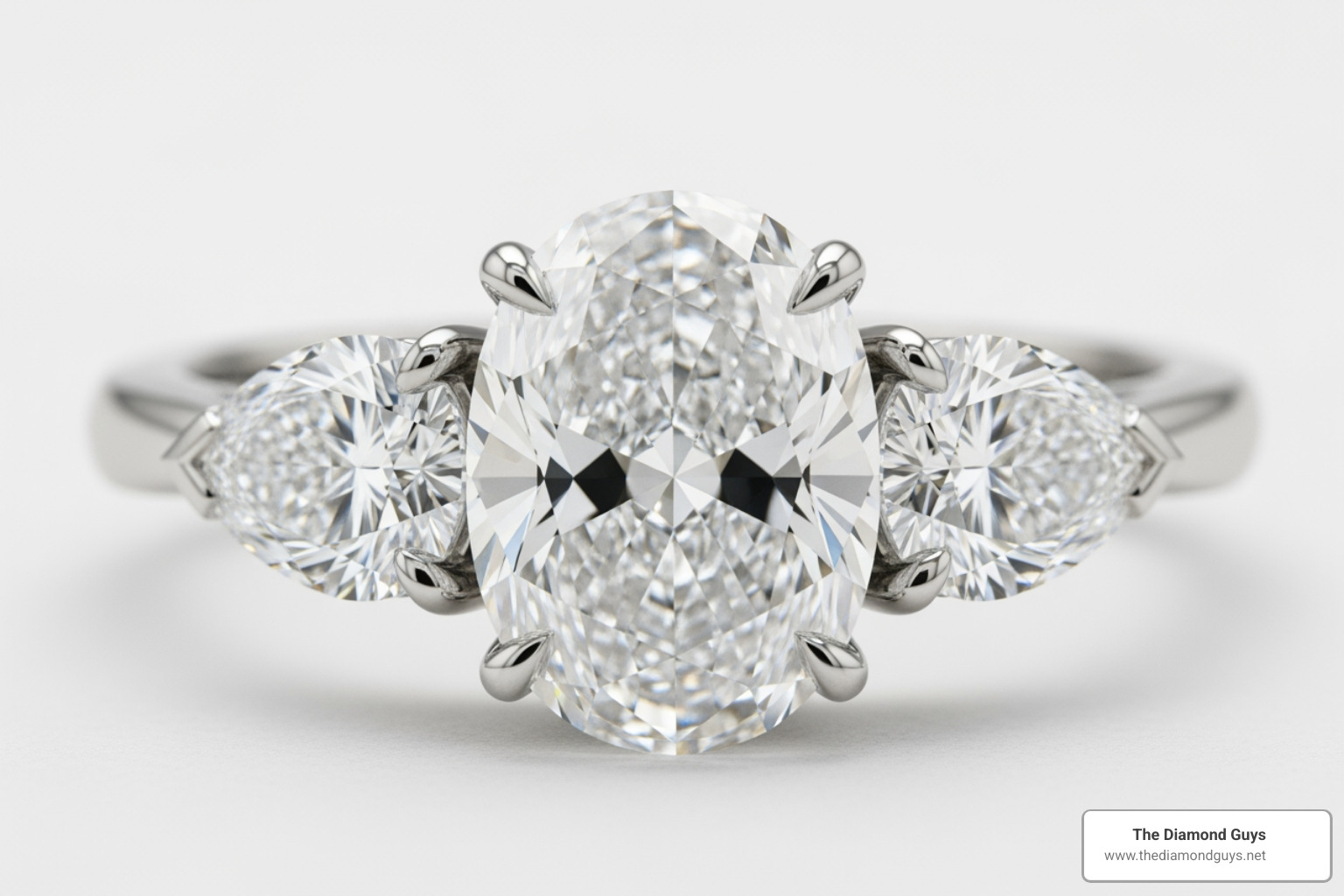
When selecting a large diamond, whether natural or lab-grown, the 4Cs (Cut, Color, Clarity, and Carat) become even more critical. For a 4 or 5 carat stone, these factors are magnified, directly influencing the diamond's overall beauty and presence.
- Cut: This is arguably the most important of the 4Cs, especially for larger diamonds. A superb cut will maximize a diamond's brilliance, fire, and scintillation, regardless of its size. For a 4 or 5 carat diamond, an excellent cut can make the stone appear even larger and more vibrant. We carefully select and offer only well-cut diamonds to ensure maximum sparkle.
- Color: For larger diamonds, color becomes more noticeable. While colorless (D-F) diamonds are highly prized, near-colorless (G-J) options can still appear stunning, especially when set in white gold or platinum, and offer a slight budget advantage.
- Clarity: Inclusions, which are tiny internal imperfections, can be more visible in larger diamonds. We recommend aiming for eye-clean diamonds (VS1, VS2, or SI1 grades), where inclusions are not visible to the naked eye, ensuring your large diamond looks flawless.
- Carat: This refers to the diamond's weight. For 4 or 5 carat diamonds that are man made, you're already in the field of impressive size, allowing for a truly statement piece.
Maximizing Your Budget with a Lab-Grown Diamond
Choosing a large lab-grown diamond is a strategic move to maximize your budget without compromising on size or quality. Because these diamonds that are man made are significantly more affordable, you can achieve a much larger carat weight than you might have thought possible with a natural diamond.
The savings aren't just for the stone itself. With the money you save on a lab-grown diamond, you have the flexibility to:
- Upgrade your setting: Opt for a more elaborate setting, perhaps with intricate pavé details, a halo, or a unique vintage design that perfectly complements your large center stone.
- Choose premium metals: Select a luxurious metal like platinum or 18k gold without stretching your budget.
- Create a custom design: Why settle for off-the-shelf when you can design a piece that truly reflects your unique style? Our experts at The Diamond Guys can help you craft a one-of-a-kind custom engagement ring that perfectly showcases your 4 or 5 carat lab-grown diamond. This allows you to get exactly what you're looking for with less sticker shock.
Consider the example of a 2-carat lab-created round diamond at around $5,000 versus a $20,000 natural one. This substantial difference allows for incredible freedom in design and personalization, ensuring your piece is not only stunning but also uniquely yours.
Why Certification Matters for Large Lab Diamonds
When investing in a significant piece like a 4 or 5 carat lab-grown diamond, certification from a reputable independent gemological laboratory is non-negotiable. These certifications provide an unbiased assessment of your diamond's quality and confirm its origin.
Leading laboratories like the Gemological Institute of America (GIA) and the International Gemological Institute (IGI) issue comprehensive reports for diamonds that are man made. The GIA, for instance, provides a distinct GIA Laboratory-Grown Diamond Report. This report clearly identifies the diamond as "laboratory-grown" and details its 4Cs, just as they would for a natural diamond. The report also includes a laser inscription on the diamond's girdle, stating "laboratory-grown" along with the report number, ensuring clear identification and authenticity.
This certification offers invaluable peace of mind. It verifies that your diamond meets the stated quality standards, confirms it is indeed a lab-grown diamond, and provides official documentation for insurance purposes. Especially for larger stones, where value is significant, having this third-party verification is crucial.
The Smart Choice: Benefits of Choosing Lab-Grown
Choosing diamonds that are man made isn't just a trend; it's a smart, conscious decision that aligns with modern values. Beyond the obvious cost-effectiveness, these diamonds offer significant advantages in ethical sourcing and environmental sustainability.
At The Diamond Guys, we've seen how our clients in Scottsdale and Los Angeles appreciate knowing their beautiful diamond also represents a responsible choice.
Environmental and Ethical Benefits of Diamonds That Are Man Made
The environmental footprint of lab-grown diamonds is notably smaller than that of mined diamonds. The traditional mining process involves extensive land disturbance, habitat destruction, and significant energy and water consumption. In contrast, lab-grown diamonds are created in controlled environments, drastically reducing these impacts.
Consider these compelling statistics:
- Energy Consumption: Lab-created diamonds use approximately 250 million joules of energy per carat, whereas mined diamonds consume around 538.5 million joules per carat. That's a significant reduction in energy demand.
- Water Usage: The difference in water usage is even more striking. Lab-created diamonds consume a mere 18 gallons of water per carat, compared to an astonishing 126 gallons for their mined counterparts.
- Carbon Emissions: Lab-grown diamonds also boast startlingly lower carbon emissions. Some pioneering companies are even growing their diamonds with 100% renewable energy, further minimizing their environmental impact.
Beyond the environment, the ethical considerations are paramount for many. Diamonds that are man made are inherently conflict-free. They bypass the complex and often problematic supply chains associated with mined diamonds, guaranteeing that your purchase does not contribute to human rights abuses or fund conflict. This peace of mind is a priceless aspect for many consumers today.
The Market Shift: Why Everyone is Talking About Lab Diamonds
The rise of diamonds that are man made is more than just a passing fad; it represents a fundamental shift in consumer perception and industry dynamics. Once viewed with skepticism, lab-grown diamonds are now celebrated for their value, beauty, and ethical credentials.
This shift is largely driven by changing consumer values, particularly among younger buyers. These consumers are increasingly conscious of the ethical and environmental impact of their purchases. They appreciate that lab-grown diamonds offer a guilt-free luxury, allowing them to acquire a stunning, large diamond without compromising their principles. This growing demand has led to a surge in market share; in 2018, lab-grown diamonds accounted for 3.4% of jewelry sector sales worldwide, projected to rise to 7.5% by 2021, and reaching 17% of the diamond jewelry market by 2023. This rapid growth indicates a strong and sustained consumer interest.
Even major players in the traditional diamond industry have acknowledged this shift, with some historically natural-diamond-focused companies launching their own lab-grown diamond lines to meet this rising demand. This move is a clear indicator of the mainstream acceptance and growing importance of lab-grown diamonds in the market. The increased availability and choice mean that finding your perfect 4 or 5 carat lab-grown diamond has never been easier or more exciting.
Conclusion: Find Your Perfect Large Lab-Grown Diamond
The world of diamonds that are man made offers an unparalleled opportunity for anyone dreaming of a magnificent 4 or 5 carat diamond. We've explored how these scientifically engineered gems are chemically, physically, and optically identical to natural diamonds, offering the same breathtaking beauty and durability. We've seen how advancements in HPHT and CVD technology have transformed them from industrial tools into exquisite, gem-quality jewels.
The advantages are clear: significant cost savings, guaranteed ethical sourcing, and a considerably smaller environmental footprint. These factors resonate deeply with today's conscious consumer, driving a market shift that shows no signs of slowing down. As technology continues to evolve, we can expect even greater innovations and accessibility in the lab-grown diamond market.
At The Diamond Guys, with our 5-star rated stores in Scottsdale, AZ, and Los Angeles, CA, we are passionate about helping you steer this exciting landscape. We believe in providing expert guidance, ensuring ethical sourcing, and offering a personalized shopping experience that sets us apart. Whether you're envisioning a custom engagement ring or a statement jewelry piece, our team is here to help you select a stunning 4 or 5 carat lab-grown diamond that perfectly captures your dreams and values.
We invite you to experience the difference. Find the perfect large lab-grown diamond for your special occasion and create a piece that will be cherished for a lifetime.
To explore our exquisite collection of diamonds that are man made or discuss a custom design, we encourage you to book a virtual or offline appointment with one of our expert jewelers. We look forward to helping you find your perfect sparkle!


