

The Sparkling Truth About Natural and Lab Grown Diamonds
What Is the Difference Between Real and Synthetic Diamonds?
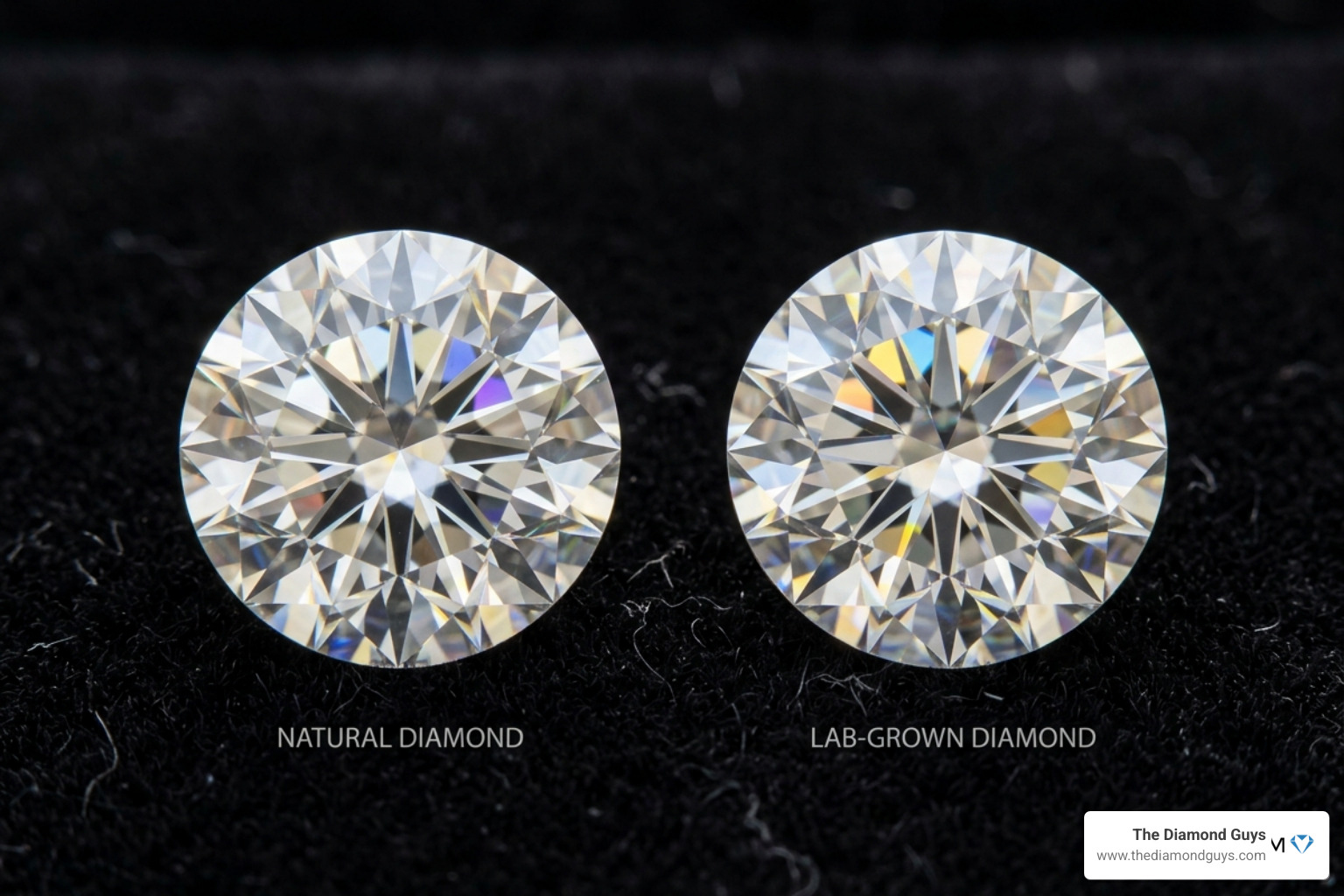
The difference between real and synthetic diamonds comes down to one thing: origin. Here's a quick breakdown:
| Feature | Natural Diamond | Lab-Grown Diamond | Simulant (CZ/Moissanite) |
|---|---|---|---|
| Origin | Earth's mantle | Laboratory | Manufactured (not diamond) |
| Chemical makeup | Pure carbon | Pure carbon | Different compounds |
| Formation time | Up to 3 billion years | A few weeks | Days |
| Hardness (Mohs) | 10 | 10 | 8.5–9.25 |
| Price vs. natural | — | 30–75% less | Much less |
| Certified as diamond? | Yes | Yes | No |
Natural diamonds formed deep inside the Earth billions of years ago. Lab-grown diamonds are made in weeks using technology that replicates those same conditions. Both are real diamonds — chemically, physically, and optically identical. Simulants like cubic zirconia and moissanite, however, are a completely different story — they only look like diamonds.
Whether you're shopping for an engagement ring or just want to understand what you're buying, knowing these differences helps you make a smarter, more confident choice.
I'm Morgan Price, a content and SEO specialist who has spent years researching the difference between real and synthetic diamonds to help consumers navigate the often confusing jewelry market. In this guide, I'll walk you through everything The Diamond Guys want you to know — from how each stone is made to how to tell them apart.
Understanding the Difference Between Real and Synthetic Diamonds
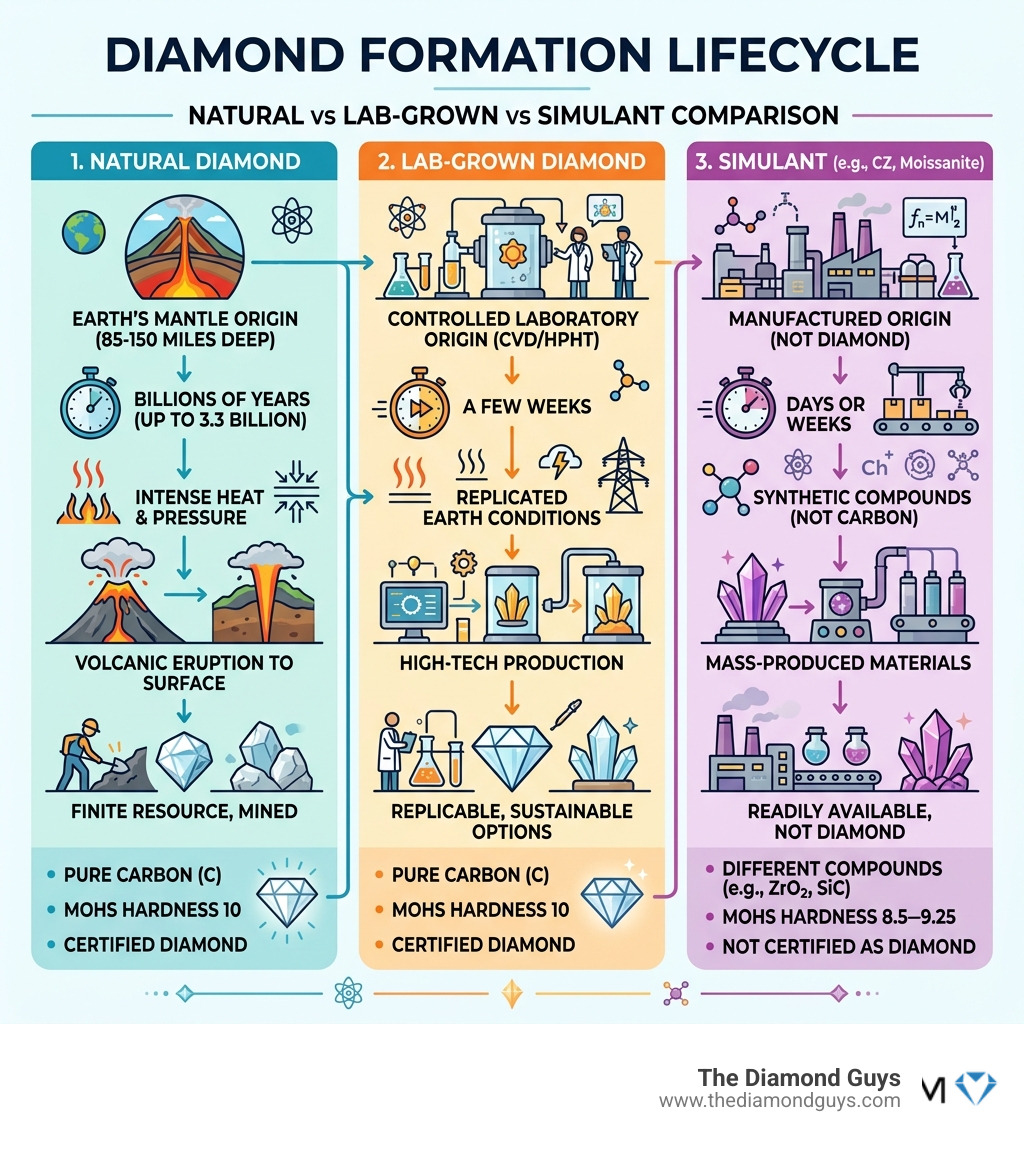
To truly grasp the difference between real and synthetic diamonds, we have to look back — way back. Natural diamonds are essentially time capsules. They were forged between 1 billion and 3.3 billion years ago, long before dinosaurs roamed the Earth. These stones formed under unimaginable heat and pressure about 85 to 150 miles deep within the Earth's mantle.
They didn't just sit there, though. They were brought to the surface by powerful volcanic eruptions through structures called kimberlite pipes. Because they require such specific geological conditions to form, natural diamonds are a finite resource. This rarity is a huge part of their allure; when you hold a natural diamond, you're holding a piece of Earth's ancient history.
In contrast, "synthetic" or lab-grown diamonds are a marvel of modern human ingenuity. While the term "synthetic" can sometimes make people think of something "fake," in the gemological world, it simply means "man-made." As we often explain to our clients at our Scottsdale and Los Angeles showrooms, Are Lab Grown Diamonds Real Diamonds is a question with a resounding "Yes." They are 100% carbon, just like their mined counterparts.

The primary distinction is that lab-grown diamonds are produced in controlled environments. While nature takes billions of years, we can now grow a diamond in a matter of weeks. This difference in "growth history" is what gemologists look for when identifying a stone’s origin.
How Lab-Grown Diamonds Are Created
In 2026, the technology used to create diamonds has reached incredible heights. There are two primary ways these stones are "born" in a lab: HPHT and CVD.
High Pressure High Temperature (HPHT)
The HPHT method is the original way scientists learned to grow diamonds. It essentially mimics the Earth's natural process. A small diamond "seed" is placed into carbon and subjected to extreme heat (about 1,300–1,600°C) and intense pressure (roughly 5-6 GPa). Under these conditions, the carbon melts and begins to form a diamond crystal around the seed. It’s like a high-speed version of what happens 100 miles underground.
Chemical Vapor Deposition (CVD)
CVD is a slightly newer and very popular method. It involves placing a diamond seed in a vacuum chamber filled with carbon-rich gas, like methane. A plasma reactor breaks down the gas molecules, and the carbon atoms "rain down" onto the seed, building the diamond layer by layer. This method allows for incredible precision and often results in very high-quality stones. You can learn more about these scientific processes through the Simulants, Moissanite and Lab-Grown Diamonds | GIA 4Cs resources.
The Science Behind the Difference Between Real and Synthetic Diamonds
At the atomic level, the difference between real and synthetic diamonds is virtually non-existent. Both consist of a crystal lattice of pure carbon atoms. This structure is what gives a diamond its legendary sparkle and unmatched hardness.
However, because lab-grown diamonds are created so much faster than natural ones, they often have different growth patterns. Natural diamonds grow in octahedral shapes, while lab diamonds might grow in cubic or cuboctahedral shapes depending on the method. While these shapes are lost once the diamond is cut and polished, the "atomic fingerprints" remain. For a deeper dive into how long these technologies have been around, check out the History Of Lab Grown Diamonds How Long Have Lab Grown Diamonds Been Around.
Diamond Simulants vs. Lab-Grown Gems
It is vital to distinguish lab-grown diamonds from "simulants." This is where many consumers get confused.
- Cubic Zirconia (CZ): This is a laboratory-grown zirconium dioxide. It’s much softer than a diamond and will scratch or become "cloudy" over time.
- Moissanite: Often mistaken for a lab diamond, moissanite is actually silicon carbide. It is very hard (9.25 on the Mohs scale) and very sparkly, but it has a different "fire" than a diamond — often showing rainbow flashes that are more intense than a diamond’s white light reflection.
As we cover in our guide Is Moissanite A Lab Grown Diamond, these stones are not diamonds. They have different chemical compositions and different physical properties. If you want the real deal, you want either a natural or a lab-grown diamond.
Comparing Value, Durability, and Ethics
When choosing between these two, most of our Scottsdale and Phoenix jewelry buyers focus on three main pillars: price, durability, and the "story" (ethics) behind the stone.
Durability
In terms of toughness, there is no difference between real and synthetic diamonds. Both sit at a perfect 10 on the Mohs scale of hardness. This means they are 58 times harder than any other mineral in nature. Whether you choose natural or lab-grown, your diamond will be resistant to scratching and perfect for everyday wear in an engagement ring. If you’re worried about strength, our article Are Lab Grown Diamonds As Strong As Real Diamonds confirms that they are identical in this regard.
Value and Investment
This is where the paths diverge. Natural diamonds are rare and their supply is limited. Historically, they have held their value well and, in the case of rare fancy colors, can even appreciate significantly.
Lab-grown diamonds, however, are priced based on the cost of production and technology. As technology improves and production increases (with over 110,000 tons of synthetic diamonds now produced annually for various uses), the price has dropped. Today, lab-grown diamonds are often 30% to 75% less expensive than natural diamonds of the same quality.
While this makes them incredibly affordable for a larger center stone, it’s important to note that their resale value is generally much lower than natural diamonds. We suggest checking out our Synthetic Diamond Price Guide for the latest market trends.
Ethical Sourcing and the Difference Between Real and Synthetic Diamonds
The conversation around ethics has changed a lot in the last few years.
- Natural Diamonds: The industry has made massive strides through the Kimberley Process, which ensures that diamonds are "conflict-free." Furthermore, natural diamond mining supports the livelihoods of approximately 10 million people worldwide, contributing to education and healthcare in developing nations.
- Lab-Grown Diamonds: These are often marketed as the "eco-friendly" choice because they don't involve mining. However, growing diamonds is energy-intensive. Some labs use renewable energy, but many others rely on coal-powered grids.
The "right" choice depends on what matters most to you. You can read more about these nuances at The Differences Between Natural Diamonds and Synthetics.
How to Identify and Certify Your Gemstone
To the naked eye — and even under a standard jeweler’s loupe — it is impossible to see the difference between real and synthetic diamonds. Even the most experienced gemologists need specialized equipment to tell them apart.
One of the main ways experts identify them is by looking for trace amounts of nitrogen. Most natural diamonds contain tiny amounts of nitrogen, which they absorbed from the Earth. Lab-grown diamonds, especially those made via CVD, are often nitrogen-free.
Certification is Key
Because they look identical, certification is your best friend. Reputable laboratories like the GIA (Gemological Institute of America) and the IGI (International Gemological Institute) provide detailed reports for both types of stones.
A GIA Laboratory-Grown Diamond Report will clearly state that the stone is man-made. Furthermore, most lab-grown diamonds have a tiny laser inscription on the "girdle" (the edge of the stone) that identifies them as lab-grown. This ensures transparency for future buyers or insurers. If you're curious about the tools we use, read Can A Jeweler Tell The Difference Between Lab Grown Diamonds.
Frequently Asked Questions
Do lab diamonds pass a diamond tester?
Yes, they do! Because lab-grown diamonds have the same thermal and electrical conductivity as natural diamonds, they will pass a standard diamond tester. This is because, at their core, they are diamonds. Simulants like cubic zirconia will fail these tests. You can find more details on this in our post Do Lab Diamonds Pass A Diamond Tester.
Do lab-grown diamonds get cloudy over time?
Absolutely not. Because lab diamonds are chemically identical to natural diamonds, they are incredibly stable. They will not change color, lose their sparkle, or become cloudy. If a "diamond" becomes cloudy, it is likely a simulant like CZ, not a lab-grown diamond. We debunk this myth further in Do Lab Grown Diamonds Get Cloudy.
Can you insure a lab-grown diamond?
Yes, you certainly can. Just like a natural diamond, you can get a lab-grown diamond appraised and insured. The insurance will be based on the replacement cost of the stone. Since lab diamonds cost less to replace than natural ones, your insurance premiums will typically be lower. For more on protecting your investment, see Can You Insure A Lab Grown Diamond.
Conclusion
At the end of the day, the difference between real and synthetic diamonds isn't about quality or beauty — both options offer breathtaking brilliance and lifelong durability. The choice is deeply personal.
Are you drawn to the ancient, "one-of-a-kind" miracle of a natural diamond that was formed billions of years ago? Or do you prefer the modern, high-tech, and budget-friendly appeal of a lab-grown diamond that allows you to get a much larger stone for your investment?
At The Diamond Guys in Scottsdale and Los Angeles, we specialize in helping you navigate these waters without the pressure of a big-box retailer. We believe in ethical sourcing and providing the expert guidance you need to find the perfect stone for your story. Whether you're looking for a custom natural diamond engagement ring or a stunning lab-grown solitaire, we’re here to help.
Ready to start your journey? Dive into our Lab Grown Diamonds - The Ultimate Guide or visit us today to see the sparkle in person.


