

Ethical Diamonds Phoenix Area: How to Shop Conflict-Free in the Valley
Why Shopping for Ethical Diamonds in the Phoenix Area Matters in 2026
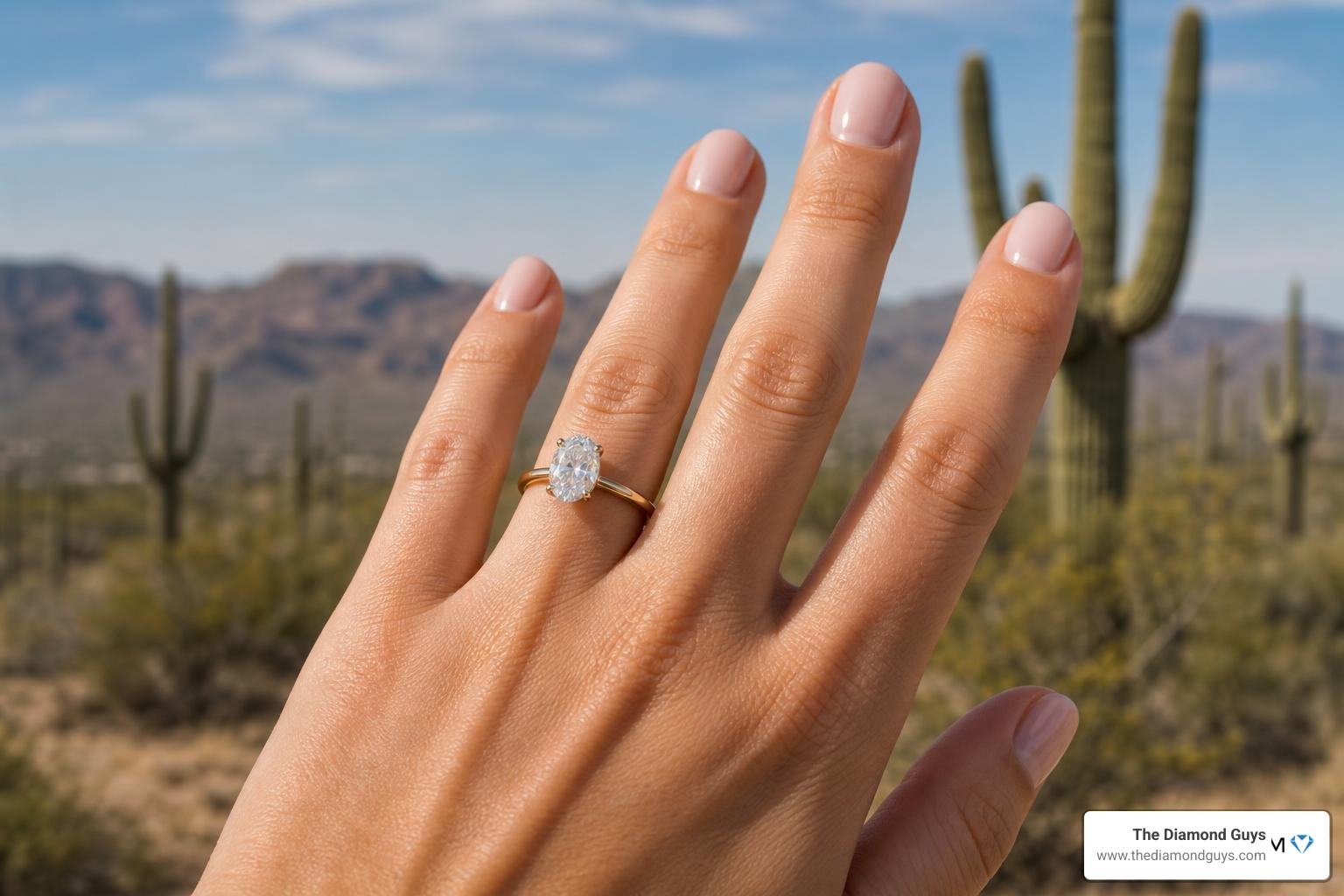
If you're looking for ethical diamonds in the Phoenix area, here's a quick answer to get you started:
How to find conflict-free diamonds locally in the Valley:
- Look for Kimberley Process certified diamonds — ask your jeweler for documentation
- Consider lab-grown diamonds — they are guaranteed conflict-free and cost 20-40% less than mined diamonds
- Ask for a diamond origin report or invoice guarantee from your jeweler
- Choose jewelers with transparent sourcing policies and recognized grading certifications (GIA or IGI)
- Visit local Phoenix-area showrooms like The Diamond Guys, where you can compare natural and lab-grown options side by side
Buying a diamond is one of the biggest purchases most people make. And in 2026, more couples in the Valley of the Sun are asking a simple but important question: where did this stone come from?
That question matters. Diamonds mined in conflict zones have historically funded violence and human rights abuses. The good news? Phoenix-area buyers today have more ethical options than ever — from Kimberley Process certified natural diamonds to lab-grown stones that bypass mining entirely.
This guide walks you through everything you need to know to shop with confidence.
I'm Morgan Price, a backlink outreach and content strategist with deep experience researching the ethical diamonds Phoenix area market and connecting consumers with transparent, trustworthy information. Read on for a complete breakdown of your best options in the Valley.
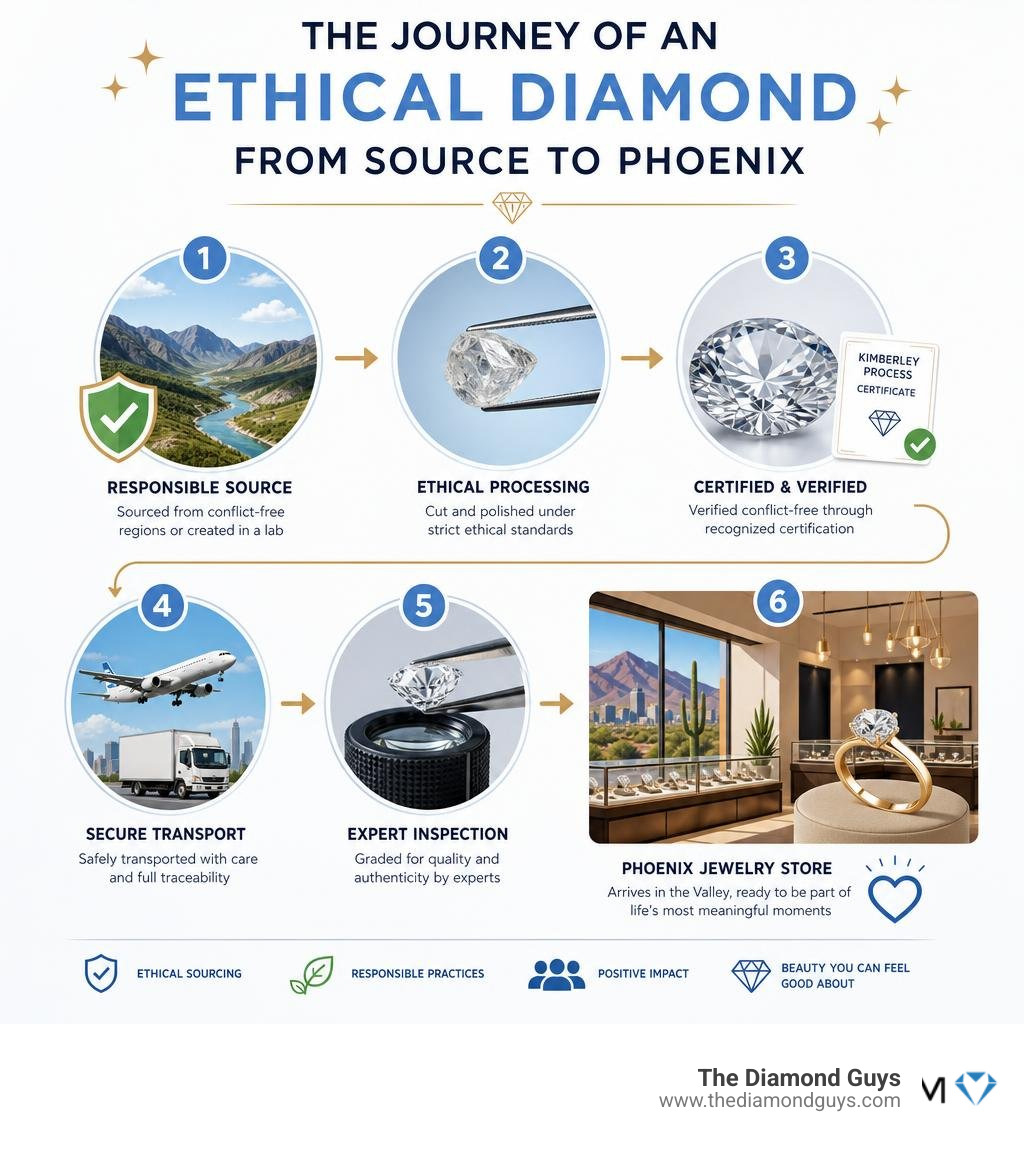
Must-know ethical diamonds Phoenix area terms:
Why Choose Ethical Diamonds Phoenix Area?
The demand for ethical diamonds in the Phoenix area is not just a passing trend—it is a fundamental shift in how we celebrate love. When you choose an ethically sourced diamond, you are making a conscious decision that impacts global communities. You are ensuring that your symbol of love is not built on a foundation of exploitation.
For many years, the diamond industry was clouded by stories of "blood diamonds"—stones mined in war zones to finance violent insurgencies. Today, Phoenix buyers are increasingly prioritizing human rights, fair wages, and environmental stewardship. They want to know that the miners who extracted their natural diamond worked in safe conditions and were paid a living wage.
Choosing ethical diamonds also means supporting retailers who care about the planet. Traditional diamond mining is incredibly resource-intensive, often leaving massive open pits in the earth and disrupting local ecosystems. By demanding ethical standards, consumers in the Valley are pushing the jewelry industry toward a more sustainable future.
What Defines Ethical Diamonds Phoenix Area?
To shop smart in the Phoenix market, it helps to understand the terminology. A diamond is generally considered "ethical" if it is conflict-free and sourced under conditions that respect both people and the environment.
Historically, conflict diamonds (or blood diamonds) originated from areas controlled by forces at war with recognized governments. To combat this, the United States signed the Clean Diamond Trade Act in 2003. This act implemented strict import and export regulations, requiring all rough diamonds entering or leaving the U.S. to carry a valid certificate of origin.
For modern consumer protection, ethical sourcing goes beyond just avoiding war zones. It also includes:
- Supply chain transparency: Knowing exactly which mine or laboratory your diamond came from.
- Fair labor practices: Ensuring workers are treated humanely, paid fairly, and provided with safe equipment.
- Eco-conscious operations: Minimizing land degradation and water pollution during the extraction process.
The Role of the Kimberley Process Certification Scheme
How do we actually prove a natural diamond is clean? That is where the Kimberley Process Certification Scheme (KPCS) comes in. Established in 2003, this international initiative was designed to prevent conflict diamonds from entering the mainstream rough diamond market.
Today, more than 75 countries participate in the Kimberley Process. Under this system, rough diamonds must be transported in tamper-resistant containers and accompanied by a government-validated certificate. Countries that refuse to participate are barred from the international diamond trade entirely.
When you shop for a natural diamond in Phoenix, verifying that the stone complies with ethical sourcing standards is your first line of defense against supporting unethical practices.
Natural vs. Lab-Grown: Making the Right Choice for Phoenix Buyers
If you are shopping for a diamond in the Valley, you will quickly face a big decision: do you want a natural mined diamond or a lab-grown diamond? Both are stunning, but they represent very different paths to ethical luxury.
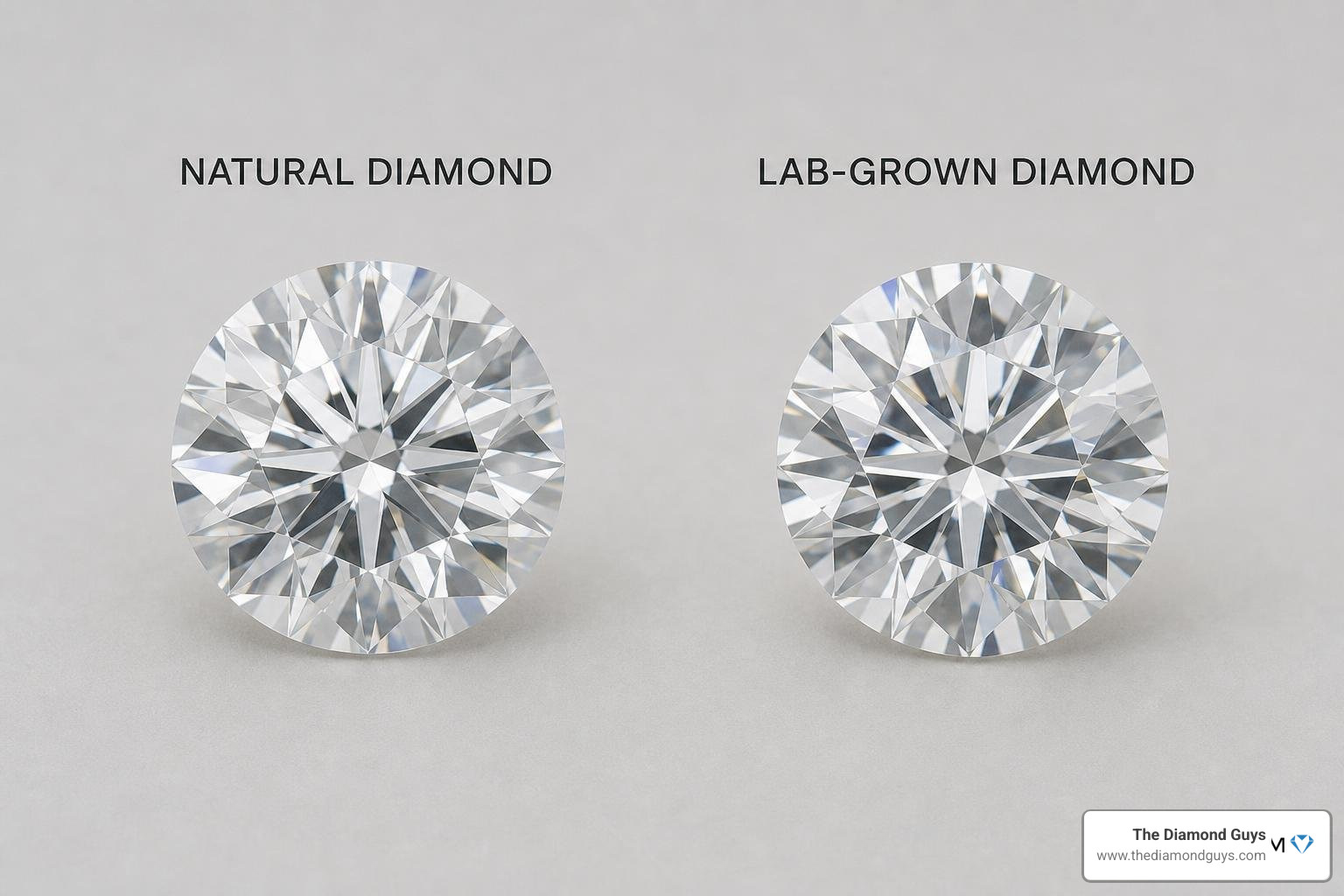
Chemically, physically, and optically, natural and lab-grown diamonds are identical. They both score a perfect 10 on the Mohs hardness scale and display the exact same fire and brilliance. The only difference is where they were born. Natural diamonds formed billions of years ago deep within the Earth's mantle, while lab-grown diamonds are created in controlled laboratory environments in just a few weeks.
| Feature | Natural Mined Diamonds | Lab-Grown Diamonds |
|---|---|---|
| Origin | Earth's mantle (billions of years old) | High-tech laboratory (weeks to grow) |
| Chemical Composition | Pure Carbon (C) | Pure Carbon (C) |
| Ethical Guarantee | Requires Kimberley Process verification | Inherently 100% conflict-free |
| Price | Premium pricing | 20-40% less expensive |
| Environmental Impact | High land displacement and water usage | Extremely low land footprint; lower carbon emissions |
| Resale Value | Retains a higher percentage of retail value | Lower long-term resale value |
Environmental Benefits of Lab-Grown Ethical Diamonds Phoenix Area
For eco-conscious buyers in Arizona, lab-grown diamonds offer a massive advantage. Traditional diamond mining requires displacing tons of earth, consuming vast amounts of fossil fuels, and using millions of gallons of water.
In contrast, lab-grown diamonds have a significantly lower environmental footprint. They require zero land displacement, use minimal water, and generate far fewer carbon emissions. Many modern diamond laboratories are even powered by renewable energy sources, making them the ultimate choice for sustainable luxury in our beautiful desert environment.
Price and Value Retention of Lab-Grown Diamonds
One of the most appealing aspects of lab-grown diamonds is their affordability. Because the supply chain is shorter and does not require expensive mining operations, lab-grown diamonds are typically 20-40% less expensive than their mined counterparts.
This price difference allows Phoenix buyers to maximize their budget. You can choose a larger carat size, a higher clarity grade, or invest more into a stunning custom-designed setting. However, it is important to keep resale value in mind. Because lab-grown diamonds can be produced continuously, they do not hold their value over time in the same way that rare, natural diamonds do. If long-term heirloom value is your priority, a certified natural diamond may still be the right path for you.
How to Verify and Shop for Conflict-Free Diamonds Locally
Shopping for a diamond should be an exciting, joyful experience. But to ensure you are getting a truly conflict-free stone, you need to know how to verify its origins.
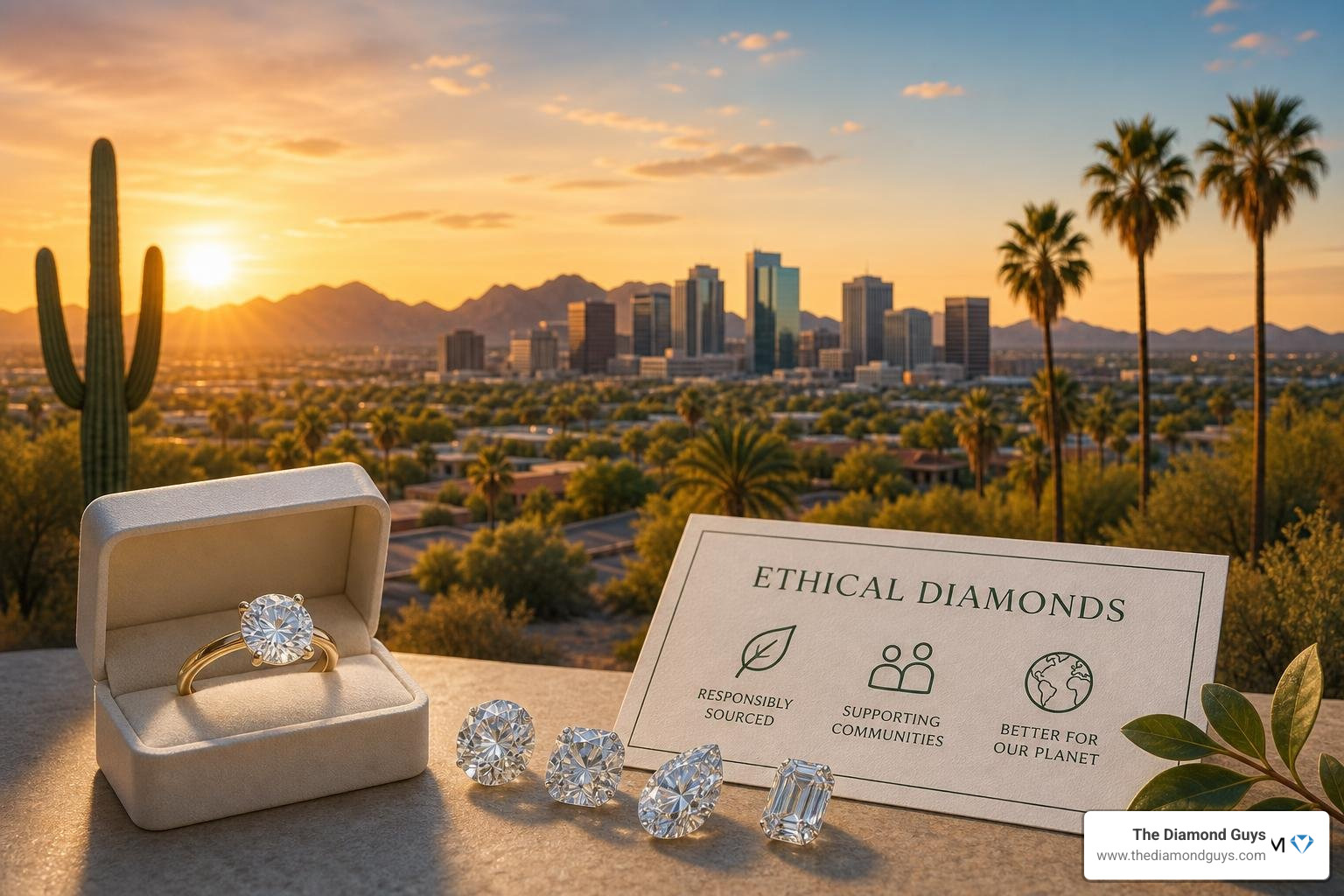
The best way to protect yourself as a consumer is to ask for independent grading reports. Reputable organizations like the Gemological Institute of America (GIA) and the International Gemological Institute (IGI) grade both natural and lab-grown diamonds. Many of these certified diamonds feature a microscopic laser inscription on the girdle, linking the physical stone directly to its official grading report.
Questions to Ask Your Local Phoenix Jeweler
When you walk into a Phoenix-area showroom, don't be shy about asking tough questions. A trustworthy jeweler will welcome the opportunity to discuss their sourcing practices.
Here are the key questions you should ask:
- "Can you provide a Kimberley Process certificate or an invoice guarantee for this natural diamond?"
- "What is your store's official policy on ethical sourcing and human rights?"
- "Do you have the origin of this diamond documented on its grading report?"
- "Can you show me the laser inscription on this diamond under a microscope?"
- "What custom design options do you offer for ethically sourced or lab-grown stones?"
By asking these questions, you can quickly separate transparent, education-focused jewelers from those who rely on vague marketing claims. For more details on what to look for, you can review standard ethical diamond guidelines used across the industry.
Understanding Diamond Traceability and Origin Reports
As technology advances, the diamond industry is becoming increasingly transparent. Many natural diamonds now come with advanced traceability reports.
Using blockchain technology, some mining companies can track a diamond's journey from the exact mine where it was unearthed, through the cutting and polishing facilities, all the way to the retail showroom. Brands like CanadaMark guarantee that diamonds were mined in the Northwest Territories of Canada under strict environmental laws and fair labor standards. If you want absolute peace of mind for a natural stone, a mine-to-market traceability report is the gold standard.
Frequently Asked Questions About Ethical Diamonds
Are lab-grown diamonds real diamonds?
Yes! Lab-grown diamonds are 100% real diamonds. They feature the exact same carbon structure, optical properties, and thermal conductivity as mined diamonds. The only difference is that they are grown in a lab using advanced technology (like High-Pressure, High-Temperature or Chemical Vapor Deposition) instead of being mined from the earth. Even professional gemologists cannot tell them apart without specialized laboratory equipment.
How does the Kimberley Process protect consumers?
The Kimberley Process protects consumers by ensuring that more than 99% of the world's rough diamonds are sourced from conflict-free areas. By requiring strict government validation and tamper-resistant shipping containers, it prevents "blood diamonds" from entering the legitimate supply chain, giving you peace of mind when buying a natural stone.
Can I design a custom engagement ring with ethical diamonds?
Absolutely! Designing a bespoke engagement ring is one of the best ways to celebrate your unique love story. At our showroom, we use advanced CAD design technology to help you visualize your ring before it is handcrafted. You can pair your custom setting with an ethically sourced natural diamond, a sustainable lab-grown diamond, or even repurpose family heirlooms for a truly eco-friendly design.
Conclusion
Finding the perfect diamond in the Valley of the Sun doesn't mean you have to compromise on your values. Whether you fall in love with the billions-of-years-old story of a certified natural diamond or the modern, eco-friendly brilliance of a lab-grown stone, you have the power to make an ethical choice.
At The Diamond Guys, we believe that luxury should be beautiful inside and out. We skip the high-pressure sales tactics of big-box retailers to provide you with a personalized, education-first shopping experience in our Scottsdale showroom. We are proud to offer an extensive selection of certified conflict-free natural diamonds and stunning lab-grown options.
Ready to take the next step in your love story? Find your perfect conflict-free diamond at The Diamond Guys today and design a ring you will cherish forever.


