

Jewelry Store Financing: Find the Perfect Payment Plan for You
Why Financing Matters for Jewelry Retailers

Financing jewelry stores has become essential for owners who want to maintain premium inventory, upgrade their showrooms, and stay competitive in a growing market. Whether you need capital to stock high-value diamonds, invest in custom design technology, or manage seasonal cash flow gaps, the right financing strategy can transform your business from surviving to thriving.
Quick Answer: Top Financing Options for Jewelry Stores
- SBA Loans - Best for large investments and real estate with low rates
- Business Term Loans - Predictable payments for inventory and renovations
- Inventory Financing - Use your stock as collateral for seasonal purchases
- Business Lines of Credit - Flexible funding for ongoing operational needs
- Customer Payment Plans - Boost sales by offering BNPL and store credit cards
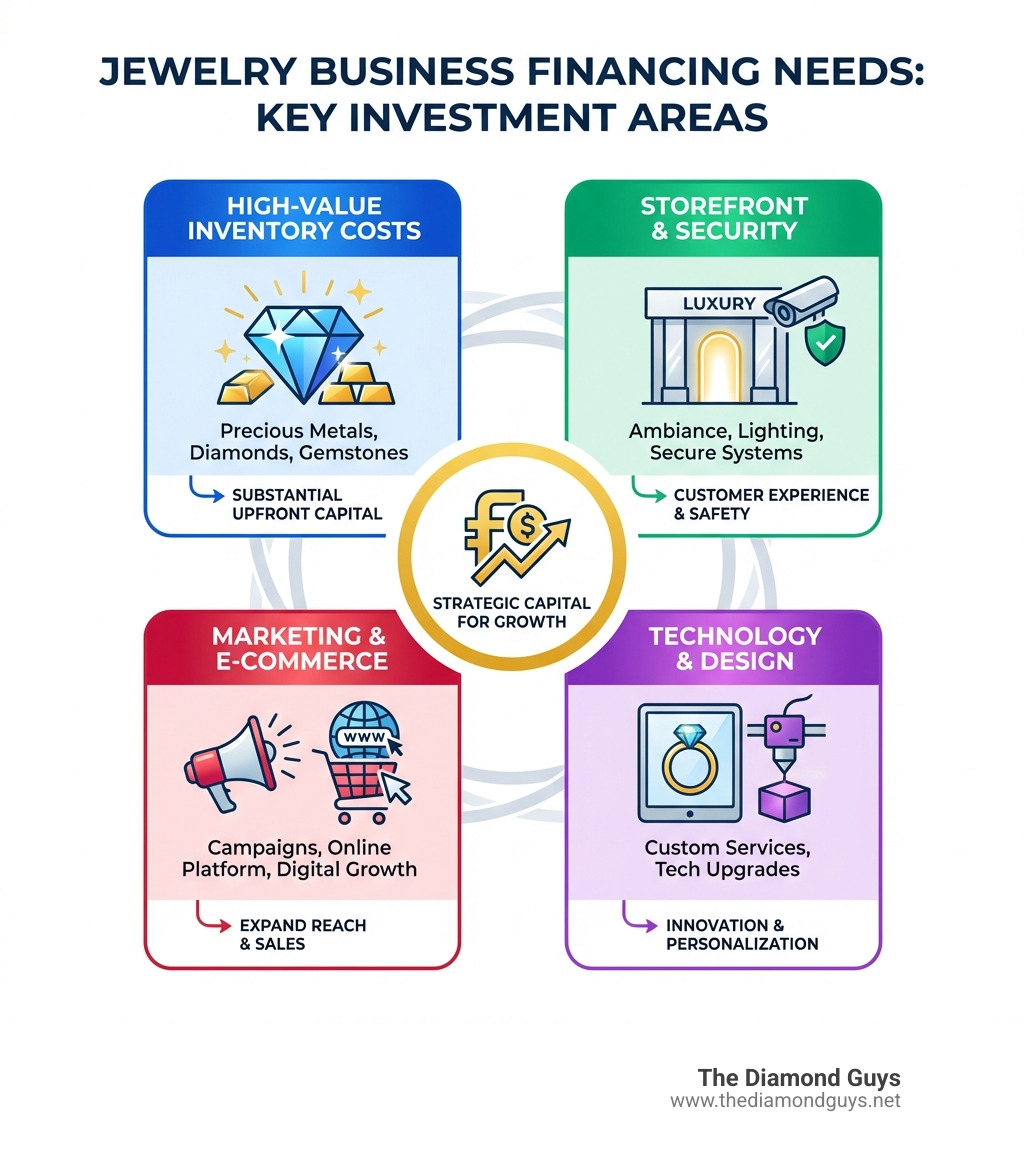
The jewelry industry has grown significantly, with revenue climbing from $282 billion in 2020 to $358 billion in 2024, and projections showing it will exceed $446 billion by 2029. This growth creates opportunities, but it also means you need strategic capital to keep pace. Precious metals, diamonds, and gemstones require substantial upfront investment. Your storefront needs to create the right ambiance with proper lighting, security systems, and neat displays. And today's customers expect both an in-store experience and a strong online presence.
Unlike many retail businesses, jewelry stores operate with high margins—averaging 45%—but also high costs. You're not just buying inventory; you're investing in assets that can sit on your shelf for months. You need capital not just to survive slow seasons, but to seize opportunities when they arise—like securing a rare gemstone collection or launching a marketing campaign during peak wedding season.
I'm Morgan Price, and through years of working with jewelry businesses on their growth strategies, I've seen how financing jewelry stores strategically can open up new revenue streams, improve customer experience, and build lasting competitive advantages. Whether you're a boutique jeweler specializing in custom designs or an established store looking to expand, understanding your financing options is crucial to your success.
Why Your Jewelry Business Needs Strategic Funding
Running a jewelry store, especially one that prides itself on quality and customer experience like ours in Scottsdale and Los Angeles, requires a significant amount of capital. It’s a high-margin business, yes, but it's also a high-cost one. The reasons we need strategic funding are as dazzling as the pieces we sell.
First and foremost, there's the high-value inventory. We're talking about precious metals like gold and platinum, rare diamonds, and vibrant gemstones. These aren't inexpensive items; they require substantial upfront investment. To offer our customers in Arizona and California a diverse and captivating selection, we need to continuously replenish and expand our stock. This often means purchasing in bulk to get better pricing, which ties up significant working capital.
Beyond the sparkle of our inventory, there's the critical need to maintain a captivating and secure storefront ambiance. Our physical locations are where many customers still prefer to make their most significant jewelry purchases. They want to see the pieces, feel the quality, and receive personalized guidance. This means investing in neat display cases, sophisticated lighting to make every gem shine, and state-of-the-art security systems to protect our valuable assets. These aren't luxuries; they're necessities that contribute to the trust and luxury experience our customers expect.
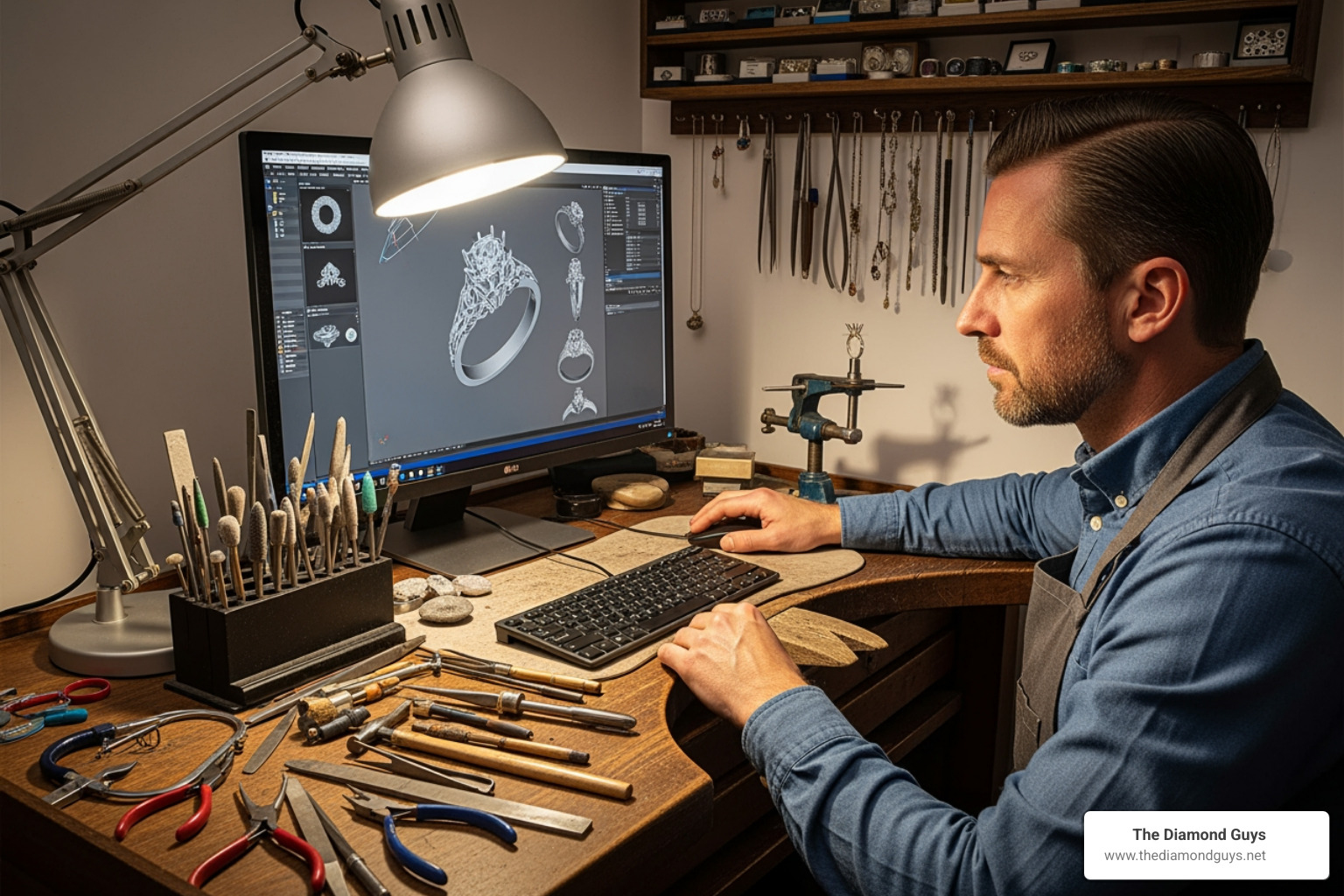
Furthermore, the jewelry industry is constantly evolving, driven by technological investments. From advanced CAD software for custom designs to 3D printing for prototypes and laser engraving for personalized touches, technology allows us to offer unique and customizable options. These tools improve our craftsmanship and differentiate us from competitors.
Effective marketing campaigns are also vital. Whether it's bridal campaigns, holiday promotions, or showcasing our unique lab-grown diamond collection, reaching our target audience requires investment. And let's not forget the importance of a robust e-commerce platform. While the majority of jewelry sales still happen in-store, online sales now account for nearly 30% of the market. A strong online presence, integrated with our physical stores, is crucial for growth.
All these investments contribute to our profitability. While the average profit margin for jewelry stores hovers around 45% (ranging from 25% to 75%), achieving and maintaining this requires careful financial management and strategic capital. Without adequate funding, even a thriving business can face challenges in scaling, innovating, and meeting customer demand.
The Impact of Brand and Customization on Financing Needs
At The Diamond Guys, we understand that our brand isn't just a logo; it's a promise of quality, ethical sourcing, and an unparalleled customer experience. Branding is essential to have a thriving jewelry store, helping us differentiate ourselves in a competitive market. A strong brand identity builds trust and credibility, especially when customers are making significant, sentimental purchases.
Our specialization in custom engagement rings and our expertise in natural and lab-grown diamonds truly sets us apart. Offering custom design services isn't just a perk; it's a core part of our value proposition. This means investing in skilled jewelers, advanced design software, and potentially technologies like 3D printing and laser engraving. These capabilities require upfront capital, but they also significantly increase our value proposition, allowing us to create unique pieces that truly resonate with our clients. As we often say, it's about Crafting Your Legacy: The Art of Designing a Custom Lab Diamond Ring.
When we focus on our unique selling points—expert guidance, ethical sourcing, and a personalized shopping experience—we're not just selling jewelry; we're selling a dream. This strategy often means higher average ticket sales and stronger customer loyalty. However, it also dictates our financing needs. We need capital that supports a custom, high-touch business model, not just a high-volume one. Our financing needs are tied directly to our commitment to quality and personalized service, ensuring we can continue to offer the exceptional experience our customers deserve.
Top Business Loan Options for Jewelry Stores
Navigating business loans can feel as intricate as a finely cut diamond. But understanding your options is key to securing the capital you need to shine. Here, we'll explore the most suitable loan options for financing jewelry stores, helping you determine which might be the perfect fit for your business's unique needs in Arizona and California. For broader industry insights, we often look to resources like JCK Online: Jewelry Business Insights.
| Loan Type | Loan Amount | Term Length | Best For | Key Pro |
|---|---|---|---|---|
| SBA Loans | Up to $5 million | Up to 25 years | Large investments, real estate, expansion | Low interest rates, long repayment terms, government-backed |
| Business Term Loans | $5,000 - $500,000+ | 1-5 years | Inventory, equipment, renovations, marketing | Predictable fixed payments, lump-sum funding |
| Inventory Financing | Varies by inventory | 6-18 months | Stocking high-value goods, seasonal demand | Uses inventory as collateral, frees up working capital |
| Business Line of Credit | $10,000 - $1 million | Revolving | Cash flow management, unexpected expenses | Flexible, interest only on used funds, on-demand access |
SBA Loans: Government-Backed Support
SBA loans, backed by the U.S. Small Business Administration, are often the gold standard for businesses seeking substantial funding with favorable terms. They're particularly well-suited for financing jewelry stores that require large investments, such as purchasing commercial real estate for a new location in Scottsdale or Los Angeles, or undertaking major renovations. These loans support long-term growth strategies.
The primary advantages of SBA loans include low interest rates and long repayment terms, sometimes stretching up to 25 years for real estate. This makes monthly payments more manageable and allows us to invest in significant, foundational assets without severe cash flow strain. However, be prepared for an extensive application process. It requires thorough documentation, a solid business plan, and a good credit history. While the process can be lengthy, the benefits often outweigh the wait. We always recommend reviewing the SBA Jewelry Retailer Guidance for detailed information.
Business Term Loans: Predictable Growth Capital
When we need a lump sum of capital for a specific, identifiable purpose, a business term loan is often our go-to. These loans are perfect for planned expenditures like significant showroom upgrades, purchasing new collections of high-value inventory, or investing in new technology for our custom design services.
A key benefit of term loans is their predictability. We receive a lump sum upfront, and then repay it with fixed payments over a set period, typically 1 to 5 years. This allows for predictable budgeting, as we know exactly what our monthly obligations will be. While they generally require a good credit history and a stable business performance, they offer a clear path to funding and repayment.
Inventory Financing: Stocking Your Showroom
For a business like ours, where high-cost items are the core of our offering, inventory financing is incredibly valuable. It’s designed specifically to help us purchase the diamonds, gemstones, and precious metals that fill our display cases, especially in anticipation of seasonal demand like engagement season or the holidays.
The unique aspect of inventory financing is that it uses the inventory itself as collateral. This can make it easier to qualify for, as the lender has a tangible asset backing the loan. It allows us to make bulk purchases, securing better prices from suppliers without draining our existing working capital. While these loans often come with higher interest rates than traditional term loans and are typically a short-term solution (6-18 months), they are crucial for maintaining a diverse and appealing selection for our customers.
Business Line of Credit: Flexible, On-Demand Funding
Think of a business line of credit as a flexible safety net or a strategic tool for managing day-to-day operations. It's ideal for cash flow management, covering unexpected expenses, or navigating seasonal dips in sales. Unlike a term loan, we don't receive a lump sum; instead, we're approved for a maximum amount and can draw funds as needed.
This is a revolving credit facility, meaning as we repay the borrowed amount, the credit becomes available again. We only pay interest on the funds we actually use, not on the entire approved amount. This flexibility is invaluable for a jewelry business, allowing us to quickly respond to opportunities or address short-term needs. While they offer immense flexibility, it's important to be aware that they can have potential for high rates if not managed carefully, especially for newer businesses.
The Power of Customer Financing to Boost Your Sales
Beyond securing capital for our own operations, offering flexible customer financing options is a game-changer for financing jewelry stores and dramatically boosting sales. We've seen how it can transform a hesitant browser into a happy customer, especially when they're considering a significant purchase like an engagement ring.

By providing accessible payment solutions, we can significantly increase conversion rates. Many customers desire a beautiful piece of jewelry but need help bridging the gap between desire and affordability. Financing helps them make that dream a reality today. This often leads to a higher average ticket size, as customers feel more comfortable upgrading to a slightly larger diamond or a more intricate setting when they can spread out the payments.
Crucially, offering flexible payment plans also builds customer loyalty. When we make the purchasing process easier and more transparent, customers feel valued and are more likely to return for future anniversaries, birthdays, or special occasions. This approach aligns perfectly with our commitment to a personalized shopping experience, making every step as comfortable as possible. For those wondering, yes, Can you finance engagement rings, and we have insights on How to afford your dream engagement ring.
Types of Customer Payment Plans
The landscape of customer payment plans is diverse, each offering different benefits to both the customer and the jewelry store.
Store Credit Cards: Many jewelry stores, including large national chains, offer their own branded credit cards. These function like traditional credit cards but often come with special promotional offers, such as 0% APR for a set period (e.g., 6, 12, or even 24 months) if the purchase is paid in full within that time. The catch? If the balance isn't paid off, deferred interest can kick in, charging interest from the original purchase date. These cards can be a great way to facilitate sales, but it's crucial for customers to understand the terms. Providers like Synchrony and Comenity Bank are common partners for these programs.
Buy Now Pay Later (BNPL): Services like Affirm, Klarna, or Afterpay have become incredibly popular. BNPL allows customers to make a purchase immediately and split the cost into several interest-free installments, often four payments over six weeks, or longer terms with interest. A soft credit check is usually performed, making it accessible for many. For businesses, partnering with third-party providers like these means getting paid upfront while customers enjoy flexible payments.
Layaway Plans: A classic option that has made a resurgence, layaway allows customers to reserve a piece of jewelry with an initial deposit and then make scheduled payments over time. The key difference is that the customer doesn't take possession of the item until it's fully paid off. There are typically no credit checks, no interest, and often no fees, making it an attractive option for those who prefer to avoid credit.
Payment Plans and Special Financing: Beyond branded credit cards, many stores partner with financing companies to offer various payment plans directly. These can include fixed-rate installment loans or promotional financing with specific APRs for certain periods. The goal is to provide options that fit different customer budgets and credit profiles. For us, establishing strong partnerships with reliable financing partners is key to offering these flexible solutions. Our goal is to make the process simple and transparent for our customers, ensuring a smooth path to their dream jewelry. Companies like Synchrony are leaders in this space, helping businesses achieve Sparkling results begin with Synchrony..
A Practical Guide to financing jewelry stores
Securing the right financing for your jewelry business isn't just about getting money; it's about making smart, strategic decisions that fuel your growth and solidify your future. It's a journey that moves beyond day-to-day operations into long-term vision.
At The Diamond Guys, we view financing as a growth multiplier, not just a safety net. It allows us to invest in our brand, our inventory, and our customer experience, ultimately enhancing our financial health and competitive edge. Staying informed through resources like National Jeweler Industry News helps us understand market trends and adapt our financing strategies accordingly.
Key Steps for Securing financing for your jewelry store
The path to successful financing jewelry stores involves careful preparation and a strategic approach. Here are the steps we recommend:
Assess Your Needs: Before you even think about applying for a loan, clearly define why you need the financing. Is it for inventory, a new POS system, a marketing campaign, or a store renovation in Los Angeles? Quantify the exact amount needed and how it will contribute to your business's growth and profitability.
Create a Business Plan: A well-structured business plan is your roadmap and a critical document for lenders. It should outline your business model, market analysis, financial projections, and how the requested funds will be used to achieve your goals. This demonstrates your vision and capability to repay the loan.
Check Your Credit Score (Personal & Business): Lenders will scrutinize both your personal and business credit scores. A strong credit history signals reliability. Take steps to improve any areas of concern before applying.
Prepare Financial Documents: Gather all necessary financial statements, including profit and loss statements, balance sheets, cash flow projections, and tax returns for the past few years. The more organized and complete your documentation, the smoother the application process will be.
Compare Lenders and Loan Types: Don't settle for the first offer. Research various lenders—traditional banks, online lenders, and specialty financiers—and compare their loan products, interest rates, terms, and fees. Match the loan type to your specific needs, as discussed in the previous section.
Application Process: Once you've chosen a lender and loan type, carefully complete the application. Be honest, provide all requested information, and be prepared to answer follow-up questions promptly.
Common Mistakes to Avoid When financing jewelry stores
Even the most experienced business owners can stumble when seeking financing. Avoiding these common pitfalls can save you time, money, and stress:
- Borrowing Without a Clear Plan: Taking on debt without a precise strategy for how the funds will generate a return is a recipe for trouble. Every dollar borrowed should have a purpose and a projected ROI.
- Ignoring Repayment Terms: Don't just look at the interest rate. Understand the full repayment structure, including monthly payments, loan duration, and any penalties for early repayment or late payments. A seemingly low-interest loan with an unfavorable repayment schedule can be costly.
- Underestimating Working Capital Needs: Many businesses secure financing for large assets but forget to account for the ongoing operational costs (payroll, utilities, marketing) that the new investment might entail. Always ensure you have enough working capital to support your growth.
- Overlooking Interest Costs: While promotional 0% APR offers on customer financing can be attractive, always understand the deferred interest clauses. For business loans, calculate the total cost of interest over the life of the loan.
- Failing to Diversify Funding: Relying solely on one type of financing or one lender can limit your options and flexibility. A mix of short-term and long-term financing, custom to different needs, often provides the most robust financial foundation.
How to Maximize Your Return on Investment (ROI)
Once you've secured financing, the real work begins: making that capital work for you. Here’s how we recommend maximizing your ROI:
- Invest in High-Margin Items: Focus your inventory financing on items that offer the best profit margins. For instance, while natural diamonds are timeless, our expertise in Lab Diamonds vs Real Diamonds allows us to guide customers toward high-quality, ethically sourced lab-grown diamonds that often offer excellent margins while providing exceptional value to our clients.
- Improve In-Store Experience: Use financing to improve your physical space. Upgrading lighting, display cases, and security systems not only protects your assets but also creates a more luxurious and inviting atmosphere that encourages sales and repeat visits.
- Digital Marketing & E-commerce: Allocate funds to a robust digital marketing strategy, including SEO, social media advertising, and a user-friendly e-commerce platform. This expands your reach beyond your physical locations in Scottsdale and Los Angeles, attracting new customers who might start their journey online.
- Track Performance Metrics: Continuously monitor key performance indicators (KPIs) related to your financed investments. Are those new marketing campaigns driving traffic? Is the upgraded inventory selling as projected? Regularly analyzing these metrics allows you to adjust strategies and ensure your capital is generating the best possible returns.
Frequently Asked Questions about Jewelry Store Financing
We often get questions about the specifics of financing jewelry stores and customer payment plans. Here are some of the most common ones:
What credit score do I need to get jewelry financing?
The credit score requirement for financing jewelry stores can vary by lender and the type of financing you're seeking. Generally, banks and the SBA require higher scores, often in the good to excellent range (typically 680+ for business loans, or 640+ for store credit cards). These lenders look for a strong history of responsible credit management.
However, alternative lenders are more flexible. Online lenders or those specializing in small business financing may offer options for businesses with fair credit (e.g., 600-680). In some cases, especially for newer businesses, a personal guarantee from the owner with good personal credit might be required. Building a solid business credit history is crucial over time, distinct from your personal credit.
What is the average profit margin for a jewelry store?
The average profit margin for jewelry stores can be quite wide, typically ranging from 25% to 75%, with an average of 45%. This significant range is influenced by several factors:
- Business model: A high-volume, lower-price point store might have a smaller per-item margin but higher overall revenue, while a luxury boutique might have higher margins on fewer, more expensive pieces.
- Inventory quality: The type of materials (e.g., gold vs. silver, natural vs. lab-grown diamonds) and craftsmanship directly impact costs and potential margins.
- Pricing strategy: How a store positions itself in the market and prices its products plays a huge role.
- Cost management: Efficient operations, inventory control, and marketing spend all affect the final profit margin.
Can online-only jewelry businesses get financing?
Absolutely, online-only jewelry businesses can and do get financing! While the majority of jewelry sales still occur in-store, online sales now account for nearly 30% of the market, and lenders recognize this growing segment.
The types of financing available include:
- E-commerce financing: Specialized lenders offer loans custom to online businesses, often focusing on revenue streams from online sales platforms.
- Revenue-based loans: These are particularly suitable for online businesses, as repayment is tied directly to a percentage of daily or weekly sales, making it flexible for fluctuating revenue.
- SBA loans: Online businesses can also qualify for SBA loans, provided they meet the credit and business plan requirements.
The key for online jewelers, just like brick-and-mortar stores, is to provide proof of sales and revenue, demonstrate a strong business model, and have a clear plan for how the financing will be used to drive further growth.
Conclusion: Funding Your Legacy in the Jewelry World
As we've explored, financing jewelry stores is more than just securing a loan; it's about making strategic investments that define your business's future. From maintaining a breathtaking inventory to crafting personalized experiences and investing in cutting-edge technology, the right capital open ups unparalleled opportunities.
At The Diamond Guys, we pride ourselves on offering expert guidance and a personalized shopping experience for custom engagement rings, natural, and lab-grown diamonds in Scottsdale, AZ, and Los Angeles, CA. We understand that every piece of jewelry tells a story, and so does every business journey. Strategic financing is the tool that allows us to continue writing our story, enhancing our offerings, and strengthening our connection with you, our valued customer.
Consider this guide your first step in understanding how to leverage financing not just as a means to an end, but as a powerful growth tool that gives you a competitive edge. We're here to help you steer these decisions, ensuring you have the resources to build a lasting legacy in the jewelry world.
We invite you to Explore your financing options with us and find how we can help your business sparkle even brighter.


