

Valley Diamond Buying Guide for Modern Engagement Rings
Start With the 4Cs, Certification, and a Real Price Comparison
A smart Phoenix diamond buying guide starts with three steps: prioritize an excellent cut, compare independently graded diamonds from several sellers, and confirm the return policy before paying. Choose a stone that looks bright to your eye, ask for a GIA grading report, and do not assume a higher color or clarity grade will look better once the diamond is set.
For many engagement-ring buyers, an eye-clean SI1 clarity diamond and near-colorless G or H color can offer strong visual value. Avoid paying for invisible upgrades, and compare stones just below popular weights, such as 0.90 to 0.99 carats instead of a full carat. Price differences between retailers can be dramatic even when diamonds have nearly identical specifications.
You should also decide early whether a natural or lab-grown diamond best fits your priorities. Lab-grown diamonds have the same chemical and physical makeup as mined diamonds and can cost less, while natural diamonds may appeal to buyers who value rarity and long-term tradition. In either case, inspect the loose stone when possible, keep every document, and consider an independent appraisal after purchase.
I am Morgan Price, a white-hat research and outreach specialist who helps content teams turn complex buying decisions into clear, trustworthy resources. This Phoenix diamond buying guide is built to help you compare quality, sourcing, documentation, and price with less pressure and more confidence.
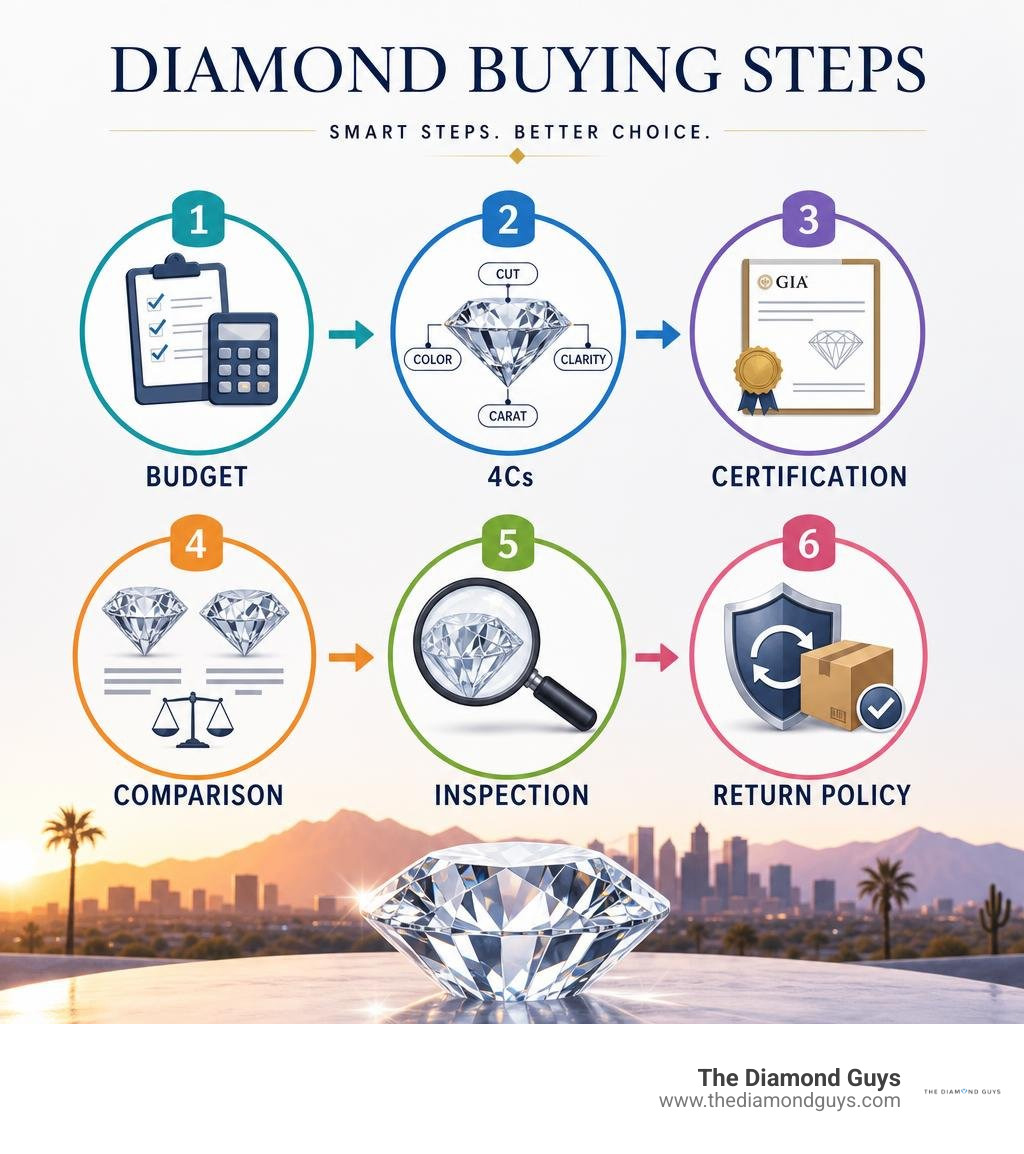
Simple guide to Phoenix diamond buying guide:
Essential Phoenix Diamond Buying Guide: Navigating the 4Cs and Stone Quality
Diamond shopping in the Valley should be exciting, not intimidating. The easiest way to cut through confusing jewelry jargon is to master the standard 4Cs framework: Cut, Color, Clarity, and Carat weight. Understanding how these factors balance each other lets you invest your budget where it actually matters—in visible beauty and fire—rather than on paper-only upgrades that disappear to the naked eye. We always recommend building a baseline understanding through structured Diamond Education before stepping into a showroom or browsing Loose Diamonds in Scottsdale AZ.
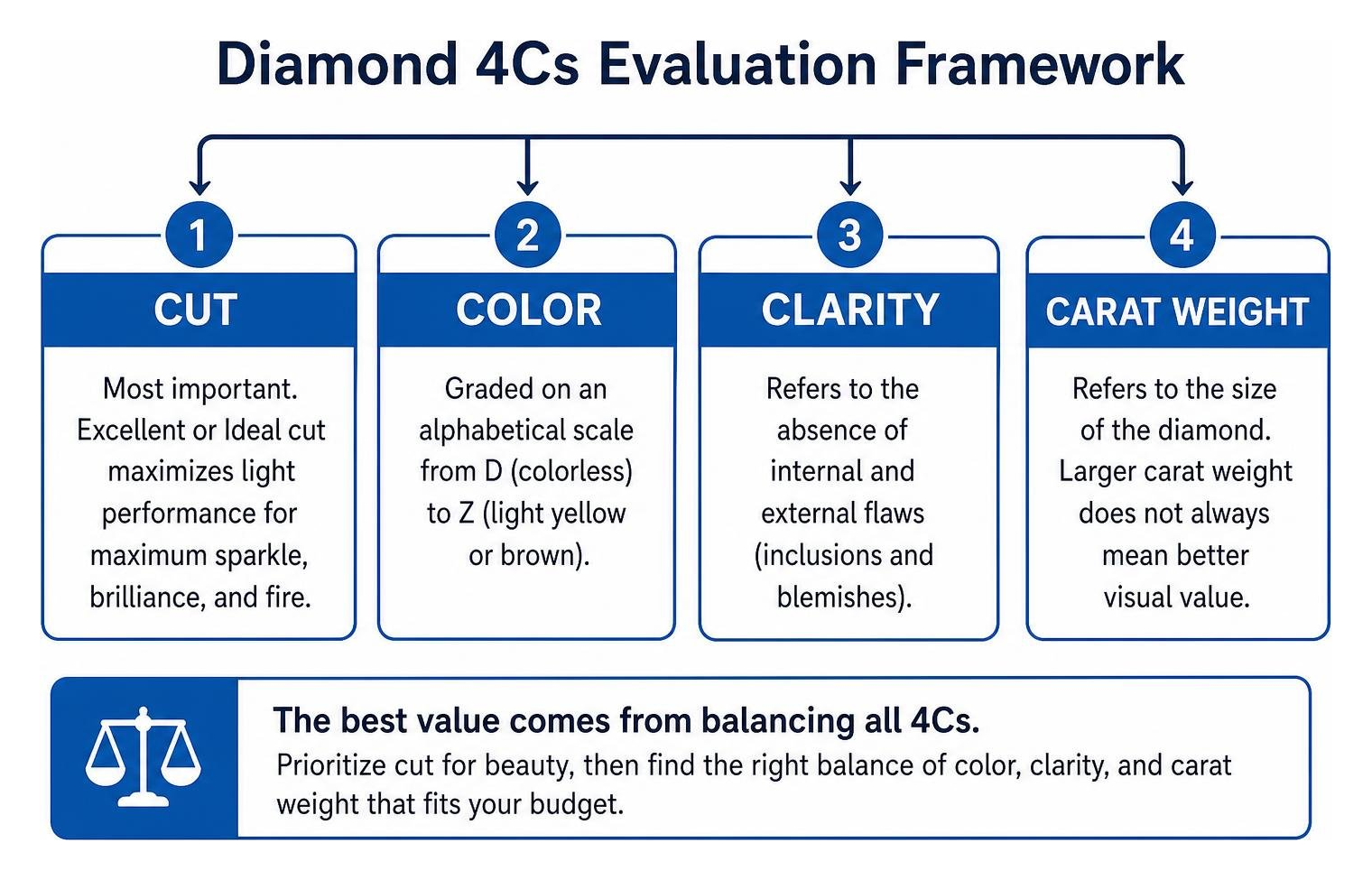
Understanding Cut, Color, Clarity, and Carat Value
Cut is the most critical of the 4Cs. A diamond's cut grade does not refer to its shape (like round, oval, or emerald), but rather to the precision of its proportions, symmetry, and polish. An Excellent or Ideal cut maximizes light performance, giving the diamond that breathtaking sparkle, brilliance, and fire. Even a flawless, perfectly colorless diamond will look dull and lifeless if it is poorly cut.
When evaluating Color, diamonds are graded on an alphabetical scale from D (colorless) to Z (light yellow or brown):
- D–F (Colorless): Pristine, icy look, but commands top-tier pricing.
- G–J (Near Colorless): Outstanding visual value. When set in white gold, yellow gold, or platinum, G and H color diamonds face up bright white to the naked eye at a substantially lower cost.
Clarity measures internal characteristics (inclusions) and surface blemishes:
- FL–VVS2: Essentially perfect under 10x magnification, but carries steep premiums.
- VS1–VS2: Very minor inclusions that are impossible to see without a microscope.
- SI1–SI2 (Slightly Included): Often the "sweet spot" for value. A well-selected, eye-clean SI1 diamond looks identical to a flawless stone from normal viewing distances.
Carat Weight measures the stone's physical mass. Diamond prices rise exponentially at round-number benchmarks like 1.00 ct, 1.50 ct, or 2.00 ct. Choosing a diamond at "under-size" marks—such as a 0.92-carat or 1.42-carat stone—can save you 15% to 25% without any perceptible difference in face-up size.
Practical Phoenix Diamond Buying Guide Tips for Certification Verification
Never buy a significant center stone without an independent, third-party grading report. The Gemological Institute of America (GIA) is the gold standard for diamond grading, known for strict, unbiased grading criteria. Proprietary "in-house certificates" from retail chains often inflate color and clarity grades by one or two levels to justify higher price tags.
When looking at GIA Certified Diamonds in Scottsdale AZ, verify the following:
- Match the Laser Inscription: Authentic GIA stones feature a microscopic laser inscription of their report number on the diamond's outer edge (girdle). Have the jeweler show you this inscription under a 10x loupe or digital microscope.
- Check the Online Registry: Cross-reference the certificate number on GIA’s official online report database to ensure the physical document has not been altered.
- Inspect Loose: Always evaluate the loose gem before it is mounted into prongs or a bezel, as heavy metal settings can easily conceal girdle chips or edge inclusions.
Choosing Between Natural and Lab-Grown Diamonds
Modern Valley couples now have two distinct, high-quality diamond categories: mined natural diamonds and laboratory-grown diamonds. Understanding the differences between these options ensures you select the center stone that matches your lifestyle, ethical values, and financial goals. For a deeper look at mined gems, explore our Natural Diamond Jewelry Phoenix Guide 2026.
| Feature | Natural (Mined) Diamonds | Lab-Grown Diamonds |
|---|---|---|
| Chemical Composition | Pure crystallized carbon ($C$) | Pure crystallized carbon ($C$) |
| Crystal Structure | Isometric-hexoctahedral lattice | Isometric-hexoctahedral lattice |
| Hardness (Mohs Scale) | 10 (Highest scratch resistance) | 10 (Highest scratch resistance) |
| Grading Standards | GIA, IGI standard 4Cs reports | GIA, IGI standard 4Cs reports |
| Visual Appearance | Identical sparkle, fire, and brilliance | Identical sparkle, fire, and brilliance |
| Origin | Formed billions of years ago in Earth's mantle | Grown in high-tech laboratories (HPHT / CVD) |
| Relative Pricing | Premium price tied to geological rarity | Highly accessible pricing for larger carats |
Lab-Grown Diamonds vs. Natural Diamonds in Arizona
It is a common myth that lab-grown diamonds are "fake" or synthetic simulants like cubic zirconia or moissanite. In reality, lab diamonds are 100% genuine diamonds created using Chemical Vapor Deposition (CVD) or High Pressure High Temperature (HPHT) processes. They possess identical chemical, physical, and optical qualities to mined gems.
Working with experienced Scottsdale Lab Grown Specialists lets you stretch your engagement ring budget significantly. By selecting Lab Grown Diamonds, shoppers can either maximize carat weight for the same budget or invest in intricate, custom metal settings.
Long-Term Value and Sustainability Considerations
When deciding between natural and lab-created stones, consider what value means to you:
- Natural Diamonds: Prized for geological history, finite supply, and traditional value retention over generations.
- Lab-Grown Diamonds: Celebrated for modern innovation, guaranteed conflict-free origins, and incredible cost efficiency.
- Alternative Gemstones: If you want distinct color and character, high-hardness gemstones like sapphires and rubies (rated 9 on the Mohs scale) offer durable, heirloom-quality brilliance at varied price points.
How to Avoid Overpaying and Spot Retail Red Flags
Diamond markups vary dramatically between jewelry stores across the Phoenix metropolitan area. Industry research shows that for an essentially identical 1.0-carat diamond, shoppers frequently encounter price quotes ranging from $6,514 to more than $15,000 depending on the retail overhead. For 1.50 to 1.55 carat stones (VS1/VS2 clarity, G/H color), quotes range from under $11,500 at wholesale-direct dealers to upwards of $19,000 at traditional chain boutiques.
Setting Your Budget with the Phoenix Diamond Buying Guide
To avoid unnecessary markups:
- Shop Outside Peak Holidays: Retail chains frequently raise prices or reduce discount flexibility leading up to Valentine’s Day and December holidays.
- Compare Real-Time Specs: Gather written specifications across local showrooms and benchmark stones against verified standards from the Gemological Institute of America.
- Explore Flexible Financing: If managing cash flow, look into clear terms via our Diamond Jewelry Financing Guide 2026.
Store Red Flags and Return Policy Essentials
Protect your purchase by watching for common showroom tactics:
- High-Contrast Sales Tricks: Beware of jewelers who only show you an obviously brown, poorly cut stone next to an overpriced D-Flawless gem. A reputable jeweler will show you side-by-side variations within realistic grades (such as F vs. H or VS2 vs. SI1) under neutral, daylight-balanced lighting.
- Pre-Set Ring Pressure: Stores pushing pre-set mountings may be hiding large black inclusions or feather fractures under metal prongs. Demand to review loose stones before final assembly.
- Vague or In-House "Certificates": Refuse in-house appraisals marketed as official diamond grading certificates. Insist on GIA or equivalent international laboratory credentials.
- No Written Return Policy: Never buy without a written, 30-day money-back guarantee.
- Get an Independent Appraisal: Spend $50 to $200 with an independent, non-selling gemological appraiser after purchase. This verifies the stone in your setting matches the certification paperwork and serves as essential documentation for your insurance provider.
Designing Custom Rings and Selecting Durable Metals
Creating a bespoke setting ensures your diamond ring is structurally sound and tailored to your partner's aesthetic. Following a dedicated Custom Engagement Rings Phoenix Guide allows you to partner with true Phoenix Ethical Ring Makers rather than settling for mass-produced cast settings.
Selecting the Right Precious Metal for the Arizona Climate
Our warm, sunny Arizona climate and active outdoor lifestyle require durable metal choices:
- Platinum: Naturally white, hypoallergenic, and exceptionally dense. It develops a soft satin patina over time and holds diamond prongs securely without wearing thin.
- 14k Gold (Yellow, White, Rose): Composed of 58.3% pure gold alloyed with durable metals like nickel, zinc, or copper. 14k gold is significantly harder and more scratch-resistant than 18k gold, making it ideal for daily wear in Phoenix.
- 18k Gold: Richer in gold content (75%) with a deeper natural luster, though slightly softer than 14k alloys.
- White Gold Care: White gold is plated in rhodium for a mirror-bright finish. In the desert heat, daily sunscreen, pool chlorine, and natural skin oils will require re-plating every 12 to 24 months to maintain its bright white sheen.
Custom Ring Settings and Setting Longevity
Selecting the right setting architecture protects your center diamond for decades of daily wear:
- Prong Settings (4-Prong vs. 6-Prong): Four prongs display more of the diamond's profile, while six prongs offer superior diamond security against accidental impact.
- Bezel Settings: A smooth metal rim wraps entirely around the gem's perimeter. This is the most protective setting style, ideal for active professions or athletic routines.
- CAD 3D Modeling: Modern bespoke jewelers utilize Computer-Aided Design software and 3D resin prototypes. You can test your concept using our Design Your Ring App before your custom mount is cast in precious metal.
Frequently Asked Questions about Diamond Buying in Phoenix
How can I verify that a diamond is authentic and accurately graded?
Always verify that your stone comes with an official GIA grading report. Have the jeweler examine the diamond under a 10x microscope in front of you to align the laser-inscribed GIA serial number on the girdle with your printed report. You can also confirm the digital report on the official GIA online registry.
Why do diamond prices vary so drastically across Valley jewelry stores?
Diamond pricing differences stem primarily from overhead markups, supply chain tiers, and marketing costs. Traditional retail mall chains mark up stones substantially to cover expensive leases and national advertising. Independent private jewelers and direct brokers offering Wholesale Diamonds in Scottsdale AZ operate with leaner margins, passing significant savings directly to local buyers.
Is an independent appraisal necessary after buying an engagement ring?
Yes. Having your finished ring evaluated by an independent, credentialed gemologist (who does not sell jewelry) costs between $50 and $200. This appraisal confirms that the center stone matches your GIA report specifications, provides retail replacement valuation for your insurance policy, and guarantees peace of mind.
Conclusion
Finding the perfect diamond engagement ring comes down to education, transparency, and personal connection. By prioritizing an exceptional cut, choosing smart color and clarity thresholds like G-H and SI1, and demanding verified GIA grading reports, you can secure a breathtaking stone while avoiding inflated retail markups.
At The Diamond Guys, we are proud to be a 5-star rated custom jeweler serving Scottsdale and Phoenix, AZ. Our diamond specialists are dedicated to providing ethical sourcing, wholesale-direct value, and an unhurried, personalized shopping experience tailored to your vision. Whether you are searching for a rare mined gem or an exquisite lab-grown center stone, visit our premier jewelry store in Phoenix, AZ to begin your custom design journey today.


