

The Great Fit: Everything You Need to Know About Resizing Wedding Bands
Your Wedding Band Doesn't Fit? Here's What You Need to Know
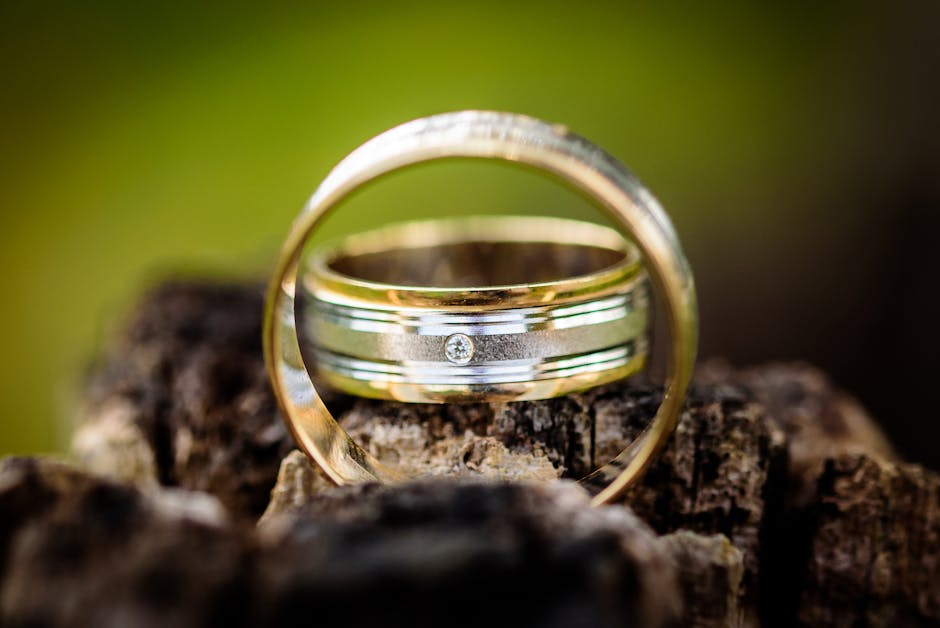
Resizing wedding band is one of the most common jewelry services couples need — and it's simpler than most people expect.
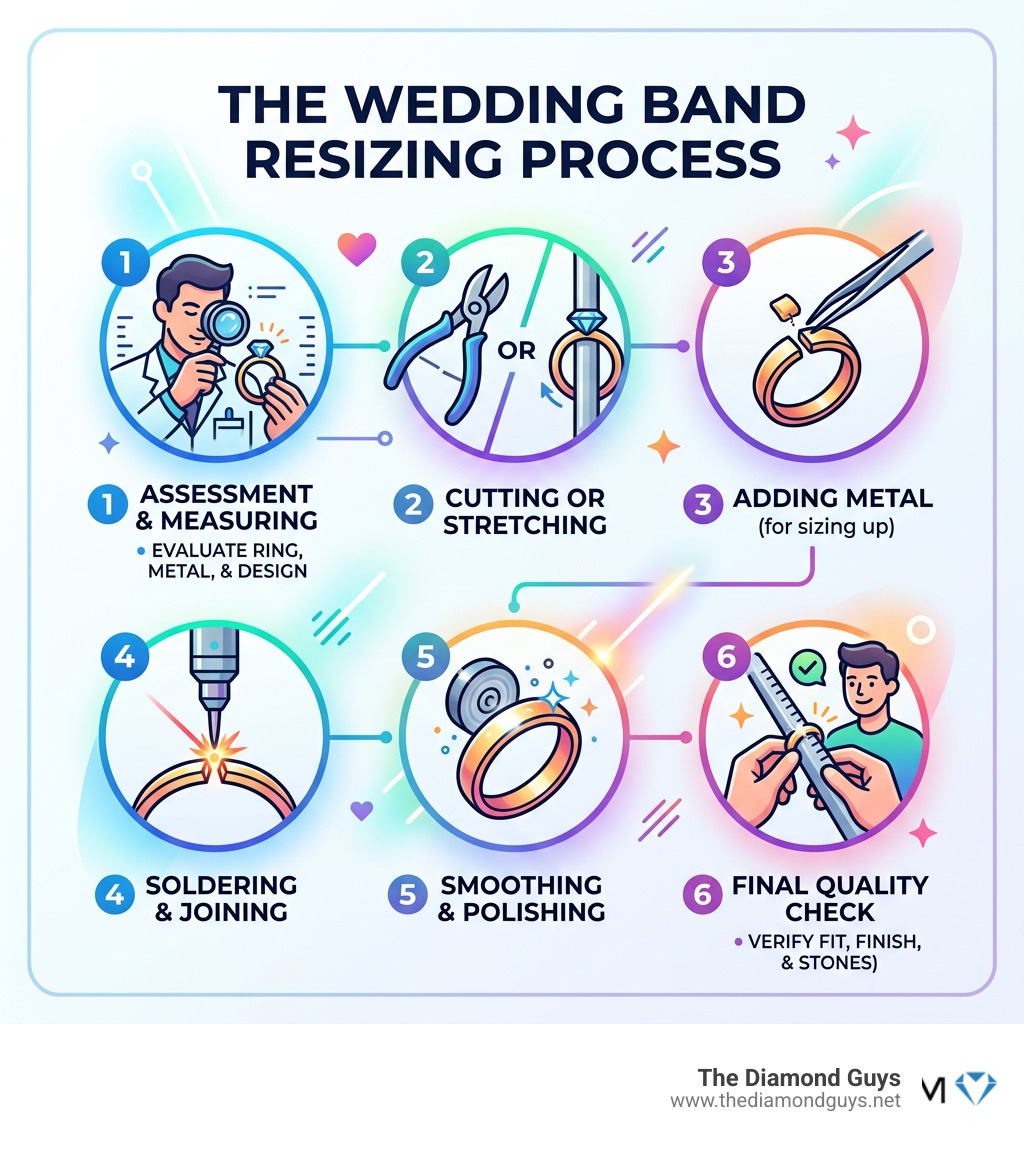
Here's a quick overview of what the process involves:
- Assessment — A jeweler evaluates your ring's metal, design, and how much adjustment is needed.
- Cutting or stretching — The band is either cut to remove metal (sizing down) or cut to add metal (sizing up).
- Soldering and welding — The band is rejoined using heat and precision tools.
- Polishing — The ring is finished to look seamless, as if it was never altered.
- Quality check — Fit, finish, and stone security are all verified before it's returned to you.
Most resizing jobs cost between $20 and $200 and take roughly one week to complete. Simple jobs with no stones can be done in one to two days.
Your wedding band is more than jewelry — it's a symbol you wear every single day. When it doesn't fit right, it's uncomfortable, distracting, and even risky (a loose ring can slip off without warning). Getting the fit right protects both the ring and the meaning behind it.
I'm Morgan Price, a backlink outreach specialist with deep expertise in the jewelry industry, including the nuances of resizing wedding band options across metals, designs, and jeweler services. Whether your ring is slightly too snug or spinning freely on your finger, this guide walks you through everything you need to make a confident, informed decision.
Similar topics to Resizing wedding band:
Common Signs You Need a Resizing Wedding Band Service
How do you know if your ring is actually the "wrong" size or if your fingers are just having a dramatic day? Finger size isn't static; it fluctuates based on the temperature in Scottsdale, your salt intake, and even your stress levels. However, there are definitive signs that it's time to seek a professional resizing wedding band service.
The Spinning Test
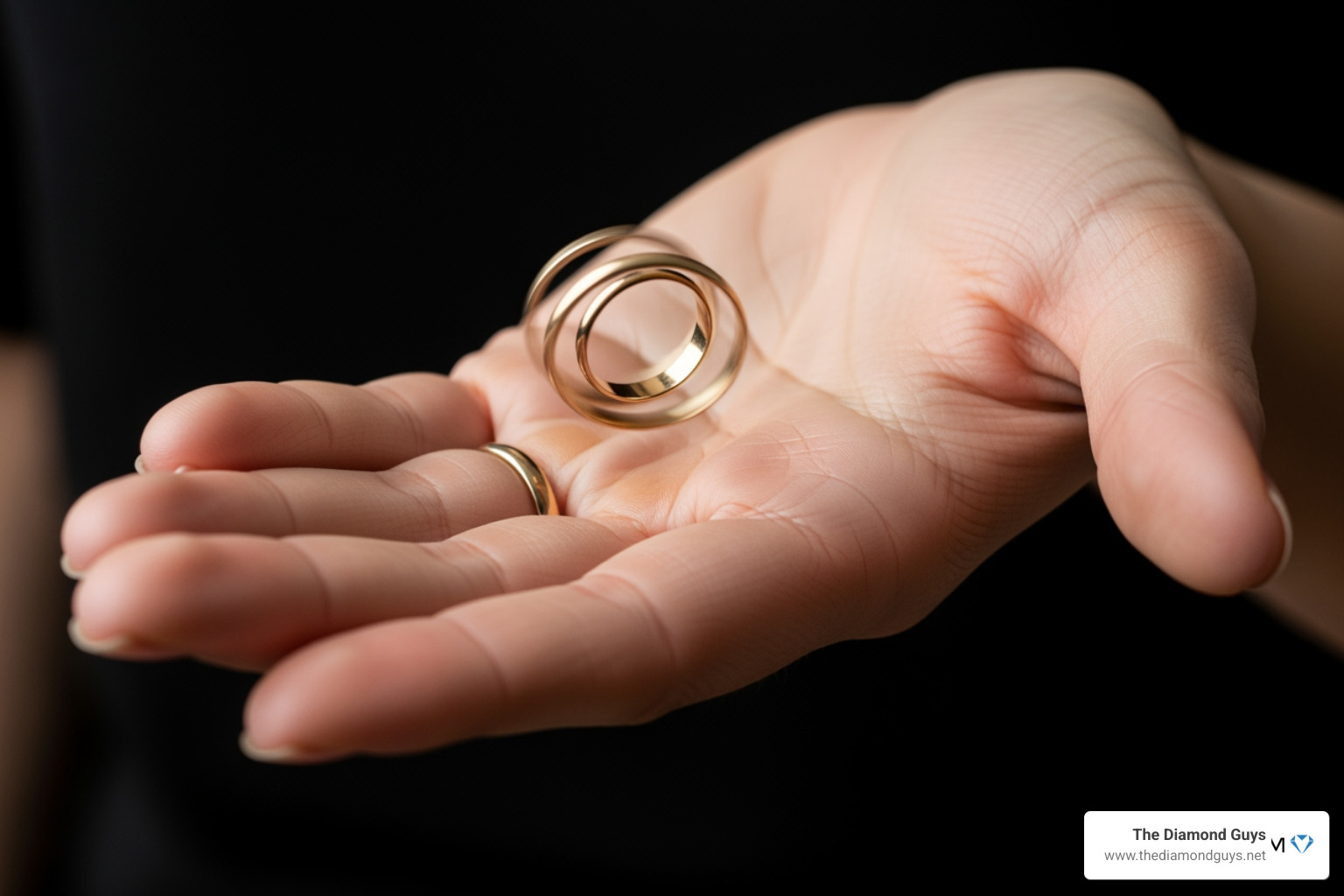
One of the most obvious signs is the "spinning test." If your ring constantly rotates so the setting or design is facing your palm, it’s likely too loose. While a little movement is normal, a ring that flips over with every hand gesture is a candidate for being sized down.
Resistance at the Knuckle
A properly fitting ring should slide over your knuckle with just a bit of friction. If you have to use soap, Windex, or a lot of prayer to get your ring off, it’s too tight. Conversely, if the ring slides off your finger without any resistance at the knuckle, you run a high risk of losing it while washing your hands or reaching into a bag.
Seasonal and Lifestyle Changes
In the heat of an Arizona summer, your fingers will naturally swell. In the winter, they contract. We often tell our clients to wait a few days and observe the fit across different times of the day. If the ring is consistently painful or consistently falling off regardless of the weather, it's time for an adjustment. Weight fluctuations and pregnancy are also common reasons why a once-perfect band may suddenly feel like a tourniquet.
If you are unsure whether your specific ring type can handle the change, you might wonder, can engagement rings be resized? The answer is usually yes, but the complexity depends on the design.
The Professional Process: How Jewelers Resize Your Ring
When you hand your precious heirloom over to us, you might worry about what happens behind the scenes. Rest assured, the professional resizing wedding band process is a blend of traditional metallurgy and modern technology.
Step 1: The Assessment
We begin by inspecting the structural integrity of the band. We check for existing solder joints, thinning metal, and loose stones. We then use a professional mandrel to determine the current size and a set of sizing rings to find your perfect new fit.
Step 2: Sizing Down (The "Cut and Join")
To make a ring smaller, we cut a small section out of the bottom of the shank (the back part of the band). We then bring the two ends together, solder them using a matching metal alloy, and polish the seam until it's invisible.
Step 3: Sizing Up (The "Bridge Insertion")
Making a ring larger is more involved. We cut the band and pull the ends apart to the desired size. We then insert a "bridge"—a small piece of matching metal—into the gap. This ensures the band remains thick and strong.
Step 4: Finishing Touches
Using laser welding, we join the pieces with extreme precision. This modern technique is much cleaner than traditional torch soldering. Finally, the ring is buffed and polished. If it’s white gold, we’ll give it a fresh rhodium plating to restore that mirror-like shine.
| Feature | Sizing Down | Sizing Up |
|---|---|---|
| Method | Remove metal section | Add metal "bridge" |
| Material Cost | Lower (labor focused) | Higher (cost of added metal) |
| Complexity | Standard | Higher (matching thickness/alloy) |
| Structural Impact | Minimal | Requires careful reinforcement |
For those with high-end pieces, you can find more details in our complete guide to platinum ring resizing.
Material Matters: Which Metals Can and Cannot Be Resized?
Not all rings are created equal. The metal your band is made of dictates whether a resizing wedding band service is even possible.
The "Easy" Metals
- Yellow, White, and Rose Gold: These are the most common and generally the easiest to resize. However, rose gold can be finicky; because of its high copper content, it can occasionally crack if adjusted more than one full size.
- Sterling Silver: Very malleable and easy for any jeweler to work with.
- Platinum: While difficult to work with due to its high melting point and density, it is absolutely resizable by experts who have the right equipment.
The "Difficult" or "Impossible" Metals
- Tungsten Carbide: This metal is incredibly hard and brittle. It cannot be cut or soldered. If your tungsten ring doesn't fit, most manufacturers simply offer a replacement in the new size.
- Titanium: While technically possible to resize in very specific circumstances, most local jewelers cannot do it because it requires specialized machinery and an inert atmosphere to weld.
- Ceramic and Resin: These materials are "fixed." Once they are molded and cured, they cannot be altered without shattering.
Design Challenges: Eternity Bands
The "Eternity Band"—where diamonds go all the way around the finger—is the Everest of resizing. Because there is no plain metal "shank" to cut into, resizing usually involves removing or adding stones, which can be prohibitively expensive or ruin the symmetry of the design.
We always adhere to the Jewelers of America industry standards to ensure that every adjustment maintains the safety of your gemstones.
Cost and Timeline for Your Jewelry Adjustment
One of the first questions we get in our Scottsdale or Phoenix locations is: "How much is this going to cost, and when can I have it back?"
Estimating the Price of a Resizing Wedding Band
The cost of resizing wedding band services varies based on several factors:
- Metal Type: Gold is standard, but platinum requires more labor and expensive material for the bridge.
- Sizing Direction: Sizing up is almost always more expensive than sizing down because you are paying for the additional gold or platinum added to the ring.
- Thickness and Width: A wide "cigar" style band requires more metal to size up than a thin, dainty band.
- Stone Setting: If the resizing process causes the prongs to shift, we must tighten every stone to ensure they don't fall out.
Average Price Ranges:
- Gold: $30 – $100
- Platinum: $50 – $150+
- Silver: $20 – $60
Typical Turnaround for a Resizing Wedding Band
Standard resizing usually takes 3 to 7 business days. If the ring has a complex pattern or requires stones to be reset, it may take up to two weeks. For those in a hurry—perhaps a wedding ceremony is just days away—many jewelers offer rush services for an additional fee, sometimes completing the job in 24 to 48 hours.
Safe Alternatives and Risks of Multiple Adjustments
Sometimes, a permanent resizing wedding band procedure isn't the best move. If your finger size changes frequently or the ring is only slightly loose, consider these alternatives.
Sizing Beads and Guards
- Sizing Beads: These are two tiny metal globes added to the inside of the band. They act like "anchors," keeping the ring from spinning while allowing it to fit over a larger knuckle.
- Spring Inserts: A horseshoe-shaped metal strip inside the band that self-adjusts to your finger size.
- Ring Guards: Temporary plastic or metal sleeves that clip onto the bottom of the ring.
The Risks of "Over-Resizing"
Every time a ring is heated, cut, and soldered, the metal undergoes stress. We generally recommend that a ring should not be resized more than two or three times in its lifetime. Frequent resizing can lead to "metal fatigue," making the band brittle and prone to snapping.
If your ring has been through the ringer, you can find more info about jewelry repair to see if a full shank replacement is a better option.
When to Avoid a Resizing Wedding Band Procedure
- Thinning Shanks: If the bottom of your ring is already paper-thin, cutting it again might cause it to collapse.
- Patterned Bands: Intricate engravings or milgrain patterns will be interrupted at the solder point. A master jeweler can often "re-trace" the pattern, but it's never 100% perfect.
- Plated Jewelry: Resizing a gold-plated silver ring will destroy the plating at the heat point, requiring the entire ring to be re-plated.
Frequently Asked Questions about Ring Resizing
How can I accurately determine my ring size before visiting a jeweler?
The best way is to visit us in person, but if you're checking at home, do it in the afternoon. Fingers are usually smaller in the morning and swell as the day goes on. Ensure your hands are at room temperature—cold hands will give you a size that's too small. Also, the ring must be able to fit over your knuckle but remain snug enough not to fall off.
Is it possible to resize a ring with intricate engravings or diamonds?
Yes, but it requires a high level of skill. We use laser technology to minimize the "heat zone," protecting nearby diamonds. For engravings, we do our best to match the pattern at the seam. If your ring has channel-set diamonds, resizing it too much can cause the "channel" to warp, potentially popping the stones out. This is why we check stone security after every resize.
How many times can a wedding band be safely resized?
Most rings can handle being resized one to two sizes up or down without much drama. However, resizing a ring multiple times or trying to jump four sizes at once can compromise the structural integrity. If you need a massive change, we might suggest "re-shanking" the ring—replacing the entire bottom half of the band with a new, correctly sized piece of metal.
Conclusion
At The Diamond Guys, we understand that your wedding band is a piece of your history. Whether you are in Scottsdale, AZ, or Phoenix, we provide expert guidance to ensure your ring fits perfectly for a lifetime of wear. From simple gold bands to complex custom pieces, our commitment to ethical sourcing and personalized service ensures your jewelry is in the best possible hands.
Don't let a poorly fitting ring sit in a jewelry box. A simple adjustment can make it feel brand new again. Ready to get that perfect fit? Schedule your jewelry repair in Scottsdale AZ today and let us help you wear your symbol of love with comfort and confidence.


