

Why 1 Carat Pear Shaped Diamonds Are the Perfect Fit
Why a 1 Carat Pear Shaped Diamond Ring Might Be the Smartest Choice You Make
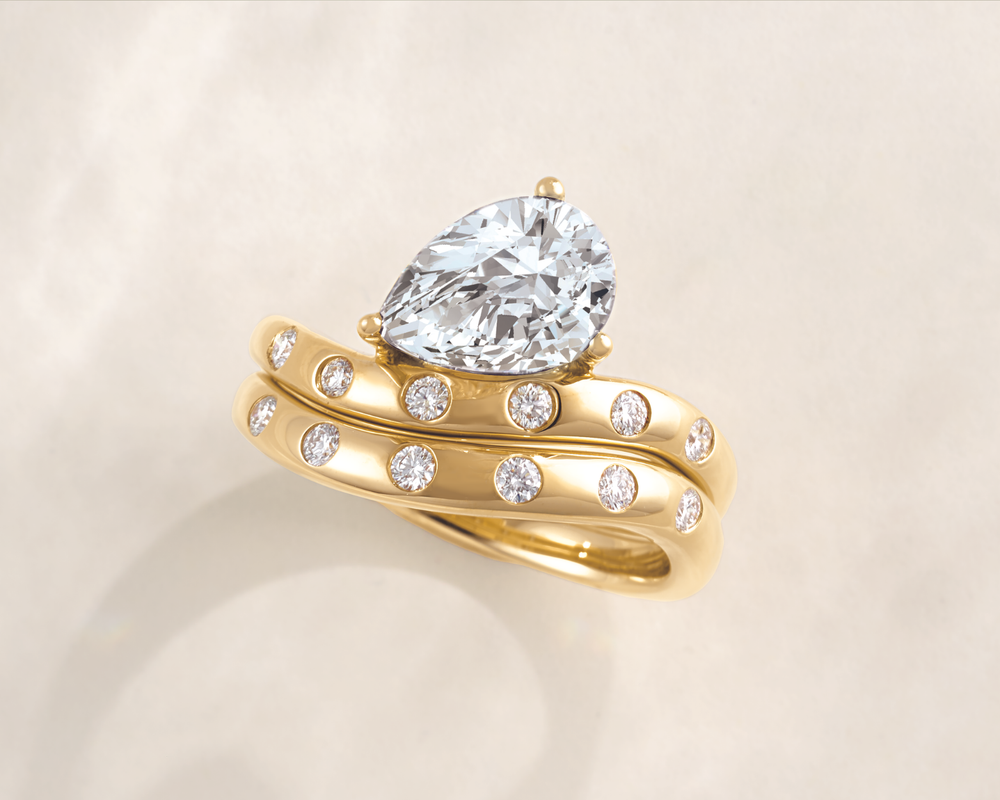
A 1 carat pear shaped diamond ring combines elegance, value, and a distinctive look that few other diamond shapes can match. Here's what you need to know at a glance:
| Feature | Quick Answer |
|---|---|
| Visual size | Appears 8% larger on top than a round diamond of the same carat weight |
| Price vs. round | Typically 10–30% less expensive than a comparable round diamond |
| Best color grades | D–F for a crisp white look; G–H for excellent value |
| Best clarity grades | VS1–VS2 for a clean, eye-clear appearance |
| Popular settings | Solitaire, halo, and pavé band |
| Certification | Look for GIA (natural) or IGI (lab-grown) |
| Lab-grown option | Same physical properties, significantly lower price |
The pear cut — also called a teardrop diamond — has a unique shape that creates a slimming, elongating effect on the finger. It has 57 facets, giving it brilliance close to a round cut. And right now in 2026, it's one of the most sought-after shapes for engagement rings.
But with so many options — natural vs. lab-grown, solitaire vs. halo, white gold vs. rose gold — it's easy to feel overwhelmed. This guide breaks it all down clearly.
I'm Morgan Price, a diamond and fine jewelry specialist who has helped countless buyers navigate the details of choosing the perfect 1 carat pear shaped diamond ring, from understanding the 4Cs to finding the right setting for their budget. In the sections ahead, I'll walk you through everything you need to make a confident, informed choice.
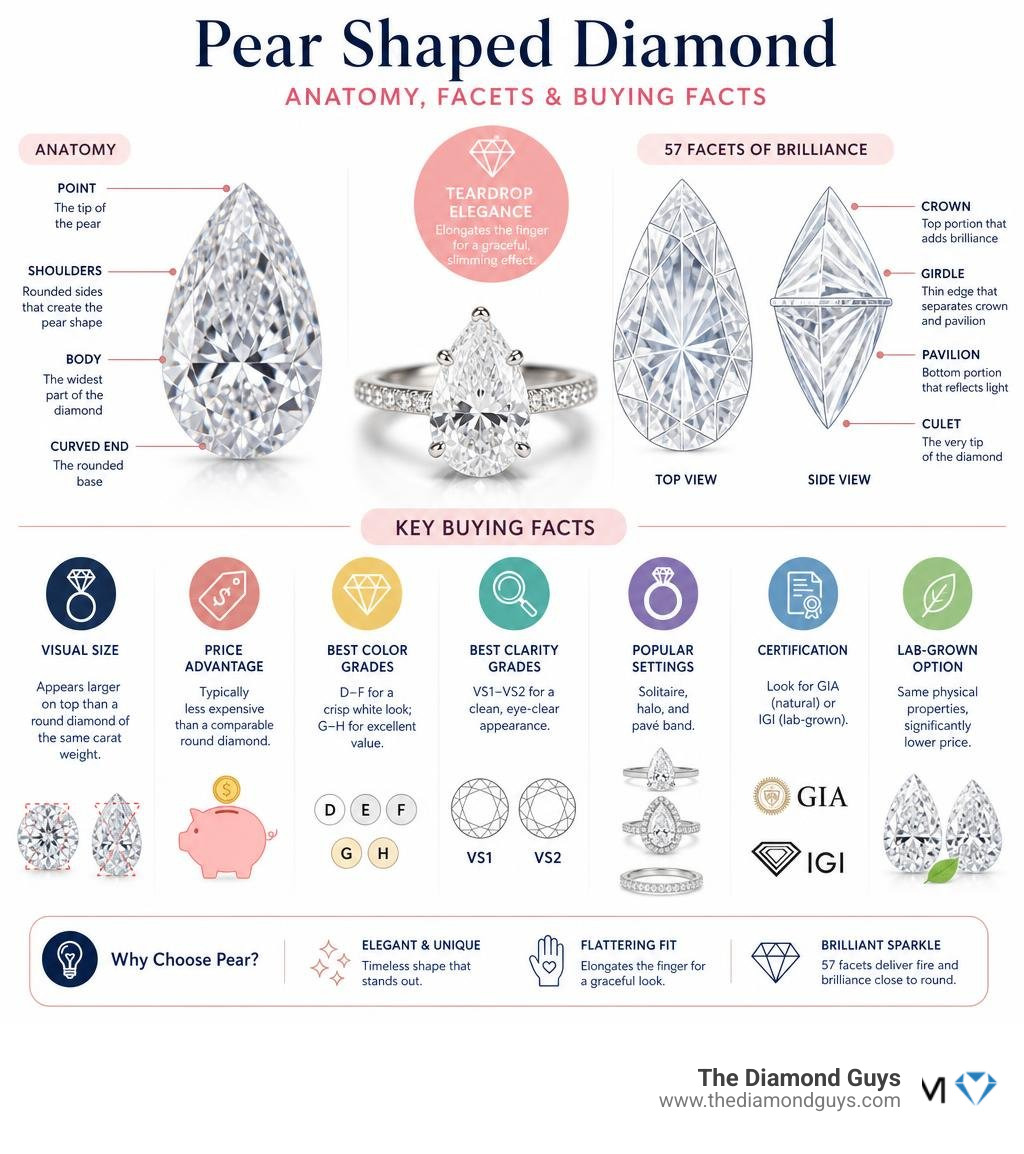
1 carat pear shaped diamond ring word guide:
The Unique Appeal of a 1 Carat Pear Shaped Diamond Ring
The pear-shaped diamond is a stunning hybrid cut that dates back to the 15th century. By combining the fiery brilliance of a traditional round brilliant cut with the elegant, elongated shape of a marquise cut, the pear shape offers a modern look with a vintage soul.
When you choose a 1 carat pear shaped diamond ring, you are opting for a piece of jewelry that stands out from the crowd. While round and oval diamonds remain incredibly popular, the pear cut offers an artistic, asymmetrical charm. It symbolizes independence, empowerment, and unique personal style, making it a perfect fit for a modern engagement ring.
The teardrop shape is not just beautiful; it is also incredibly functional. Because of its elongated silhouette, a pear-shaped diamond naturally makes the wearer's finger look longer and more slender. At our showrooms in Scottsdale, AZ, and Los Angeles, CA, we frequently hear from clients who are amazed at how much more flattering a pear shape is on their hand compared to symmetrical square or round cuts.
If you are beginning your search, exploring Pear Shaped Diamond Engagement Rings is an excellent way to see how this shape can be styled across various bands and settings.
How the Pear Cut Maximizes Visual Size and Value
One of the best-kept secrets in the diamond industry is that a 1 carat pear shaped diamond ring offers much better visual value than a round diamond of the identical carat weight.
- Larger Top Surface Area: Pear-shaped diamonds are typically cut shallower than round diamonds, meaning more of their carat weight is distributed on the top surface. In fact, pear-shaped diamonds are approximately 8% larger on the top surface than round diamonds of the identical carat weight. A standard 1 carat pear diamond measures roughly 8mm x 5.5mm, giving it a commanding presence on the hand.
- Lower Cost per Carat: Because cutting a pear shape results in less wasted rough diamond material during the manufacturing process, these stones are classified as "fancy cuts." As a result, pear-shaped diamonds typically cost 10% to 30% less than round diamonds of equivalent size and quality.
- The "Magic" Weight Trick: To maximize your savings even further, we often advise clients to look for diamonds weighing just under the 1.00-carat mark (such as 0.90 to 0.95 carats). These slightly smaller stones can save you up to 10% or more on price, while appearing virtually identical in physical size to a full 1.00-carat stone.
When selecting your diamond, pay close attention to the length-to-width ratio. The industry standard for a well-proportioned pear diamond is a ratio between 1.55 and 1.70. A ratio within this range ensures the diamond is neither too stubby nor too narrow, preserving its perfect teardrop symmetry.
Choosing the Right Metal and Setting for Your 1 Carat Pear Shaped Diamond Ring
The setting you select for your pear-shaped diamond is critical, not only for its aesthetic appeal but also for its physical protection. Because pear diamonds have a sharp, delicate point, they require specialized settings to ensure they do not chip during daily wear.
- Prong Settings: A standard prong setting is highly popular because it allows the maximum amount of light to enter the diamond, enhancing its 57 facets of brilliance. For a pear shape, we strongly recommend a 5-prong or 6-prong setting that includes a specialized V-prong at the pointed tip to shield it from accidental impacts.
- Halo Settings: Surrounding your 1 carat center stone with a halo of smaller diamonds is a fantastic way to make the center stone look even larger. A halo also provides an extra perimeter of metal and diamond security around the entire edge of your pear cut.
- Bezel Settings: For those with an active lifestyle, a bezel setting wraps a thin rim of metal around the entire edge of the stone. This offers the ultimate level of protection while giving the ring a sleek, modern, and contemporary feel.
When it comes to metal choice, your options are highly versatile:
- Platinum and White Gold: These bright, icy metals are excellent for highlighting colorless diamonds. They create a seamless, brilliant look that emphasizes the stone's natural fire.
- Yellow Gold and Rose Gold: Warm metals add a beautiful contrast to a white diamond. If you choose yellow or rose gold, you can often save money by choosing a slightly lower color grade (like G to J), as the warm metal naturally masks any faint yellow undertones in the diamond.
To see these settings in action, you can browse Pear Cut Diamond Engagement Rings to find the combination that speaks to you and explore the perfect design for your style.
Evaluating the 4Cs for Pear-Shaped Diamonds
When shopping for a 1 carat pear shaped diamond ring, understanding the 4Cs (Cut, Color, Clarity, and Carat Weight) is essential. However, because the pear shape is a fancy cut, the way you evaluate these characteristics is slightly different than evaluating a standard round brilliant diamond.
First and foremost, always look for a diamond certified by a reputable, independent gemological laboratory. For natural diamonds, a GIA (Gemological Institute of America) certification is the gold standard. For lab-grown diamonds, an IGI (International Gemological Institute) certificate is highly trusted. These certificates ensure that the stone's color, clarity, and carat weight are graded accurately and ethically.
One of the most unique optical phenomena to watch out for in a pear-shaped diamond is the bow-tie effect.
Because of the way the facets are cut on elongated shapes (like pear, marquise, and oval cuts), light passing through the center of the stone can create a dark, bow-tie-shaped shadow across the middle of the diamond. While almost all pear diamonds have some degree of a bow-tie, a well-cut stone will minimize this shadow, ensuring that light reflects evenly across the entire surface. This is why viewing a diamond in person or through high-definition 360-degree video is so important before making a final purchase.
Color and Clarity Guidelines for a 1 Carat Pear Shaped Diamond Ring
Because of its unique anatomy, a pear-shaped diamond holds color and shows inclusions differently than other cuts. Here are the specific guidelines we recommend to get the best balance of beauty and budget:
1. Color Grades
Pear-shaped diamonds tend to show color more easily near their pointed tip, where the diamond is shallower and the facets are smaller. If you want an icy, perfectly colorless look, we recommend sticking to the D–F color range.
However, if you want the best value for your money, the G–H color range is an excellent sweet spot. In a G or H color grade, the diamond will still look completely white to the naked eye, especially when set in white gold or platinum, but you will save thousands of dollars compared to a D or E color stone. If you plan to set your diamond in a warm yellow gold or rose gold band, you can comfortably drop to an I or J color grade without noticing any warmth.
2. Clarity Grades
Because a pear cut has 57 facets of brilliant, crisscrossing light, it is highly effective at hiding tiny natural inclusions. This means you do not need to pay a premium for a Flawless (FL) or Very Very Slightly Included (VVS) diamond.
Instead, look for VS1 or VS2 clarity grades. These diamonds are "eye-clean," meaning that any tiny natural characteristics inside the stone are completely invisible to the naked eye without magnification. When choosing a VS1 or VS2 stone, just make sure that any inclusions are located near the center of the stone or under the facets, rather than right at the delicate pointed tip, where they could potentially weaken the diamond's structure.
Lab-Grown vs. Natural 1 Carat Pear Diamonds
One of the biggest decisions modern buyers face in 2026 is choosing between a natural, earth-mined diamond and a lab-grown diamond. Both options are physically, chemically, and optically identical, but they differ significantly in origin, price, and market value.
To help you compare, we have put together a quick breakdown of how natural and lab-grown 1 carat pear diamonds match up:
| Feature | Natural 1 Carat Pear Diamond | Lab-Grown 1 Carat Pear Diamond |
|---|---|---|
| Origin | Formed deep within the Earth over billions of years | Grown in a controlled laboratory using advanced technology |
| Chemical Structure | Pure carbon crystal structure | Pure carbon crystal structure |
| Mohs Hardness Scale | 10 (hardest known natural substance) | 10 (hardest known substance) |
| Brilliance & Fire | Exceptional light performance | Exceptional light performance |
| Average Price (Solitaire) | Approximately £4,670 (~$6,000 USD) | Approximately $900 - $1,500 USD |
| Value Retention | Holds long-term market and resale value | Exceptional visual value but lower resale value |
| Certification | GIA Certified | IGI or GIA Certified |
The choice between lab-grown and natural comes down to your personal priorities. If you value historical rarity, geological wonder, and long-term resale value, a natural diamond is a timeless choice. On the other hand, if you want to maximize your budget and get a larger, higher-quality stone for a fraction of the cost, a lab-grown diamond offers incredible beauty and sustainable, conflict-free peace of mind.
Frequently Asked Questions About Pear-Shaped Rings
Which way should you wear a pear-shaped diamond ring?
There is no official rulebook, but the most popular way to wear a pear-shaped diamond is with the pointed tip facing outward, toward your fingernails. When worn this way, the teardrop shape naturally elongates your hand and creates a slimming, elegant look.
However, some wearers prefer to point the tip inward, toward their wrist, for a more unconventional, personal style. The best way to wear it is whichever way feels most comfortable and beautiful to you!
Are pear-shaped diamonds more expensive than round cuts?
No! Pear-shaped diamonds are actually significantly less expensive than round brilliant cuts of the same weight and quality. Because cutting a round diamond wastes a large portion of the rough crystal, round cuts command a premium.
Pear-shaped diamonds, being fancy cuts, make more efficient use of the rough diamond crystal, resulting in savings of roughly 10% to 30% compared to a round diamond of equivalent size.
How do you protect the delicate tip of a pear-shaped diamond?
The pointed tip of a pear diamond is its most vulnerable area and can be prone to chipping if hit hard against a surface. To protect it, ensure your jeweler sets the stone with a protective prong — such as a V-prong — directly over the point.
Alternatively, choosing a halo setting or a full bezel setting will completely surround the diamond's perimeter with protective metal, keeping your stone safe through years of daily wear.
Conclusion
Choosing a 1 carat pear shaped diamond ring is a brilliant way to capture timeless romance, modern sophistication, and exceptional visual value all in one stunning piece of jewelry. Its unique teardrop silhouette and finger-lengthening magic make it a standout choice for anyone seeking something a little more distinctive than a traditional round cut.
At The Diamond Guys, we specialize in bringing your dream jewelry to life. Whether you are looking for a rare, ethically sourced natural diamond or a stunning, high-brilliance lab-grown alternative, we provide a highly personalized, 5-star shopping experience that sets us apart from big-box retailers. With showrooms in Scottsdale, AZ, and Los Angeles, CA, our expert team is here to guide you through every step of the custom design process.
If you are ready to find the perfect stone or want to learn more about selecting the right diamond characteristics for your budget, read our expert diamond purchase guidance or schedule a consultation with us today. Let us help you design a ring that you will cherish forever!


