

Stay Golden Without Getting Bent Out of Shape
Is 24k Gold Too Soft for a Wedding Band? Here's What You Need to Know
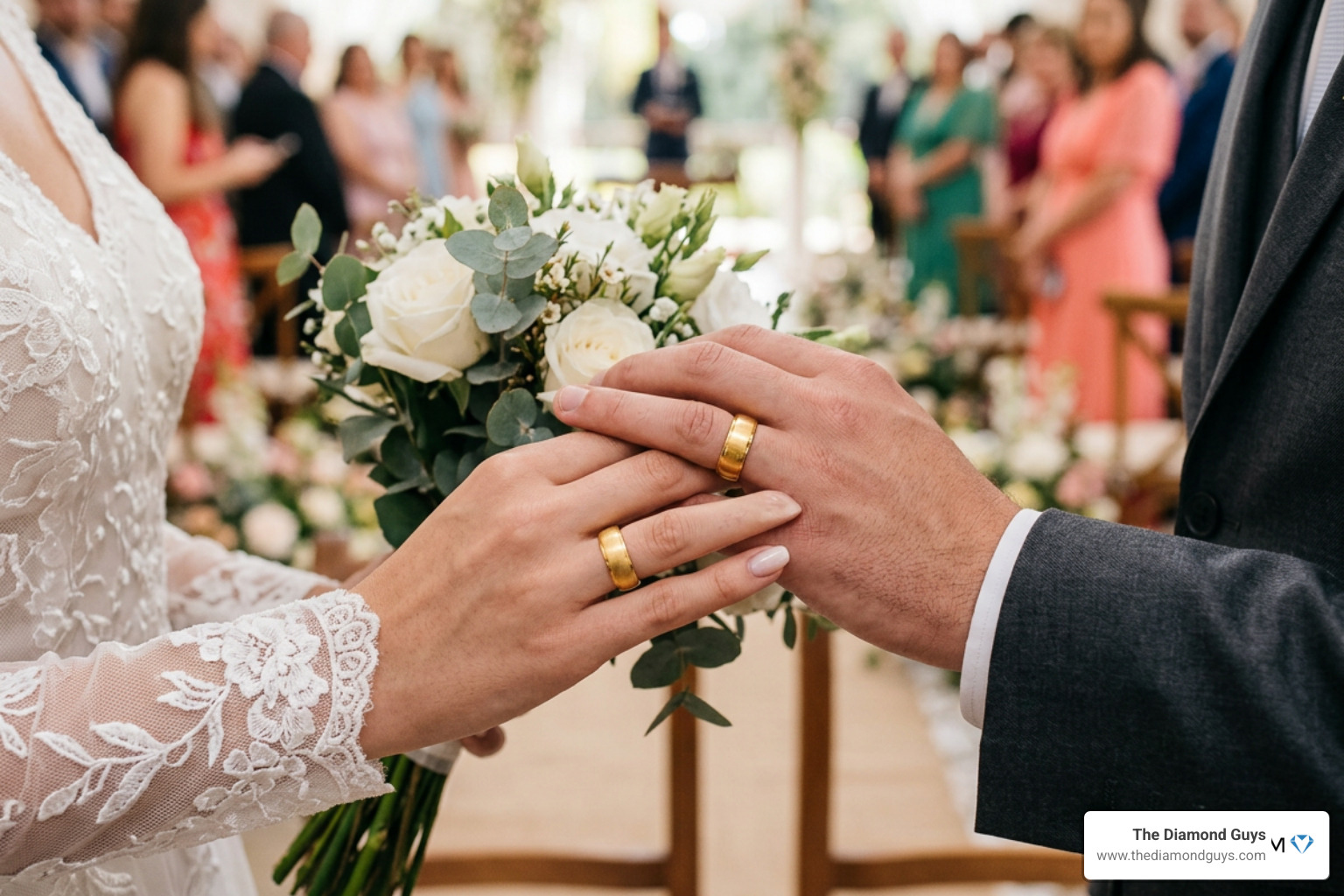
24k gold wedding bands are the purest form of gold jewelry you can buy — and that's exactly what makes them both so desirable and so debated.
Quick answer: Can you wear a 24k gold band every day?
- Yes, with caveats. 24k gold is 99.9% pure and softer than 14k or 18k gold.
- It can scratch and bend more easily than alloyed metals.
- However, bands crafted with the right thickness and structure hold up well for daily wear.
- They are naturally hypoallergenic, tarnish-resistant, and hold strong long-term value.
- Best suited for people who prioritize purity, investment value, and sensitive skin over maximum scratch resistance.
The appeal is easy to understand. Pure gold has a richer, deeper yellow color than any alloyed alternative. It contains zero added metals. And its value tracks directly with the live gold market — no guesswork, no hidden markups. But the question almost every buyer asks first is the same: won't it just bend?
That's exactly what this guide is here to answer — clearly and honestly.
I'm Morgan Price, a backlink outreach and content specialist who has spent years researching and building authoritative resources in the fine jewelry space, including in-depth coverage of 24k gold wedding bands and how they compare across retailers, metals, and price points. Let's get into what the research actually shows.
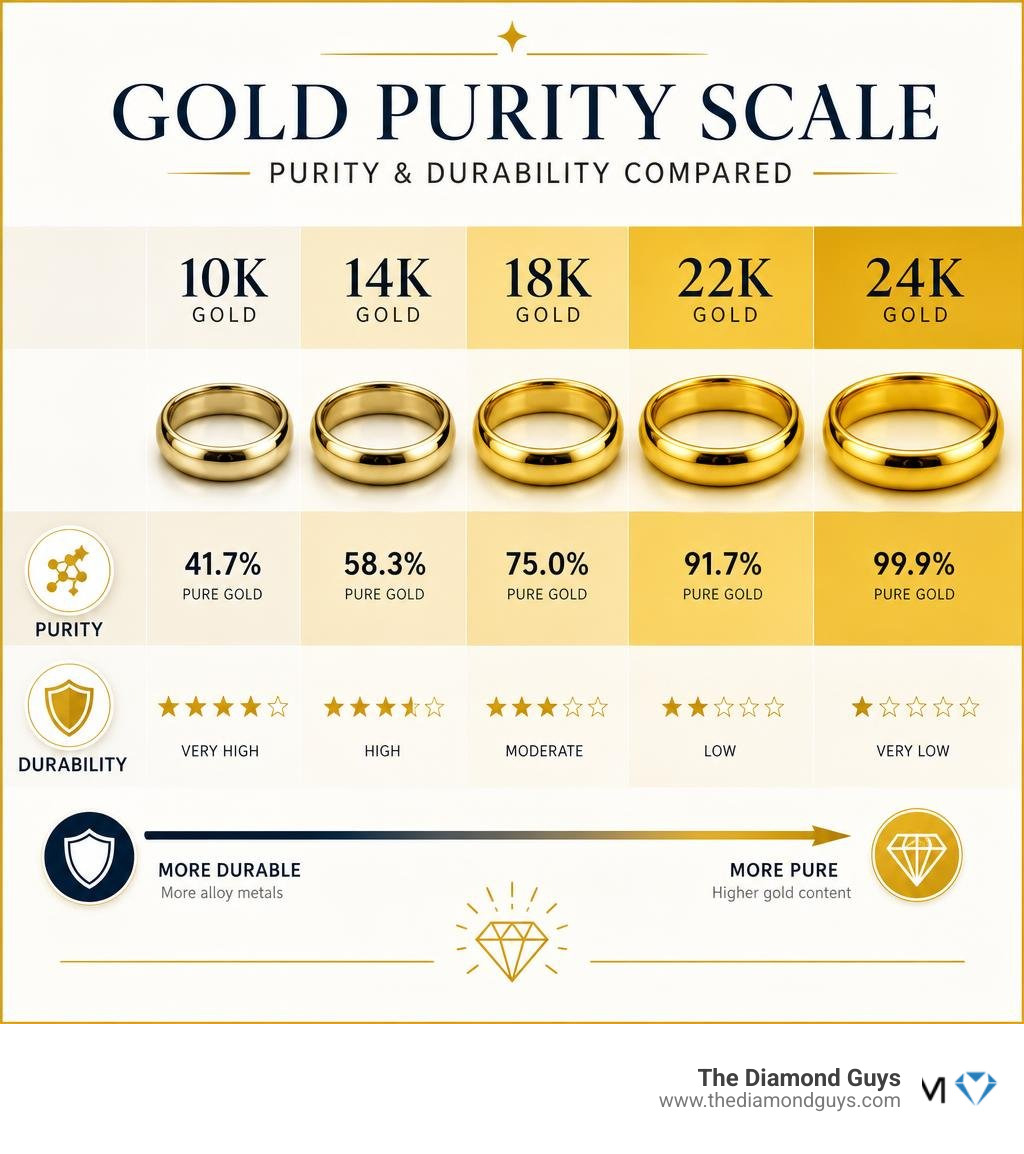
Essential 24k gold wedding bands terms:
Understanding 24k Gold Wedding Bands: Purity, Color, and Value
To truly appreciate 24k gold wedding bands, we first have to look at what "24 karat" actually means. In metallurgy, gold purity is measured on a scale of 24 parts. Therefore, 24k gold is 100% pure gold—or, practically speaking, 99.9% pure, as refining processes require a microscopic margin for natural elements.
When you buy a lower karat rating, such as 14k or 18k, you are purchasing a blend. An 18k ring contains 18 parts pure gold and 6 parts alloy metals (75% purity), while a 14k ring contains 14 parts pure gold and 10 parts alloy metals (58.3% purity).
These alloy metals—typically copper, silver, zinc, or nickel—are melted down with pure gold to make the resulting metal harder and more scratch-resistant. However, diluting the gold comes with a aesthetic trade-off. Pure 24k gold boasts a mesmerizing, incredibly warm, deep orange-yellow hue that lower karats simply cannot replicate. It has a distinct luster and heavy, luxurious weight on the finger that feels completely different from lightweight, alloyed bands.
Another incredible benefit of 99.9% purity is absolute tarnish resistance. Pure gold is chemically inert. It does not react with oxygen, moisture, or common household acids. While the alloy metals in 14k or 10k rings can oxidize over time when exposed to sweat, chlorine, or cosmetics—resulting in a dulling or darkening of the metal—a 24k gold band will never tarnish.
| Gold Karat | Gold Purity Percentage | Fineness (Parts per 1000) | Color Profile | Mohs Hardness Rating | Common Uses |
|---|---|---|---|---|---|
| 24k | 99.9% | 999 | Rich, deep orange-yellow | 2.5 | Investment jewelry, ceremonial bands |
| 22k | 91.6% | 916 | Bright, saturated yellow | 2.75 - 3.0 | Traditional Eastern jewelry |
| 18k | 75.0% | 750 | Warm, classic yellow | 2.75 - 3.0 | Fine luxury bridal jewelry |
| 14k | 58.3% | 583 / 585 | Gentle, soft yellow | 3.5 - 4.0 | Everyday commercial jewelry |
| 10k | 41.7% | 417 | Pale, washed-out yellow | 4.0 - 4.5 | Budget-friendly jewelry |
Comparing 14k, 18k, and 24k Gold Wedding Bands
When we help couples in our Scottsdale, AZ showroom compare karats, the differences become immediately clear visually and physically.
Alloy metals don't just change the hardness of a ring; they drastically alter its color depth. For instance, white gold is created by mixing yellow gold with white metals like nickel, zinc, or palladium, and then coating it in rhodium plating. Rose gold achieves its romantic pink hue through a high copper content. Even yellow gold changes tone based on the alloy mix. A 14k yellow gold band has a softer, lighter yellow hue because over 40% of its composition consists of silver and copper. An 18k band strikes a beautiful middle ground, offering a luxurious warm yellow.
But when you place an 18k band next to a solid 24k band, the difference is night and day. The pure gold band has an almost glowing, sun-kissed radiance.
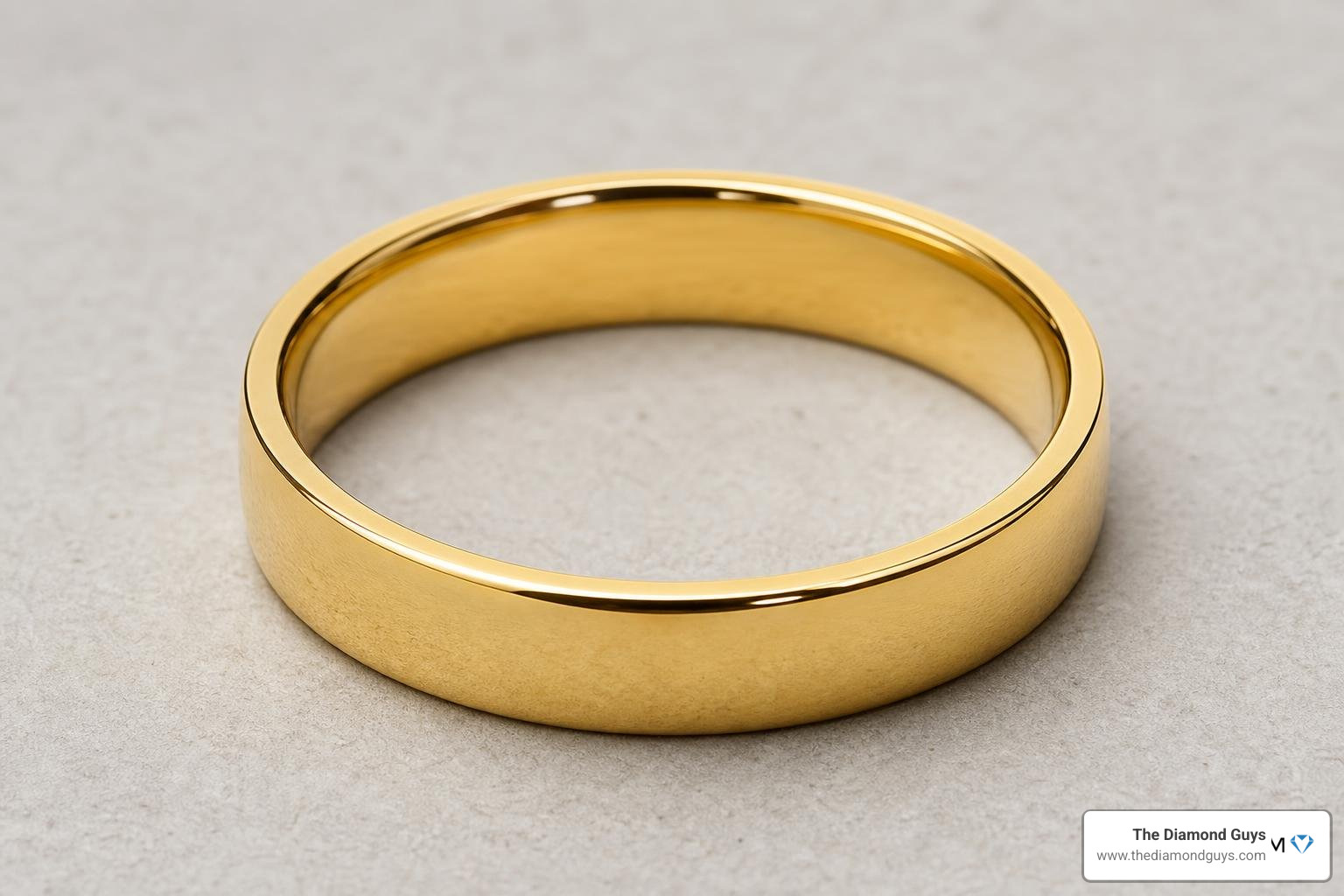
Many couples opt for classic profiles to showcase this extraordinary color. A popular example is a sleek, modern 4 mm flat band ring, which features clean edges that capture the light beautifully. Others prefer a traditional rounded look, such as a classic round wedding band, which emphasizes the metal's natural, liquid-like sheen.
The Durability Debate: Is Pure Gold Too Soft for Daily Wear?
Let's address the elephant in the room: metal hardness. On the Mohs Hardness Scale, which measures a material's resistance to scratching, a diamond sits at a perfect 10. Platinum sits around 4 to 4.5. Hardened steel sits at 6. Pure 24k gold, however, rates at a modest 2.5.
This means that pure gold is roughly as hard as a fingernail. It is highly malleable, which is why it has been prized by artisans for thousands of years—it can be hammered, pulled, and shaped without breaking. But does this malleability make it impractical for a wedding band you plan to wear while lifting weights, gardening, or washing dishes?
The key to wearing a 24k gold band daily lies in its structural thickness and design.
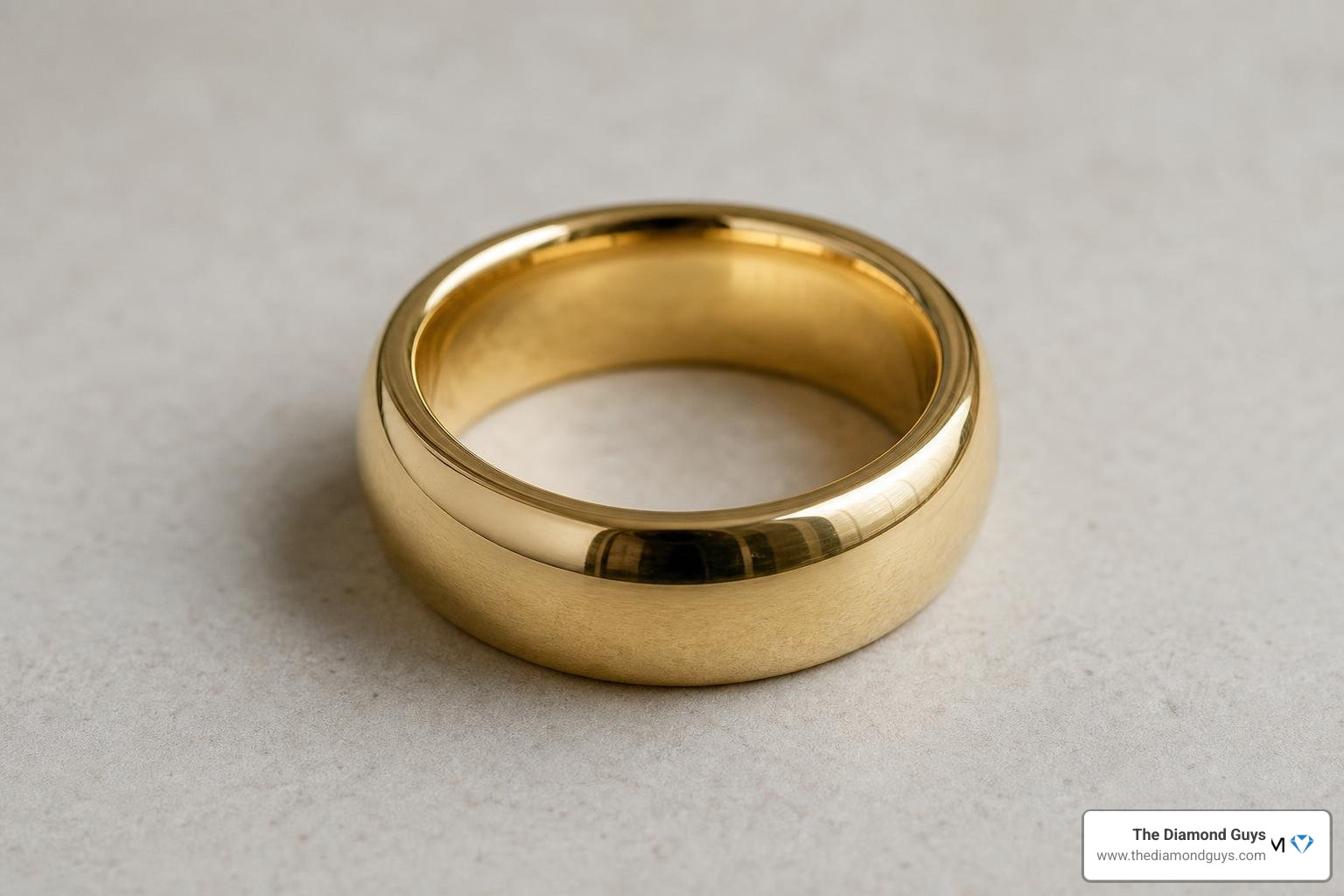
If you buy a paper-thin, lightweight 24k ring, it will warp and bend out of round under pressure. However, when a jeweler crafts a pure gold band with a substantial thickness (usually 1.5mm to 2.2mm or greater) and a dense, structural profile, the ring becomes remarkably resilient. Thick, solid bands distribute physical pressure across a larger volume of metal, preventing the ring from easily bending out of shape.
Additionally, opting for a comfort-fit interior—where the inside edges of the band are gently rounded rather than flat—not only makes the ring incredibly easy to wear but also adds structural bulk to the core of the band, reinforcing its integrity.
How 24k Gold Wedding Bands Hold Up Over Time
If you wear a 24k gold wedding band every single day, it will change. It is important to embrace this reality before making your purchase.
Unlike 14k gold, which resists minor abrasions, pure gold will develop a unique surface patina over time. As it contacts everyday objects—doorknobs, steering wheels, cutlery—microscopic scratches will accumulate on the surface. Rather than ruining the ring, these tiny marks soften the high-polish shine into a gorgeous, glowing satin or matte finish. In many cultures, this natural transition is celebrated; the surface patina represents the shared journey, weathering, and beautiful history of a marriage.
While minor surface scratching is inevitable, major bending or structural warping is rare if the ring is properly sized and sufficiently thick. If you choose a ring with a substantial gram weight, its structural integrity will remain intact for generations.
Pros and Cons: Pure Gold vs. Platinum and Palladium
When deciding on a wedding band metal, it helps to weigh pure gold against other popular premium options like platinum and palladium.
Platinum
Platinum is a white precious metal known for its incredible density and durability. Like pure gold, platinum is highly hypoallergenic and tarnish-resistant. However, platinum has a completely different weight feel. It is about 60% denser than 14k gold, giving it a comforting, substantial weight.
While platinum is highly resistant to breaking, it actually scratches quite easily—often faster than 14k gold—and develops its own soft "patina" over time. The main difference is color; if you want a cool, icy white metal, platinum is king. If you want the ultimate warm glow, 24k yellow gold is unmatched.
Palladium
Palladium is a sister metal to platinum. It shares platinum's hypoallergenic properties and white color but is significantly less dense (meaning it feels much lighter on the finger). Palladium is harder than platinum, making it highly scratch-resistant. However, it is also more difficult for jewelers to resize or repair.
Hypoallergenic Properties and Sensitive Skin
For anyone with sensitive skin, contact dermatitis, or metal allergies, pure gold is the absolute gold standard. Many commercial jewelry alloys contain nickel, which is the leading cause of metal-related skin allergies. When alloyed rings wear down or come into contact with sweat, they can release trace amounts of nickel, causing red, itchy rashes.
Because 24k gold is 99.9% pure, it is completely biocompatible and inert. It contains zero nickel, zero copper (which can turn skin green), and zero zinc. It is the safest, most comfortable metal choice for sensitive skin.
If you are exploring alternative styles, you might look at mixed-material options that blend distinct materials like wood or turquoise with precious metal accents. However, for pure, uninterrupted skin contact, nothing compares to the hypoallergenic safety of solid 24k gold.
For couples in the Phoenix metropolitan area looking for expert guidance, visiting a trusted local jeweler can help you weigh these physical properties in person. This allows you to compare the weight and feel of pure gold against platinum and palladium to find the perfect match for your lifestyle.
Pricing, Authenticity, and Investment Value of Pure Gold
One of the most compelling aspects of buying a 24k gold wedding band is how it is priced. Unlike lower-karat commercial jewelry, which carries massive retail markups that have little to do with the actual value of the metal, premium pure gold jewelry is often priced with ultimate transparency.
Transparent pricing means the cost of your ring is calculated using a simple formula:
$$\text{Total Price} = (\text{Exact Gram Weight of the Ring} \times \text{Live Gold Spot Price per Gram}) + \text{The Maker's Craftsmanship Fee}$$
Because pure gold is an globally traded investment asset, your ring holds intrinsic financial value from the moment you buy it. While a 14k gold ring loses the vast majority of its retail value the second you walk out of a jewelry store (due to high markups and low gold content), a 24k gold band retains excellent resale or buy-back value. Many specialty pure-gold brands even offer lifetime buy-back programs, allowing you to exchange your ring for its real-time gold weight value down the road.
Retail prices fluctuate based on the ring's weight and style. For example:
- A delicate, thin 2mm domed band might weigh around 4.3 grams and retail for around $1,100.
- A classic 4.5mm comfort-fit band weighing approximately 11 grams typically retails for around $3,500.
- Heavy, ultra-wide statement bands (up to 10mm or 13mm) can weigh an ounce or more, with prices ranging from $6,000 to over $12,000 depending on the current market spot price.
You can browse a wide selection of these styles to see how different widths affect the total gram weight and pricing.
Ensuring Authenticity
When purchasing a pure gold band, always verify its authenticity. Look for the proper purity stamps stamped on the inside of the band.
In the United States, pure gold is stamped with "24k" or "999" (signifying 999 parts per 1000 pure gold). In other regions, you may see a "99.9%" stamp or official government hallmarks. Always buy from a reputable jeweler who provides a certified breakdown of the ring's exact weight in grams and guarantees its purity.
Frequently Asked Questions About 24k Gold Bands
Are 24k gold bands hypoallergenic?
Yes, absolutely. 24k gold is the most hypoallergenic metal available for jewelry. Because it contains 99.9% pure gold and zero alloy metals like nickel, zinc, or copper, it is completely biocompatible and will not cause skin irritation, rashes, or discoloration, even on the most sensitive skin types.
How do you clean pure gold jewelry?
Cleaning pure gold is simple and safe because the metal is highly chemical-resistant.
- Mix a few drops of mild dish soap in a bowl of warm water.
- Soak your 24k band for 10 to 15 minutes to loosen any dirt or oils.
- Gently scrub the ring with a soft-bristled toothbrush (do not use stiff brushes, as they can scratch the soft metal).
- Rinse thoroughly under warm running water.
- Dry gently with a clean, soft microfiber cloth. Never use paper towels or rough rags, which can leave microscopic scratches on the polished surface.
- Store your pure gold band in a soft fabric pouch or a separate compartment in your jewelry box to prevent it from rubbing against harder gemstones or alloyed jewelry.
What styles and widths are best for pure gold?
Because pure gold is softer, certain designs are better suited for daily wear than others:
- Domed Bands (D-Shape): Classic domed profiles are excellent because their curved outer surface naturally deflects direct impacts, reducing the risk of bending.
- Flat Bands: A flat profile with a substantial thickness (at least 1.8mm to 2mm) provides great structural strength and showcases the deep yellow color beautifully.
- Hammered Finishes: A hammered texture is a brilliant choice for 24k gold. Because the surface is already textured, any minor scratches or scuffs from daily wear blend in seamlessly, enhancing the ring's rustic character.
- Optimal Widths: For men, widths between 4mm and 6mm offer the perfect balance of weight, durability, and classic style. For women, widths between 3mm and 4.5mm provide a stunning look while maintaining excellent structural integrity.
Conclusion
Choosing a wedding band is a deeply personal decision. While 24k gold wedding bands require a bit more mindfulness during daily wear than their alloyed 14k counterparts, they reward you with an unparalleled, glowing color, absolute hypoallergenic safety, and a timeless connection to the earth's purest precious metal.
If you love the idea of a ring that is both a beautiful symbol of your commitment and a genuine, heirloom-grade asset that holds real-world value, pure gold is an extraordinary choice.
At The Diamond Guys, we believe your wedding bands should be as unique and enduring as your love story. Whether you are looking for a classic pure gold band or want to design a custom bridal set, our team in Scottsdale, AZ is here to guide you every step of the way with honest advice, ethical sourcing, and a pressure-free shopping experience.
Ready to find your perfect fit? Explore custom LA wedding bands or visit our Scottsdale showroom to experience our personalized design process in person!


