

Unlocking Brilliance: Everything You Need to Know About IGI Lab Grown Diamond Certification
Understanding IGI Certified Lab Grown Diamonds
For modern buyers, choosing a diamond is a big decision. Understanding igi certified lab grown diamonds can give you immense confidence.
An igi certified lab grown diamond means it has been rigorously evaluated by the International Gemological Institute (IGI), one of the world's most respected independent gemological laboratories.
This certification provides:
- Authenticity: Confirms the diamond is real and lab-grown.
- Quality Assessment: Details its specific grades for cut, color, clarity, and carat weight (the 4Cs).
- Transparency: Offers an unbiased, third-party report of its characteristics.
- Confidence: Gives buyers peace of mind knowing the diamond's exact specifications.
The International Gemological Institute (IGI) is a global leader in gemological grading. They provide comprehensive reports that act as a diamond's blueprint. This gives you clear, unbiased information about your potential purchase. IGI pioneered the grading of lab-grown diamonds back in 2005. They remain a trusted name in the industry today, issuing more reports for these gems than any other organization.
What is an IGI Lab Grown Diamond Certification?
Picture this: you've found the perfect diamond, but how do you know it's truly what the seller claims? That's where IGI certified lab grown diamonds come into play, offering you a roadmap to confidence in your purchase.
The International Gemological Institute has quite the story. Founded in 1975 in Antwerp, Belgium (the diamond capital of the world!), IGI has grown into something pretty impressive over nearly five decades. We're talking about the world's largest independent gemological laboratory, with 29 laboratories and 18 schools spread across 10 countries. Their commitment to excellence isn't just talk either – they hold ISO 9001:2000 certification in several countries, including the United States, which means their processes meet those tough international quality management standards.
Here's what makes IGI special in the lab-grown diamond world: they were true trailblazers. Back in 2005, when most people had barely heard of lab-grown diamonds, IGI was already grading them. They were literally A Pioneer in Lab Diamond Grading, establishing the industry standards we rely on today for disclosure, standardization, and authenticity. They even helped create the modern laser inscription process for diamonds! Today, IGI issues more reports for lab-grown diamonds than any other organization – talk about expertise through experience.
So what's the point of all this certification? It's really about two key things: authenticity verification and objective quality assessment. The certification confirms that your diamond is indeed a real diamond – just one that was grown in a laboratory rather than pulled from the earth. (And yes, they're absolutely real diamonds! Check out our article on Are Lab-Grown Diamonds Real Diamonds if you're curious about that.)
The objective assessment part is where things get really valuable. You get an unbiased, third-party evaluation of your diamond's exact characteristics. It's like having a trusted expert friend who knows everything about diamonds give you the complete scoop – no sales pressure, just facts.
The Grading Process: Consistency and Expertise
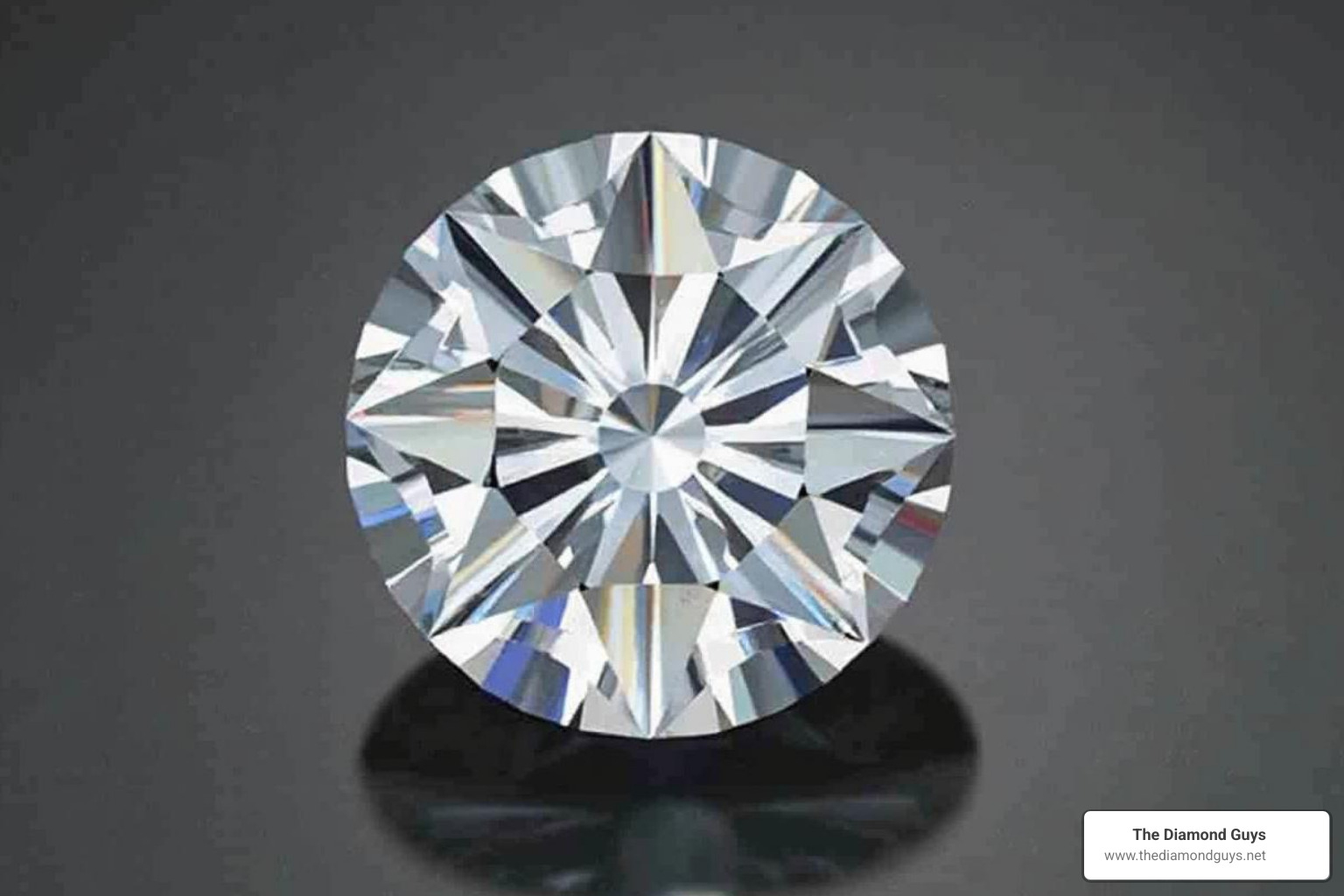
Here's something that might surprise you: IGI grades lab-grown diamonds using the exact same standards they use for natural diamonds. Same expert gemologists, same rigorous 4Cs criteria, same advanced technology. The only difference? They also determine the diamond's origin during the process.
The screening process is fascinating. Every single diamond gets examined with sophisticated instruments to determine whether it's naturally mined, laboratory grown, or a simulant. This step is crucial because, to your eyes, IGI certified lab grown diamonds look identical to natural ones – they're optically, chemically, and physically the same.
The actual grading process is beautifully systematic. Multiple gemologists independently assess each diamond without talking to each other about their findings. For color grading, they place the diamond upside down in a standardized viewing environment – this helps them see the color more neutrally. Clarity gets examined under 10X magnification, where they're looking at the visibility, size, number, location, and nature of any internal or surface characteristics.
This consistency means you can trust that an IGI report gives you a reliable, unbiased evaluation – whether you're looking at a natural or lab-grown diamond.
What's on an IGI Lab-Grown Diamond Report?
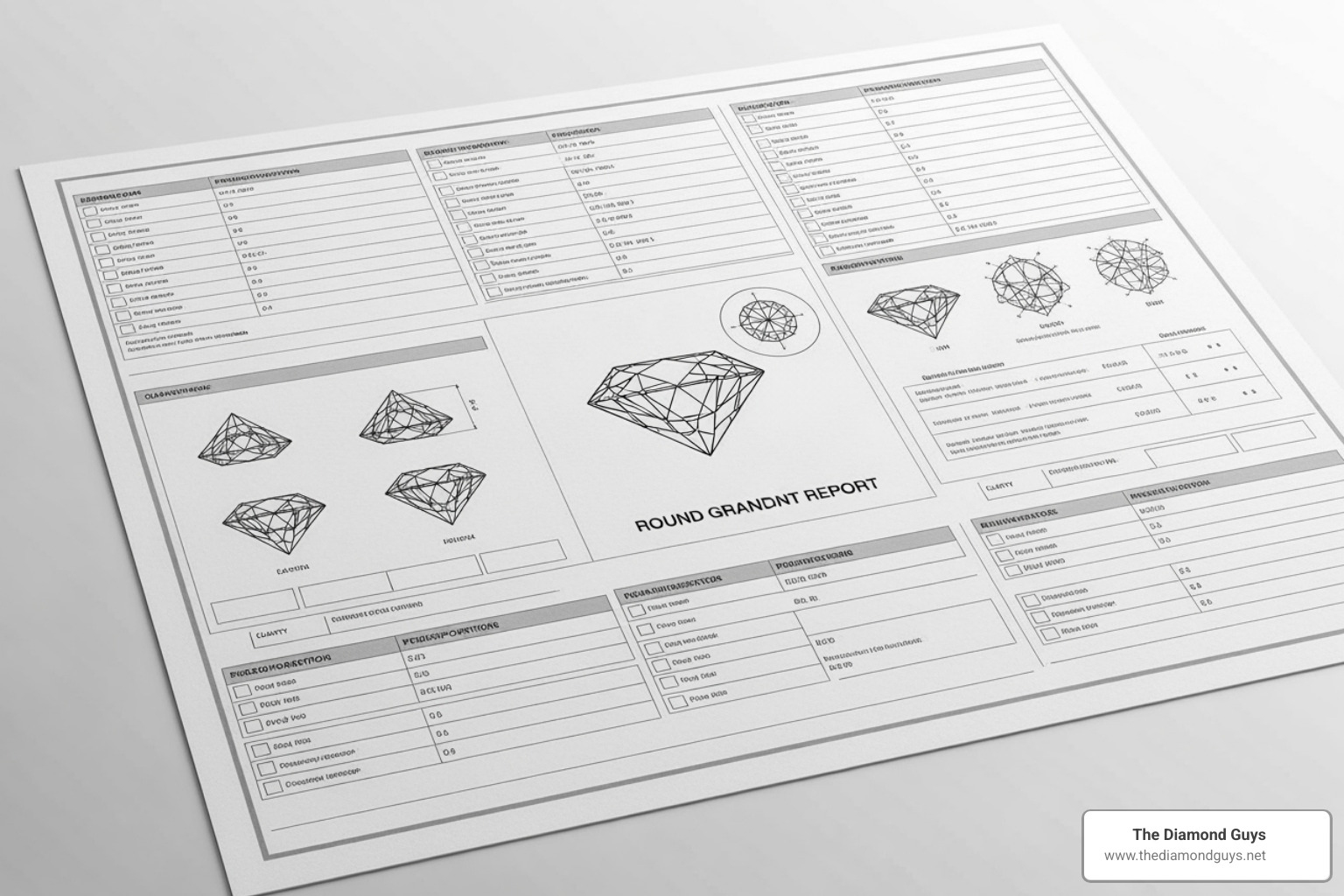
Think of an IGI lab-grown diamond report as your diamond's complete biography. It tells you everything you need to know, and then some.
The basics are all there: the report number and date give your diamond a unique identity, while the shape and cutting style describe whether you're looking at a round brilliant, oval, emerald cut, or another style. You'll find precise measurements in millimeters and the exact carat weight down to two decimal places.
The heart of the report covers the famous 4Cs. The color grade (typically on a D-Z scale, with D being completely colorless) tells you how much or how little color your diamond has. The clarity grade reveals what's happening under 10X magnification – any inclusions inside or blemishes on the surface. For round brilliant diamonds, you'll see a cut grade that assesses how well the diamond's facets work with light to create that amazing sparkle. For other shapes, you'll get polish and symmetry grades instead.
Here's where lab-grown diamond reports get interesting: they include details you won't find on natural diamond reports. The growth method tells you whether your diamond was created using High-Pressure High-Temperature (HPHT) or Chemical Vapor Deposition (CVD) – two completely different approaches to growing diamonds.
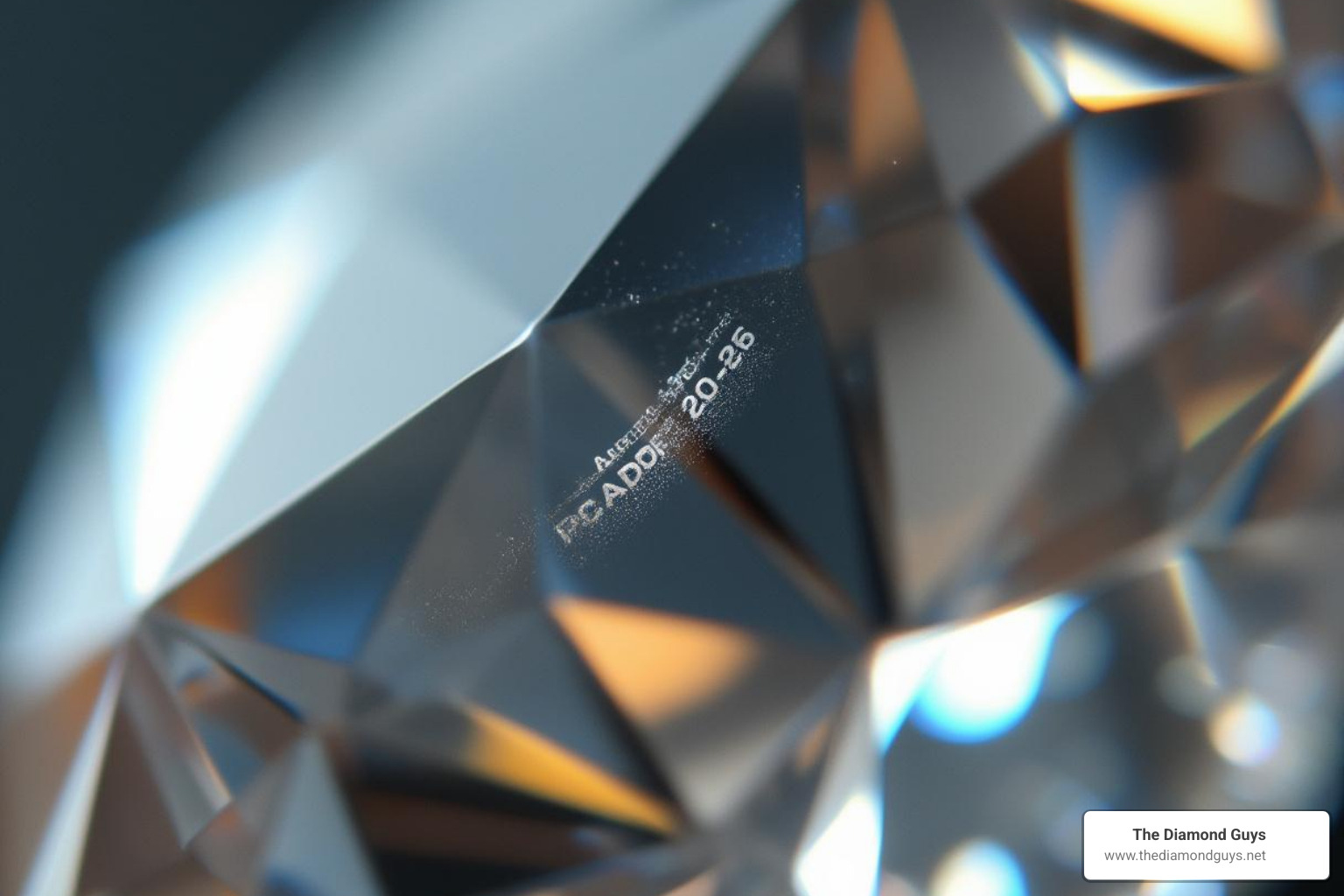
Most IGI certified lab grown diamonds also have a laser inscription on their girdle (the thin edge around the diamond). This tiny inscription includes the report number and often "LAB GROWN" to clearly identify the diamond's origin. Don't worry – you won't see this with your naked eye!
If your diamond received any post-growth treatments to improve its appearance, those will be clearly noted in the comments section. This transparency is crucial because treatments can affect both the diamond's final look and its value.
The beauty of this system? You can verify everything online. Just head to the IGI website and enter your report number – instant verification that your diamond is exactly what the report claims it to be.
Decoding the IGI Report: The 4Cs and Beyond
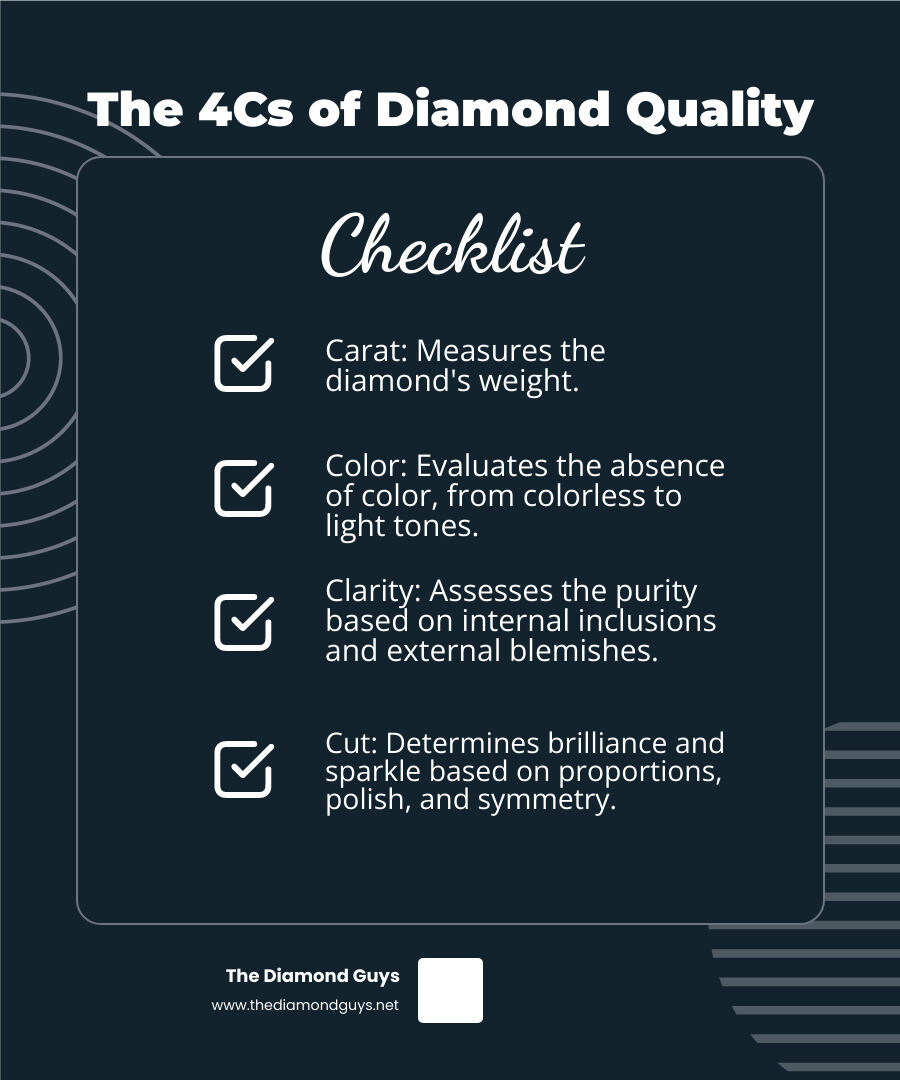
Alright, let's dive into the heart of any diamond's story: the famous 4Cs! Whether you're looking at a natural gem or a dazzling igi certified lab grown diamond, these four characteristics – Cut, Color, Clarity, and Carat – are the universal language of diamond quality. They tell you everything about its brilliance, fire, and that special sparkle that catches your eye. Learning how IGI assesses each of these 'Cs' is key to truly understanding your diamond's report and appreciating its unique beauty and value. Curious about how these lab-grown beauties stand up to testing? We've got an article for you: Do Lab Diamonds Pass a Diamond Tester.
Cut: The Key to Sparkle
If you ask most diamond experts (including us here at The Diamond Guys!), they'll tell you that Cut is arguably the most important of the 4Cs. Why? Because the cut is what makes a diamond truly sparkle! It's all about how well the diamond's facets interact with light. A beautifully cut diamond, no matter if it's lab-grown or mined, will capture and reflect light in a way that creates breathtaking brilliance and fiery flashes. That's the 'wow' factor we all look for!
When IGI grades the cut, especially for popular round brilliant diamonds, they give it a grade from Ideal (or Excellent) all the way down to Poor. This isn't just about the diamond's shape; it's a careful look at its proportions (like how deep or wide it is), the precise arrangement of its facets, and how well it handles light performance. They also check the polish (how smooth the surface is) and symmetry (how perfectly aligned its tiny facets are). These details might sound small, but they make a huge difference in how much sparkle your diamond will have. Simply put, a better cut means more dazzling sparkle!
Color: From Colorless to Light Tones
Next up is Color, and this one might surprise you a little! When we talk about a diamond's color, we're actually talking about the absence of color – how truly colorless it is. The less color, the higher the grade. IGI uses a widely recognized alphabetical scale that goes from D to Z.
Here’s a quick rundown of what those grades mean:
- D-F: These are your 'Colorless' diamonds. Think of them as pure, icy white. They're the rarest and most sought-after.
- G-J: These are 'Near Colorless.' To the naked eye, especially once they're set in a ring, they'll still look beautifully white. This range is often a fantastic choice if you're looking to balance stunning beauty with a smart budget.
- K-M: You might start to see a very faint yellow tint in these, which is why they're called 'Slightly Tinted.'
- N-Z: As you go further down the alphabet, the yellow or brownish tints become more and more noticeable.
Now, if you're dreaming of something truly unique, like a vibrant blue, pink, or intense yellow diamond, those are called 'Fancy Color Diamonds.' They're graded on a completely different scale that focuses on the intensity of their hue. To make sure every diamond gets a fair and unbiased assessment, IGI gemologists carefully grade color in a super controlled, standardized environment, often even placing the diamond upside down to get the clearest view.
Clarity: A Measure of Purity
Next, let's talk about Clarity – this is all about how 'clean' your diamond is, meaning the presence (or absence!) of tiny internal imperfections called inclusions and external surface marks called blemishes. Don't worry, most of these are microscopic! IGI gemologists are like diamond detectives, examining each stone under 10x magnification using a special tool called a loupe.
Here’s how IGI's clarity scale breaks down, from perfectly clear to those with more noticeable characteristics:
- IF (Internally Flawless): These diamonds are like a perfectly clear pane of glass – no inclusions visible, even under 10x magnification.
- VVS1-VVS2 (Very Very Slightly Included): Inclusions are present, but they’re so tiny, they're incredibly difficult for even an expert to spot under 10x magnification.
- VS1-VS2 (Very Slightly Included): Here, inclusions are still quite small and usually difficult to see under 10x magnification.
- SI1-SI2 (Slightly Included): You'll start to notice these inclusions under 10x magnification, but they often don't impact the diamond's beauty to the naked eye.
- I1-I3 (Included): At this level, inclusions are more obvious under 10x magnification and might even be seen without it, potentially affecting the diamond's transparency or sparkle.
For most people, the sweet spot for value is often an 'eye-clean' diamond – meaning any inclusions aren't visible without magnification. You can often find stunning 'eye-clean' diamonds in the VS or SI range. By the way, if you're wondering if a jeweler can spot the difference between a lab-grown and a natural diamond, we've got an article for you: Can a Jeweler Tell the Difference Between Lab-Grown Diamonds.
Carat: The Measure of Weight
Finally, let's talk about Carat! This is probably the most commonly known of the 4Cs, but it's also often misunderstood. Many people think 'carat' means size, but it actually refers to the diamond's weight. Think of it this way: one carat is precisely 200 milligrams. So, a higher carat weight simply means a heavier diamond.
Now, while a heavier diamond usually means a bigger diamond, it's not always a perfect one-to-one relationship with how large it looks. This is because the diamond's cut and shape play a big role in its visual size. A beautifully cut diamond, for instance, can appear larger than a poorly cut one of the exact same carat weight because it's optimized to maximize its spread and brilliance.
You'll also notice that diamond prices tend to jump quite a bit as the carat weight increases, and it's not always a linear climb. This is because larger, high-quality diamonds are much rarer. For example, a single 2-carat diamond will likely cost you significantly more than two 1-carat diamonds of similar quality, simply because finding that one large, perfect rough stone is much harder.
To give you a clearer picture, here's a general guide for how carat weight usually translates to visual size for a classic round brilliant cut diamond:
| Carat Weight | Approximate Diameter (mm) |
|---|---|
| 0.50 ct | 5.1 mm |
| 0.75 ct | 5.9 mm |
| 1.00 ct | 6.5 mm |
| 1.25 ct | 6.9 mm |
| 1.50 ct | 7.4 mm |
| 2.00 ct | 8.2 mm |
Why Choose an IGI Certified Lab Grown Diamond?
Choosing an igi certified lab grown diamond offers a compelling blend of benefits that appeal to the modern buyer. From increased consumer confidence to ethical considerations and remarkable affordability, these diamonds are changing the landscape of fine jewelry. If you're weighing your options, our article Should I Buy a Lab-Grown Diamond Engagement Ring offers more insights.
The Advantages for the Modern Buyer
We've seen why so many of our customers are making the switch to IGI-certified lab-grown diamonds. Here are the key advantages:
- Exceptional Value: Lab-grown diamonds trade for notably lower prices than comparable natural diamonds. This means you can often get a larger, higher-quality diamond for your budget, allowing you to truly maximize your sparkle without breaking the bank.
- Guaranteed Authenticity and Quality: An IGI certification provides an accurate assessment of the diamond's cut, color, clarity, and carat weight according to strict international standards. This assures you that you're purchasing a real diamond with verified characteristics.
- Detailed Transparency: IGI reports offer comprehensive details, including the specific growth method (HPHT or CVD) and any post-growth treatments. This level of transparency gives you a complete understanding of your diamond's journey.
- Industry Standard Acceptance: IGI has established itself as the "gold standard" for lab-grown diamond certification due to its early adoption, comprehensive grading, and wide industry acceptance. Major jewelry chains trust IGI, and so can you.
- Peace of Mind: Knowing your diamond has been independently verified by a world-leading gemological institute provides unparalleled peace of mind. You can be confident in your purchase, knowing exactly what you're receiving.
- Ethical Considerations: While the environmental footprint of lab-grown diamonds varies depending on the energy source used in their production, they inherently eliminate concerns related to traditional mining, such as conflict financing or "blood diamonds." For many, this makes them a more ethically appealing choice.
How IGI Certification Builds Trust
Trust is paramount when purchasing a diamond, and IGI certification plays a pivotal role in building that trust for lab-grown diamonds.
- Third-Party Verification: An IGI report is an unbiased, third-party assessment. This objective evaluation eliminates any potential seller bias, ensuring you receive an impartial appraisal of the diamond's quality.
- Laser Inscription for Identification: As we mentioned, most igi certified lab grown diamonds come with a microscopic laser inscription on their girdle. This inscription includes the IGI report number and often "LAB GROWN." This allows for quick and easy identification of your specific diamond under magnification, directly linking it to its unique report. It's like a diamond's fingerprint!
- Easy Online Report Verification: IGI makes it incredibly easy to verify your diamond's report online. Simply visit their website and enter the report number to access a digital copy of your diamond's details. This readily available verification tool further improves consumer confidence.
- Insurance Ready: Because IGI provides such detailed and verifiable reports, insuring your igi certified lab grown diamond is a straightforward process. The report provides all the necessary information for appraisal and coverage, just like a natural diamond. In fact, we have more information about this in our article: Can You Insure Lab-Grown Diamonds.
By providing transparent, verifiable, and comprehensive reports, IGI empowers consumers to make informed decisions, fostering a deep sense of trust in the lab-grown diamond market.
Frequently Asked Questions about IGI Certified Lab Grown Diamonds
We know that choosing a diamond can bring up lots of questions, especially with all the exciting new options available! Here at The Diamond Guys, we hear a lot about lab-grown diamonds and their certifications. So, let's tackle some of the most common questions we get, sharing our expert insights to help you feel confident and informed.
Is IGI a good certification for lab diamonds?
Oh, absolutely! When it comes to igi certified lab grown diamonds, IGI isn't just "good"—they are widely recognized as the global leader and the industry standard. Think of them as the pioneers in this field!
IGI was the very first major gemological institute to start grading lab-grown diamonds, way back in 2005. That means they have nearly two decades of specialized experience in this area. This long history translates into incredible expertise, and they've issued more reports for lab-grown diamonds than any other organization. Their reports are known for being incredibly detailed, comprehensive, and consistent. They even tell you important things like the diamond's growth method (whether it's CVD or HPHT) and if it's had any special treatments after it grew. This level of detail is a huge reason why so many major jewelry retailers and jewelers around the world trust IGI for their lab-grown diamond inventory. So yes, they are definitely the go-to certification for these beautiful gems!
How does IGI's grading for lab diamonds compare to its grading for natural diamonds?
This is a fantastic question, and it's one we hear often! The simple answer is: IGI uses the exact same grading standards and scales for both lab-grown and natural diamonds. There's no difference in their approach!
This means the famous 4Cs (Cut, Color, Clarity, and Carat) are applied with the same careful, rigorous methods, by the very same expert gemologists, using the same advanced equipment. It doesn't matter if the diamond came from the earth or was grown in a lab. Why? Because lab-grown diamonds are optically, chemically, and physically identical to natural diamonds. So, the criteria used to assess these properties are naturally the same. The only difference you'll see on an IGI report between a natural and a lab-grown diamond is a clear statement of its origin. This amazing consistency means that an IGI report allows you to directly and fairly compare the quality of any diamond, whether it's natural or lab-grown.
Are IGI certified lab diamonds worth anything?
Absolutely, igi certified lab grown diamonds hold significant value! It's true that they are typically more affordable than their natural counterparts. This often allows you to choose a larger or higher-quality stone for your budget, which is a fantastic advantage! But this affordability certainly doesn't mean they aren't "worth anything."
An IGI certification is your guarantee of the diamond's authenticity and quality. It confirms that you have a real diamond, with all the same physical, chemical, and optical properties as a mined diamond. They sparkle with the same brilliance, boast the same incredible durability (scoring a perfect 10 on the Mohs hardness scale), and possess the same breathtaking beauty. This makes them a truly valuable and stunning choice for any fine jewelry piece, whether it's a sparkling engagement ring, neat earrings, or a meaningful pendant.
Like all diamonds, their value is shaped by their 4Cs and the current market demand. While their resale market is still growing compared to natural diamonds, they are undeniably a tangible, beautiful asset. They can be insured, passed down through generations as cherished heirlooms, and enjoyed for a lifetime. The sentimental and personal value they hold often goes far beyond just their monetary worth. They are certainly something to treasure!
Conclusion
Well, we've certainly covered a lot of ground today, haven't we? We hope this deep dive has given you a really clear picture of what igi certified lab grown diamonds are all about, and the invaluable role the International Gemological Institute (IGI) plays in ensuring their authenticity and quality.
From their pioneering efforts in grading these modern marvels to their rigorous adherence to international standards for the 4Cs, IGI truly provides the transparency and confidence that today's consumers demand.
Choosing an igi certified lab grown diamond means you're selecting a beautiful, real diamond that has been carefully evaluated and documented. This empowers you to make an informed decision, secure in the knowledge of your diamond's exact characteristics and exceptional value.
And that's exactly where we come in at The Diamond Guys! For expert guidance in selecting the perfect stone and understanding its certification, our specialists are here to help. We pride ourselves on offering a truly personalized shopping experience, expert guidance, and ethically sourced diamonds. This is what sets us apart from big-box retailers.
We're proud to serve our wonderful clients in Scottsdale, AZ, Sherman Oaks, CA, Los Angeles, CA, and across Arizona and California, USA. We're here to guide you through every step of your diamond journey, helping you find that perfect stone that truly speaks to you. If you're still weighing your options, or just curious to learn more, be sure to explore our comprehensive guide on Lab Diamonds vs Real Diamonds.


