

The Best Places to Buy a Lab Created Blue Diamond
The Best Places to Buy a Blue Lab Diamond in 2026

If you're ready to buy a blue lab diamond, here are the best types of sellers to look for:
Best places to buy a blue lab diamond:
- Certified jewelers - Offer IGI, GIA, or GCAL grading reports with every stone
- Custom-design studios - Let you choose cut, color intensity, and setting together
- Specialist retailers - Focus on fancy color lab diamonds with deep inventory
- Local experts (like The Diamond Guys in Scottsdale and Los Angeles) - Provide hands-on guidance, transparent pricing, and personalized service
Blue lab diamonds are one of the most striking gems you can buy right now. Natural blue diamonds are extraordinarily rare — fewer than 0.02% of all diamonds in circulation are blue, and the odds of finding one in nature are roughly 1 in 10,000. The famous Oppenheimer Blue, just 14.62 carats, sold for over $57 million at auction. Lab-created versions give you the same vivid color and identical physical properties at a fraction of that cost — typically 50–90% less than their mined counterparts.
This guide cuts through the noise so you know exactly where to shop, what to look for, and how to avoid overpaying.
I'm Morgan Price, a backlink outreach and content specialist with hands-on experience researching the lab-grown diamond market, including the niche world of fancy color stones like the blue lab diamond. I'll walk you through the most trustworthy places to buy and the key questions to ask before you commit.
Simple blue lab diamond glossary:
What a Blue Lab Diamond Is and Why Buyers Want One
A blue lab diamond is a real diamond grown in a controlled environment rather than mined from the earth. It has the same carbon crystal structure, the same hardness, and the same sparkle you expect from any diamond. The difference is origin, not identity.
Why do buyers want one? Three big reasons:
- Blue diamonds are visually unforgettable
- Natural blue diamonds are incredibly rare
- Lab-grown versions make that rare look far more attainable
For many shoppers, a blue lab diamond hits a sweet spot between luxury, individuality, and practicality. You get a true diamond with a bold fancy color, but without the eye-watering price tag that often comes with mined blue stones.

Is a blue lab diamond a real diamond?
Yes. A lab-created blue diamond is a real diamond in every meaningful gemological sense. It is:
- Chemically identical to a mined diamond
- Physically identical to a mined diamond
- Optically identical to a mined diamond
- Rated 10 on the Mohs hardness scale
That means it can absolutely be worn in engagement rings, earrings, pendants, and everyday jewelry. It is not cubic zirconia, not moissanite, and not glass with a good publicist.
The main difference is formation. Natural diamonds grow underground over billions of years. Lab-grown diamonds are created in weeks using advanced technology that recreates diamond-growing conditions. If you want a deeper breakdown, see Are Lab Grown Diamonds Real Diamonds?.
Blue lab diamond vs natural blue diamond
This is where the buying decision gets interesting.
Natural blue diamonds are among the rarest diamonds on earth. Research shows they make up less than 0.02% of natural diamonds in circulation, and the odds of finding one are around 1 in 10,000. That rarity is exactly why exceptional mined blue diamonds can sell for staggering amounts.
Lab-grown blue diamonds, on the other hand, give buyers the same type of material with far better accessibility and pricing.
| Factor | Blue Lab Diamond | Natural Blue Diamond |
|---|---|---|
| Origin | Created in a lab | Formed in the earth |
| Diamond status | Real diamond | Real diamond |
| Color cause | Boron introduced during growth | Trace boron in natural formation |
| Rarity | Limited, but far more available | Extremely rare |
| Price | Typically much lower | Often dramatically higher |
| Collector appeal | Lower than natural rarities | Higher due to rarity |
| Visual appearance | Often very consistent | Can vary more in hue and saturation |
The biggest advantage of natural blue diamonds is rarity and collector prestige. The biggest advantages of lab-grown blue diamonds are price, availability, and customization.
What gives a blue lab diamond its color?
Blue diamonds get their color from boron. When boron atoms enter the diamond crystal lattice during growth, the stone absorbs light in a way that creates blue coloration.
In lab-grown production, that blue color is usually achieved during either:
- HPHT, or high pressure high temperature growth
- CVD, or chemical vapor deposition growth
In both methods, controlled conditions help create the desired hue. The amount and distribution of boron influence how light or saturated the blue appears. That is why some stones look soft and icy, while others fall into stronger categories like Fancy Intense or Fancy Vivid Blue.
Color in fancy diamonds is graded differently than the standard D-to-Z scale used for colorless stones. If you want a primer on that, read What is Diamond Color?.
Best Places to Buy a Lab Created Blue Diamond
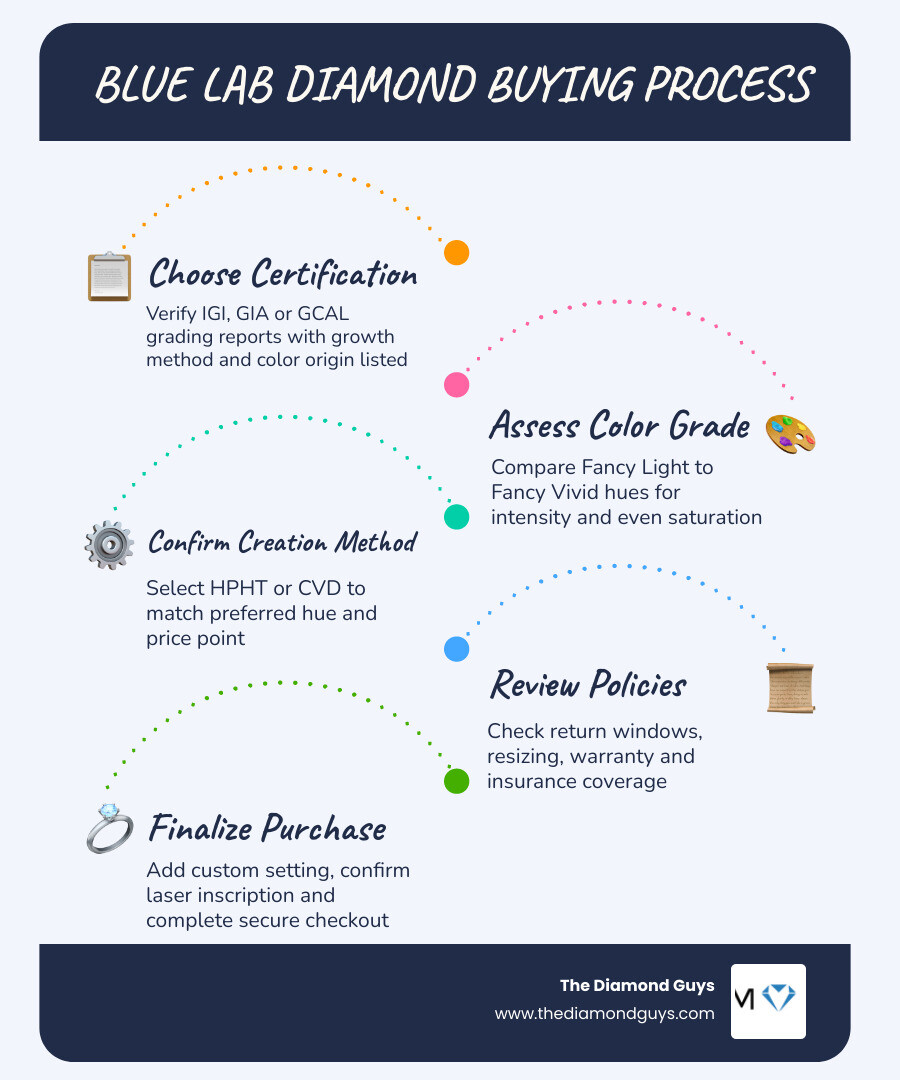
If you are shopping for a blue lab diamond, the best place is not simply the cheapest listing online. It is the seller that gives you confidence before, during, and after the purchase.
We recommend focusing on sellers that offer:
- Third-party grading reports
- Clear color and clarity specs
- High-resolution photos or 360-degree video
- Setting and customization options
- Transparent policies for returns, resizing, and support
- Access to real human guidance
At The Diamond Guys, we see many buyers come in after getting overwhelmed online. Fancy color diamonds can be confusing, especially when color intensity, growth method, and treatment disclosure are buried in fine print.
Buy from sellers that provide full grading reports
This is non-negotiable.
A reputable seller should provide a grading report from a recognized lab such as:
- IGI
- GIA
- GCAL
For a blue lab diamond, that report should ideally include:
- Carat weight
- Shape and measurements
- Clarity grade
- Cut details, where applicable
- Fancy color grade
- Whether the diamond is laboratory-grown
- Growth method, when stated
- Laser inscription information, if present
Why does this matter? Because fancy blue diamonds are graded by color intensity, not just by whether they are "blue." Fancy Light, Fancy, Fancy Intense, and Fancy Vivid can look very different in person and in price.
We strongly suggest comparing the report to the diamond itself and checking that any laser inscription matches the paperwork. For more on reports, see the Ultimate IGI Certified Lab Grown Diamonds Guide.
Prioritize strong selection, custom options, and clear imagery
Blue lab diamonds are not one-size-fits-all. Shape, saturation, and setting all affect the final look.
The best sellers make shopping easier with:
- Multiple shape options
- Filters for carat, clarity, and color intensity
- Videos that show the stone in motion
- Detailed photos in different lighting
- Ring setting builders
- Support for custom designs
This matters because some cuts show color better than others. Cushion, radiant, oval, and pear cuts are especially popular for blue diamonds because they can showcase color beautifully. Round diamonds offer classic brilliance, but some buyers prefer fancy shapes for a more dramatic color presentation.
If you want something highly specific, such as a halo with tapered side stones or a bezel-set blue center stone, working with a local expert in Scottsdale or Los Angeles can save you time and guesswork.
Check policies before you buy a blue lab diamond
A beautiful diamond is only part of the purchase. Policies matter too.
Before ordering, check:
- Return window
- Warranty coverage
- Free or paid resizing
- Shipping timelines
- Insurance guidance
- Upgrade options
- Cleaning and maintenance support
This is especially important for custom pieces, since custom orders may have different return terms than loose stones. We always tell shoppers to read the policy before they fall in love with the ring. Romance is great. Fine print is still undefeated.
How to Evaluate Blue Lab Diamond Quality Before You Purchase
Blue diamonds still follow the logic of the 4Cs, but fancy color changes the priorities. In a colorless diamond, cut often leads the conversation. In a blue lab diamond, color usually comes first.

Color matters most in a blue lab diamond
For blue lab diamonds, the most important quality factor is color.
Fancy color diamonds are judged using hue, tone, and saturation. Common blue intensity categories include:
- Faint
- Very Light
- Light
- Fancy Light
- Fancy
- Fancy Intense
- Fancy Vivid
- Fancy Deep
- Fancy Dark
In general:
- Fancy Intense and Fancy Vivid command the most attention
- Even color distribution is better than obvious zoning
- Pure blue is prized, though some stones may show grayish or greenish modifiers
Many buyers love blue lab diamonds because lab growth can produce very consistent, vibrant color. That consistency can be a major advantage if you want a cleaner, stronger blue look.
Cut, clarity, and carat for blue diamonds
After color, focus on cut, clarity, and carat.
Cut:
- Radiant and cushion cuts often show strong color
- Oval and pear shapes can look elegant and elongating
- Round cuts maximize classic sparkle
- Emerald and Asscher cuts can look sophisticated, but clarity becomes more visible
Clarity:
- VS1 or VS2 is a comfortable target for many buyers
- SI1 can offer good value if inclusions are not visible face-up
- Very high clarity matters less if the stone has great color and looks clean to the eye
Carat:
- Larger size increases visual impact and price
- Fancy color diamonds are often bought for face-up appearance, not just weight
- Some elongated shapes can appear larger than rounds of the same carat weight
A balanced purchase usually means prioritizing color first, then choosing the best eye-clean clarity and shape within budget. For more side-by-side buying help, read A Comprehensive Guide to Comparing Lab Grown Diamonds.
How to verify authenticity and quality
If you want to verify a blue lab diamond properly, use a layered approach:
- Request a third-party grading report
- Match the inscription on the girdle to the report
- Confirm whether the color is growth-created or treated
- Ask whether the stone is HPHT-grown or CVD-grown
- Have a certified gemologist review the stone if needed
You may see online advice about fog tests, water tests, or UV light. These can be mildly interesting, but they are not enough for a serious purchase. They cannot replace lab grading.
Also be aware of enhanced blue diamonds. Some are natural or lab-grown diamonds that have been treated to create or intensify color. Treatments are not automatically bad, but they must be clearly disclosed because they affect value and care expectations.
For a clearer overview, visit Lab Diamonds vs Real Diamonds.
Price, Sustainability, and Value: Is a Blue Lab Diamond Worth It?
For many buyers, yes.
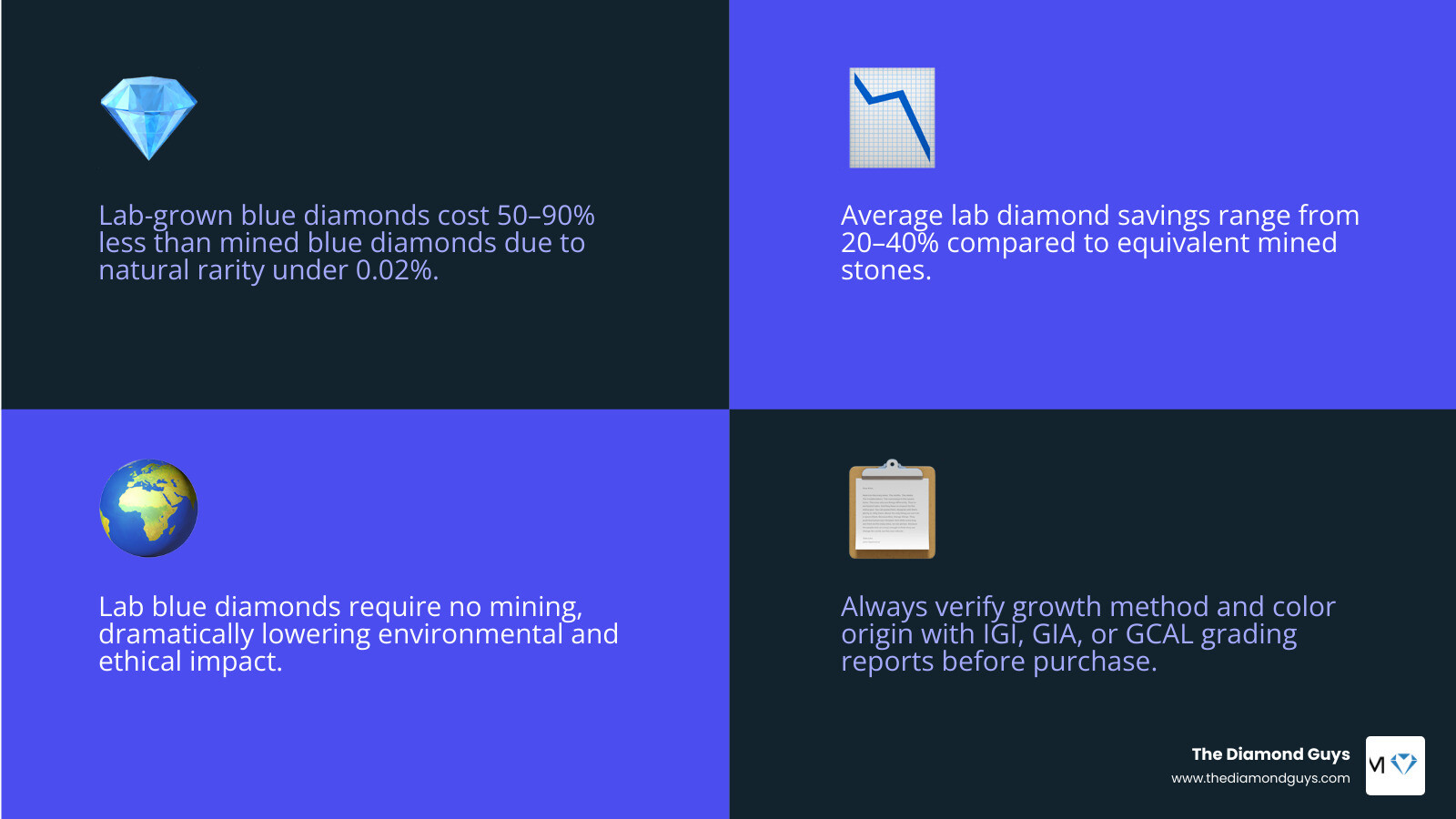
The strongest argument for a blue lab diamond is value. Research consistently shows lab-grown diamonds are generally 20% to 40% more affordable than mined diamonds overall, while lab-grown blue diamonds can be 50% to 90% less expensive than mined blue diamonds due to the extreme rarity premium in natural fancy blue stones.
How much does a blue lab diamond cost in 2026?
In 2026, price depends on:
- Color intensity
- Carat weight
- Shape
- Clarity
- Certification
- Whether you are buying loose or set jewelry
As a general rule:
- Smaller blue lab diamond jewelry pieces can start in the hundreds
- Fine jewelry with larger or stronger-color stones moves into the low thousands and up
- Fancy Vivid Blue stones command a premium over lighter blue grades
- Natural blue diamonds can reach extraordinary prices, with top examples referenced in the millions per carat
A loose stone may give you the best comparison value, while a mounted ring adds the cost of metal, design work, and accent stones.
Sustainability and ethics compared with mined blue diamonds
Many shoppers choose lab-grown because they want a purchase that feels more aligned with modern values.
Potential sustainability and ethics advantages include:
- Less reliance on mining
- More transparent supply chains
- Easier origin disclosure
- Lower risk of conflict-related sourcing concerns
That said, "sustainable" should not be treated as a magic word. Lab-grown diamonds still require energy to produce, and sustainability varies by manufacturer and supply chain. We think the most responsible approach is asking good questions and buying from jewelers who are transparent about sourcing.
Benefits and potential drawbacks to know before buying
Benefits:
- Far lower price than natural blue diamonds
- Real diamond durability and brilliance
- Access to rare-looking color
- More customization options
- Good fit for buyers who prioritize beauty over geological rarity
Potential drawbacks:
- Lower resale value than rare natural blue diamonds
- Smaller inventory than standard white lab diamonds
- Fancy color grading can confuse first-time buyers
- Value depends heavily on certification and disclosure
- Some buyers simply prefer natural rarity for emotional or collector reasons
In other words, a blue lab diamond is usually a great choice if you want the look, durability, and wow factor of blue diamond jewelry without paying collector-level natural prices. If you are still weighing the tradeoffs, read Should You Buy a Lab Grown Diamond?.
Best Jewelry Styles for a Blue Lab Diamond
One of the best things about blue lab diamonds is how versatile they are. They can look icy and elegant, rich and dramatic, or modern and edgy depending on the setting.
Best ring settings for a blue lab diamond center stone
Popular settings include:
- Solitaire
- Halo
- Three-stone
- Bezel
- Pavé
A few style notes:
- Solitaire settings let the blue center stone do all the talking
- Halo settings can make the center look larger and brighter
- Three-stone rings add symbolism and extra presence
- Bezel settings feel sleek and secure
- Pavé bands add sparkle without overpowering the center
Metal choice also changes the look:
- White gold and platinum create crisp contrast
- Yellow gold gives the blue a richer, warmer feel
- Rose gold can create a more romantic, fashion-forward style
Earrings, pendants, and statement pieces
Blue lab diamonds are not just for engagement rings.
They also work beautifully in:
- Stud earrings
- Drop earrings
- Pendants
- Tennis bracelets
- Anniversary jewelry
- Men’s jewelry
Studs and pendants are great entry points if you want the color without committing to a center-stone ring. If you want a bolder look, blue diamond earrings can add a lot of personality. For style inspiration, check out Dive Into Style: The Best Blue Diamond Earrings for Guys.
Blue diamonds compared with other colored lab-grown options
If you love color, blue is not your only option. Green lab-grown diamonds are another popular choice for buyers who want something less traditional.
Blue often feels:
- Cool
- Elegant
- Modern
- Calm but noticeable
Green often feels:
- Earthy
- Distinctive
- Fresh
- A bit more unconventional
If you are comparing colors, these guides may help:
- From Lab to Luster: The Story of Green Lab Grown Diamonds
- Shop Smart: Finding Your Perfect Lab Created Green Diamond
Frequently Asked Questions About Blue Lab Diamond Shopping
Do lab-created blue diamonds look different from natural blue diamonds?
To the naked eye, usually not in any reliable way. Both are real diamonds, and both can show beautiful blue color. In fact, many lab-grown blue diamonds have very even saturation, which some buyers prefer. The major difference is rarity and origin, not everyday appearance.
Will a blue lab diamond get cloudy or fade over time?
No. A properly made blue lab diamond should not fade, and it does not turn cloudy just because it is lab-grown. If a diamond ever looks dull, it is usually because of buildup from lotion, soap, skin oils, or everyday wear. Routine cleaning solves the problem. For more, see Do Lab Grown Diamonds Get Cloudy?.
What should I ask before placing an order?
Ask these questions every time:
- Which lab issued the grading report?
- Is the blue color growth-created or treated?
- What is the exact fancy color grade?
- Is the diamond eye-clean?
- Can I see videos in different lighting?
- What is the return window?
- Is resizing included?
- How long will a custom piece take?
- Is aftercare available?
- Does the inscription match the certificate?
Conclusion
Buying a blue lab diamond should feel exciting, not confusing. The smartest shoppers focus on certified quality, clear disclosures, strong visuals, and real guidance from people who understand fancy color diamonds.
At The Diamond Guys, we help buyers in Scottsdale, AZ and Los Angeles, CA compare stones, understand color grades, and create jewelry that feels personal rather than mass-produced. If you want a rare look without the rare-natural price tag, a blue lab diamond is one of the most compelling options on the market in 2026.
And if you want one more useful read before you shop, start here: More info about lab vs real diamonds.


