

Real Rocks: Engagement Rings with Natural Diamonds Explained
What You Need to Know Before Buying Engagement Rings with Natural Diamonds
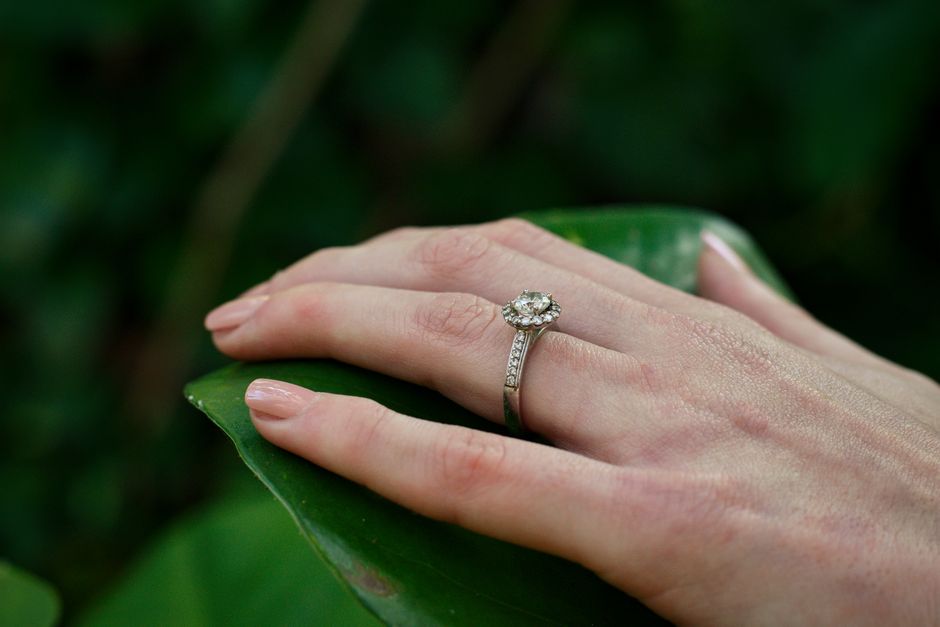
If you're considering engagement rings with natural diamonds, here's a quick summary of what matters most:
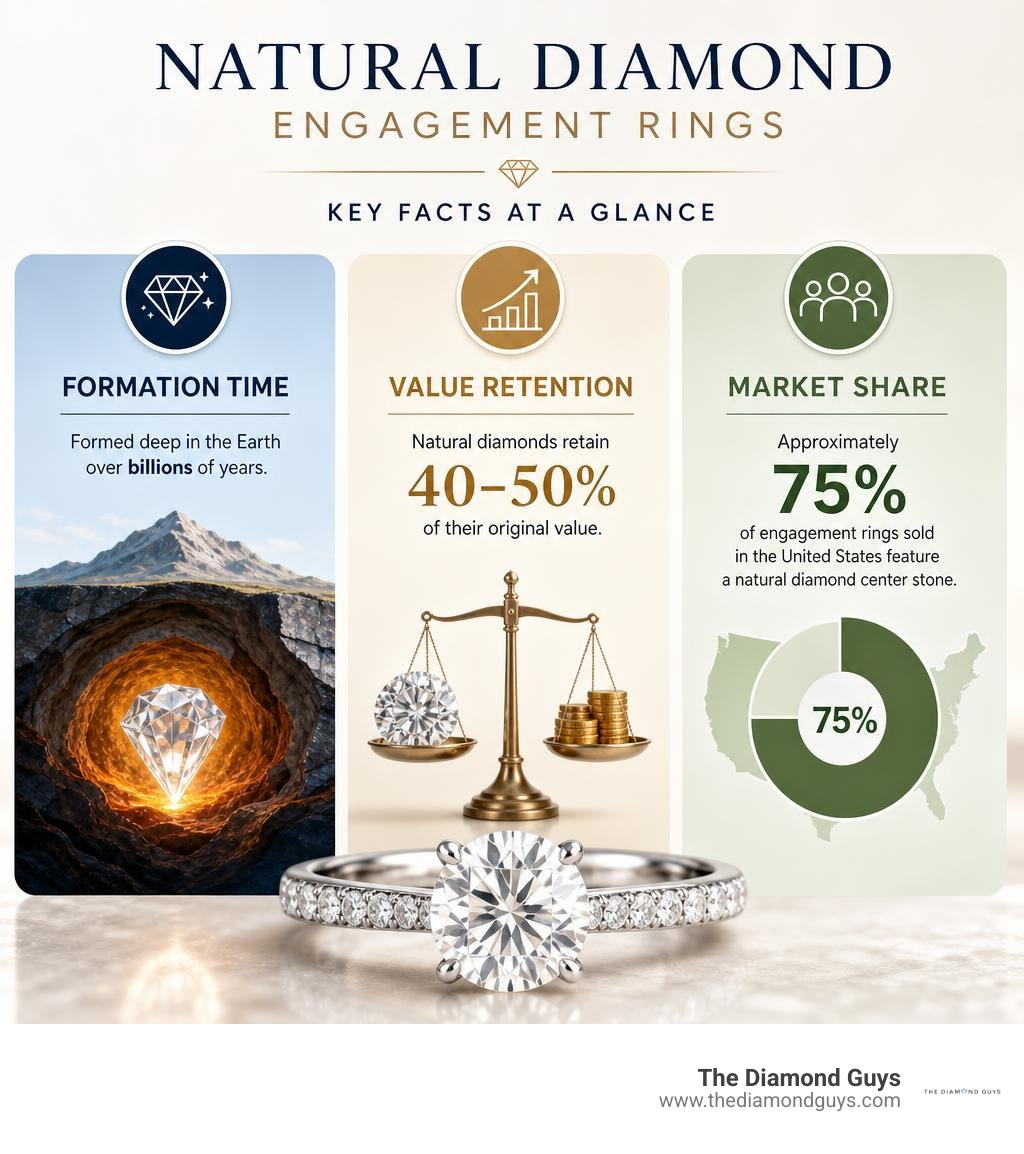
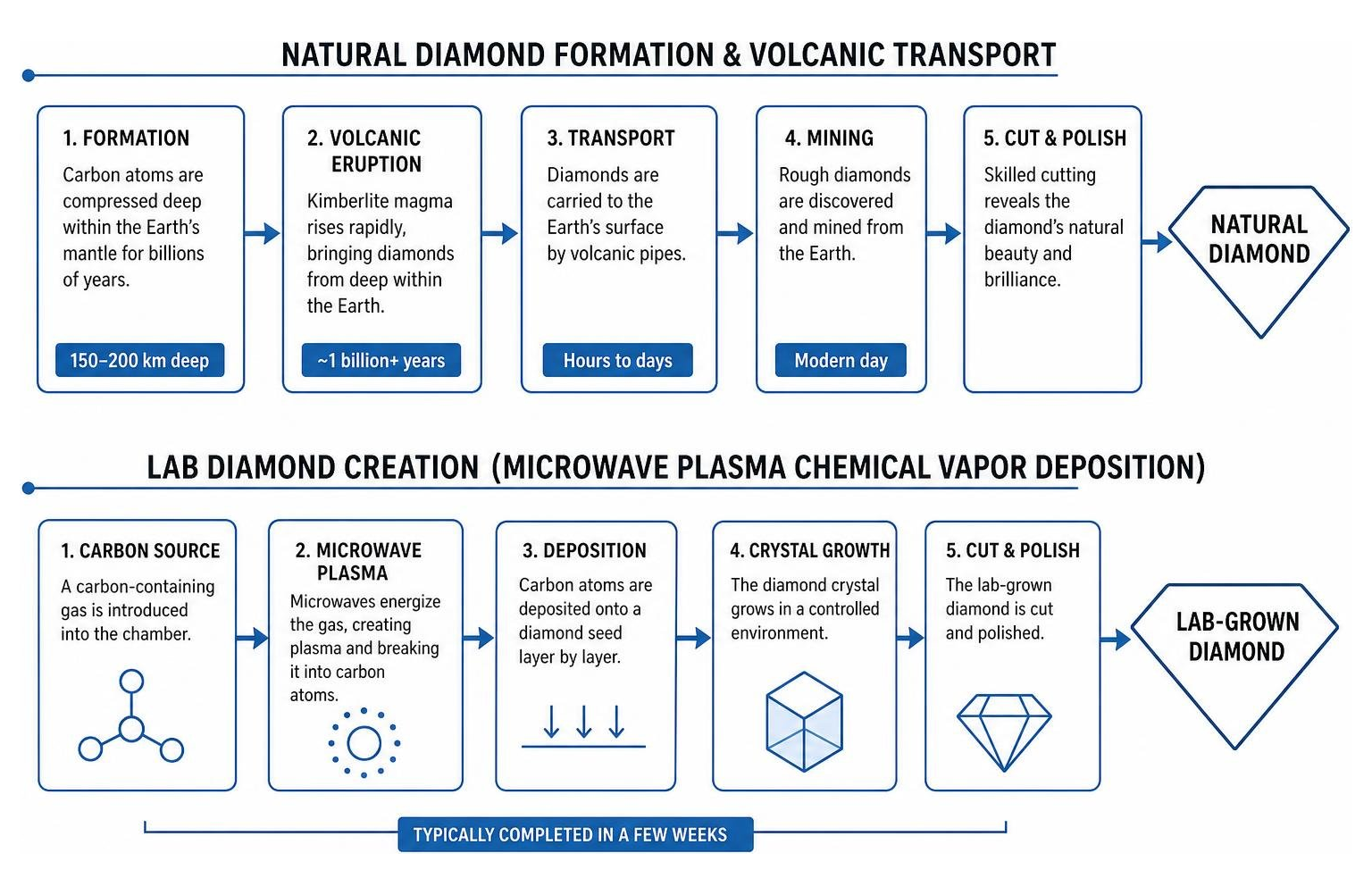
- Natural vs. lab-grown: Natural diamonds form deep in the earth over billions of years. Lab-grown diamonds are made in weeks. Both are real diamonds, but they are very different in origin, rarity, and resale value.
- Value retention: Natural diamonds retain roughly 40–50% of their original value. Lab-grown diamonds have little to no resale value.
- The 4 Cs: Cut, Color, Clarity, and Carat weight determine how a diamond looks and what it costs.
- Certifications: Look for GIA or AGS certification to verify quality.
- Ethical sourcing: Ask for conflict-free stones backed by the Kimberley Process.
- Average cost: Most natural diamond engagement rings in the US cost between $5,500 and $6,000.
There's something remarkable about a natural diamond. The stone on your partner's finger could be over a billion years old — formed deep inside the earth long before humans existed. That kind of history is impossible to replicate in a lab, and it's a big part of why natural diamonds still carry such deep meaning for so many people.
Approximately 75% of all engagement rings sold in the United States feature a natural diamond center stone. That's not just tradition — it's a reflection of what people genuinely value when choosing a ring meant to last a lifetime.
I'm Morgan Price, a content and outreach specialist with a focus on helping people find trustworthy, transparent information about significant purchases like engagement rings with natural diamonds — so you can shop with confidence rather than confusion. In the sections below, we'll walk through everything you need to know, from the 4 Cs to ethical sourcing to how much you should realistically spend.
Why Choose Engagement Rings with Natural Diamonds?
When you begin shopping for an engagement ring, you will quickly find yourself at a crossroads: do you go with a classic, earth-mined treasure or a modern, factory-created alternative? While both options look identical to the untrained eye, they carry entirely different stories, values, and long-term outlooks.
The overwhelming majority of couples—about 75%—still choose engagement rings with natural diamonds. This preference is not just about aesthetics; it is deeply tied to the emotional weight of giving a symbol that is as enduring and irreplaceable as your commitment. To understand why so many people make this choice, it helps to look at how women perceive these options. You can explore this perspective further in our detailed discussion on Do Women Prefer Natural Diamonds vs. Lab-Grown?.
To help you visualize the core differences, we have broken down the comparison below:
Natural vs. Lab-Grown Diamonds At a Glance
| Feature | Natural Diamonds | Lab-Grown Diamonds |
|---|---|---|
| Origin | Formed deep within the Earth's mantle | Mass-produced in industrial laboratories |
| Age | 1 to 3.3 billion years old | Created in a matter of weeks |
| Rarity | Highly finite; a true geological miracle | Unlimited supply; production capacity grows daily |
| Value Retention | Retains an average of 40-50% of original value | Rapidly depreciating; little to no resale value |
| Gem-Quality Yield | Only 30% of mined diamonds are gem-quality | Nearly all produced stones are gem-quality |
Value Retention of Engagement Rings with Natural Diamonds
One of the most practical arguments for choosing a natural diamond is its long-term financial stability. A natural diamond is an asset that holds inherent value due to its scarcity. On average, natural diamonds retain about 40% to 50% of their original retail value over time.
In contrast, lab-grown diamonds are subject to the laws of technology and mass production. As manufacturing methods become cheaper and more efficient, the cost of creating lab-grown diamonds continues to plummet. Consequently, they carry virtually no resale or trade-in value. If you buy a lab-grown diamond today, it may be worth only a fraction of its purchase price in just a few years.
This stark difference in value comes down to supply. Natural diamonds are a finite resource. Earth finished making them billions of years ago, and what we have is all we will ever get. Furthermore, mining is an incredibly selective process: only about 30% of all mined diamonds are of high enough quality to be used in jewelry. When you buy a natural stone, you are purchasing a rare piece of the earth. For a deeper dive into how these factors influence the luxury jewelry market, check out our Natural Diamond Jewelry: Complete Guide.
The Appeal of Earth-Mined Stones
Beyond the numbers, there is an irreplaceable emotional value to earth-mined stones. A natural diamond is a survivor. It survived billions of years of intense heat and pressure, followed by a violent volcanic ride to the Earth's surface.
Every natural diamond has tiny imperfections—known as inclusions—that occurred during its formation. Think of these as nature's fingerprints. No two natural diamonds are exactly alike. When you present your partner with a natural diamond, you are giving them a completely unique geological relic. That sense of history, mystery, and individuality is something a machine simply cannot replicate.
Understanding the 4 Cs of Natural Diamonds
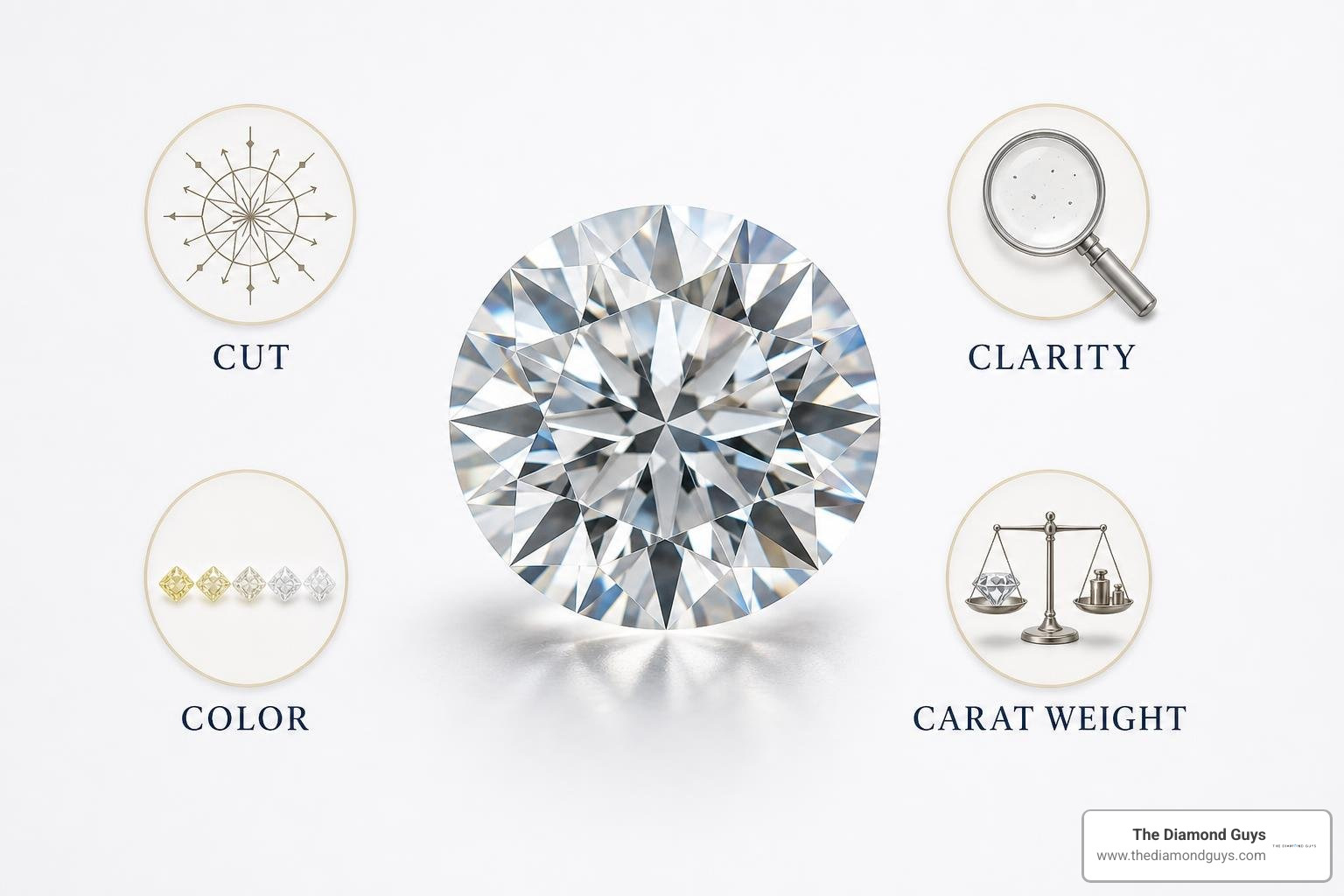
If you want to shop smart, you need to understand the universal language of diamond grading: the 4 Cs. Established by the Gemological Institute of America (GIA), this framework evaluates a diamond based on its Cut, Color, Clarity, and Carat weight.
How the 4 Cs Affect Engagement Rings with Natural Diamonds
Each of the 4 Cs plays a direct role in how beautiful the diamond looks on your partner's hand and how much it will cost. Understanding how to balance these factors is the secret to getting the most beautiful diamond for your budget.
1. Cut: The Engine of Sparkle
The cut is widely considered the most important of the 4 Cs. It does not refer to the shape of the diamond (like round, oval, or princess), but rather to how well the stone's facets interact with light.
- The Impact: A well-cut diamond will reflect light beautifully, masking slight imperfections in color and clarity. A poorly cut diamond, even if it is perfectly colorless and flawless, will look dull and lifeless.
- Our Advice: Never compromise on the cut. Always aim for an "Excellent" or "Very Good" cut grade.
2. Color: The Search for Purity
The GIA grades diamond color on a scale from D (completely colorless) to Z (light yellow or brown).
- The Impact: Colorless diamonds (grades D-F) are the rarest and most expensive. However, near-colorless diamonds (grades G-J) look completely white to the naked eye when set in a ring, offering a fantastic opportunity to save money without sacrificing beauty.
- Our Advice: If you are setting your diamond in yellow or rose gold, you can easily drop to an I or J color grade, as the warm metal will mask any slight yellow tints in the stone.
3. Clarity: Nature's Birthmarks
Clarity measures the number, size, and location of internal characteristics (inclusions) and surface imperfections (blemishes). The scale ranges from Flawless (FL) to Included (I3).
- The Impact: Flawless diamonds are incredibly rare and command premium prices. However, most inclusions are invisible to the naked eye.
- Our Advice: Look for an "eye-clean" diamond in the VS1, VS2, or SI1 ranges. These stones have inclusions that can only be seen under magnification, meaning they look identical to a flawless diamond when worn on the finger, but cost significantly less.
4. Carat: The Visual Presence
Carat is the measure of a diamond's physical weight, not its physical size.
- The Impact: Because large diamonds are discovered much less frequently than small ones, the price of a diamond escalates exponentially as the carat weight increases.
- Our Advice: If you want to maximize the visual presence of your ring on a budget, look for "under-sizes." For example, a 0.90-carat diamond will look almost identical to a 1.00-carat diamond but can cost up to 20% less because it falls just short of the popular 1.00-carat milestone.
How to Choose and Budget for Your Ring
Setting a budget for an engagement ring is a highly personal decision. While old marketing campaigns used to suggest spending two or three months' salary, that rule is outdated. Today, the average cost of a natural diamond engagement ring in the United States sits around $5,500 to $6,000.
Your goal should be to find a balance between a comfortable financial boundaries and a design that matches your partner's style.
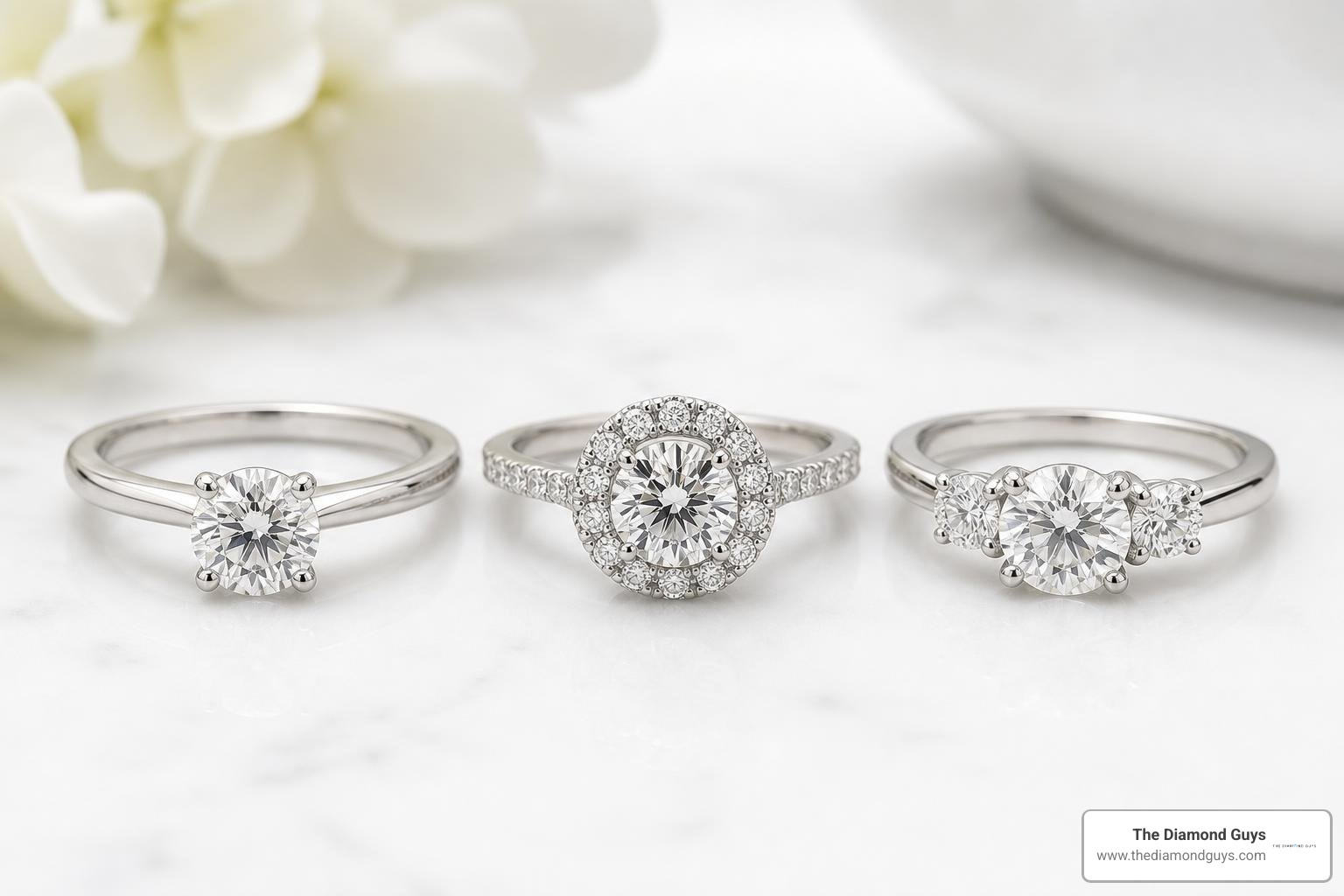
The setting and metal you choose will play a massive role in both the overall cost and the style of the ring. Here are the most popular choices:
- Solitaire: The classic choice. A single natural diamond set on a plain band. This timeless style highlights the beauty of the center stone and works well with any diamond shape.
- Halo: A circle of smaller diamonds surrounds the center stone. This is a brilliant budget-saver because the halo makes the center diamond look significantly larger than it actually is.
- Three-Stone (Trilogy): Featuring a center stone flanked by two side stones, symbolizing your past, present, and future together.
- Metal Choices: Platinum is the most durable and secure choice, though it carries a higher price tag. Yellow gold and rose gold offer warm, classic aesthetics, while white gold provides a sleek, modern look that requires occasional replating to maintain its bright white shine.
If you are looking for something truly tailored to your partner's personality, creating a custom ring is often the best route. It allows you to select the exact stone, metal, and design elements to fit your budget perfectly. To learn more about how this process works, read our Custom Engagement Rings Guide.
Ethical Sourcing and Certifications
When buying a natural diamond, peace of mind is just as important as beauty. You want to know that your symbol of love was sourced responsibly and ethically.
Always insist on buying a diamond certified by an independent, reputable gemological laboratory. The Gemological Institute of America (GIA) is the gold standard in the jewelry industry. A GIA grading report provides an unbiased, scientific evaluation of the diamond's 4 Cs, ensuring that you are getting exactly what you pay for. Avoid store-issued certificates, as these can often be biased or inflated.
To ensure your diamond is conflict-free, verify that your jeweler complies with the Kimberley Process. Established in 2003, this international initiative prevents "conflict diamonds" from entering the mainstream rough diamond market. Today, over 99% of the world's diamonds are sourced from conflict-free areas through this rigorous system of trackable warranties.
Common Myths and Care Tips
Because diamonds are the hardest natural substance on Earth, many buyers assume they are completely indestructible. This is a myth! While a diamond is incredibly resistant to scratching, it can still chip or crack if it is struck with enough force at a specific angle.
To keep your natural diamond engagement ring safe and sparkling for decades to come, keep these care tips in mind:
- Avoid rough wear: Take your ring off when lifting weights at the gym, doing heavy gardening, or cleaning with harsh household chemicals.
- Clean it regularly: Diamonds are natural grease magnets. Lotion, soap, and skin oils will quickly build up behind the stone, blocking light and making the diamond look cloudy.
- The safe home cleaning method: Soak your ring in a bowl of warm water mixed with a few drops of mild dish soap for 20 to 30 minutes. Gently brush the stone with a soft-bristled baby toothbrush, paying special attention to the underside where dirt accumulates. Rinse with warm water and dry with a lint-free cloth.
- Get professional checkups: Bring your ring to a trusted jeweler twice a year. They will inspect the metal prongs to ensure they haven't bent or loosened, keeping your precious natural diamond safely secured.
Frequently Asked Questions about Natural Diamond Rings
How do I know if my natural diamond is ethically sourced?
You can ensure your diamond is ethically sourced by purchasing from reputable jewelers who strictly adhere to the Kimberley Process and the System of Warranties. Always ask your jeweler directly about their sourcing policies and request a GIA grading report, which helps trace and document the quality and legitimacy of the stone.
Why do natural diamonds hold their value better than lab-grown alternatives?
Natural diamonds hold their value because they are a finite, rare natural resource. Earth's supply of natural diamonds is limited, and only a small percentage of mined stones are gem-quality. Lab-grown diamonds, on the other hand, can be mass-produced in unlimited quantities. As manufacturing technology improves, the cost of producing lab-grown diamonds continues to fall, driving down their market and resale value.
How often should I clean my natural diamond engagement ring?
We recommend giving your ring a gentle cleaning at home once every week or two to keep dirt and oils from dulling its sparkle. Additionally, you should take your ring to a professional jeweler twice a year for a deep cleaning and a safety check on the prongs and setting.
Conclusion
Buying an engagement ring is one of the most significant emotional and financial decisions you will ever make. While the options can feel overwhelming, focusing on quality, value retention, and personal style will lead you to a ring that your partner will cherish forever.
At The Diamond Guys, we specialize in taking the stress out of the diamond-buying process. Whether you visit our showroom in Scottsdale, AZ, or our office in Los Angeles, CA, we are here to provide expert guidance, ethical sourcing, and a highly personalized shopping experience. We don't believe in high-pressure sales tactics; we believe in educating you so you can make the absolute best choice for your budget and your relationship.
If you are ready to explore your options, read through our Ultimate Diamond Engagement Rings Guide Scottsdale to get a sense of local trends, or connect directly with our team of experts by visiting our Natural Diamond Experts in Scottsdale page. For a complete understanding of diamond jewelry styles, don't forget to check out our comprehensive Natural Diamond Jewelry: Complete Guide. Let's work together to find a real rock that tells your unique love story!


