

Sparkle with a Clean Conscience on Your Big Day
Ethical Engagement Rings Worth Considering

Start with the materials, then check the sourcing. Look for recycled precious metals or certified Fairmined gold, and ask the jeweler where the diamond or gemstone came from. Lab-grown diamonds, colored stones, and even sea glass can give you more design choices, but no material is automatically ethical without clear sourcing details.
For a Christmas or New Year's Eve proposal, leave time for sizing and any custom work. This roundup will help you compare styles and find a ring that fits both your partner and your values.
I'm Morgan Price, a backlink outreach specialist who researches ethical engagement rings and checks sourcing claims for editorial content. That research shapes the practical questions we'll use to look at each option.
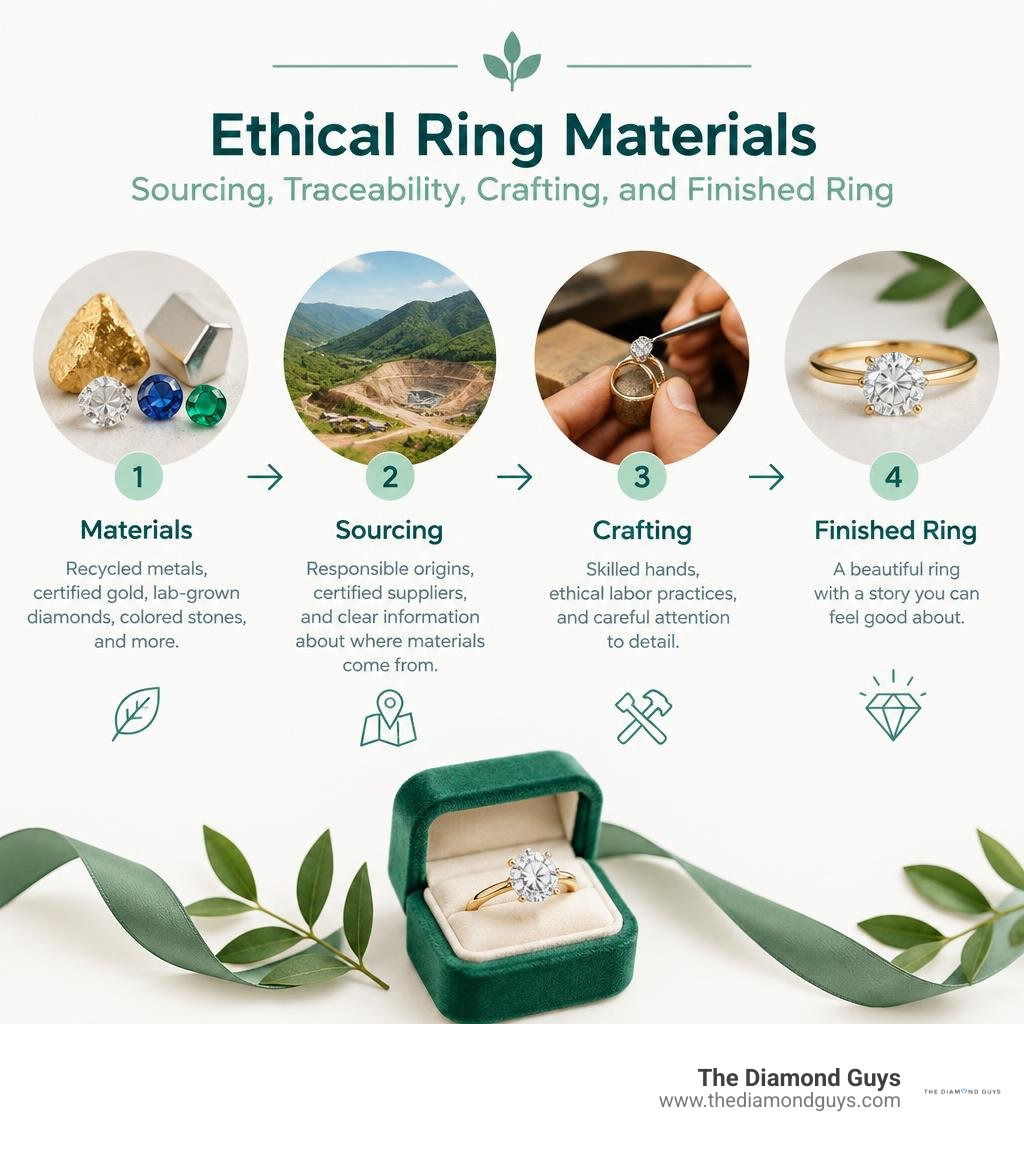
Ethical engagement rings word list:
What Defines Truly Ethical Engagement Rings?
When we talk about ethical fine jewelry, we are looking at the entire journey of a piece—from the very origin of its raw materials to the hands that shape the final band. In the past, jewelry supply chains were often opaque, leaving buyers in the dark regarding labor conditions and ecological disruption. Today, conscious couples demand total transparency.
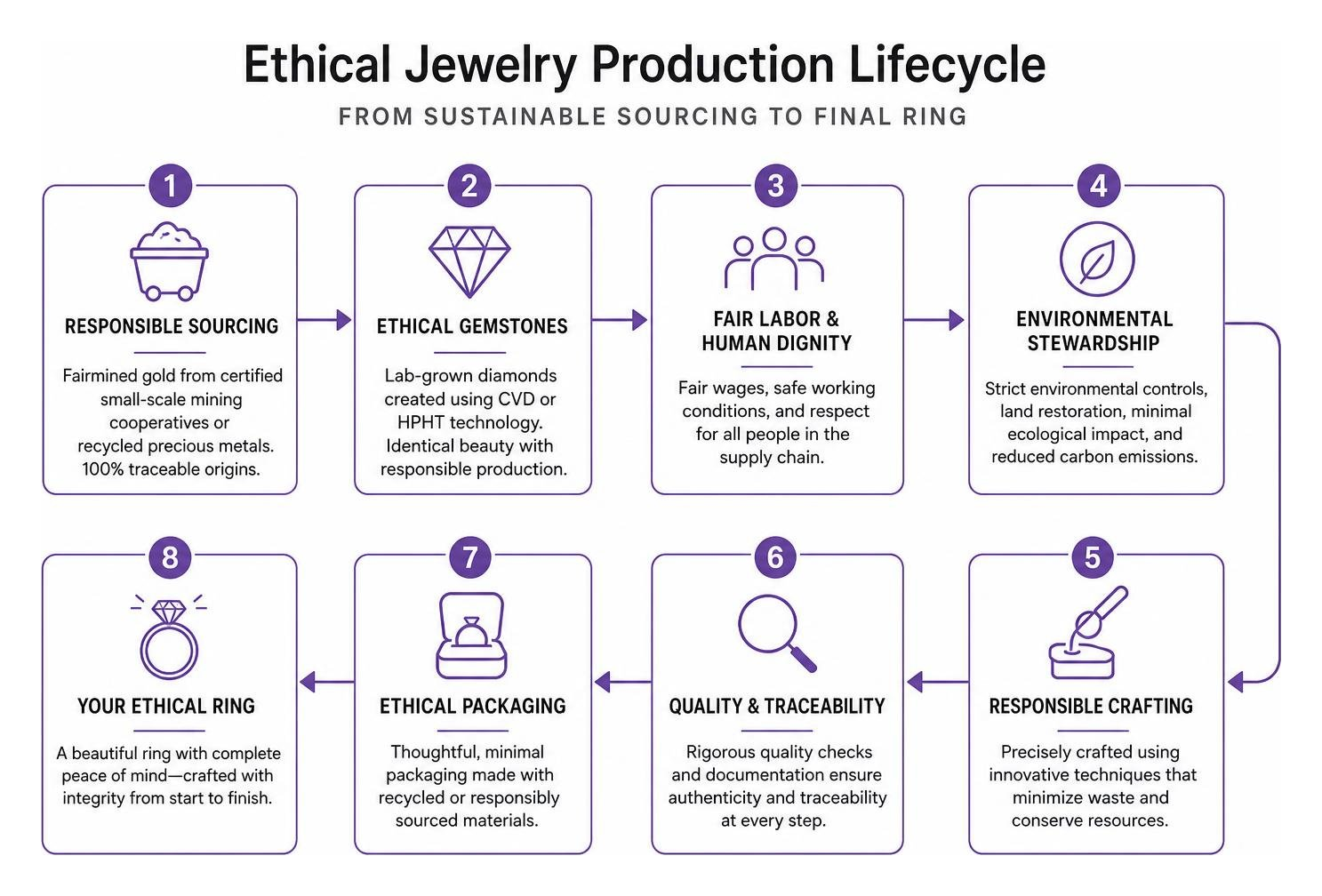
An ethical ring is defined by three fundamental pillars:
- Traceable Origins: Knowing exactly where the gemstone and metal originated.
- Fair Labor and Human Dignity: Ensuring everyone involved in the supply chain receives fair living wages, works in safe conditions, and is treated with respect.
- Environmental Stewardship: Minimizing ecological disruption, eliminating toxic runoff, and reducing carbon emissions through innovative crafting techniques.
Whether you are designing a ring from scratch or choosing a signature silhouette, true sustainability means you do not have to compromise on beauty, durability, or integrity.
Sustainable Metals and Fairmined Gold
The metal that forms the band of your engagement ring represents the foundation of your design. Traditional precious metal mining often carries a heavy footprint, which is why sustainable alternatives have surged in popularity.
Fairmined gold represents a gold standard for responsible artisanal mining. Sourced from certified small-scale mining cooperatives (such as those in Colombia), Fairmined certification guarantees that artisanal miners work under strict safety standards, receive fair market prices plus an additional community premium, and operate with responsible environmental management. Every single gram of Fairmined gold is fully segregated and traceable from mine to market.
On the other hand, recycled precious metals take existing gold, platinum, or silver already in circulation—from vintage jewelry or post-consumer sources—and refine it back to pure elemental quality. This process creates zero new mining demand and drastically cuts down carbon emissions.
| Metric | Fairmined Gold | Recycled Gold | Traditional Mined Gold |
|---|---|---|---|
| Origin Traceability | 100% traceable to specific community mines | Traceable to refinery source | Often mixed and untraceable |
| Community Support | Direct social premiums for local miners | Indirectly reduces global demand | Variable; corporate-focused |
| Environmental Impact | Strict chemical controls and land restoration | Near-zero new mining footprint | High habitat disruption and waste |
| Purity & Durability | Uncompromised 14k / 18k / 24k quality | Uncompromised 14k / 18k / 24k quality | Industry standard |
Both recycled metals and Fairmined options offer exceptional durability and shine, allowing you to select the metal type that best matches your personal ethos.
Lab-Grown Diamonds and Conscious Gemstones
A major revolution in ethical fine jewelry is the evolution of laboratory-grown diamonds. Grown using advanced technological processes—Chemical Vapor Deposition (CVD) or High Pressure High Temperature (HPHT)—these stones share the exact same physical, chemical, and optical properties as mined diamonds. They exhibit identical brilliance, fire, scintillation, and a rating of 10 on the Mohs hardness scale.
Because lab diamonds bypass the earth-mining lifecycle, they eliminate conflict concerns and significantly reduce land displacement. Choosing a classic lab-grown diamond solitaire engagement ring allows you to celebrate your commitment with a stunning, high-clarity centerpiece that carries complete peace of mind. For those seeking extra sparkle along the band, modern lab-grown diamond pavé engagement rings offer exquisite light performance while maintaining ethical production standards.
Top Styles for Sustainable Holiday Proposals
The festive season brings crisp winter air, holiday lights, and an unmistakable sense of romance. With Christmas Eve and New Year’s Eve holding the title as the two most popular days of the entire year to get engaged, choosing the right ring style makes the holiday surprise magical. Here are the leading ethical engagement ring styles capturing hearts this season.
Classic Solitaire Ethical Engagement Rings
For the partner who loves timeless sophistication, the solitaire remains the ultimate classic. By placing the entire focus on a single, breathtaking stone, a solitaire setting celebrates minimalist elegance without distraction.
A six-prong lab-grown diamond solitaire ring provides both superior diamond security and optimal light entry, letting the center stone catch the glow of holiday lights from every angle. Solitaires also offer unmatched versatility, pairing seamlessly with straight wedding bands, contoured bands, or eternity rings later on.
Modern Multi-Stone and Three-Stone Settings
Three-stone rings—often called trilogy settings—carry deep romantic symbolism. The three gems traditionally represent a couple's past, present, and future together, making them particularly poignant for a New Year's Eve proposal that looks forward to a lifetime of shared dreams.
You can explore classic balanced proportions with a timeless lab-grown diamond three-stone engagement ring set in crisp white gold, or bring warm, festive tones into your proposal with a yellow gold lab-grown three-stone ring setting. The flanking side stones naturally guide the eye inward, amplifying the visual size and radiance of the center diamond.
Warm Cognac Diamonds and Earthy Alternatives
If your significant other gravitates toward warm, unconventional palettes, cognac diamonds present a captivating alternative to traditional white gems. Cognac diamonds are natural diamonds celebrated for their deep amber, honey, and golden-brown undertones. These warm-toned stones offer the full durability of diamond mineralogy while exuding an organic, grounded warmth that feels uniquely personal.
Vintage-Inspired and Bezel Set Ethical Engagement Rings
Vintage-inspired and bezel-set designs combine heirloom romance with sleek modern ergonomics. A bezel setting encases the outer rim of the center diamond in a delicate collar of metal, protecting the gemstone edges from accidental bumps and snagging—ideal for active lifestyles.
For an Art Deco look with clean geometric lines, consider a bezel-set asscher-cut lab-grown diamond ring. If your partner loves vintage halos with contemporary flair, split-shank designs add dramatic architectural depth. You can explore this look in rich warm metal with a yellow gold halo split-shank engagement ring or in sleek platinum tones with a white gold split-shank halo engagement ring.
Alternative Materials and Bespoke Ring Customization

Beyond classic diamond designs, the ethical bridal market offers creative possibilities for couples who want their love story told through unique textures and unconventional elements.
Unconventional Gems, Sea Glass, and Salvaged Wood
Sustainable fine jewelry embraces the beauty of the natural world. Artisans today incorporate an array of rare and salvaged materials to create one-of-a-kind statement rings:
- Tumbled Sea Glass: Naturally smoothed by oceanic waves over decades, sea glass brings soft coastal pastel tones to ethical rings.
- Salvaged Sustainable Wood: Reclaimed hardwood inlays—often paired with crushed turquoise or lapis lazuli—offer an organic, earthy feel.
- Ethereal Moonstone & Limited Sapphires: Iridescent rainbow moonstones and rare, limited-run pale blue sapphires (such as ethical capsule editions where only 25 pieces were ever produced) offer subtle color variations that stand apart from traditional clear stones.
- Textured and Hand-Stamped Bands: Hand-carved organic facets, satin brush finishes, and delicate engraved patterns give bands an artisanal, lived-in character.
Custom Design Timelines and Personal Intentions
Creating a bespoke engagement ring ensures that every detail—from the prong geometry to the inner band inscription—aligns with your partner's aesthetic.
When commissioning a custom ring, timing is an essential practical factor. Bespoke and handmade ethical engagement rings typically require a production window of six to eight weeks. Because jewelry studios must cast, hand-set, polish, and certify each piece individually, planning ahead is critical—especially for a holiday proposal.
Furthermore, bespoke design allows you to infuse unique intentions into the piece. Many artisanal jewelers offer custom hand-stamped textures or interior engravings, turning your ring into a tangible token of shared values and future promises.
Frequently Asked Questions About Ethical Rings
Why are Christmas Eve and New Year’s Eve the most popular times to propose?
Holiday engagement season brings loved ones together, making it easy to celebrate your engagement directly with family and close friends. The festive atmosphere, twinkling holiday lights, and reflective milestone setting of New Year’s Eve create an inherently romantic backdrop for beginning your next chapter.
How far in advance should you order a custom ethical engagement ring?
We recommend starting your custom design process at least two to three months before your planned proposal date. Handmade and bespoke ethical rings take roughly 6 to 8 weeks to craft, and allowing extra buffer time ensures you have room for complimentary ring sizing adjustments, insurance appraisals, and stress-free holiday delivery.
What makes Fairmined gold different from standard recycled gold?
While recycled gold eliminates the need for new mining by repurposing existing metals, Fairmined gold actively supports certified artisanal and small-scale mining communities. It guarantees miners receive fair wages, work under safe conditions with strict environmental standards, and provides an additional community premium for local infrastructure and schooling.
Conclusion
Choosing an engagement ring should be an uplifting, inspiring experience that mirrors the love and integrity of your relationship. By selecting conflict-free lab-grown diamonds, Fairmined gold, or recycled precious metals, you ensure your symbol of commitment honors both your partner and the planet.
At The Diamond Guys, our passion is guiding you through every step of this journey with expert guidance, transparent sourcing, and personalized care. Whether you are seeking a showstopping solitaire or dreaming of a fully custom bespoke creation, explore our collection of certified lab-grown diamonds or schedule a consultation with our specialists in Scottsdale or Los Angeles to design the ring of your dreams.


