

Flawless Lab Diamonds and the Real Truth Behind Maximum Clarity
What to Know Before You Buy a Flawless Lab Diamond
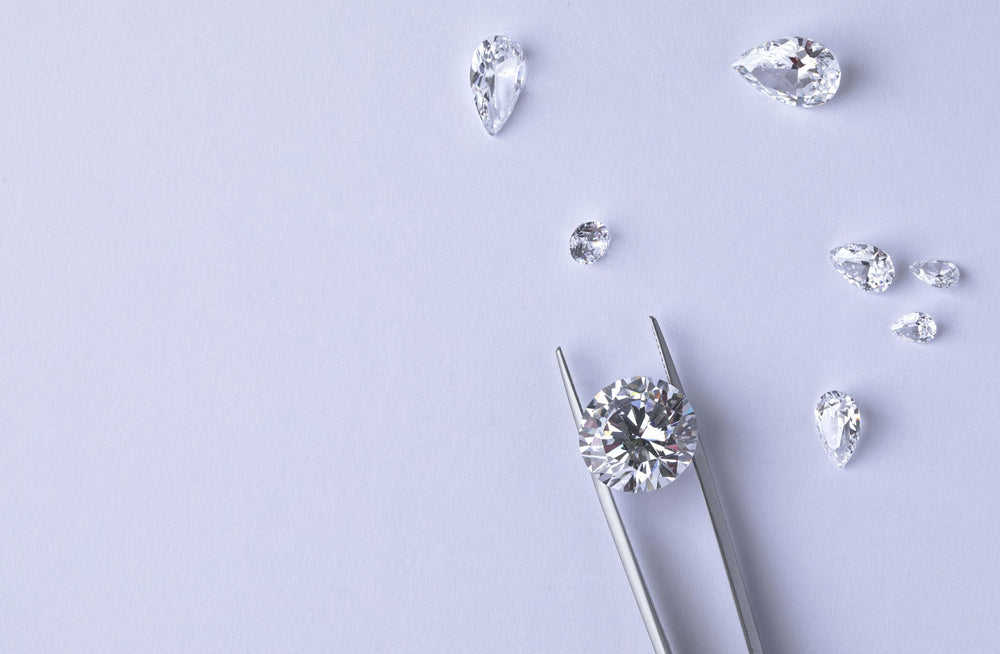
A flawless lab diamond is a real diamond with no visible internal inclusions or surface blemishes under 10x magnification, as confirmed by a recognized grading report. Before you buy, ask to see an IGI or GIA report, confirm whether the clarity grade is FL (Flawless) or IF (Internally Flawless), and compare the full 4Cs - cut, color, clarity, and carat weight - rather than buying on clarity alone.
Lab-grown diamonds have the same carbon crystal structure, hardness, and sparkle as mined diamonds. They are grown with controlled CVD or HPHT technology, which can produce exceptionally pure stones in weeks instead of the billions of years needed underground. Comparable lab diamonds often cost about 40% to 60% less than mined diamonds, though a true FL stone still commands a premium because maximum clarity is uncommon.
For many buyers, IF clarity offers nearly identical beauty to FL at a better value. Both grades look clean to the naked eye. The difference is found by a trained grader using magnification, so an excellent cut and trusted certification matter more to everyday sparkle than chasing a label alone.
Morgan Price is a white-hat SEO and research specialist who helps content teams turn technical subjects into clear, useful buying guidance. Their work on the flawless lab diamond market focuses on transparent quality signals, ethical sourcing, and the details buyers can verify with confidence.
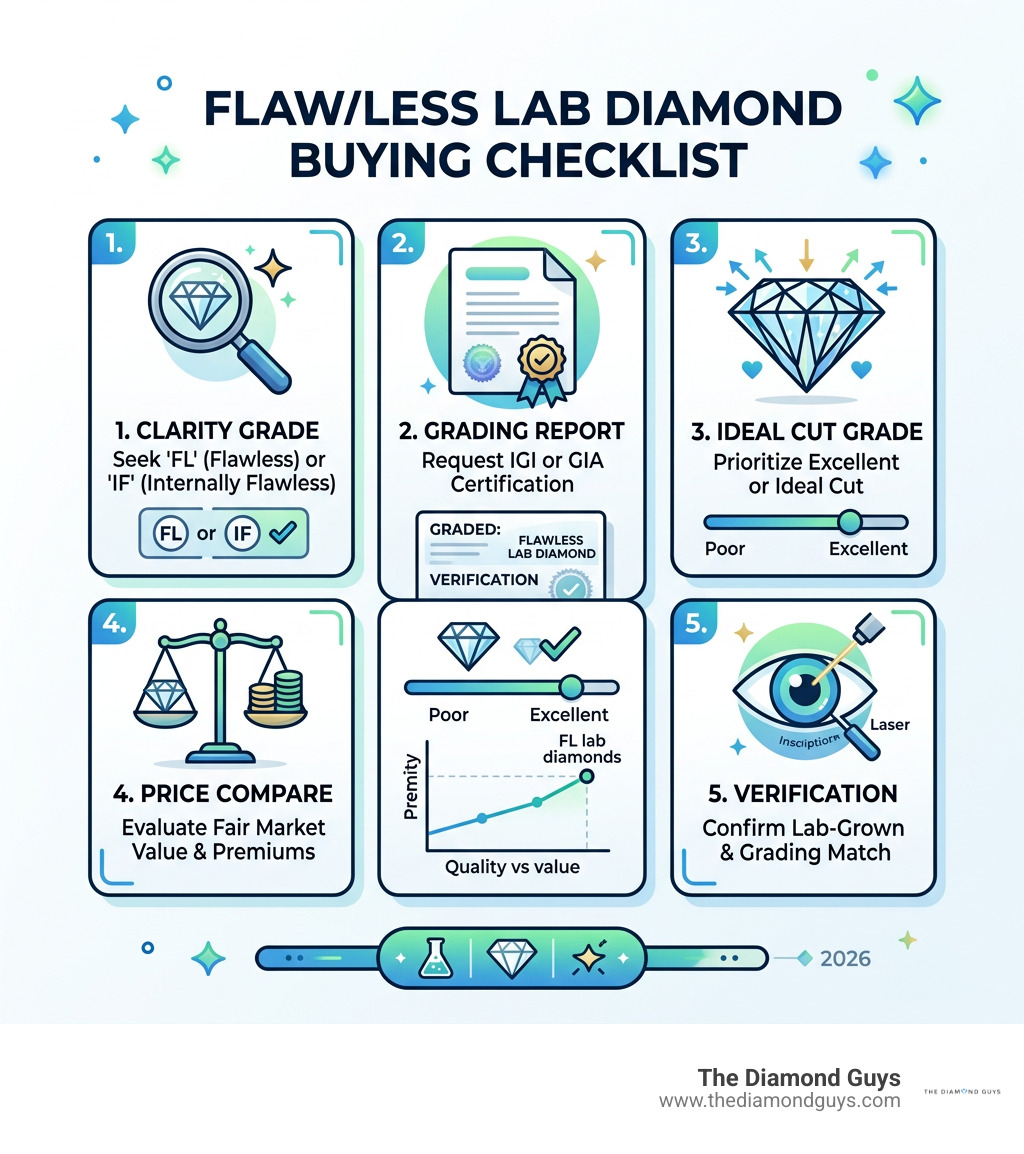
Important flawless lab diamond terms:
The Science and Grading of a Flawless Lab Diamond
When you dive into fine jewelry, clarity often feels like the most mysterious of the 4Cs. Diamond clarity measures the purity and rarity of the stone, evaluated by the presence or absence of tiny internal characteristics (inclusions) and external surface marks (blemishes).
The Gemological Institute of America (GIA) and International Gemological Institute (IGI) establish the standard clarity scale. This scale ranges from Included (I1, I2, I3) up to Flawless (FL):
- Flawless (FL): No internal inclusions or external blemishes visible to a skilled grader under 10x magnification.
- Internally Flawless (IF): No internal inclusions visible under 10x magnification; only minor surface characteristics or blemishes that do not affect the stone's interior.
- Very, Very Slightly Included (VVS1, VVS2): Inclusions are so microscopic that even trained professionals struggle to find them under 10x magnification.
- Very Slightly Included (VS1, VS2): Minor inclusions observed with effort under 10x magnification, but invisible to the unaided human eye.
- Slightly Included (SI1, SI2): Inclusions noticeable under 10x magnification and may occasionally be seen by the naked eye.
- Included (I1, I2, I3): Inclusions obvious under 10x magnification and typically visible without magnification, affecting transparency and brilliance.
A true FL diamond represents absolute perfection in crystal purity. While an IF diamond has an identical, pristine interior, it might feature a microscopic polishing line or natural surface feature that keeps it just a hair below the ultimate grade.
How Gemologists Inspect and Grade a Flawless Lab Diamond
Diamond grading requires specialized equipment, calibrated neutral lighting, and strict gemological protocols. To assign a clarity grade, a master gemologist examines the diamond using a binocular gemological microscope at 10x magnification, inspecting every facet, pavilion angle, and table reflection.
During this evaluation, gemologists assess five key factors:
- Size: How large or small are the characteristics?
- Number: How many inclusions or blemishes are present?
- Position: Where are they located (e.g., under the table or near the girdle)?
- Nature: Are they mineral crystals, feathers (cracks), clouds, pinpoints, or metal remnants?
- Relief: How visible or contrasting is the inclusion against the host diamond?
For a stone to earn an FL rating, the gemologist must find zero inclusions and zero surface blemishes across every viewing angle. A plotting diagram in the laboratory report will remain completely blank, indicating an unblemished, fully transparent crystalline lattice.
Type IIa Purity and Crystal Formation
One of the most remarkable aspects of modern diamond creation is chemical classification. Diamonds are categorized into structural types based on the presence or absence of chemical impurities within the carbon lattice—primarily nitrogen.
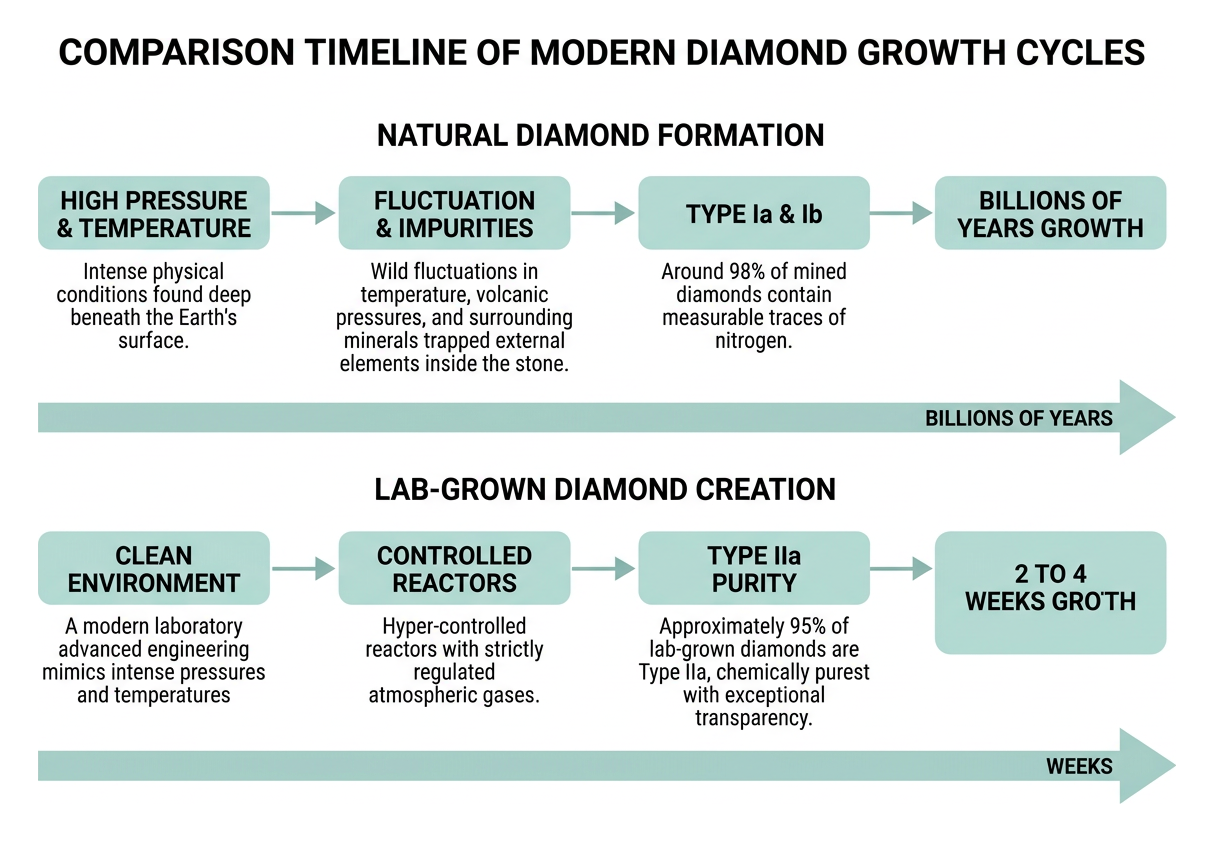
- Type Ia and Ib: Contain measurable traces of nitrogen, which can impart yellow or brown tints. Around 98% of mined diamonds fall into Type Ia.
- Type IIa: Essentially devoid of measurable nitrogen impurities, making them the chemically purest diamonds in existence.
Type IIa diamonds are renowned for their exceptional optical transparency and crisp brilliance. In nature, fewer than 2% of diamonds achieve Type IIa status (historic examples include the famous Cullinan and Koh-i-Noor diamonds). In contrast, approximately 95% of lab-grown diamonds are Type IIa.
Because lab synthesis takes place in hyper-controlled reactors where atmospheric gases are strictly regulated, carbon atoms crystallize with extraordinary purity. This pristine chemical foundation allows lab-created stones to achieve high clarity grades and an icy, vivid sparkle.
How Modern Technology Produces Maximum Diamond Clarity
Creating a diamond requires replicating the intense physical conditions found over 100 miles beneath the Earth's surface. In nature, wild fluctuations in temperature, volcanic pressures, and surrounding rock minerals trap external elements inside the stone during its billions of years of growth.
In a modern laboratory, advanced engineering mimics those exact pressures and temperatures in a clean environment over a 2 to 4-week growth cycle.
Chemical Vapor Deposition (CVD) vs. High Pressure High Temperature (HPHT)
Two advanced technologies produce gem-quality lab-grown diamonds:
- Chemical Vapor Deposition (CVD): A diamond seed slice is placed in a vacuum chamber filled with a carbon-rich gas mixture (such as methane and hydrogen). Microwaves ionize the gas into glowing plasma, breaking the chemical bonds so pure carbon atoms rain down and crystallize onto the seed layer by layer. CVD allows for exceptional control over purity, producing breathtaking center stones as well as brilliant accents like those in our Lab Grown Diamond Halo Necklace.
- High Pressure High Temperature (HPHT): Large hydraulic presses subject a pure carbon source and diamond seed to pressures over 800,000 pounds per square inch and temperatures exceeding 2,500°F. A molten metal flux dissolves the carbon, precipitating it onto the seed crystal to form a complete diamond.
Why Engineering a Flawless Lab Diamond Remains Rare
Given our precise modern controls, you might wonder why every lab-grown diamond isn't automatically graded Flawless.
Growing diamonds is a delicate, dynamic process. As carbon atoms bond at rapid speeds:
- Growth Strain: Internal lattice strain can occur when atoms do not align in perfect geometric harmony.
- Flux Inclusions: In HPHT synthesis, tiny remnants of the molten metal catalyst can become trapped inside the growing diamond.
- Pinpoints and Clouds: In CVD growth, microscopic variations in chamber pressure or temperature can introduce minute internal pinpoint clusters.
Yielding a stone with zero internal inclusions and zero external flaws under 10x magnification remains a difficult gemological feat. Only a modest fraction of lab-grown crystal yields attain genuine FL or IF certification, maintaining the rarity and prestige of maximum clarity.
Flawless Lab-Grown vs. Natural Diamonds: Comparing Value and Purity
Both natural and lab-created diamonds share identical physical, chemical, and optical properties. They both rank at a 10 on the Mohs hardness scale, exhibit a refractive index of 2.417, and share identical light dispersion. However, their origin, rarity profiles, and market values differ considerably.
| Feature | Flawless Natural Diamond | Flawless Lab-Grown Diamond |
|---|---|---|
| Chemical Composition | Pure Carbon (Mostly Type Ia) | Pure Carbon (Typically Type IIa) |
| Clarity Availability | Extremely Rare (<1% of mined yield) | Rare, but achievable via controlled synthesis |
| Growth Period | 1 to 3.3 Billion Years | 2 to 4 Weeks |
| Price Difference | Baseline luxury benchmark | 40% to 60% less expensive |
| Environmental Impact | Heavy land excavation & mineral displaced | Controlled laboratory footprint |
| Traceability | Complex origin supply chains | Fully traceable from growth facility |
Because lab diamonds can be produced at roughly 40% to 60% lower cost than mined stones, buyers have access to extraordinary diamond dimensions and master clarity grades without runaway budgets.
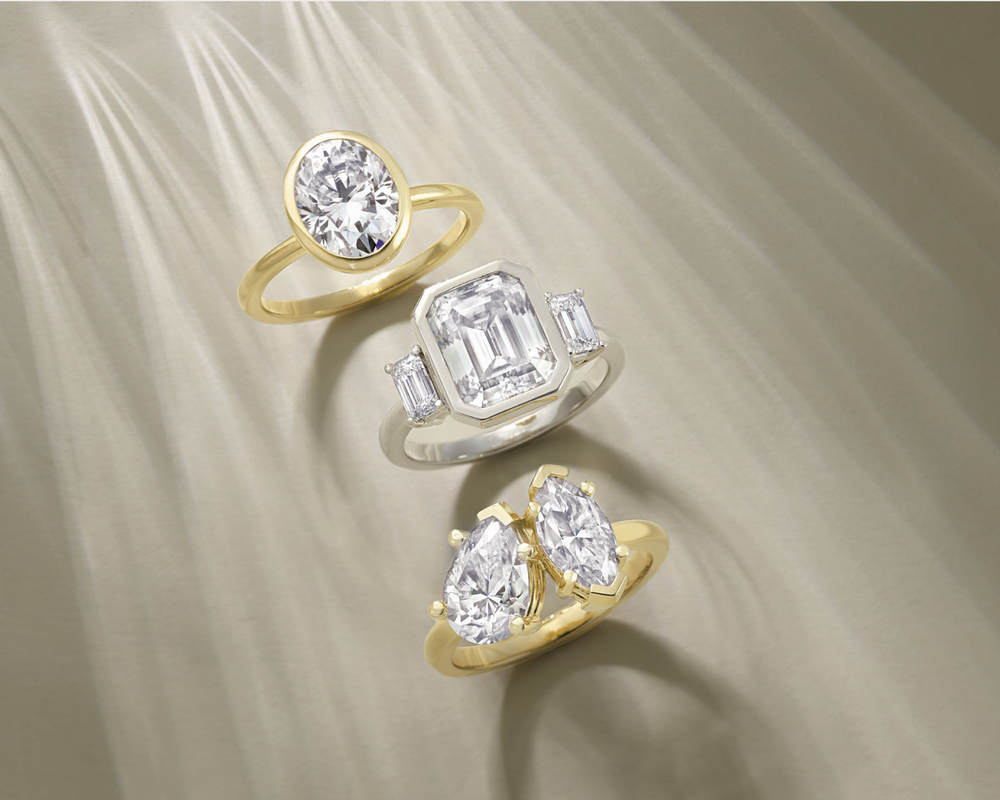
This value differential allows jewelry lovers to invest in statement heirlooms, such as our breathtaking Lab Grown Diamond Tennis Bracelet 10.00 ct or our luminous Lab Grown Diamond Tennis Necklace 7.00 ct, maximizing their scale and sparkle.
Essential Buying Guide: Certification, Authenticity, and Care
When selecting a high-clarity diamond, careful verification ensures that your investment matches the promises on paper.
Certification and Laser Inscriptions
Never purchase a high-clarity diamond without an independent, accredited grading report. The most reliable gemological institutes for lab diamonds are the International Gemological Institute (IGI) and the Gemological Institute of America (GIA).
These reports document the stone's 4Cs and confirm its lab-grown origin. Reputable stones feature a microscopic, laser-inscribed serial number on the diamond's girdle that matches the certificate number. This inscription can be verified under a standard jeweler's loupe at our Scottsdale or Los Angeles showrooms.
Everyday Care and Maintenance
While diamonds are the hardest known mineral on earth, keeping a pristine stone radiant requires routine maintenance. Skin oils, hand lotions, makeup, and cooking residue quickly form a film over the pavilion, dimming light refraction.
To maintain maximum brilliance for daily staples like our Lab Grown Diamond Stud Earrings or a tailored Lab Grown Diamond Eternity Band, follow these simple steps:
- Warm Soapy Soak: Submerge your jewelry in warm water mixed with mild, fragrance-free dish soap for 15 minutes.
- Soft-Bristled Scrub: Use a baby toothbrush to gently clean behind the setting and under the diamond's pavilion.
- Warm Rinse and Lint-Free Dry: Rinse thoroughly under warm water (ensure your sink drain is covered!) and pat dry with a microfiber or lint-free cloth.
- Professional Inspections: Bring your pieces in once a year so our jewelers can check prong tightness, setting integrity, and provide a deep ultrasonic cleaning.
Frequently Asked Questions About Flawless Diamonds
Are flawless lab diamonds chemically identical to mined diamonds?
Yes. Lab-grown diamonds possess the exact same chemical structure, physical density, and optical brilliance as mined diamonds. They are made of pure carbon atoms organized in an isometric crystal lattice, scoring a perfect 10 on the Mohs hardness scale. Even advanced handheld diamond testers identify them as real diamonds because their thermal and electrical conductivity match natural stones.
Can the naked eye tell the difference between VVS1 and Flawless clarity?
No. To the unaided human eye, an eye-clean VS1, a VVS1, and a Flawless (FL) diamond look identical in light return and clarity. The minute differences between these grades can only be resolved by a trained gemologist using 10x or greater magnification under controlled studio lighting. Buyers choose FL or IF grades for their rarity and technical perfection rather than visible differences.
Do flawless lab diamonds hold their clarity and sparkle forever?
Yes, permanently. Lab diamonds will never get cloudy, fade, or lose their brilliance over time. Because they share the identical carbon crystal structure and hardness of natural stones, their physical and optical properties remain permanent for generations.
Conclusion
A flawless lab-grown diamond brings together technical precision, structural purity, and modern gemology. By harnessing Type IIa carbon crystal formation through advanced CVD and HPHT engineering, these stones offer unmatched clarity with complete ethical transparency.
At The Diamond Guys, we take pride in offering a warm, transparent, and personalized shopping experience across our Scottsdale, AZ, and Los Angeles, CA locations. Whether you are crafting a custom engagement ring or curating fine everyday heirlooms, our expert jewelers will guide you to the perfect balance of cut, clarity, and value.
Ready to find your ideal diamond? Explore our collection of fine lab-grown diamonds or schedule a consultation with our team today.


