

Don't Dull Your Shine: The Ultimate DIY Gold Jewelry Cleaning Guide
The Safest Methods for Gold Jewelry Cleaning at Home

When it comes to keeping your fine jewelry in peak condition, simple and proven techniques are always best. Gold is a remarkably resilient precious metal, but daily life leaves behind a subtle layer of oils and debris. Fortunately, restoring that original luster does not require expensive commercial chemicals or harsh equipment.
Step-by-Step DIY Gold Jewelry Cleaning Method
For solid gold pieces—whether 10k, 14k, 18k, or 22k—the gold standard for home maintenance uses household items you already own:
- Prepare the Solution: Fill a small bowl with lukewarm tap water and add 2 to 3 drops of a mild, phosphate-free dish soap.
- Soak the Jewelry: Place your solid gold pieces into the bowl and let them soak for 10 to 15 minutes (up to 20 minutes for heavier build-up). This gently softens accumulated oils and dirt without stripping the metal.
- The Seltzer Water Trick: For intricate chain links or deep setting crevices, substitute plain tap water with unflavored seltzer water. The mild carbonation acts like thousands of microscopic, non-abrasive scrubbers that naturally lift trapped dirt.
- Brush Gently: Use a dedicated soft-bristled baby toothbrush to clean hidden areas, such as behind the center mounting or inside chain links. Always brush in light, circular motions with minimal pressure.
- Rinse Safely: Rinse your jewelry thoroughly under warm running water. Crucial tip: Always plug the drain or place a fine strainer in the sink before rinsing to eliminate any risk of losing a piece!
- Dry Thoroughly: Pat the jewelry dry with a clean, lint-free microfiber cloth. Allow the piece to air-dry completely on a towel before putting it away.
If your gold pieces include set diamonds, you can also check out our detailed guide on How to Clean Diamond Earrings for specific diamond-focused steps.
Gold Jewelry Cleaning for Gemstones, Pearls, and Organic Materials
While diamonds are hard and durable enough to handle standard soap-and-water soaks, other precious stones demand a far more tailored strategy.
- Hard Stones (Diamonds, Rubies, Sapphires): Can safely undergo warm soapy water soaks.
- Porous & Soft Gems (Pearls, Opals, Turquoise, Coral): Never submerge these in water or cleaning solutions. Water entering string holes or soaking porous surfaces can cause permanent discoloration, cracking, or weaken silk strings.
- Emeralds: Most natural emeralds are treated with delicate oils or resins to fill internal fissures; soaking them in warm soapy water can strip these treatments and compromise the stone's appearance.
For pieces set with pearls, opals, or soft gems, skip the soak entirely. Instead, dip a clean microfiber cloth into warm water with a tiny drop of gentle soap, wring it out completely, and wipe around the setting. Follow up with a second cloth dampened only with plain water to rinse away soap residue, then dry immediately.
Furthermore, observe the strict zero-heat rule: never apply concentrated heat to natural colored gemstones or porous materials, as sudden thermal changes cause cloudiness or fractures. If a stone is missing or loose in its setting, consult our specialized Gemstone Replacement Service before attempting any home cleaning.
Tailoring Methods: Solid Gold vs. Plated, Vermeil, and Filled
Understanding the structural makeup of your jewelry dictates how vigorously you can clean it:
- Solid Gold (10k to 24k): Highly durable and non-reactive. Lower karats (10k, 14k) are harder due to alloyed copper or silver, while higher karats (22k, 24k) are softer and require ultra-gentle brush strokes to prevent micro-scratching. Solid gold withstands regular soapy water soaks without losing its base metal layers.
- Gold-Filled: Features a substantial mechanical layer of gold bonded to a brass core. It handles gentle, brief soaks well, but severe scrubbing will wear down the outer gold layer over time.
- Gold-Plated & Vermeil: Gold-plated items have an extremely thin microscopic layer of gold over a base metal, while vermeil features gold electroplated over sterling silver. Never soak or scrub plated jewelry. Prolonged liquid exposure causes the thin outer coat to flake off, and scrubbing acts like fine sandpaper. Simply wipe plated items down with a damp, soft cloth.
- PVD-Coated Pieces: Physical Vapor Deposition (PVD) vacuum-coats gold onto base metals, making it up to ten times stronger than standard electroplating. While more durable, gentle wiping remains the best care practice.
Essential White Gold Care and Rhodium Maintenance
White gold is created by alloying pure yellow gold with white metals like nickel, palladium, or manganese. To achieve that signature mirror-like, icy silvery brilliance, white gold is finished with a ultra-thin electroplated layer of rhodium—a precious metal from the platinum family.
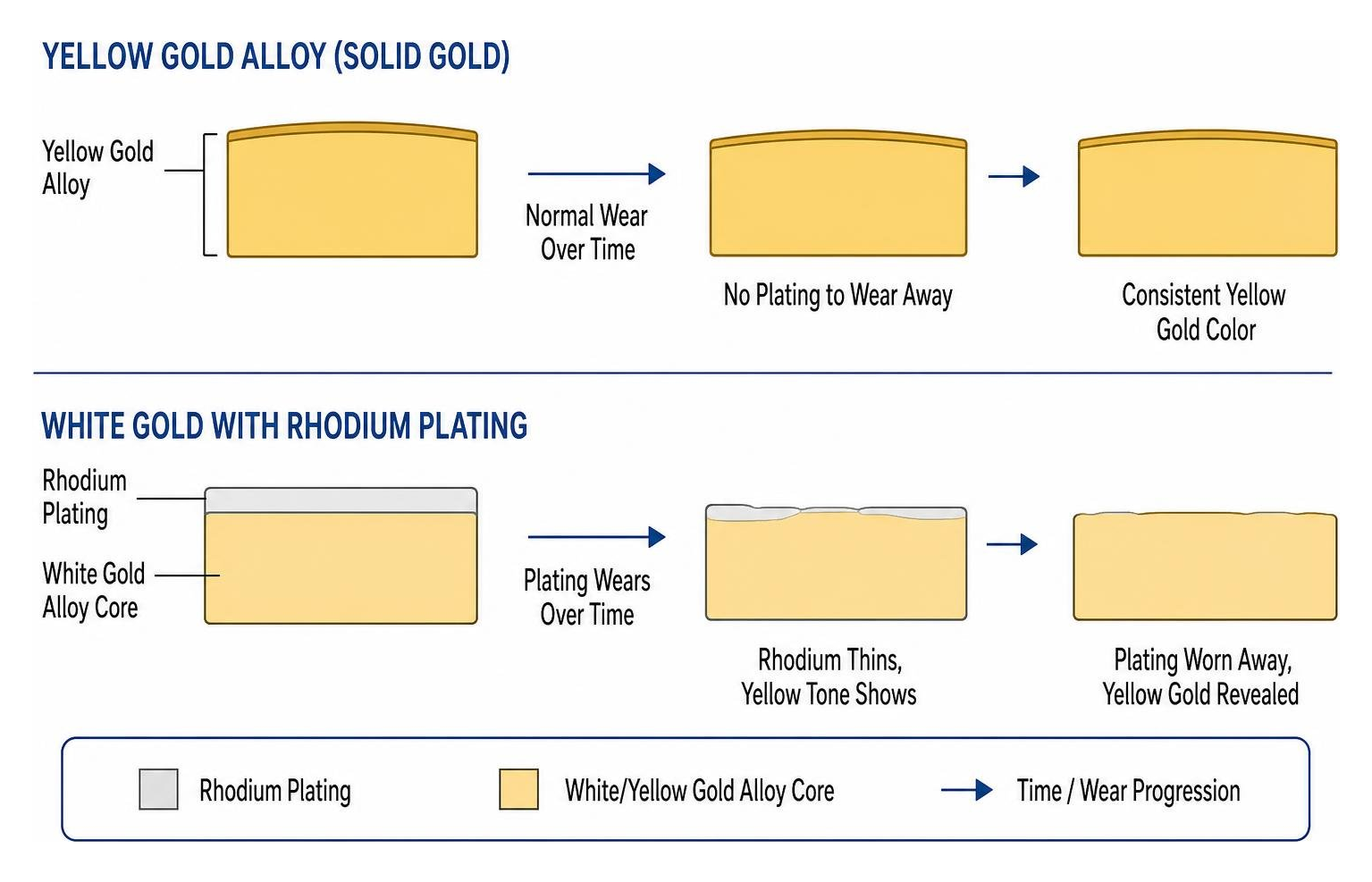
Over time, daily wear causes this exterior rhodium plating to gradually thin, exposing the slightly warm, pale yellow undertone of the gold alloy beneath.
- Re-Plating Cycle: On average, white gold rings and frequently worn items require professional rhodium re-plating every 1 to 2 years to maintain their crisp sheen.
- Chlorine Risks: White gold alloys are particularly sensitive to harsh chemicals. Chlorine (found in swimming pools, hot tubs, and laundry bleach) causes stress corrosion cracking in gold alloys. Exposure attacks metal solder joints and thins the protective rhodium layer.
To understand the lifecycle of white gold finishes, read our full article on How Long Will Rhodium Plating Last. If you ever decide to update an older yellow gold heirloom, explore Can You Change a Yellow Gold Ring to White Gold for insights into the conversion process.
Household Hazards: What Never to Use on Gold Jewelry
Well-meaning owners often fall for viral internet cleaning hacks, only to end up damaging their finest pieces. Soft metals like gold are easily etched, scratched, or stripped by common household substances.
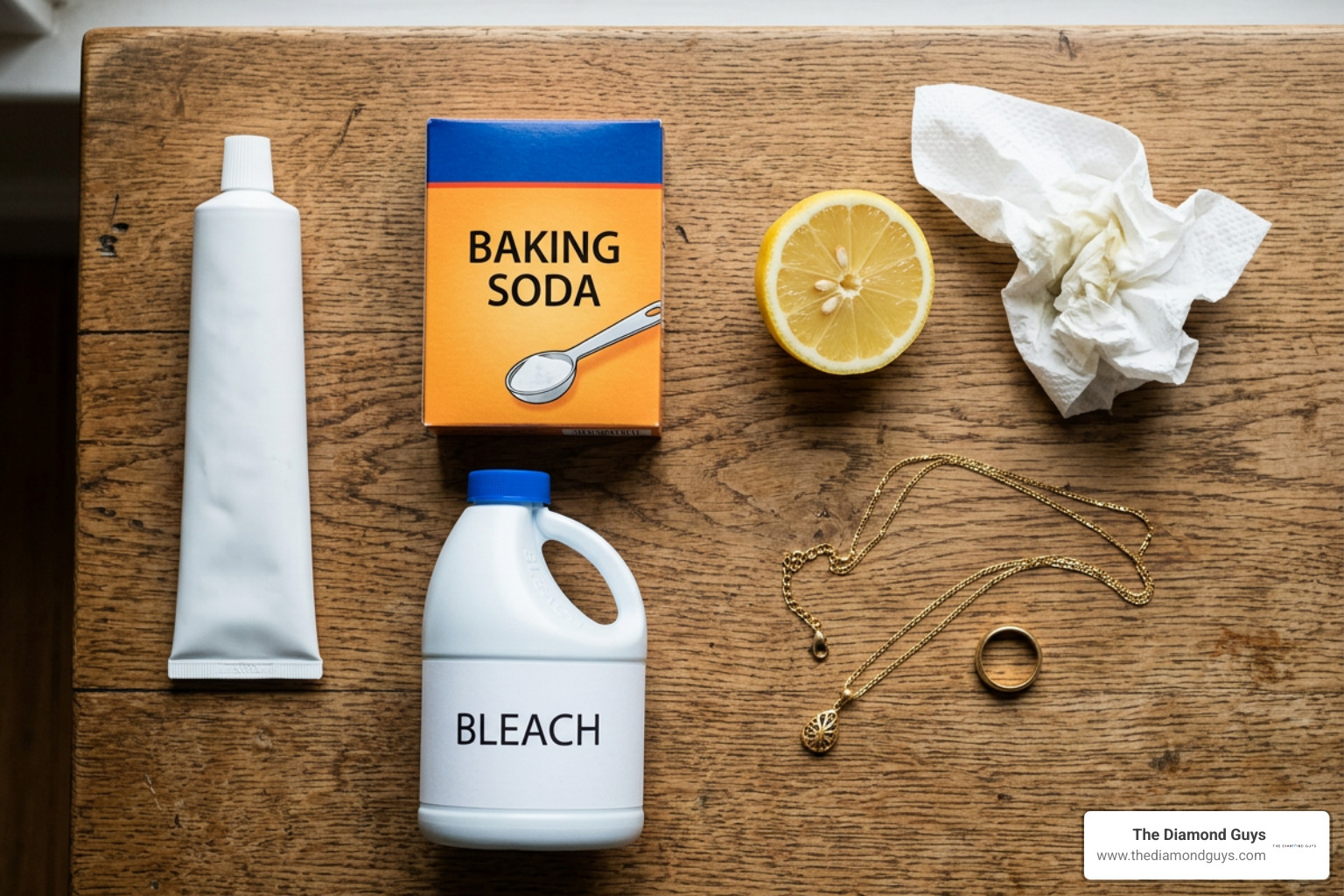
- Toothpaste: Formulated with silica abrasives designed to scrub enamel, toothpaste creates permanent microscopic scratches across gold surfaces, dulling high-polish finishes and wearing down setting prongs.
- Baking Soda: Although gentle on porcelain, baking soda paste acts as an abrasive compound that leaves soft karat gold looking matte and scratched.
- Bleach & Chlorine: Chemical exposure chemically attacks non-gold alloy metals (like nickel and copper) in your jewelry, weakening settings, eating through solder lines, and causing internal structural brittleness.
- Vinegar & Lemon Juice: Acidic solutions cause surface etching on metal finishes and permanently ruin soft gems like pearls, opals, and turquoise.
- Paper Towels & Tissues: Wood fibers contained within paper products act like tiny abrasives. Wiping dry gold with paper towels leaves fine hairline scratches across the metal. Always opt for a soft microfiber cloth instead.
As recommended by professional care guides, sticking to mild dish soap prevents catastrophic DIY damage.
Storage Best Practices and Routine Maintenance
Preventative habits reduce how often you need to perform deep gold jewelry cleaning:

- Follow the 'Last On, First Off' Rule: Put your jewelry on as the final step in your routine—after applying lotions, hairsprays, perfumes, and makeup. Take it off first before washing hands, showering, or starting your evening skincare routine.
- Prevent Cosmetic Buildup: Body oils and beauty products create a film over gold settings. A quick wipe with a dry microfiber cloth at the end of the day keeps buildup at bay.
- Use Fabric-Lined Storage: Store gold pieces in dedicated fabric-lined compartments or soft plush pouches. Never throw gold jewelry loosely into a tray together; harder gemstones (like diamonds) effortlessly scratch softer gold metals.
- Establish a Schedule: Clean frequently worn items (like engagement rings or daily hoops) every 2 to 3 weeks at home. Wiping pieces clean takes seconds and keeps grime from hardening inside settings.
Review our complete Engagement Ring Maintenance Guide 2026 for seasonal maintenance tips.
When to Skip DIY and Seek Professional Jewelry Services
While home washing is perfect for routine maintenance, DIY care has its limitations. Knowing when to hand your pieces over to professional jewelers protects sentimental heirlooms from permanent harm.
| Feature / Issue | DIY Home Care | Professional Jeweler Service |
|---|---|---|
| Primary Method | Warm water, mild dish soap, soft microfiber wipe | Professional steam cleaning & ultrasonic bath |
| Loose Stones / Prongs | ❌ Unsafe: Can cause total stone loss | ✅ Required: Prong tightening & structural laser repair |
| Deep Scratches | ❌ Cannot Fix: Abrasives ruin finish | ✅ Required: Professional wheel buffing & re-polishing |
| Porous / Antique Gems | ⚠️ Limited: Damp cloth wiping only | ✅ Safe: Expert hand-cleaning without liquid submersion |
| Inspection Routine | Surface visual check | Professional microscopic prong & setting audit |
At our store locations in Scottsdale, AZ, and Los Angeles, CA, we recommend bringing heavily worn jewelry in for professional inspection every 6 to 12 months. Our team uses specialized equipment to restore brilliant shine while carefully inspecting claw integrity under magnification.
If you suspect structural wear or need an expert touch, check out our Scottsdale Jewelry Cleaning Service or explore our Gold Jewelry Repair Guide 2026.
Frequently Asked Questions About Gold Jewelry Cleaning
Can I clean my gold engagement ring in the shower?
We strongly advise against wearing your gold engagement ring in the shower. Body washes, shampoos, and conditioners leave a stubborn film of soap scum over natural diamonds and gold, drastically dulling their sparkle. Furthermore, slick soapy fingers in the shower create a high risk of slipping your ring off down the drain! For an in-depth look at this common habit, read our article on Can I Wear My Diamond Ring in the Shower.
Can you dry gold jewelry with a hair dryer?
Yes, using a hair dryer on a cool or low-warm setting is an effective, professional trick for evaporating trapped moisture from intricate solid gold chains or hollow pendants without leaving water spots. However, never apply heat to jewelry containing natural gemstones, as sudden thermal shifts can cause internal fractures or clouding.
Is baking soda safe for cleaning solid gold?
No. Although baking soda is a popular DIY recommendation on social media, its micro-abrasive texture causes microscopic scratches across gold surfaces. Over time, these micro-abrasions accumulate, causing your polished gold to look dull and hazy. Safe gold jewelry cleaning relies on gentle surfactants like mild dish soap, not physical abrasives.
Conclusion
Keeping your fine gold collection radiant does not require complex routines or expensive chemicals. By establishing a routine of gentle warm-water washing every few weeks, using soft microfiber cloths, and storing your pieces in lined compartments, you can keep your gold shining brightly for generations.
When you notice deep scratches, loose setting prongs, or faded white gold rhodium finish, turn to professionals who understand fine metals. At The Diamond Guys, our expert jewelers take pride in offering personalized care, ethical guidance, and complete maintenance services. Contact us today or visit our showrooms to schedule a professional cleaning and setting checkup.
For more details on keeping your entire jewelry collection in immaculate condition, read our comprehensive Jewelry Repair Scottsdale AZ Complete Guide.
External References & Further Reading
- Learn more about precious metal properties and gemstone care from the Gemological Institute of America (GIA).
- Explore general jewelry care standards from GIA's Official Jewelry Care Guide.


