

Why Cushion Cut Lab Grown Diamonds Offer the Best Vintage Charm
Why Lab Grown Cushion Cut Diamonds Deliver Vintage Style and Modern Value
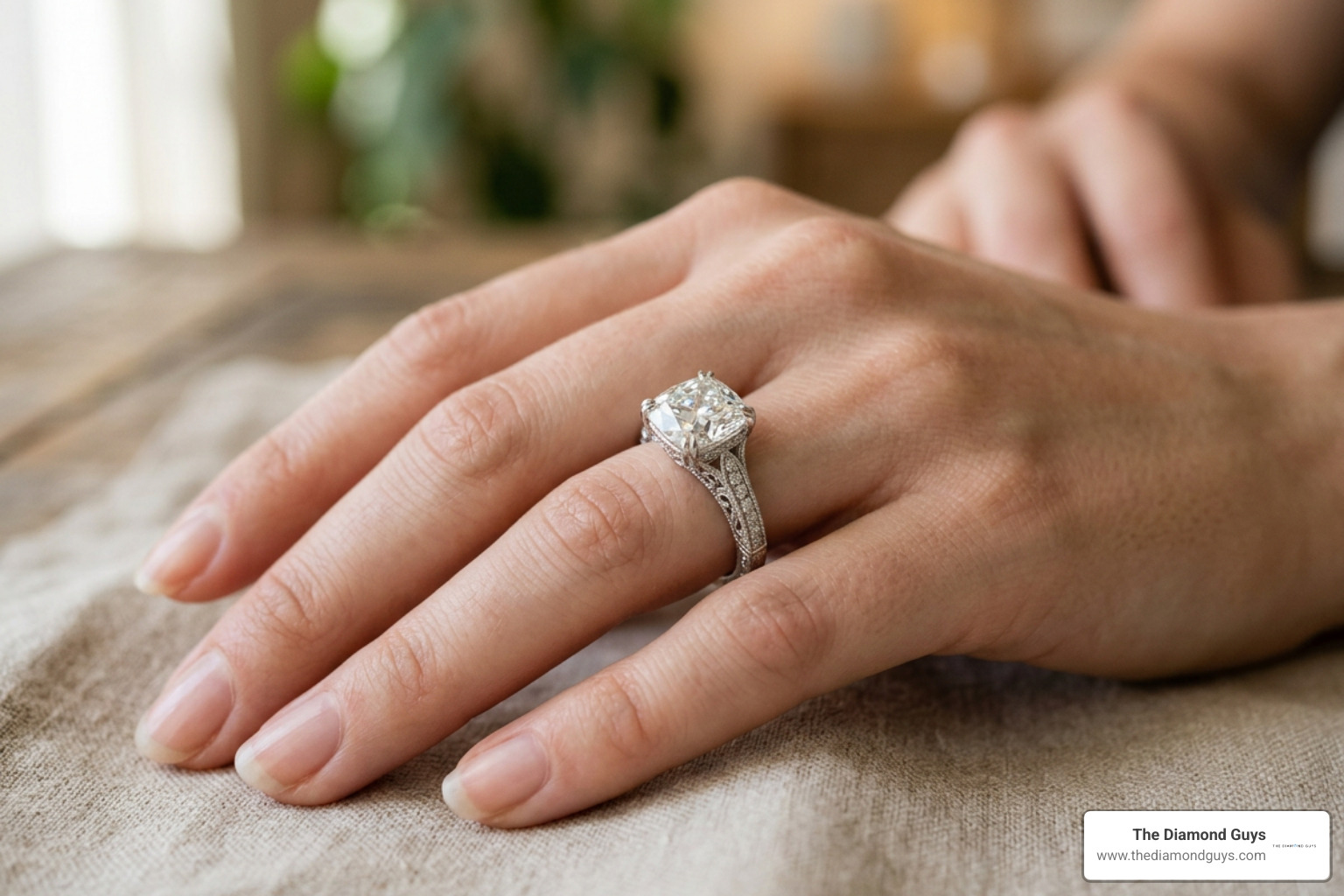
Lab grown cushion cut diamonds are real diamonds with the same chemical makeup and crystal structure as mined diamonds, but they offer a softer, antique-inspired shape at a far lower price. Their rounded corners, square-to-rectangular outline, and bright faceting create the romantic "pillow" look many buyers want in a vintage-style engagement ring.
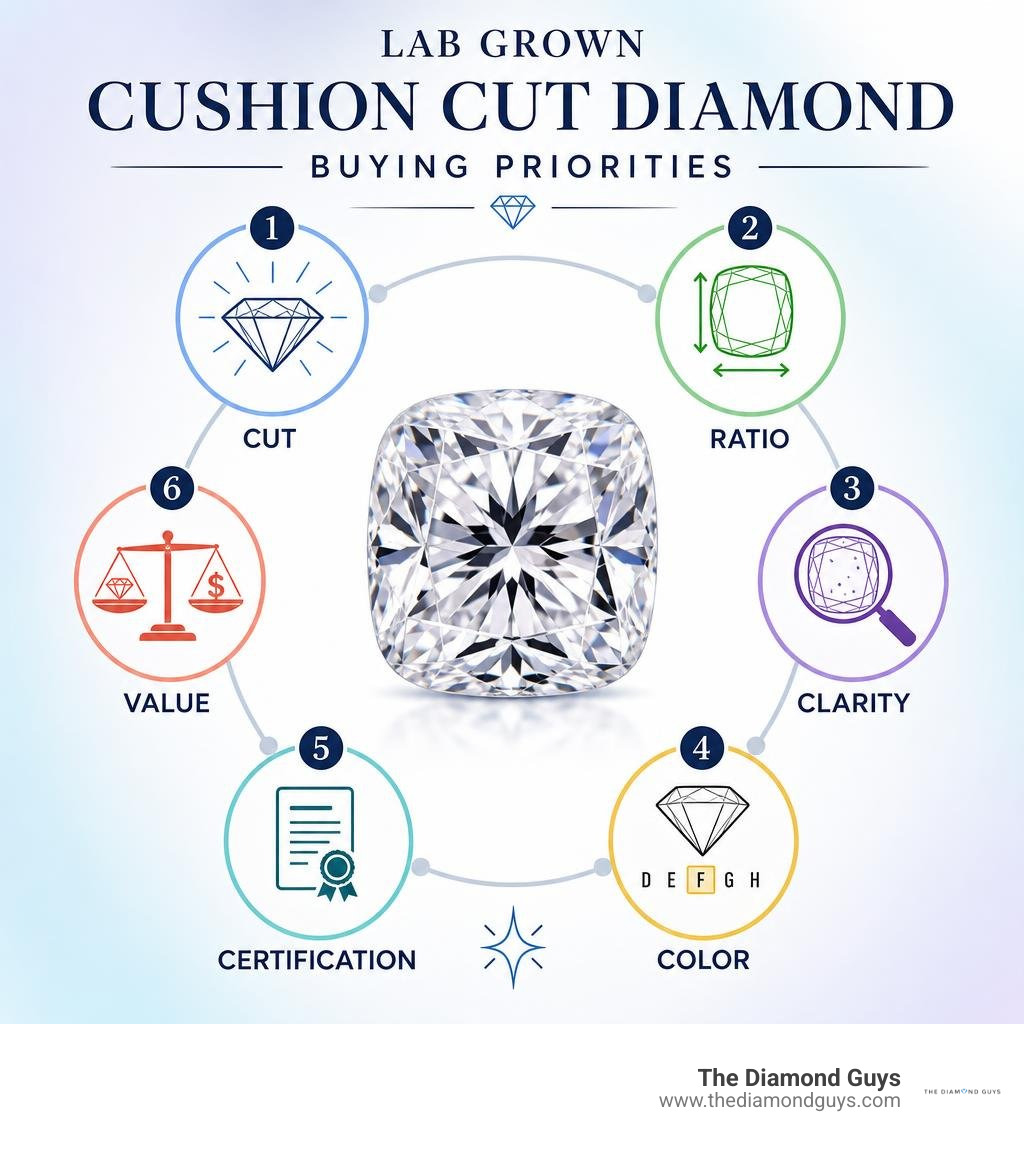
For the best choice, focus on a cushion with strong light return, an appealing length-to-width ratio, eye-clean clarity, and an independent grading report. Because lab-grown diamonds commonly cost 60-85% less than comparable natural diamonds, many buyers can choose a larger carat weight or a more detailed setting without stretching their budget.
Cushion cuts blend old-world character with modern sparkle. They are especially appealing if you want a ring that feels personal and timeless rather than perfectly uniform or overly sharp.
I am Morgan Price, a strategic backlink outreach specialist who researches jewelry topics and helps create clear, trustworthy resources for major purchases. My work on lab grown cushion cut diamonds centers on transparent quality guidance, ethical sourcing, and helping shoppers compare options with confidence.
Lab grown cushion cut diamonds further reading:
The Anatomy and Timeless Allure of the Cushion Cut
The cushion cut diamond gets its name from its signature pillow-like silhouette. Featuring gently rounded corners paired with either curved or straight sides, it creates a visual bridge between the geometric crispness of a princess cut and the soft radiance of a classic round brilliant. If you have ever wondered what is a cushion cut diamond, the answer begins centuries ago with the historic Old Mine Cut.
During the 18th and 19th centuries, master gem cutters fashioned diamonds entirely by hand under candlelight. These antique Old Mine cuts featured high crowns, deep pavilions, small tables, and open culets designed to capture the warm, flickering glow of oil lamps. Modern cushion cuts preserve that enchanting geometry while utilizing advanced faceting techniques to maximize fire and scintillation under everyday lighting.
Today, cushions generally fall into two distinct visual categories based on their facet arrangements:
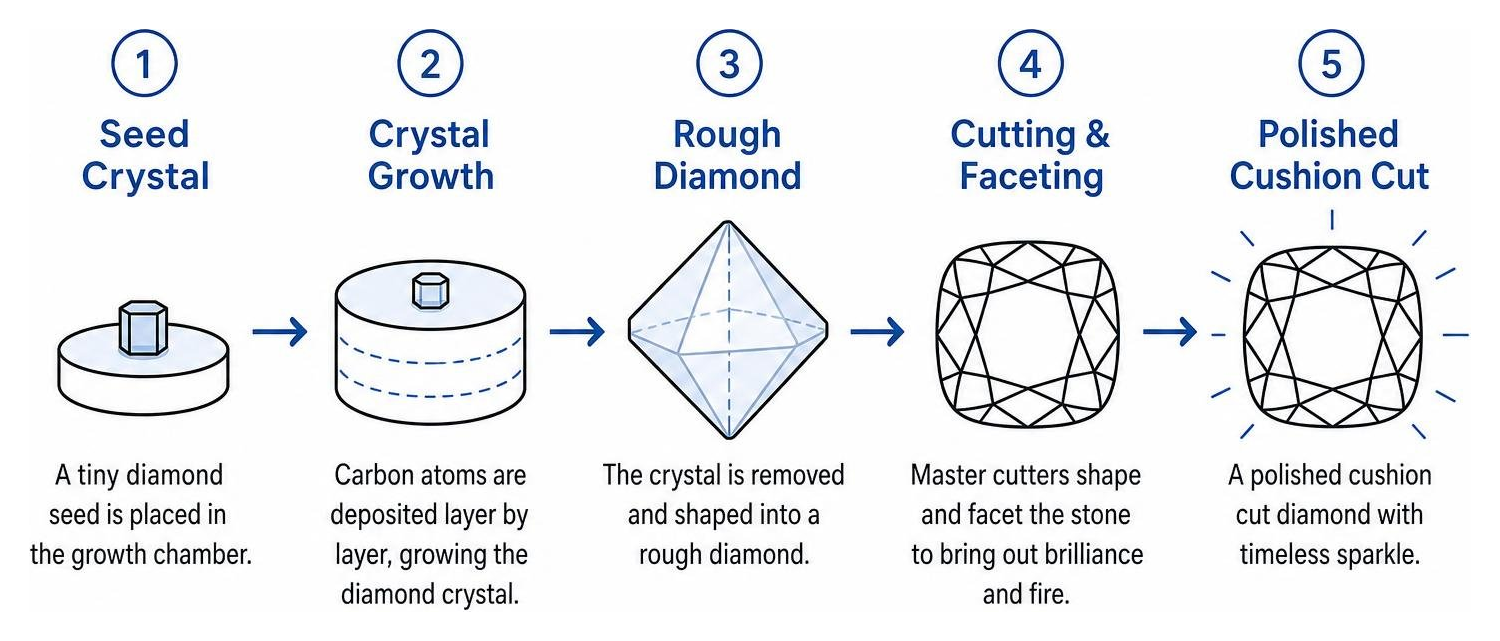
- Standard Brilliant Cushion: These stones feature larger, chunky facets that run from the center to the edges. This arrangement creates broad flashes of rainbow-colored fire and bold reflections, much like antique jewelry.
- Crushed Ice (Modified Brilliant) Cushion: These cuts incorporate extra facets along the pavilion, breaking light into thousands of tiny, glittering shards. They provide intense, high-frequency shimmer reminiscent of sparkling crushed glass.
| Feature | Standard Brilliant Cushion | Crushed Ice Cushion |
|---|---|---|
| Facet Style | Large, broad, distinct facet blocks | Small, scattered, multifaceted pavilion |
| Light Pattern | Big flashes of white light and rainbow fire | Shimmering, needle-like sparkle |
| Vintage Character | High (closely resembles antique cuts) | Low (ultra-modern diamond look) |
| Color Retention | Tends to show true body color evenly | Can concentrate face-up color |
| Clarity Forgiveness | Moderate; flaws are easier to spot | High; intricate facets hide tiny inclusions |
Vintage Appeal of Lab Grown Cushion Cut Diamonds
There is an undeniable romance to vintage aesthetics, but antique stones can sometimes come with compromised durability or uneven cuts. Lab grown stones solve this dilemma beautifully. By combining antique silhouettes with state-of-the-art precision cutting, modern couples can enjoy all the warmth of heirloom styling with exceptional optical performance.
When you browse curated collections of lab diamond rings, you will notice that cushion cuts carry a regal presence that naturally complements milgrain detailing, filigree metalwork, and delicate tapered shanks. They evoke the glamour of the Edwardian and Art Deco eras without looking like a costume piece.
How Lab Created Cushion Diamonds Compare to Mined Stones
A common misconception is that lab diamonds are synthetic imitations or diamond simulants like cubic zirconia or moissanite. In truth, lab-created diamonds are 100% physically, chemically, and optically identical to diamonds formed deep within the Earth. They register a 10 on the Mohs hardness scale, exhibit the exact same refractive index (2.42), and are formed purely of crystallized carbon.
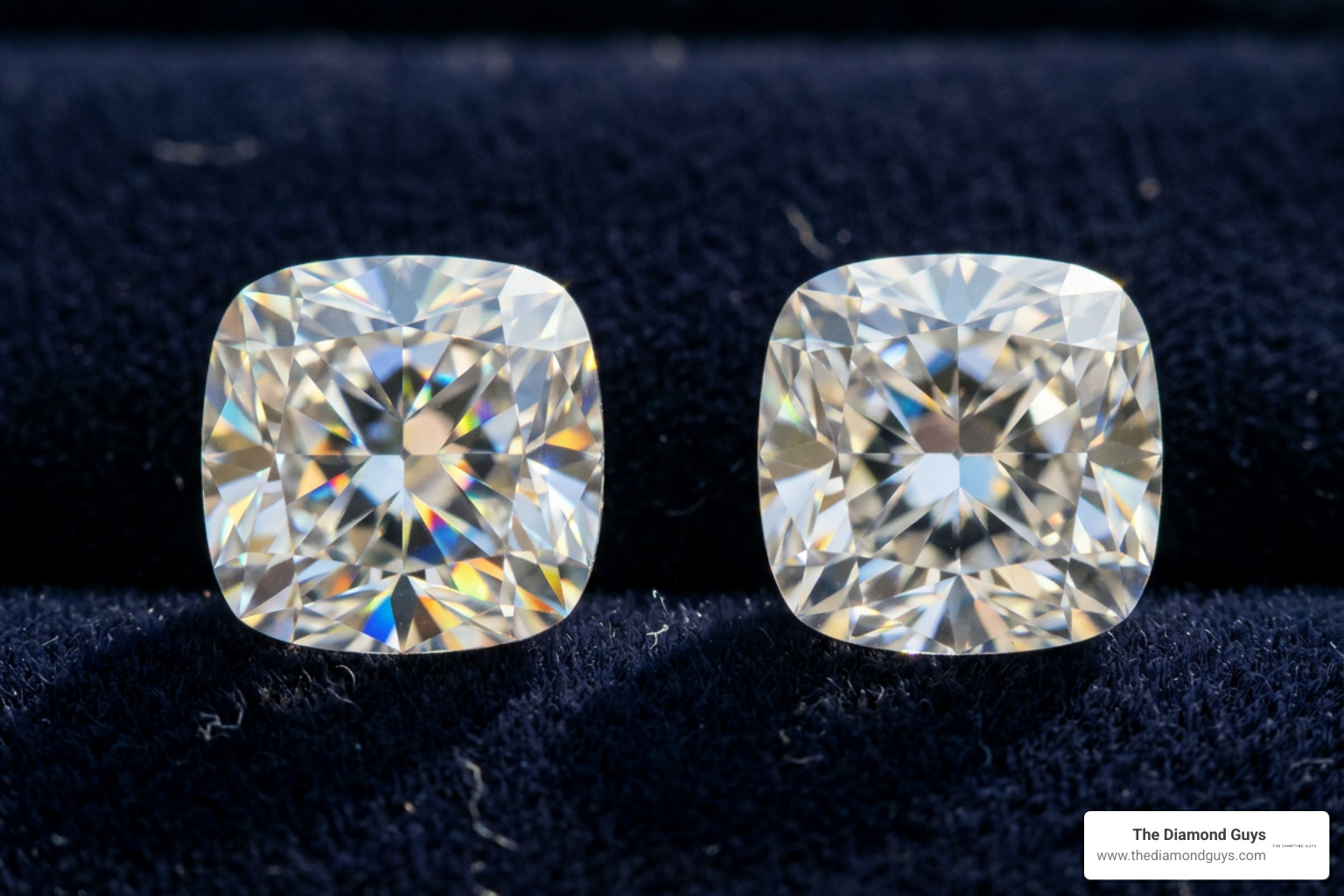
Modern laboratories replicate natural geological conditions using two primary methods:
- High Pressure High Temperature (HPHT): This method places a small diamond seed in pure carbon and subjects it to extreme pressures (over 1.5 million pounds per square inch) and temperatures exceeding 2,700°F.
- Chemical Vapor Deposition (CVD): A carbon-rich gas mixture is introduced into a vacuum chamber and broken down with microwaves, allowing pure carbon atoms to settle layer-by-layer onto a diamond seed crystal.
The key differences between mined and lab-grown stones are not found in their sparkle, but in their origin, pricing, and resource requirements. Because lab diamonds bypass lengthy supply chains and intensive earth-mining practices, they offer incredible financial advantages.
The average price of a 1-carat lab-grown cushion cut diamond ranges from $1,200 to $2,500, compared to $4,000 to $6,000 for a natural diamond of identical cut and carat weight. With savings ranging between 60% and 85%, you can select a noticeably larger center stone or invest more in an elaborate custom setting.
Market Trends and Consumer Perception
The jewelry landscape has experienced a major shift in recent years. Cushion cut diamonds remain firmly positioned among the top 5 most popular diamond shapes worldwide, accounting for approximately 10% to 15% of all engagement ring sales. At the same time, consumer preference for lab-grown gems has surged. The global lab-grown diamond market is projected to reach $49.9 billion by 2030, growing at a compound annual growth rate (CAGR) of 9.4% from 2021 to 2030.
Today's diamond buyers are pragmatic and design-focused. They recognize that selecting a lab-grown diamond does not compromise beauty or longevity—it simply allows them to build their dream ring without unnecessary financial strain.
Evaluating Lab Grown Cushion Cut Diamonds: The 4Cs and Value
Evaluating a cushion cut requires a slightly different eye than assessing a round brilliant, as cushion cuts hold color and weight uniquely across their softer corners.
1. Cut Quality & Proportions
Unlike round cuts, grading laboratories do not issue an official "Cut" grade for fancy shapes like cushions. Instead, you must evaluate the stone's physical proportions:
- Depth Percentage: Aim for 61% to 68%. A depth over 70% means extra weight is hidden in the belly of the stone where you cannot see it.
- Table Percentage: A range of 58% to 65% ensures balanced light entry and dispersion.
- Length-to-Width (L/W) Ratio: A ratio of 1.00 to 1.05 produces a balanced square shape, while 1.15 to 1.25 creates a sought-after elongated cushion.
2. Color
Cushion cuts possess deep pavilions that can retain body color more visibly than shallow cuts. For a bright, icy appearance set in platinum or white gold, we recommend choosing F, G, or H color grades. If you plan to set your diamond in yellow gold or rose gold, an I or J grade offers exceptional warmth that enhances the antique vibe while saving you money.
3. Clarity
Thanks to their intricate faceting patterns—particularly in crushed ice styles—cushion cuts conceal micro-inclusions remarkably well. Choosing a VS2 or eye-clean SI1 clarity grade will give you a stone that appears flawless to the naked eye without the premium price tag of VVS or Flawless grades.
4. Carat Weight
Because cushion cuts are cut deeper to maximize brilliance, they occasionally look slightly smaller face-up than a round stone of the same weight. However, the dramatic price savings of lab grown diamonds make it easy to scale up to a 1.5-carat or 2.0-carat cushion to achieve significant finger presence.
How Are Lab Grown Cushion Cut Diamonds Certified and Graded?
Every fine lab-grown cushion cut should come with a grading certificate from an independent gemological laboratory such as the Gemological Institute of America (GIA) or the International Gemological Institute (IGI).
These reports verify the stone's 4Cs, confirm its laboratory origin, and list its exact dimensions. Reputable growers also micro-laser engrave the grading report number and a "lab-grown" identifier directly onto the diamond's girdle. This microscopic inscription can be viewed under 10x magnification, giving you total peace of mind regarding your diamond's authenticity.
Choosing the Perfect Setting and Style for Cushion Cuts
A cushion cut's gentle curves make it one of the most versatile center stones for ring settings. Here are several popular design directions that showcase its antique character:
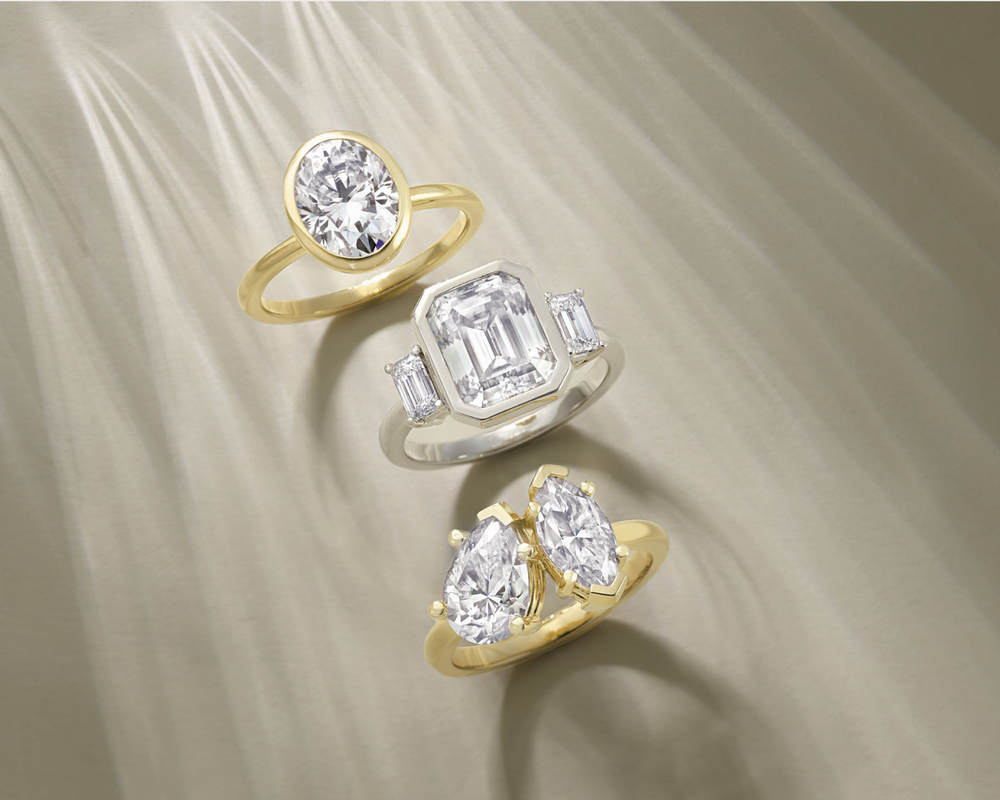
- Halo Settings: Surrounding a cushion cut with a perimeter of micro-pavé diamonds magnifies the center stone's appearance and enhances its vintage profile. Browse our cushion halo engagement rings to see how this setting delivers exceptional brilliance.
- Solitaires & Bezels: A clean four-prong or half-bezel mounting modernizes the cushion shape. For instance, our 3/4 way lab grown cushion diamond in half bezel set band pairs contemporary structural lines with soft diamond curves.
- Matching Wedding Bands: To build a cohesive bridal stack, consider pairing your ring with a cushion cut diamond eternity band for continuous sparkle.
Whether you prefer romantic three-stone settings or sleek minimalism, our collection of lab created diamond engagement rings provides inspiration for every bridal style.
Frequently Asked Questions About Cushion Cut Lab Diamonds
Do cushion cut lab diamonds look smaller than round cuts?
Yes, cushion cuts can have a slightly smaller surface area (table spread) face-up than a round brilliant of the exact same carat weight. This occurs because cushions carry more weight in their pavilion to generate deep light return. However, opting for an elongated cushion can create the visual illusion of a larger diamond. For a detailed comparison of cushion shapes across various fine jewelry styles, explore our article, Beyond the Sparkle: A Guide to Asscher and Cushion Cut Diamond Studs.
Which length-to-width ratio is best for a cushion cut?
The best ratio depends entirely on your aesthetic preference:
- Square Cushion (1.00 - 1.05): Delivers a classic, symmetric pillow silhouette that looks balanced in halo and vintage solitaire mountings.
- Slightly Elongated (1.08 - 1.14): Provides a subtle rectangular feel while preserving traditional cushion proportions.
- Elongated Cushion (1.15 - 1.25+): Offers a slender silhouette that flatters the finger and provides greater vertical coverage.
How do I clean and maintain a lab grown cushion diamond?
Caring for a lab-grown diamond is identical to caring for a mined stone. Clean your ring at home every two weeks using warm water, mild dish soap, and a soft-bristled baby toothbrush. Gently brush behind the pavilion where lotions and skin oils tend to collect, then rinse with clean water and pat dry with a lint-free cloth. We also recommend having your ring professionally inspected once a year to ensure your prongs remain tight and secure.
Conclusion
Cushion cut lab grown diamonds offer an unmatched combination of old-world charm, modern brilliance, and exceptional value. Whether you are drawn to the chunky flashes of an antique-style standard brilliant or the sleek lines of an elongated crushed ice cut, choosing a lab-grown center stone allows you to prioritize quality and scale without compromise.
At The Diamond Guys, we specialize in helping couples discover their perfect diamond. From our welcoming showrooms in Scottsdale and Phoenix, Arizona, to our personalized design consultations, we take pride in offering ethical sourcing, transparent guidance, and exceptional craftsmanship. If you are ready to bring your vision to life, consult our custom lab grown diamond ring guide or visit our lab diamond jewelry store guide to get started on creating your dream ring.


