

How to Get the Best Value Lab Diamonds Without Breaking the Bank
The Price of Synthetic Diamonds in 2026: What You Need to Know Before You Buy

The price of synthetic diamonds has dropped dramatically — and right now, they offer some of the best value in fine jewelry.
Here's a quick snapshot of what lab-grown diamonds cost in 2026 compared to natural diamonds:
| Carat Size | Lab-Grown Price | Natural Diamond Price | Savings |
|---|---|---|---|
| 0.5 ct | $260 – $591 | ~$1,500+ | Up to 70% |
| 1 ct | ~$845 – $1,200 | $3,895 – $8,000 | 60–80% |
| 2 ct | $1,750 – $2,832 | $15,000 – $25,000 | Up to 90% |
| 3 ct | $2,613 – $3,880 | $30,000 – $60,000 | Up to 92% |
| 5 ct | $14,000 – $25,000 | $80,000+ | 70–80% |
| 7 ct | $7,000 – $20,000+ | $100,000+ | 75–90% |
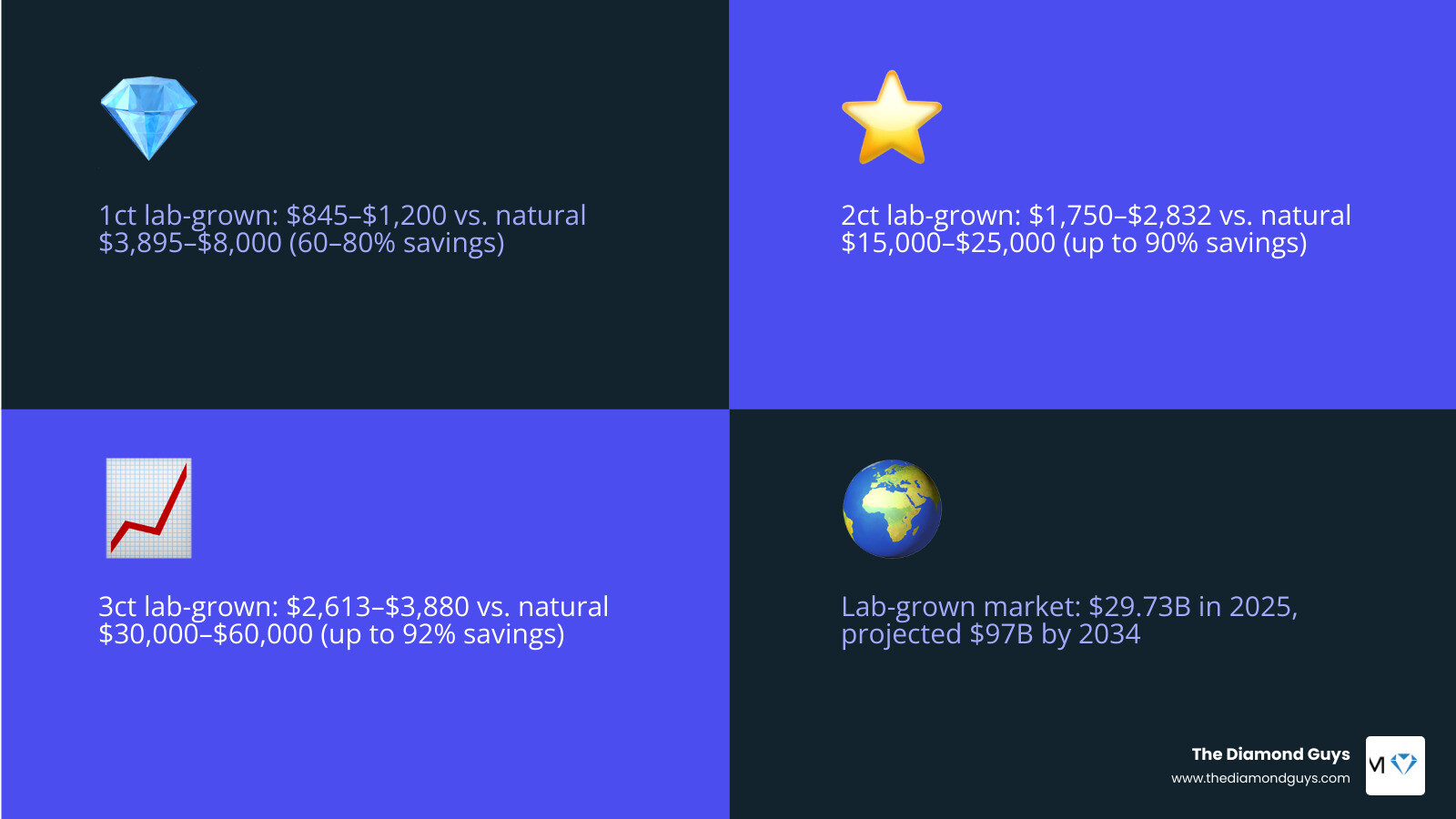
The savings are real. A 1-carat lab-grown diamond costs around $845 to $1,200 today. A comparable mined diamond starts at $3,895 and climbs fast.
That gap has been widening for years — and it shows no signs of closing.
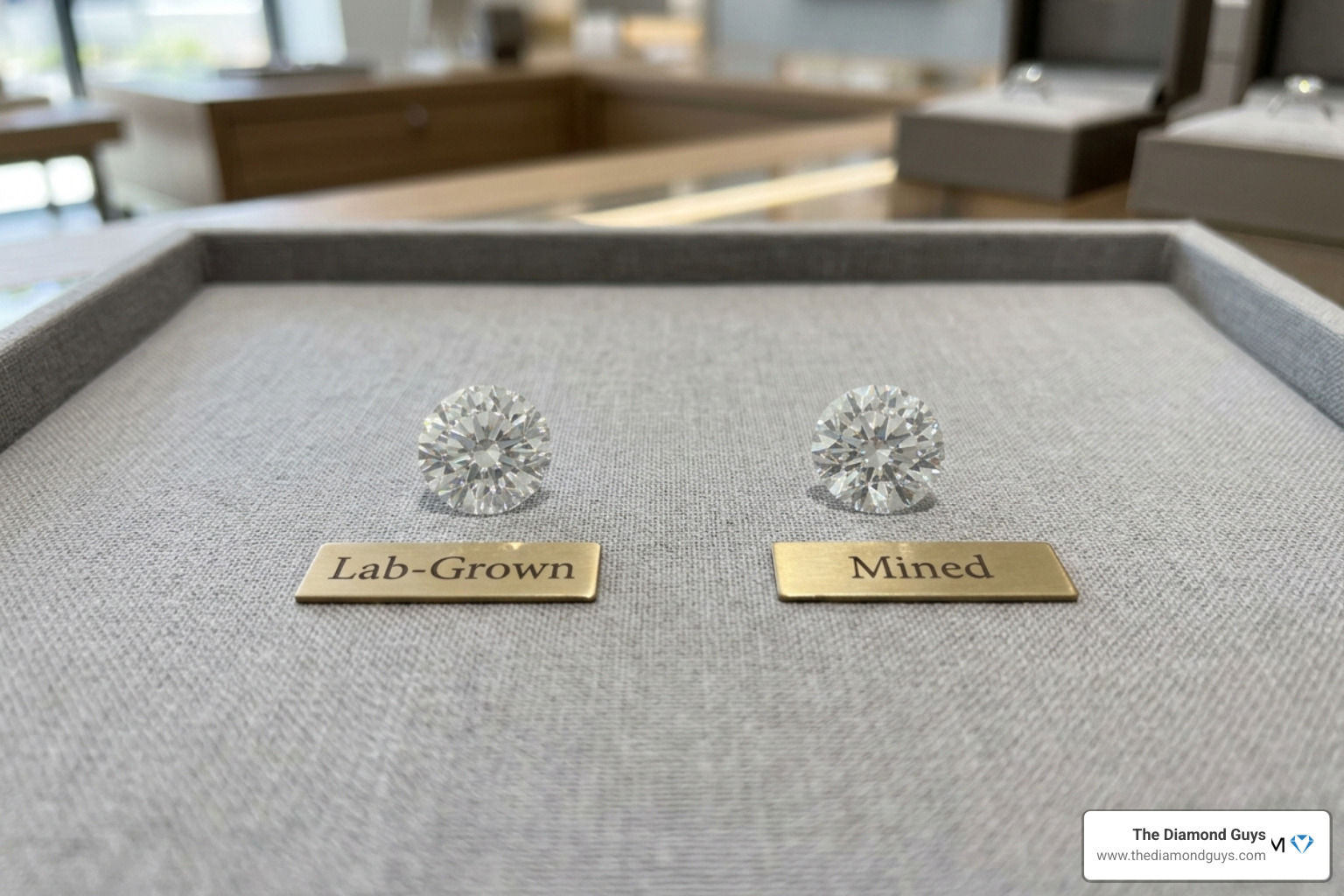
Lab-grown diamonds are chemically, physically, and optically identical to natural diamonds. The only difference is where they come from. They're grown in a lab using advanced technology, not pulled from the earth. That difference in origin is what drives the dramatic price difference.
The global lab-grown diamond market was valued at nearly $29.73 billion in 2025 and is projected to reach close to $97 billion by 2034. More couples than ever — over half of new engagement ring buyers in 2024 — chose lab-grown stones. This isn't a niche trend. It's the new mainstream.
But with so many options and wildly varying prices, knowing how to shop matters just as much as knowing what to buy. The 4Cs, the shape, the certification, and where you buy all affect what you'll actually pay — and what you'll get.
I'm Morgan Price, a backlink outreach and SEO specialist who has spent years researching the price of synthetic diamonds across retailers and markets, helping consumers cut through the noise to find genuine value. In this guide, we'll break down everything you need to make a confident, informed purchase.
Understanding the Price of Synthetic Diamonds vs. Natural Stones
When we sit down with clients in our Scottsdale or Los Angeles showrooms, the first question is almost always: "Are they real?" The answer is a resounding yes. Because lab-grown diamonds are pure carbon crystallized in an isotropic 3D form, they possess the exact same hardness (10 on the Mohs scale), refractive index, and brilliance as stones pulled from a mine.
The primary driver behind the price of synthetic diamonds being so much lower is geological rarity—or rather, the lack of it. Natural diamonds are finite; they took billions of years to form under the earth's crust. Lab diamonds, however, can be produced in a matter of weeks or months. This creates a massive shift in the supply chain. While natural diamonds require massive earth displacement and labor-intensive extraction, lab diamonds are the product of high-tech engineering.
Currently, you can expect 70% to 90% savings when choosing lab-grown. For example, a 2-carat, E color, VS2 clarity lab diamond might cost as little as $1,750. A natural diamond with those same specs? You’re looking at roughly $30,000. For a deeper dive into these differences, check out our Lab Diamonds Vs Real Diamonds guide. If you are looking for Certified Lab Grown Diamonds in Scottsdale, Chandler & Peoria, it is vital to understand that the "value" isn't just in the price tag, but in the quality you can afford.
Why Lab-Grown Costs Have Plummeted
It wasn't always this affordable. In 2008, it cost about $4,000 to produce a single carat of lab-grown diamond. By 2025, that production cost plummeted to between $300 and $500 per carat. This 25% decrease in production costs over recent years is thanks to massive technological innovation in the two main growing methods: HPHT (High Pressure High Temperature) and CVD (Chemical Vapor Deposition).
As the technology has scaled, the market has seen a "halving" of prices. We’ve seen reports of a 30% price drop for identical stones in just one year. This market saturation means that while the stones are just as beautiful, they are no longer priced as "rare" commodities. Understanding these shifts is key to A Comprehensive Guide To Comparing Lab Grown Diamonds.
The Environmental and Ethical Value Proposition
For many of our Arizona and California couples, the price of synthetic diamonds isn't the only factor; ethics play a huge role. Lab diamonds are inherently conflict-free. They bypass the historical issues associated with "blood diamonds" and the heavy environmental toll of traditional mining.
While some "100% sustainable" lab diamonds—those grown using renewable energy—can carry a 30-40% price premium, the overall carbon footprint is significantly lower. Choosing Diamonds That Are Man Made allows you to wear "guilt-free glamour," knowing your luxury didn't come at the cost of habitat destruction.
2026 Price Guide: Lab-Grown Diamond Costs by Carat Weight
The most significant factor in the price of synthetic diamonds is the carat weight. However, unlike natural diamonds, where the price per carat jumps exponentially as the stone gets larger (because big natural stones are incredibly rare), lab-grown prices remain much more linear.
| Carat Weight | Average Lab Price (2026) | Price Per Carat (Lab) | Natural Price (Starting) |
|---|---|---|---|
| 1.00 - 1.49 ct | $498 – $754 | ~$500 | $4,000 |
| 2.00 - 2.99 ct | $1,998 – $2,832 | ~$1,000 | $15,000 |
| 3.00 - 3.99 ct | $2,613 – $3,880 | ~$900 | $30,000 |
| 4.00 ct | $2,620 (Princess) - $3,140 (Round) | ~$750 | $60,000 |
| 5.00 - 5.09 ct | $12,457 – $25,000 | ~$2,500+ | $80,000 |
| 6.00 ct | $8,000 – $14,000 | ~$1,500 | $90,000+ |
| 7.00 ct | $7,000 – $20,000+ | ~$1,000+ | $100,000+ |
Note: Prices vary based on shape and quality. For example, check the 4 Carat Princess Cut Lab Grown Diamond Price | $939 Avg | 2026 for specific shape-based data.
Entry-Level Brilliance: 1 to 2 Carat Ranges
The 1 to 2-carat range is the "sweet spot" for engagement rings. In 2026, a 1-carat lab diamond averages around $845. This allows couples to allocate more of their budget toward a high-quality platinum setting or custom design. If you're looking for a 1 Carat Man Made Diamond Price Guide, you'll find that for under $2,000, you can secure a stone that is virtually perfect to the naked eye.
High-Carat Luxury: 3 to 7 Carat Price Points
This is where lab-grown diamonds truly disrupt the market. A 3-carat natural diamond can easily cost $30,000 to $60,000. In the lab-grown world, that same 3-carat stone runs between $7,000 and $13,000.
As we move into the 5 to 7-carat range, the savings become staggering. A 7-carat lab-grown diamond ranges from $7,000 for entry-level quality to $20,000+ for premium ranges. Compare that to a 7-carat natural stone, which would likely cost seven figures. For more on these larger stones, see our guide on the 1 Carat Man Made Diamond and how those savings scale up.
Maximizing Value: How the 4Cs Influence the Price of Synthetic Diamonds
Just because a diamond is grown in a lab doesn't mean it's perfect. Lab diamonds are still graded on the 4Cs: Cut, Color, Clarity, and Carat.
- Cut: This is the most important "C." A poor cut will make even a 5-carat diamond look dull. We always recommend an "Ideal" or "Excellent" cut.
- Color: For the best value, look at the "Near Colorless" range (G, H, or I). These stones look white to the naked eye but cost significantly less than D or E grades.
- Clarity: Aim for "Eye-Clean." This usually means VS1 or VS2. You don't need a Flawless diamond to have a beautiful ring.
- Carat: To save money, buy "shy." A 0.90-carat diamond is often much cheaper than a 1.00-carat stone, but they look identical in size once set.
Our Synthetic Diamond Price Guide goes into even more detail on how to balance these factors.
The Impact of Shape and Cut on the Price of Synthetic Diamonds
The shape of the diamond significantly impacts the price. Round brilliant diamonds are the most popular and generally the most expensive because they waste the most "rough" diamond material during the cutting process.
Fancy shapes like Ovals, Pears, and Emerald cuts can offer better value. In fact, an Oval or Pear shape often looks larger than a Round diamond of the same carat weight because of its elongated surface area. If you are considering a unique shape, check out Your Guide To Buying Pear Lab Diamonds.
Certification and Grading Standards
Never buy a diamond—lab or natural—without a certificate. Reputable labs like the IGI (International Gemological Institute) and GIA (Gemological Institute of America) provide independent grading. Most high-quality lab diamonds are "Type IIa," which is the purest form of diamond, making up only 2% of natural diamonds but nearly all lab-grown ones. For more on what to look for, read our Best Man Made Diamonds Guide.
Market Trends and the Future of Lab-Grown Diamond Pricing
The market for lab diamonds is evolving rapidly. By 2034, the market is expected to reach $97 billion. As production becomes even more efficient, we may see the price of synthetic diamonds stabilize or continue a slow decline.
However, it is important to manage expectations regarding "investment." If you are asking Should You Buy A Lab Grown Diamond, the answer depends on your goals. If you want the most beautiful, largest stone for your budget to celebrate your love, lab-grown is unbeatable. If you are looking for a financial asset to resell later, natural diamonds are the traditional choice.
Resale Reality and Long-Term Value
We believe in total transparency: lab-grown diamonds currently have very little resale value. A lab diamond bought for $1,200 might only resell for $50 or less. Natural diamonds, by contrast, typically retain about 50% of their purchase price.
When you buy a lab diamond, you are buying a beautiful piece of jewelry for sentimental value, not an investment portfolio. We discuss this further in our Synthetic Diamond Price article.
Frequently Asked Questions about Synthetic Diamond Prices
Do lab-grown diamonds hold any resale value?
As of 2026, lab-grown diamonds hold very little to no resale value. They are best viewed as a lifestyle purchase rather than a financial investment. You are "saving" the money upfront rather than "investing" it for later.
Why is the price of synthetic diamonds so much lower than mined?
It comes down to supply and production. Natural diamonds are geologically rare and expensive to mine. Synthetic diamonds are grown in labs using electricity and carbon, and as technology improves, the cost to grow them continues to drop.
Can a jeweler tell the difference between lab and natural diamonds?
Not with the naked eye. Even experienced gemologists need specialized equipment to detect growth patterns or look for tiny laser inscriptions on the girdle of the stone that identify it as lab-grown.
Conclusion
At The Diamond Guys, we pride ourselves on being more than just a jewelry store. Whether you visit us in Scottsdale, AZ, or Los Angeles, CA, our mission is to provide expert guidance and a personalized experience. We believe that every couple deserves a ring they love, regardless of whether the diamond came from a mine or a lab.
By understanding the price of synthetic diamonds and how to navigate the 4Cs, you can find a stone that offers "guilt-free glamour" and incredible brilliance without breaking the bank. Ready to find your perfect stone? Shop our lab diamond jewelry store guide to start your journey today.


