

Sparkle Like a Pro with a 10 Carat Diamond Bracelet
The 10 Carat Tennis Bracelet: Everything You Need to Know Before You Buy

A 10 carat tennis bracelet is one of the most striking pieces of fine jewelry you can own — a continuous line of diamonds totaling 10 carats of total weight, set in gold or platinum, worn on the wrist.
Quick answers for buyers:
| Question | Answer |
|---|---|
| What does "10 carat" mean? | Total diamond weight across all stones in the bracelet |
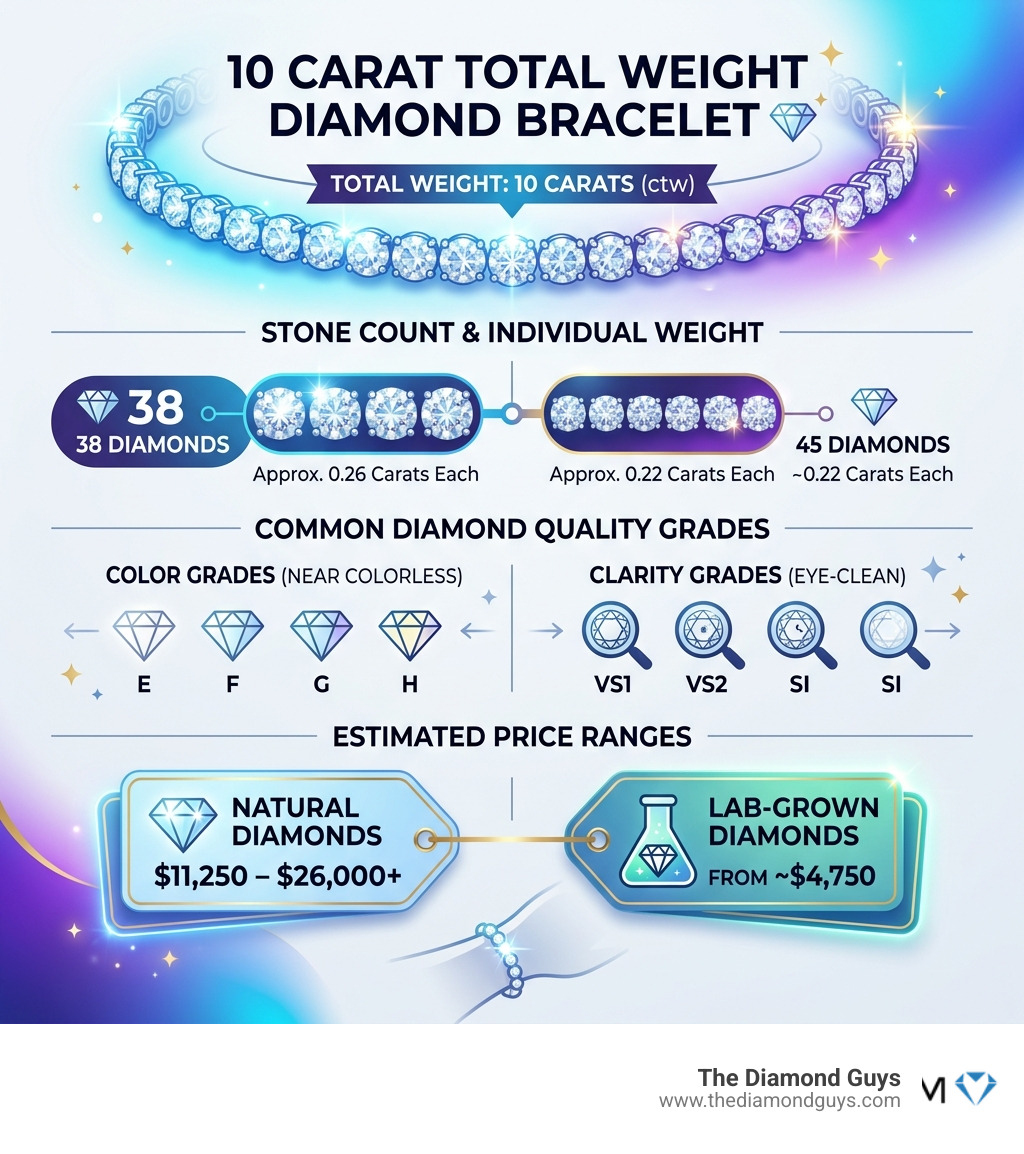
| How many diamonds? | Typically 38–45 individual stones |
| Price range (natural) | ~$11,250 – $26,000+ depending on quality |
| Price range (lab-grown) | From ~$4,750 |
| Standard length | 7 inches |
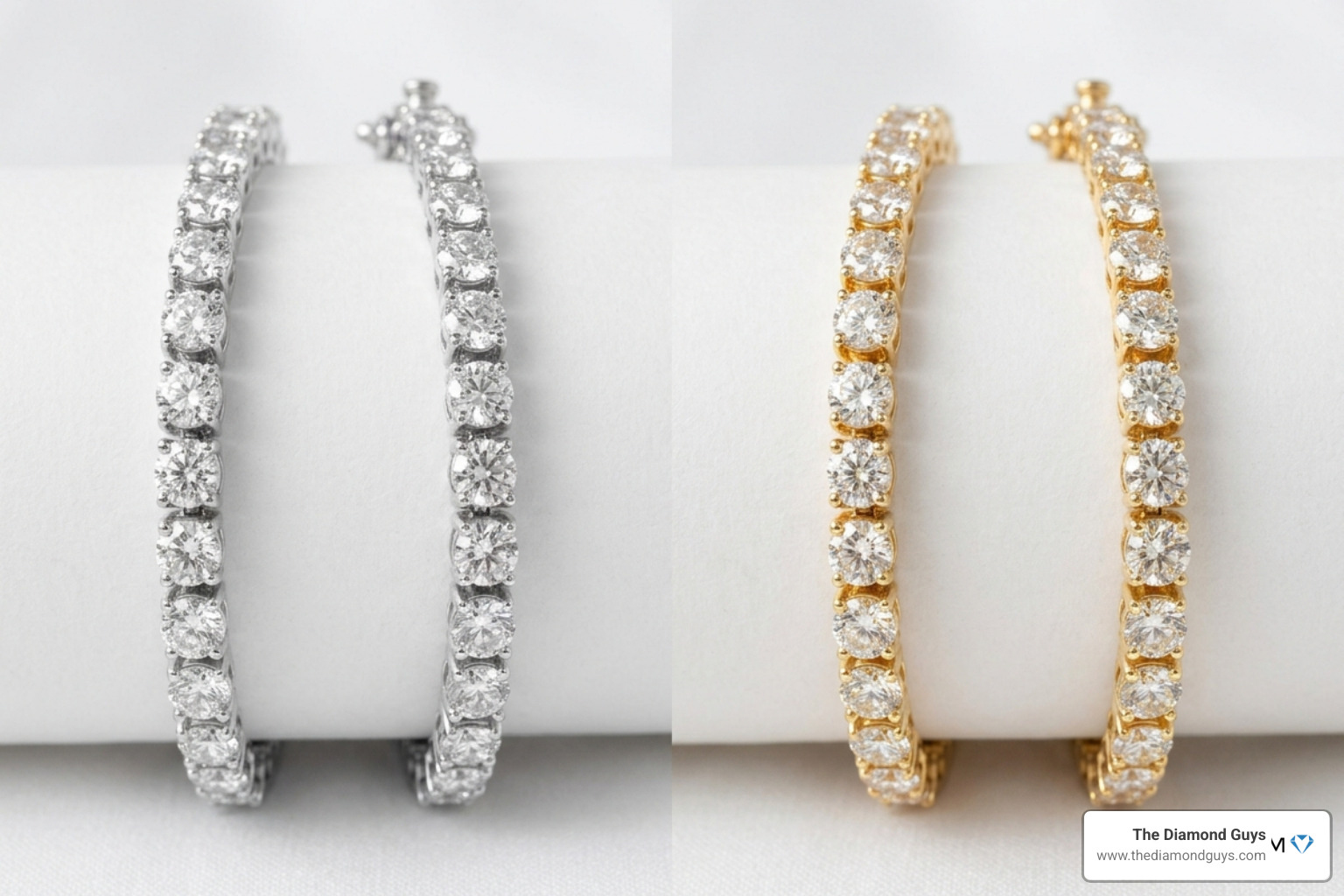
| Best metal options | 14k gold, 18k gold, or platinum |
| Common clarity grades | VS1–VS2 (best value), SI (budget-friendly) |
| Common color grades | E–F (near colorless), G–H (slightly warm) |
The name "tennis bracelet" has a great origin story. Tennis star Chris Evert wore a diamond strand bracelet during her 1978 U.S. Open match — and when it broke and fell off mid-game, she asked officials to pause play until it was found. The name stuck, and the style became a jewelry icon.
Today, a 10 carat version represents the boldest expression of that classic look — enough sparkle to turn heads in any setting, from everyday errands to black-tie events.
I'm Morgan Price, a backlink outreach and SEO specialist with deep experience researching and writing about high-value jewelry purchases, including the 10 carat tennis bracelet market across natural diamonds, lab-grown options, and everything in between. Whether you're buying for a milestone occasion or simply treating yourself, this guide will help you find the right bracelet with confidence.
Must-know 10 carat tennis bracelet terms:
Understanding the 10 Carat Tennis Bracelet: Quality and Craftsmanship
When we talk about a 10 carat tennis bracelet, we are referring to the "total carat weight" (ctw). This means the sum of all the diamonds in the strand equals 10 carats. Because this is a significant amount of diamond weight, the quality of each individual stone becomes paramount. Unlike a 3ct diamond tennis bracelet where stones are smaller, a 10-carat piece features diamonds large enough for the naked eye to easily spot inclusions or off-colors.
The 4Cs in a High-Carat Setting
To ensure your bracelet looks like a masterpiece rather than a collection of "frozen spit," we focus on the 4Cs:
- Cut: This is the most important factor for sparkle. Most 10-carat bracelets use round brilliant diamonds because their 58 facets maximize light return. However, fancy shapes like emerald or oval are becoming increasingly popular for a modern "main character" moment.
- Clarity: For a bracelet of this magnitude, we generally recommend VS1-VS2 clarity. This ensures the diamonds are "eye-clean," meaning you won't see any black spots or clouds without a magnifying loupe. While some budget options use SI or even I-grade diamonds, these can appear lackluster in such a prominent piece.
- Color: To achieve that crisp, icy look, aim for E-F color (colorless) or G-H color (near-colorless). If you are setting the diamonds in yellow gold, you can sometimes "cheat" down to an I or J color, as the metal's warmth hides slight yellow tints in the stones.
- Carat Weight per Stone: In a standard 7-inch 10 carat tennis bracelet, you are looking at approximately 38 to 45 diamonds. This means each stone is roughly 0.22 to 0.26 carats. These are substantial diamonds!
The Importance of Certification
At this price point, GIA (Gemological Institute of America) certification is the gold standard. A complete guide to diamond tennis bracelets will tell you that consistency is key. You want "perfectly matched" stones. If one diamond is slightly yellower or duller than its neighbor, it will stand out like a sore thumb.
| Diamond Shape | Sparkle Level | Style Vibe |
|---|---|---|
| Round Brilliant | Maximum | Timeless & Classic |
| Emerald Cut | Subtle "Hall of Mirrors" | Sophisticated & Vintage |
| Oval Cut | High | Modern & Finger-Lengthening (if in a ring!) |
| Marquise | High | Unique & Edgy |
Metal Options and Setting Styles for Maximum Brilliance
The metal you choose doesn't just hold the diamonds; it sets the entire mood of the piece. In April 2026, we are seeing a resurgence in yellow gold, though platinum remains the king of durability for high-carat jewelry.
Choosing Your Metal
- 14k Gold: A fantastic balance of purity and strength. It’s harder than 18k gold, making it a practical choice for a bracelet you might wear daily.
- 18k Gold: Offers a richer, more buttery yellow color. It is the standard for luxury, though it is slightly softer. Check out our 18k gold tennis bracelet ultimate guide for a deeper dive.
- Platinum: The ultimate choice for security. It is hypoallergenic and doesn't wear away over time like gold. It also has a natural white sheen that makes D-F color diamonds look even brighter.
Setting the Stage: 4-Prong vs. Bezel
The most common setting for a 10 carat tennis bracelet is the 4-prong setting. This style uses four small metal claws to hold each diamond, allowing the maximum amount of light to enter the stone from all sides. For more on this, see our 4 prong tennis bracelet complete guide.
Security is Non-Negotiable
A 10-carat bracelet is a significant investment. You shouldn't be worried about it slipping off during a night out in Scottsdale or Phoenix. Look for a box clasp with a double safety lock (sometimes called "side wings"). This ensures that even if the main latch pops open, the safety arms will keep the piece on your wrist.
Natural vs. Lab-Grown: Choosing Your 10 Carat Sparkle
One of the biggest decisions buyers face in 2026 is whether to go with earth-mined (natural) or lab-grown diamonds. Both are chemically, physically, and optically identical. The difference lies in their origin and, most notably, their price.
The Price Gap
The statistics are clear: a 10 carat tennis bracelet price guide shows that lab-grown options offer incredible value.
- Lab-Grown: You can find a high-quality (E-F color, VS1 clarity) 10-carat bracelet for approximately $4,750.
- Natural: For a similar quality in natural diamonds, prices can soar above $20,000 to $26,000.
Ethical and Sustainable Sourcing
For many of our clients in Arizona and California, ethical sourcing is a top priority. Natural diamonds should always be Kimberley Process compliant, ensuring they are conflict-free. On the other hand, lab-grown diamonds are often praised for their sustainability, as they require no large-scale earth mining.
If you are looking for a 10.00ctw diamond tennis bracelet in 14k yellow gold, you'll find that lab-grown stones allow you to get a much higher color and clarity grade for a fraction of the cost of natural stones.
Frequently Asked Questions about 10 Carat Tennis Bracelets
Buying a piece this size often comes with a lot of questions. We’ve compiled the most common inquiries we hear at our Scottsdale and Los Angeles locations.
How much does a 10 carat tennis bracelet cost in 2026?
As of April 2026, the market has stabilized significantly. For a natural diamond bracelet of decent quality (J-L color, I clarity), you might pay around $11,250. However, for a premium "investment grade" piece with G-H color and VS clarity, expect to pay between $16,000 and $22,000. If you want even more "wow" factor, you might even consider a 15 ct tennis bracelet, which moves into the $30,000+ range for natural stones.
What is the best diamond shape for a 10 carat tennis bracelet?
While the round brilliant is the "OG" of tennis bracelets, oval and emerald cuts are trending heavily.
- Round Brilliant: Best for maximum sparkle and a classic look.
- Emerald Cut: Best for a "quiet luxury" aesthetic; it shows off the diamond's clarity.
- Oval: A great middle-ground that offers high sparkle with a unique, modern silhouette. Check out our 3ct diamond tennis bracelet complete guide for more on how shapes affect the "face-up" size of the stones.
How do I ensure my 10 carat bracelet is ethically sourced?
Always ask for documentation. For natural diamonds, this means a GIA report and a guarantee of conflict-free origin. For lab-grown, many manufacturers provide sustainability reports. At The Diamond Guys, we pride ourselves on being game set match: discovering the best tennis bracelets by vetting every supplier we work with.
How do I choose the right size?
The standard length for a 10 carat tennis bracelet is 7 inches. However, if you have a smaller wrist, a 6.5-inch length may prevent the bracelet from sliding too far down your hand. You want the bracelet to have enough "drape" to be comfortable but not so much that it gets caught on things. A good rule of thumb: you should be able to fit one finger between the bracelet and your wrist.
How do I care for my bracelet?
A 10-carat piece requires maintenance. We recommend:
- Professional Inspections: Every 6 months, have a jeweler check the prongs. With 40+ diamonds, the odds of one prong getting snagged and loosening are higher than with a ring.
- Cleaning: Use warm water, mild dish soap, and a soft toothbrush to remove oils and lotions that dull the sparkle.
- Storage: Store it flat in a lined jewelry box so the diamonds don't scratch each other or other pieces in your collection.
Conclusion
A 10 carat tennis bracelet is more than just jewelry; it’s a milestone. Whether you choose the icy brilliance of lab-grown diamonds or the timeless rarity of natural stones, this is a piece that will be passed down for generations.
At The Diamond Guys, we specialize in helping you navigate these big decisions. From our 5-star rated showrooms in Scottsdale, AZ, and Los Angeles, CA, we offer expert guidance that big-box retailers simply can't match. We believe in a personalized shopping experience where you can see the difference between a VS1 and an SI2 diamond with your own eyes.
Ready to find your sparkle? Explore our full collection of diamond tennis bracelets or visit us in-store to start your custom design journey today. We'll help you find a piece that doesn't just look good on your wrist—it feels right for your story.


