

Decoding 2 Carat CVD Diamond Pricing Before You Shop
What a 2 Carat CVD Diamond Costs in 2026
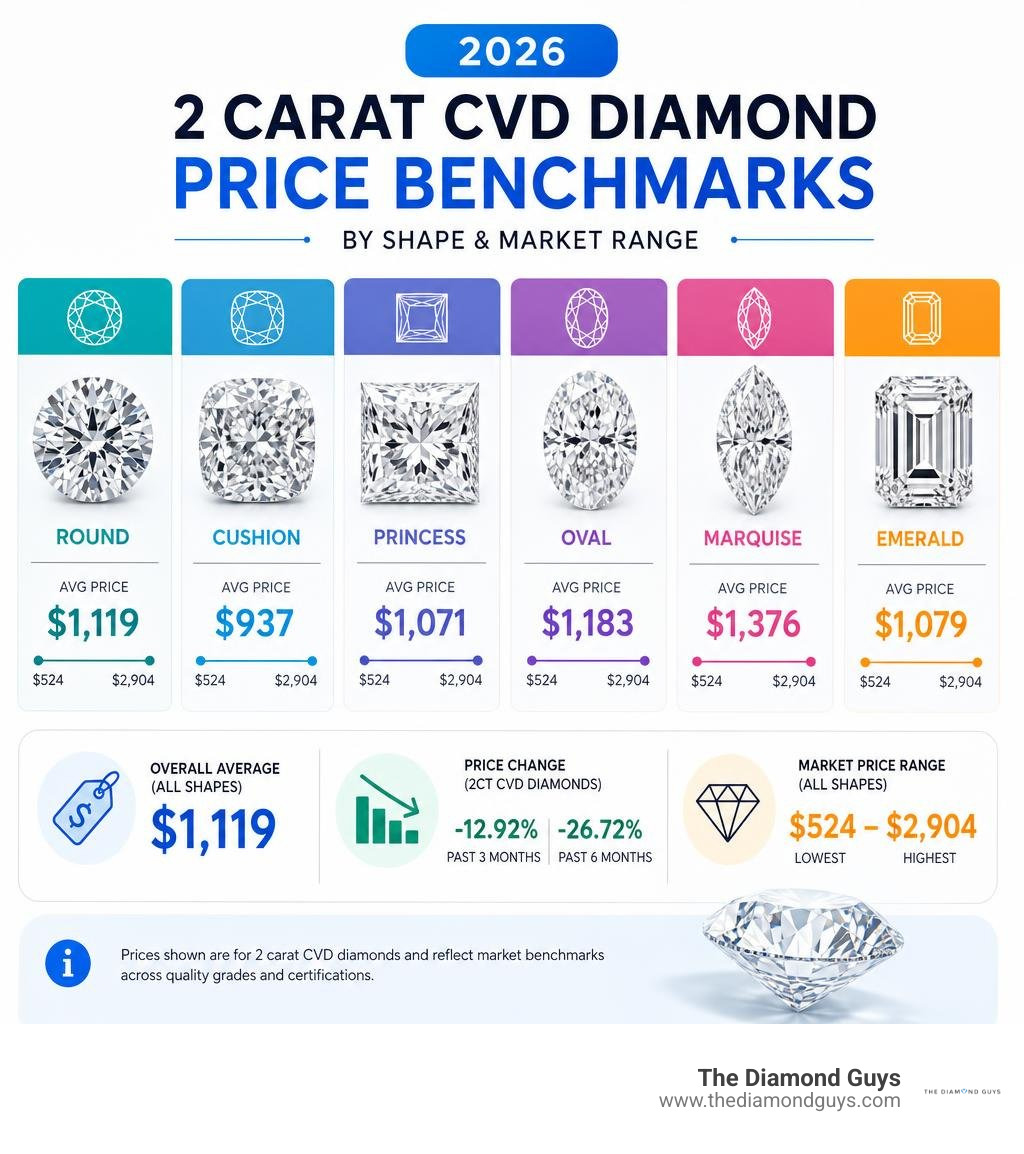
A 2 carat CVD diamond price is currently about $1,119 on average for the loose stone. Across quality grades and shapes, most 2 carat lab-grown diamonds fall between $524 and $2,904.
That range is wide because two diamonds with the same carat weight can look and perform very differently. Shape, cut quality, color, clarity, certification, and any post-growth treatment all affect the final price. For example, current average prices range from about $937 for a cushion cut to $1,376 for a marquise cut.
Lab-grown diamond prices have also been falling. The 2 carat category declined 12.92% in the past three months and 26.72% over six months, so comparing current, like-for-like certified stones matters more than relying on an older quote.
I am Morgan Price, a white-hat research and outreach specialist who helps content teams turn market data into clear buying guidance, including research on 2 carat CVD diamond price trends. Below, we will break down what a fair price looks like and how to compare stones without paying for specs that do not improve what you see.
Simple 2 carat cvd diamond price glossary:
Current Market Overview: Average 2 Carat CVD Diamond Price and Ranges
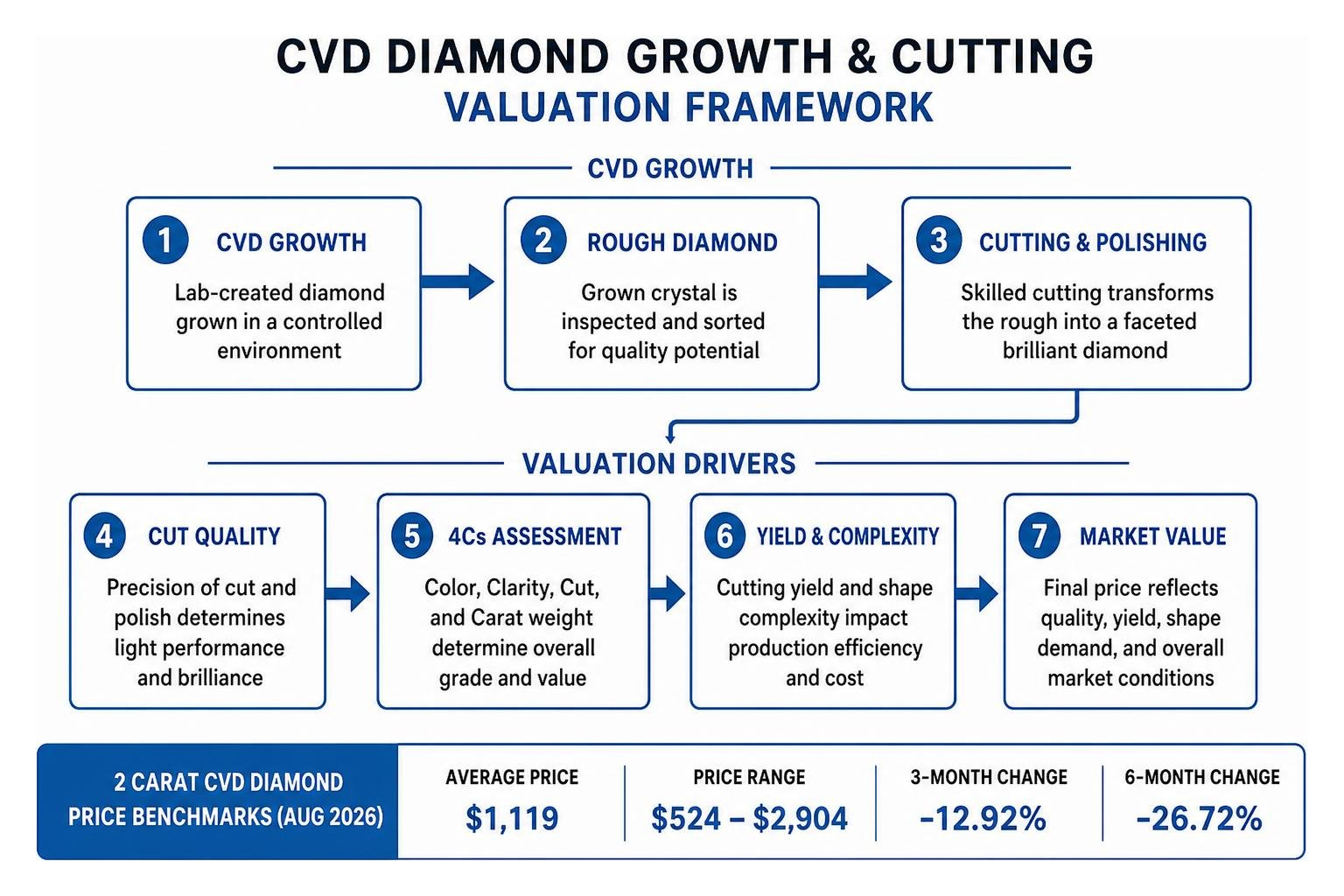
When shoppers enter the market for a 2 carat lab-grown diamond, the wide range of numbers online can feel overwhelming. Right now, in August 2026, the overall average price of a 2 carat lab-grown diamond sits comfortably at $1,119. Depending on your exact requirements for cut precision, color grading, clarity, and silhouette, expect a loose stone to cost anywhere from $524 to $2,904.
Understanding this spectrum helps you avoid paying a premium for invisible grading specs or settling for a dull, poorly faceted gem.
| Diamond Shape | Current Average Price (2 Carat) | 1-Month Price Change | Typical Value Profile |
|---|---|---|---|
| Marquise | $1,376 | -7.34% | Premium fancy cut; maximum surface spread |
| Oval | $1,283 | -2.95% | Highly sought-after; finger-flattering proportions |
| Round Brilliant | $1,176 | -13.47% | Classic sparkle; maximum optical light return |
| Asscher | $1,114 | -2.11% | Vintage step-cut elegance; requires high clarity |
| Heart | $1,091 | -7.31% | Distinctive romantic silhouette; intricate cut work |
| Radiant | $1,048 | -27.37% | Brilliant sparkle with clean, trimmed corners |
| Emerald | $1,048 | Stable | Clean hall-of-mirrors aesthetic |
| Pear | $1,040 | -23.13% | Elegant teardrop silhouette; exceptional spread |
| Princess | $983 | -20.73% | Contemporary square cut; high yield value |
| Cushion | $937 | -12.92% | Soft pillowed outline; best entry price per carat |
As detailed in our Synthetic Diamond Price Guide, pricing for lab gems doesn't follow the rigid scarcity-based rules of mined diamonds. Instead, manufacturing yield, cutting complexity, and raw consumer demand shape modern prices.
Recent Deflation and Market Trends in 2026
The lab diamond market has seen consistent price deflation over the past year. In the last three months, 2 carat lab-grown diamond prices dropped 12.92%, compounding a larger 26.72% decline over the past six months. Over the most recent 30-day window, standard 2 carat gems saw average price points shift within a tight band of $1,085 to $1,314.
Why is this happening?
- Scaling Production: CVD (Chemical Vapor Deposition) reactors produce higher yields of gem-quality rough diamond crystals in shorter growth cycles.
- Refined Recipe Controls: Better control over methane-hydrogen plasma mixes in the reactor reduces internal strain and growth flaws.
- Expanded Inventory: With more stones reaching wholesale markets daily, retail margins have shrunk across the board.
Our team at The Diamond Guys tracks these shifts closely in our Cultured Diamonds Price Guide 2026. For buyers, this ongoing price correction creates an ideal buying window: top-tier optical performance is accessible at historically low costs.
Most Popular Color and Clarity Combinations
While natural diamonds force buyers to balance inclusions against their budget, lab-grown production methods make high color and clarity grades standard.
Across hundreds of thousands of diamond listings, the most popular combinations for 2 carat CVD stones are:
- Color Grade: F (Colorless category, delivering an icy-white look without the price premium of a D color)
- Clarity Grade: VS1 (Very Slightly Included, guaranteeing the stone is 100% eye-clean to the naked eye)
Selecting an F color, VS1 clarity stone gives you an optimal mix of aesthetic brilliance and value. Going up to VVS1 or Flawless adds cost without providing a visual difference to the naked eye. Conversely, dropping to SI1 can work well if you understand What Diamond Clarity is Best and inspect the gem to ensure inclusions don't sit under the table facet.
Comprehensive Cost Comparison by Diamond Shape
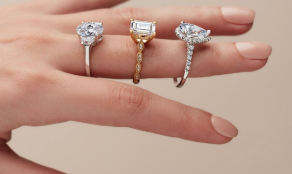
A diamond's silhouette influences its aesthetic and its price per carat. While a classic 2 Carat Solitaire Ring often features a round brilliant, fancy cuts offer distinct design choices and price variations.
Round Brilliant vs Fancy Cut Pricing Dynamics
Historically, round brilliant diamonds cost significantly more than fancy shapes because cutters lose up to 60% of the rough diamond crystal when faceting a round stone. While 2 carat round lab-grown diamonds average $1,176 (dropping 13.47% over the last month), high consumer demand keeps elongated fancy cuts like ovals and marquises slightly higher in average price.
- Marquise Cuts ($1,376): Currently the highest-priced 2 carat fancy cut. Its elongated shape creates a dramatic appearance on the finger.
- Oval Cuts ($1,283): Highly popular for engagement rings. Elongated shapes maximize visual spread per carat—an effect explored in our guide on What Diamond Shape Looks the Biggest.
- Radiant ($1,048) & Pear ($1,040): Both shapes have seen major price drops recently (-27.37% and -23.13% over one month, respectively), making them great values for modern shoppers.
- Princess ($983) & Cushion ($937): These square-based silhouettes provide the lowest entry price for a 2 carat lab stone. Cutters retain more rough crystal weight with these shapes, and that efficiency passes directly to you.
Factors Driving the 2 Carat CVD Diamond Price in Today's Market
Beyond carat, shape, and raw numbers, several hidden manufacturing elements influence the cost and quality of a CVD diamond:
- Cut Precision and Light Performance: Even with lab-grown stones, poor facet symmetry will create light leakage. Understanding What Makes a Diamond Sparkle helps you prioritize Ideal or Excellent cut grades so light reflects directly back to your eyes.
- Post-Growth Treatment (HPHT Annealing): CVD diamonds can emerge from the reactor with slight brownish tints. High-temperature, high-pressure post-growth annealing corrects this undertone to an icy colorless state. Untreated CVD stones without brown undertones carry a premium, while low-grade, poorly treated stones may look milky.
- Internal Crystal Strain: Fast growth cycles can introduce internal structural strain lines. High-grade CVD stones are grown slowly, preventing the fuzzy or hazy look found in lower-quality discount stones.
CVD Lab-Grown vs. Natural Diamonds: A Direct Value Comparison
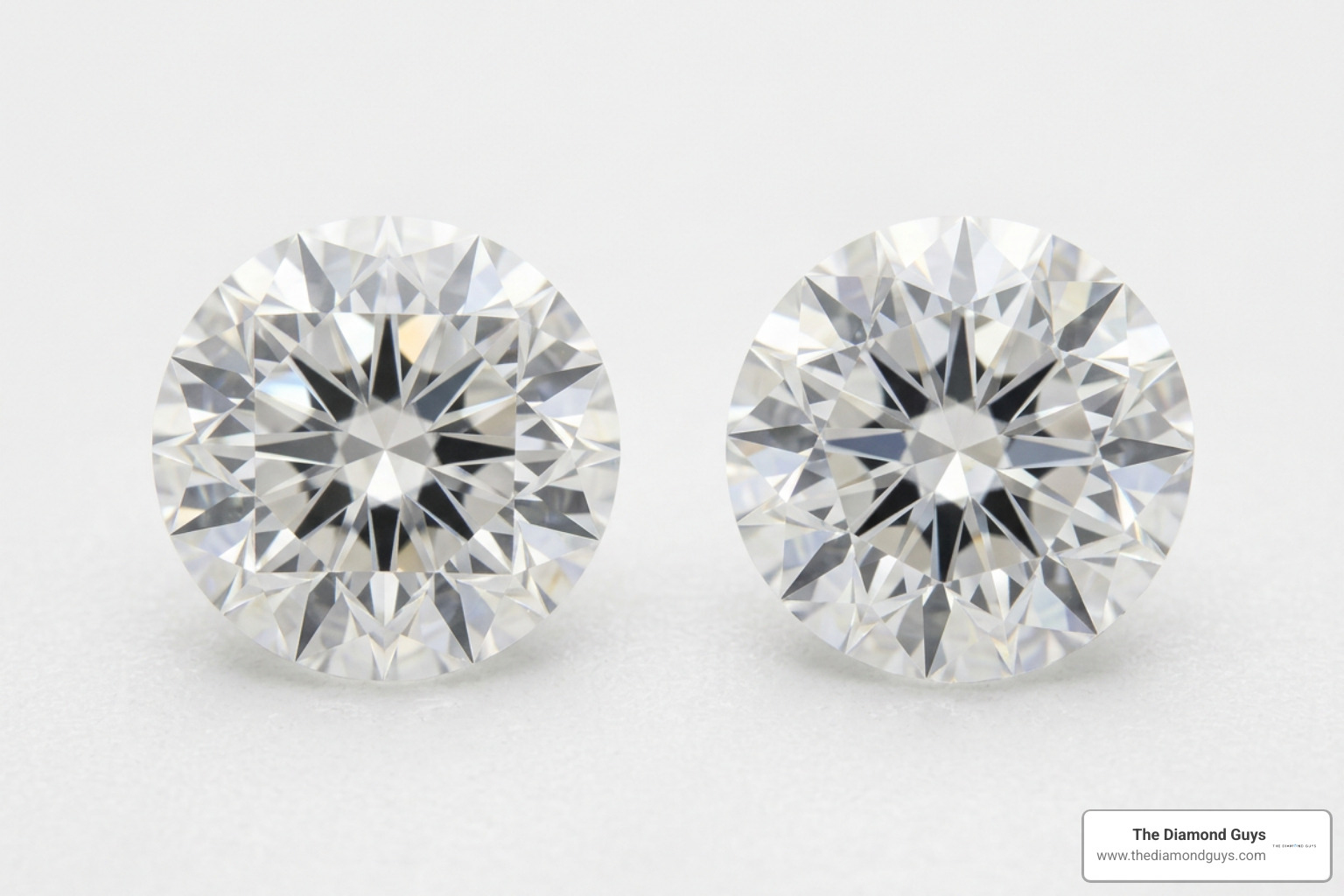
Whether grown in a reactor or formed in the earth's mantle, diamonds share the exact same physical, chemical, and optical structure. They register a 10 on the Mohs hardness scale, exhibit the same refractive index of 2.42, and scatter fire identically. For a deeper dive into the science, read our breakdown of Lab Diamonds vs Real Diamonds.
Comparing the 2 Carat CVD Diamond Price to Natural Alternatives
The price difference between natural and lab-grown diamonds becomes especially clear at the 2-carat mark. Natural rough diamonds of this size are rare in nature, creating exponential price spikes.
- 2 Carat Round Natural Diamonds: Range from $558 to $51,938, with an average asking price of $17,362 and a median asking price of $16,096, according to market price tracking on 2 Carat Round Natural Diamond Prices | Compare from $558 | CaratRadar .
- 2 Carat CVD Lab-Grown Diamonds: Average $1,119, representing savings of over 90% compared to natural diamonds of matching size and quality.
Choosing a 2 carat CVD diamond frees up your budget for other priorities. Instead of spending $16,000 to $18,000 on a natural stone, spending roughly $1,100 to $1,300 on a CVD diamond lets you invest in a custom setting, allocate funds toward a wedding, or direct savings to other goals.
Retailer Markup, Certifications, and Quality Considerations
Not all diamond vendors price their inventory the same way. The exact same certified diamond can vary by 20% to 30% between different retailers depending on overhead, marketing spend, and margin targets.
To protect your investment:
- Demand Reputable Lab Certification: Insist on IGI Certified Lab Diamonds or GIA certificates. The certificate verifies the 4Cs, confirms the growth method (CVD vs. HPHT), and notes any post-growth treatments.
- Match Certificate Numbers: Check the laser inscription on the diamond's girdle against the physical certificate to ensure you receive the exact stone you evaluated.
- Insure Your Jewelry: Many buyers ask, Can You Insure a Lab Grown Diamond? Yes—standard jewelry insurance policies cover lab-grown diamonds against loss, theft, and damage based on their market replacement value.
Frequently Asked Questions About 2 Carat CVD Diamond Costs
What is the average price of a 2 carat CVD diamond in 2026?
The current average price for a 2 carat lab-grown CVD diamond is $1,119. High-demand shapes like round brilliants and ovals range from $1,176 to $1,283 for popular F-color, VS1-clarity combinations, while square cuts like cushions and princess cuts often fall below $1,000.
Why are some shapes like cushion and princess cheaper than round cuts?
Cushion and princess cuts match the natural cube-like structure of lab diamond crystals more closely. Cutters retain a higher percentage of the rough material, reducing waste and manufacturing costs. Round brilliants require removing more rough material to achieve ideal optical proportions, resulting in a higher cost per finished carat.
How does certification impact 2 carat CVD diamond pricing?
Independent diamond grading from established laboratories like IGI or GIA provides an objective assessment of a stone's color, clarity, and cut. Uncertified stones often carry misleading grades, making a seemingly cheap diamond an overpriced, low-quality purchase. An IGI or GIA report ensures transparent, predictable market pricing.
Conclusion
Understanding 2 carat diamond pricing helps you find the right balance of size, quality, and value. With market averages sitting near $1,119 and clear visual benchmarks like F color and VS1 clarity, you can choose a stone that offers real brilliance without paying for invisible technical upgrades.
At The Diamond Guys, we pride ourselves on providing clear guidance, ethical sourcing, and custom design. Whether you are looking for loose stones or custom settings in our Scottsdale, AZ, or Los Angeles, CA showrooms, we will help you find the right diamond for your budget. Explore our wide selection of certified Lab Grown Diamonds and let us help you design your ideal ring.


