

Cut the Slack and Resize Your Favorite Necklace Chain
Get a Necklace Shortening Service for a Better Fit

A professional Necklace shortening service makes an overly long chain fit by removing the needed section and securely reattaching the clasp. First, wear the necklace and measure the length that feels right. Then ask a jeweler to confirm that the chain style, metal, pendant placement, and clasp can be altered safely before any links are removed.
For a quick, no-cut solution, try clasping into a different link, using a shortener clip, or doubling a long chain. These options are reversible. Permanent resizing is usually the better choice for valuable gold, platinum, delicate, or sentimental necklaces, where a clean, durable join matters.
A basic professional shortening often costs under $50, though metal, chain construction, and repair complexity can change the quote. Many local jewelers can finish simple work within days; mail-in repairs commonly take about 7 to 10 business days after receipt.
Morgan Price is a white-hat outreach specialist who researches trustworthy, practical resources for buyers making important jewelry decisions. Their work on Necklace shortening service content focuses on clear expectations, careful planning, and knowing when expert repair is worth it.
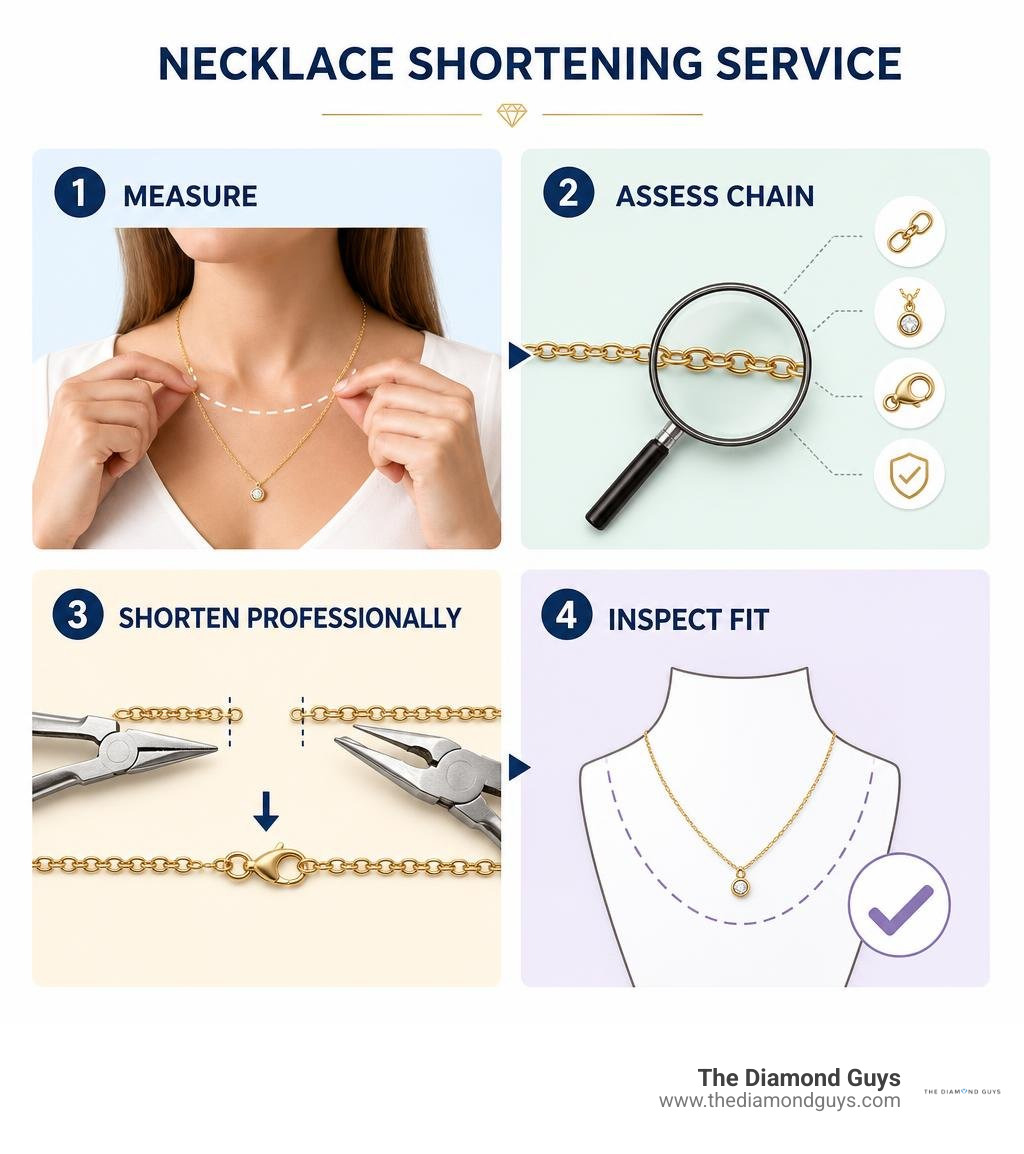
Handy Necklace shortening service terms:
Understanding Chain Types and Shortening Compatibility
When a favorite piece sits three inches too low, it can throw off the balance of your entire neckline. However, before altering any piece of jewelry, understanding the specific style of the chain and its metallurgy is critical. Not every chain is constructed the same way. The intricate weaving of metal links determines whether an alteration involves a straightforward modification or complex bench work.
Different chain styles react differently to tension, cutting, and heat. Solid metals like platinum, 14K gold, and sterling silver behave reliably under a laser welder or jeweler's torch. In contrast, hollow designs or base metals coated in thin plating can melt, warp, or discolor if handled incorrectly. During a standard silver necklace repair, a bench jeweler assesses the link composition to determine whether heat soldering or mechanical link removal is the most structurally sound approach.
| Chain Style | Alteration Difficulty | Method Used | Can It Be Shortened? |
|---|---|---|---|
| Cable / Rolo | Simple | Open link or cut & solder | Yes |
| Curb / Cuban | Simple to Moderate | Unlink, solder, and polish | Yes |
| Paperclip | Simple | Link extraction & jump ring weld | Yes |
| Figaro | Moderate | Pattern-matched link removal | Yes |
| Rope | Complex | Micro-soldering / Laser welding | Yes (Expert only) |
| Box Chain | Moderate | Link removal & end-cap solder | Yes |
| Snake | Complex | End fitting cut & re-crimp/solder | Yes (Expert only) |
| Herringbone | High / Not Recommended | Specialized end soldering | Limited / Risk of kinking |
| Hollow Chains | High | Laser welding | Case-by-case |
Chains That Jewelers Can Easily Alter
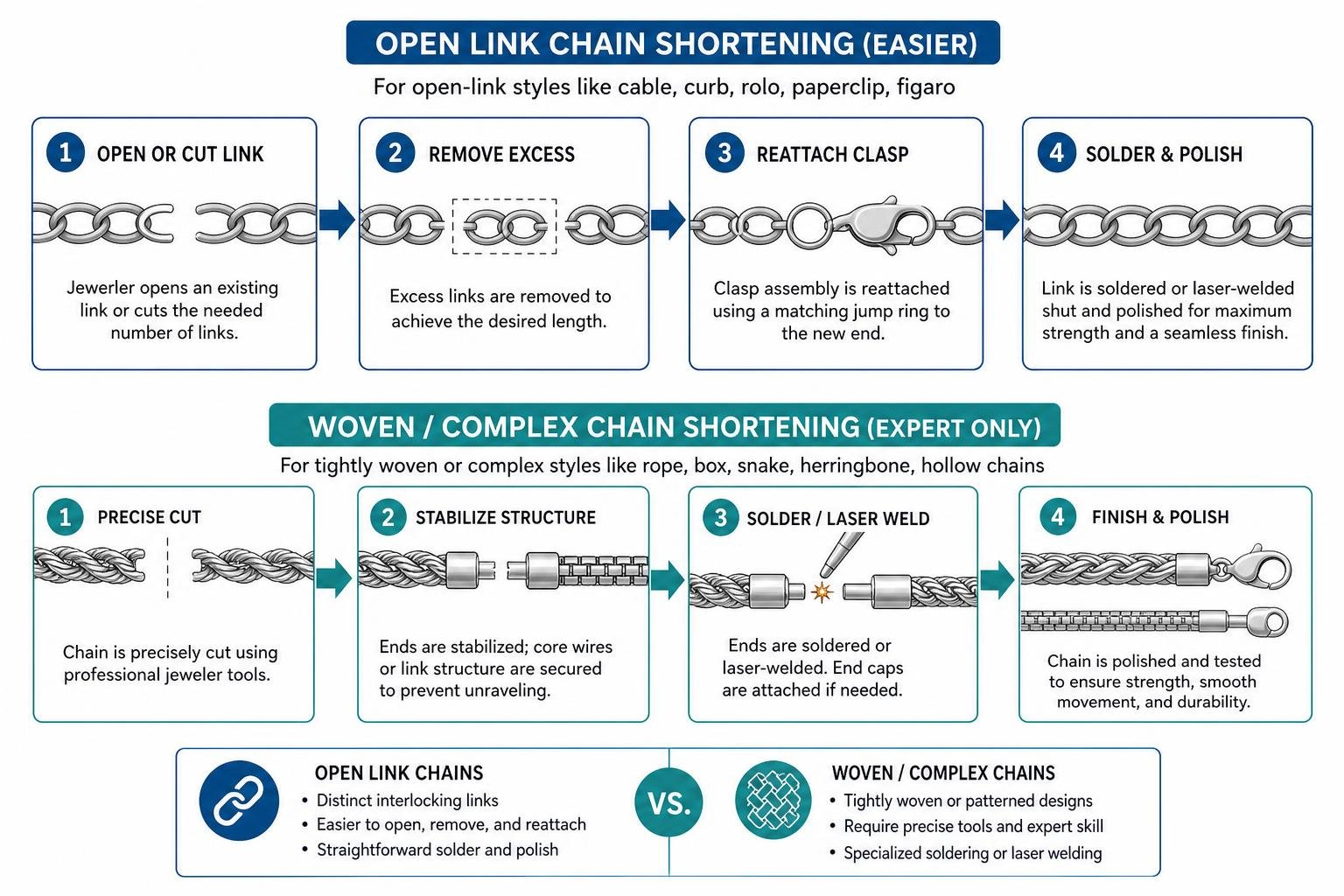
Open-link designs are the most straightforward styles to resize. Classic styles like cable chains, curb links, rolo chains, and modern paperclip links feature distinct, interlocking loops.
To shorten these patterns, a jeweler opens an existing link or cuts the exact number of segments required, removes the excess length, and secures the clasp assembly back to the newly formed terminal end using a matching jump ring. For solid precious metals, undergoing a professional gold chain repair ensures that every newly joined link is soldered or laser-welded shut, restoring maximum tensile strength so the chain will not pull apart under normal wear.
Complex Styles Requiring Specialized Techniques
Tightly woven, solid, or patterned chains require advanced technical skill:
- Rope Chains: A rope chain consists of dozens of tiny, interwoven rings spiraling together. If clipped with household tools, the entire spiral unravels like a loose thread on a knit sweater. Jewelers use high-precision micro-torches or laser welders to fuse the wire ends at the cut site before securing the end cap.
- Snake and Box Chains: Snake chains feature closely fitted plates or curved bands that form a smooth, flexible tube. Shortening them requires carefully cutting the body, stabilizing the internal core wire, and soldering an end cap or connector.
- Herringbone Chains: Herringbone links lie completely flat. Cutting into them creates structural weak points prone to kinking. While skilled jewelers can alter them, they require delicate handling and specialized end-caps.
- Hollow Links: Hollow gold chains feature empty centers to keep pieces lightweight. Traditional torch heat can easily collapse the thin walls, making non-contact laser welding the safest approach for resizing.
Temporary DIY Methods vs. Permanent Resizing
If you are not quite ready to commit to a permanent cut, or if you need to adjust your chain for an outfit tonight, temporary techniques offer quick flexibility.

Temporary adjustments allow you to experiment with different lengths across varying necklines, from boat necks to deep V-cuts, without modifying the underlying integrity of the piece.
Quick Non-Cutting Hacks for Daily Wear
- The Clasp Loop: If your chain features open links (such as a cable, paperclip, or curb link), simply fasten the lobster claw or spring ring into a link further up the chain rather than the end jump ring. Let the excess tail hang down your back, hidden by your hair or clothing.
- The Earring Post Trick: For chains with links too small for the main clasp, take a simple stud earring with a secure friction post. Thread the post through two overlapping links at the back of your neck to take up the slack, and secure the earring back tightly behind it.
- Double Wrapping: Extra-long chains (30 inches or longer) can be wrapped around the neck twice to instantly transform an opera-length piece into a stylish, layered choker and princess-length combination.
- Removable Shortener Clips: Small jewelry accessories, such as infinity clips or decorative hinged shorten-clasps, gather excess chain behind your neck without cutting any metal. These clips are designed to grip the chain securely, making them ideal for delicate pieces.
When to Avoid DIY Cutting at Home
While home hacks are great for temporary styling, you should never take wire cutters or pliers to your jewelry at home. Household diagonal cutters crush rather than slice, flattening precious metal links, splitting solder points, and creating sharp edges that scratch the skin and snag clothing.
Furthermore, simply pinching an open jump ring shut with utility pliers leaves a weak gap. Over time, friction will pull that gap open, risking the loss of your chain or attached pendants. Permanent alterations should always be handled with the proper bench equipment.
How a Professional Necklace Shortening Service Works
A professional chain resizing is a meticulous, multistep process carried out on a jeweler's bench.
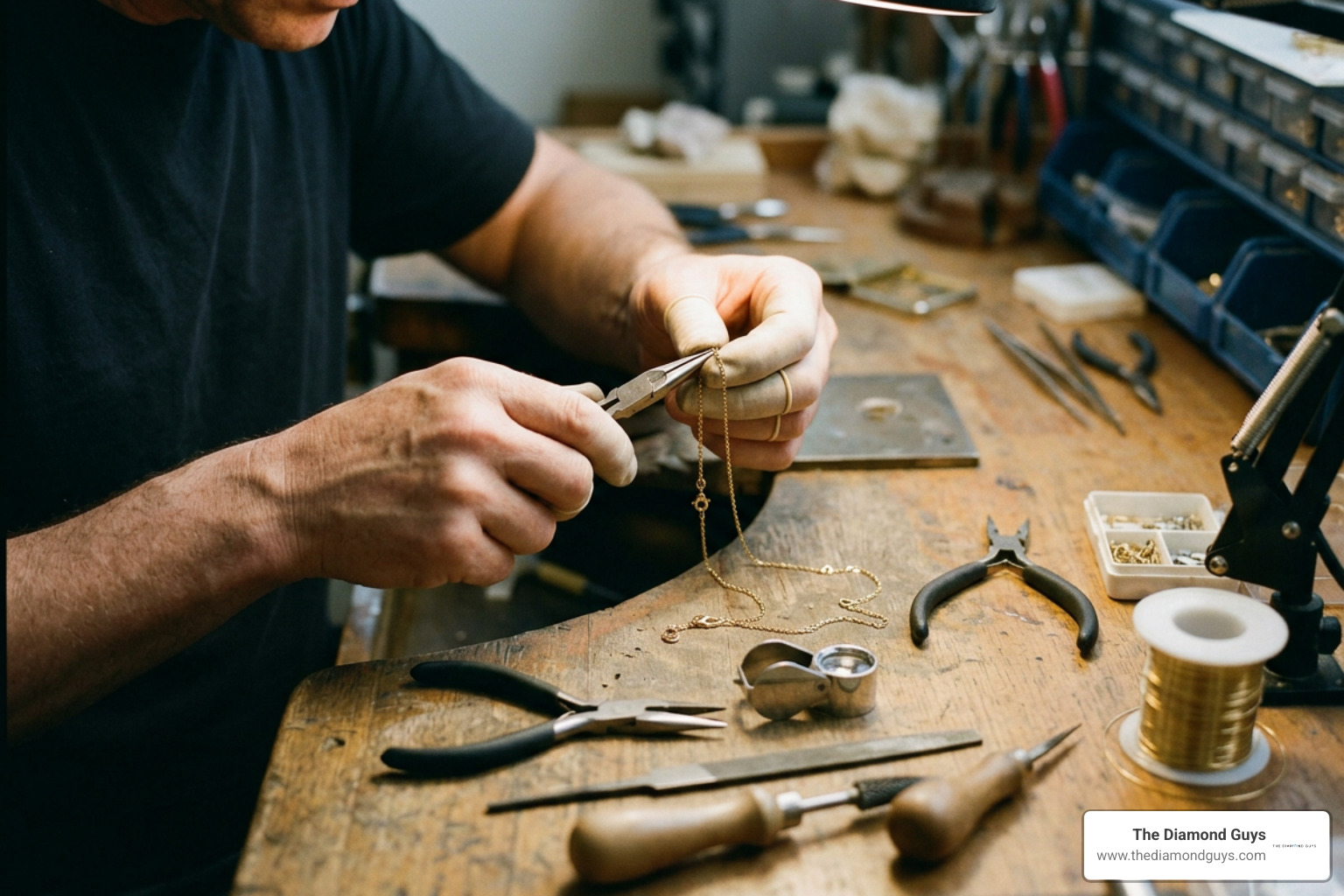
Whether you walk into a showroom in Scottsdale or mail your piece in for repair, professional jewelers follow strict quality protocols to ensure the altered necklace remains durable, balanced, and aesthetically seamless.
Step-by-Step Bench Jewelers' Process
- Intake & Measurement: The jeweler inspects the chain under high magnification to check for existing weak links, assess metal purity, and confirm the target length.
- Symmetrical Link Extraction: If the necklace features a fixed central pendant or balanced stations, the jeweler removes equal amounts of chain from both the left and right sides so the centerpiece remains perfectly balanced on your collarbone.
- End Cap & Jump Ring Preparation: The newly exposed terminal link is prepped. A solid, matching precious-metal jump ring or end cap is fitted into position.
- Soldering or Laser Welding: The connection is fused using a pinpoint laser welder or micro-torch. The jeweler flows matching karat solder into the seam, creating a solid bond that matches the surrounding metal's strength and color.
- Finishing & Cleaning: The altered section is hand-filed, smoothed, and buffed to remove fire scale or tool marks. Finally, the piece undergoes an ultrasonic bath and high-pressure steam cleaning to restore its original luster.

Factors Influencing Necklace Shortening Service Costs
The cost of shortening a necklace depends on the material, the chain's construction, and the work required. Basic base metal chains start at accessible rates, while solid precious metals require specialized solders and equipment:
- Base Metal / Sterling Silver: Generally ranges from $30.00 to $44.00.
- 10K / 14K / 18K Gold: Typically adds a modest metal and karat surcharge (ranging from +$4.00 to +$15.00 depending on gold weight and solder requirements).
- Platinum: Platinum requires high torch temperatures and specialized polishing compounds, which can incur surcharges of $25.00 to $35.00 or more.
- Chain Complexity: Intricate styles like rope, snake, or hollow link chains require extra laser bench time, which can influence the final quote for comprehensive repair services.
How to Measure and Plan Your Ideal Chain Length
Finding your ideal necklace length requires measuring while wearing the piece rather than laying it flat on a table.
Necklace drape changes depending on your neck circumference, collarbone structure, and torso proportions.
To measure your target length accurately:
- Stand in front of a mirror with a soft sewing tape measure or a piece of flexible string.
- Drape the string around your neck, adjusting it until it sits at the exact spot you want your necklace or pendant to rest.
- Pinch the meeting point, lay the string flat against a ruler, and note the total length in inches.
- If you plan to wear multiple necklaces at once, plan a 2-inch gap between each piece (for example, layering 16-inch, 18-inch, and 20-inch chains) to prevent the strands from tangling together throughout the day.
Up to one-third of a chain's original length can typically be removed without altering how the piece hangs or balances on your chest.
How to Prepare Your Jewelry for a Necklace Shortening Service
When visiting a local jeweler or sending your jewelry to a professional repair center, proper preparation ensures a smooth experience:
- Provide Exact Measurements: State the final total length desired (measured from end-to-end, including the clasp).
- Take Clear Photos: Photograph your piece lying flat next to a ruler before handing it over or packaging it.
- Package Securely: If mailing your jewelry, thread the chain through a drinking straw or fasten it inside a small zip pouch to prevent knots during transit. Always use a rigid box rather than a padded envelope, and choose tracked shipping with appropriate insurance.
- Request Your Excess Links: Always instruct the jeweler to return the removed links. Keeping the original metal links allows you to lengthen the chain later if your styling preferences change, or you can retain the precious metal for scrap value.
Frequently Asked Questions About Chain Resizing
Will shortening a chain affect its value or resale potential?
When executed by a skilled bench jeweler, permanent shortening does not diminish the intrinsic value of a necklace. The purity and weight of the remaining metal remain intact. To protect provenance on designer or branded jewelry, always request that the jeweler shorten the chain from the plain link ends, preserving original hallmark tags, maker stamps, and serial numbers near the clasp. Retaining the cut segments in your jewelry box ensures you have the original material should you ever wish to restore the necklace to its factory length.
How long does a typical jeweler take to shorten a necklace?
Turnaround times depend on the workshop setup and current bench schedule. Simple link removals on basic cable or curb chains can often be completed in-store within a few business days, or even same-day if arranged in advance. For mail-in repairs, the standard turnaround is typically 7 to 10 business days from the date the piece is received at the facility, which accounts for intake logging, bench alteration, quality control pull-testing, and insured return shipping.
Can a chain be lengthened again after being cut?
Yes, a shortened chain can be lengthened in the future, though it requires adding metal back into the piece. If you saved your original cut links, a jeweler can solder them back into the strand. Alternatively, a jeweler can attach an adjustable 2-inch extender chain to the terminal ring. This allows you to switch between lengths without having to reconstruct the primary chain body.
Conclusion
A necklace should complement your natural proportions and frame your outfits effortlessly. If a favorite piece spends more time sitting in your jewelry box than around your neck simply because the chain is too long, a professional resizing breathes new life into your collection.
Whether you opt for an easy, no-cut clip for casual weekend wear or trust an expert bench jeweler for a seamless, permanent weld, finding the right fit ensures your jewelry feels as comfortable as it is beautiful. To learn more about proper care, clasp integrity, and bench repairs, explore our comprehensive guide to jewelry repair in Scottsdale.


