

Black Lab Diamond Buying Guide: Bold, Beautiful, and Lab-Grown
Black Lab Diamonds: Bold, Beautiful, and Built for the Modern Buyer
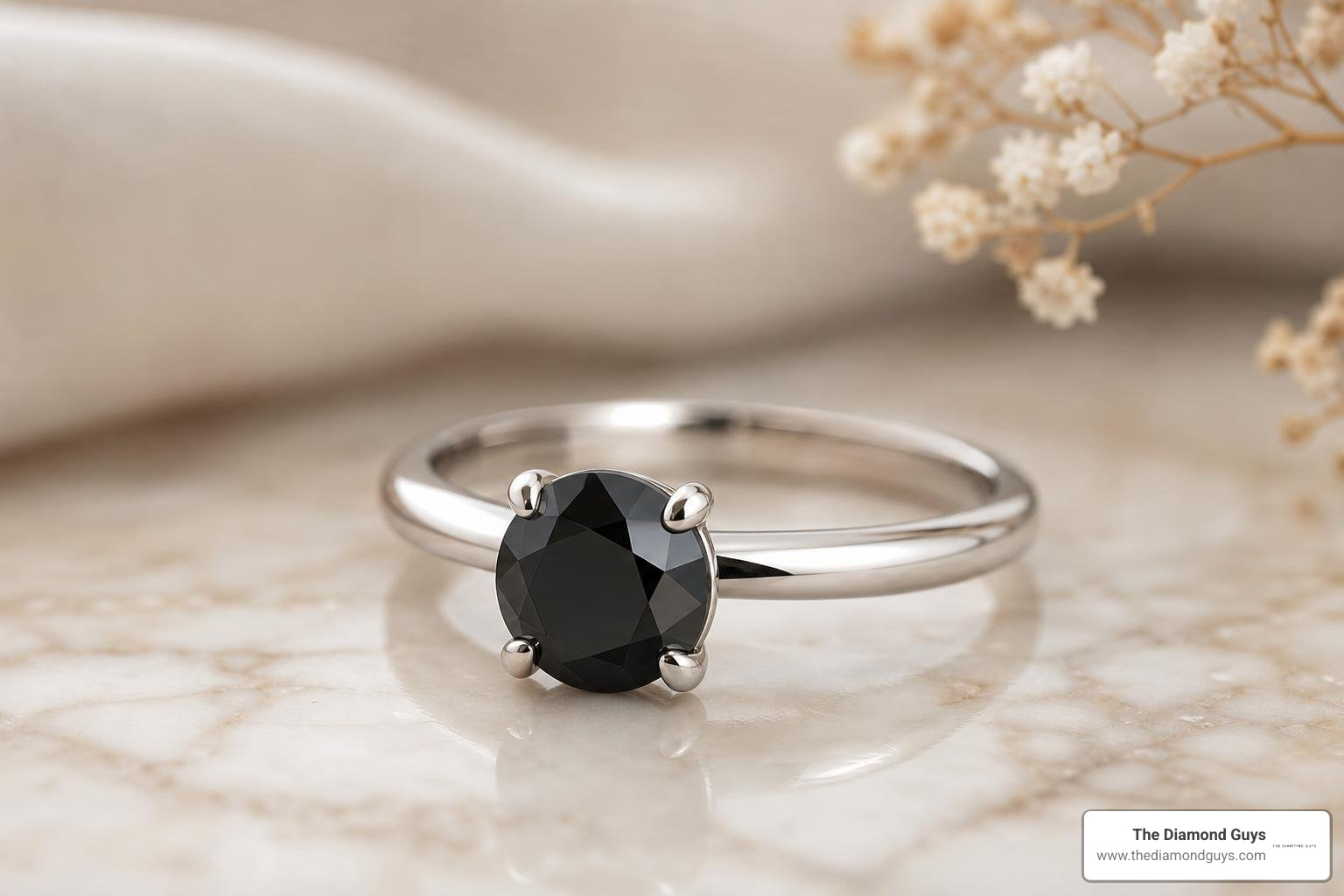
Looking for a quick answer? Here's what you need to know about black lab diamonds:
| Black Lab Diamond | |
|---|---|
| What is it? | A real diamond grown in a lab with a deep, opaque black color |
| How is it made? | HPHT or CVD process, then treated to achieve black color |
| Is it a real diamond? | Yes — same carbon structure, same Mohs 10 hardness |
| Cost vs. natural black diamond | Significantly more affordable |
| Color appearance | Uniform, glossy, metallic black finish |
| Best for | Non-traditional engagement rings, bold fine jewelry |
Once dismissed as industrial-grade stones, black lab diamonds have quietly become one of the most sought-after choices for couples who want something striking, meaningful, and outside the ordinary. Pop culture played a role — when Sex and the City 2 featured a 5-carat black diamond engagement ring, mainstream interest surged. Today in 2026, dark aesthetics and non-traditional bridal styles are stronger than ever.
Black lab diamonds deliver all the hardness and brilliance of a real diamond — with a moody, opaque beauty that colorless stones simply can't match. And because they're grown in a lab, they're more affordable, more consistent in color, and easier to source ethically than their mined counterparts.
This guide will walk you through everything you need to make a confident, informed decision.
I'm Morgan Price, and I've spent years researching the black lab diamond market — from how these stones are created to how they're graded, priced, and set into stunning jewelry. I'll cut through the noise so you can shop with clarity and confidence.
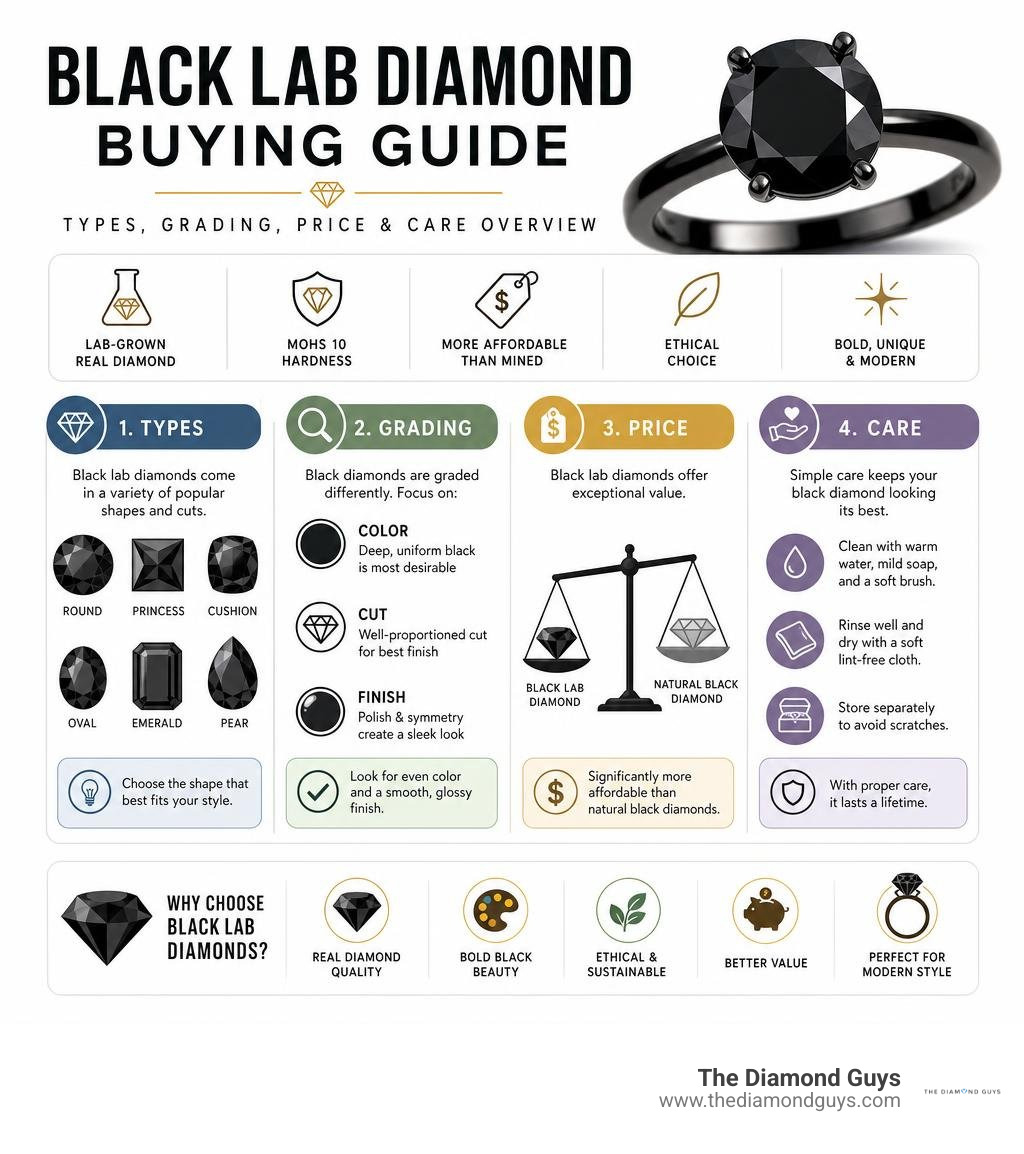
Simple black lab diamond word guide:
What is a Black Lab Diamond and How Is It Created?
To understand a black lab diamond, we must first look at what makes a diamond a diamond. Many people wonder, Are Lab Grown Diamonds Real Diamonds? The answer is a resounding yes. Physically, chemically, and optically, lab-grown diamonds are identical to natural diamonds dug out of the earth. They are entirely made of carbon crystallized in a cubic system, ranking a maximum 10 on the Mohs hardness scale.
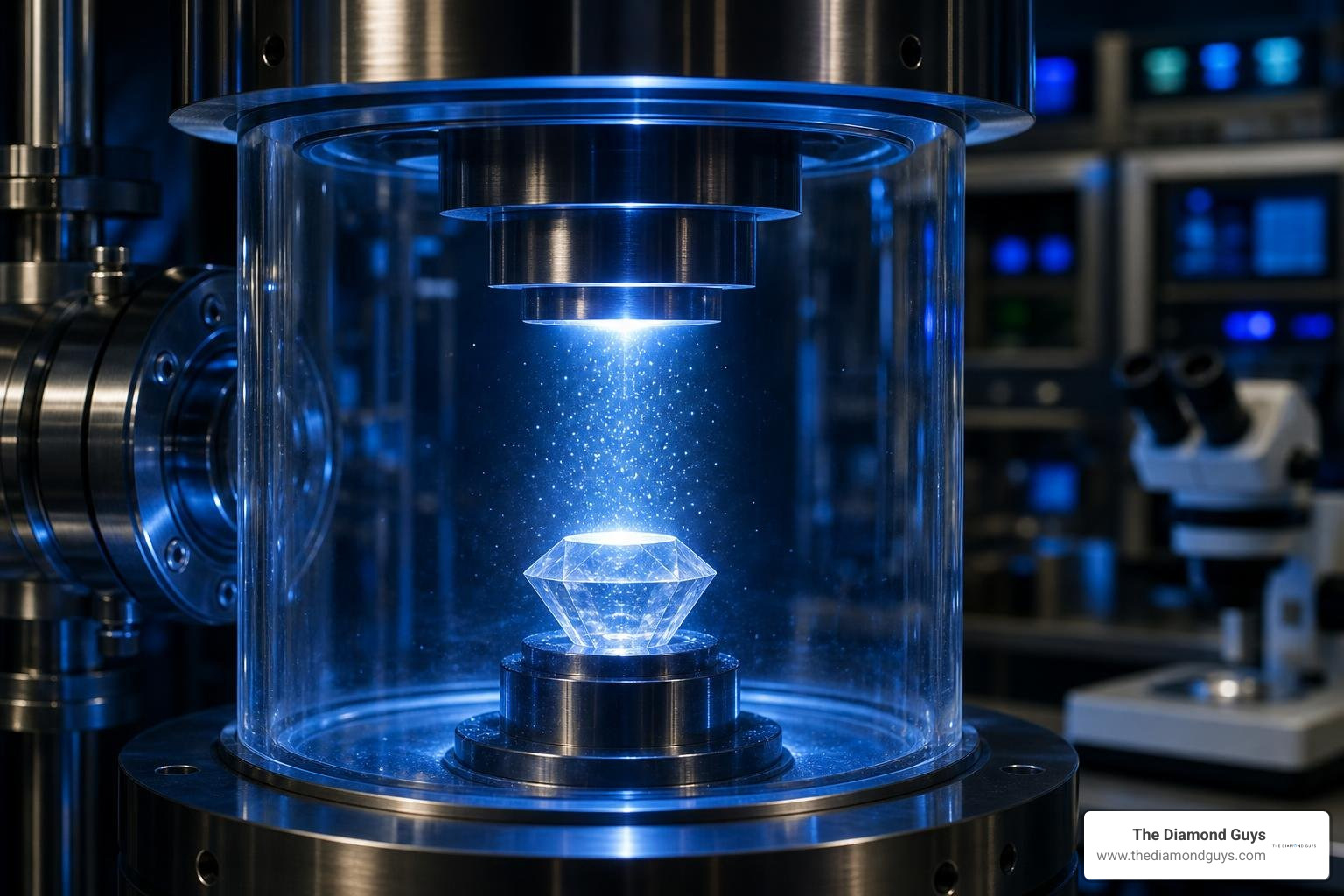
How do we get these stunning dark gems in a controlled laboratory environment? It all starts with the same advanced methods used to grow colorless or fancy colored diamonds:
- High Pressure High Temperature (HPHT): This method mimics the intense geological conditions found deep within the Earth's mantle. A carbon seed is placed in a press and subjected to temperatures exceeding 1,500°C and pressures of around 1.5 million pounds per square inch, causing pure carbon to crystallize around the seed.
- Chemical Vapor Deposition (CVD): In this process, a diamond seed is placed in a vacuum chamber filled with carbon-rich gas (like methane). Microwave energy ionizes the gas, breaking its molecular bonds and causing pure carbon to rain down and deposit onto the seed, growing the crystal layer by layer.
While these methods produce high-quality single-crystal diamonds, the deep, opaque black color is typically achieved through subsequent specialized treatments. In lab-grown diamonds turned black through treatment, the color is caused by extremely high concentrations of crystal lattice defects creating very strong light absorption. Instead of reflecting light back to your eye like a colorless diamond, the crystal lattice absorbs virtually all visible light, resulting in a solid, opaque black appearance.
The Science Behind the Color
The journey from a raw lab-grown crystal to a polished black lab diamond relies on precise physics. Most lab-grown black diamonds begin as gray, brown, or heavily included lab-grown diamonds. Scientists then use high-temperature annealing or irradiation treatments to transform the stone.
High-temperature annealing involves heating the diamond to extreme temperatures in an oxygen-free environment. This process causes "graphitization" inside the stone. Essentially, microscopic portions of the carbon structure are intentionally converted into graphite along internal crystal boundaries. Because these tiny graphite particles are spread evenly throughout the stone, they block light transmission completely, resulting in a rich, uniform black color.
Unlike natural black diamonds, which often have patchy, uneven color distribution due to random geological forces, treated lab-grown black diamonds exhibit a remarkable depth of color and an absence of unsightly visual flaws on the surface.
The Unique Appeal of a Black Lab Diamond
What makes a black lab diamond so captivating is its distinct visual personality. While a traditional white diamond is prized for its fire and scintillation (the way it sparkles and breaks light into rainbows), a black diamond is loved for its lustrous, glossy finish and metallic luster. It behaves more like a polished black mirror, catching the light on its faceted surfaces rather than from deep within.
This creates a highly modern, sleek, and edgy aesthetic. If you want to stand out from the crowd, choosing a dark centerpiece is an excellent way to make a statement. If you are exploring alternative bridal jewelry, you might also want to read about other vibrant options in our guides on Should You Buy a Lab Grown Diamond, the stunning Blue Lab Diamond, romantic Lab Grown Pink Diamonds, or discover the secrets behind green stones in From Lab to Luster: The Story of Green Lab Grown Diamonds.
Comparing Black Diamonds: Natural, Treated, and Lab-Grown
When shopping for dark gemstones, it is easy to get confused by the different terms. To help clarify, we have mapped out how these three categories stack up against one another:

To dig deeper into how lab-created stones compare generally to mined gems, check out our detailed breakdown of Lab Diamonds vs Real Diamonds.
Let's look closely at what separates these three types of black diamonds:
- Natural Black Diamonds: These are incredibly rare in nature. Their dark color is caused by massive concentrations of dark mineral inclusions, such as graphite, pyrite, or hematite, which entered the stone during its formation billions of years ago. Because of these heavy mineral inclusions, natural black diamonds are highly fractured and difficult to cut, often resulting in a pitted surface.
- Treated Natural Black Diamonds: The vast majority of "natural" black diamonds used in commercial jewelry today have actually been treated. They start as low-grade, heavily fractured gray or brown mined diamonds that undergo high-temperature annealing or irradiation to turn the fractures black. They are far more common and affordable than untreated natural black diamonds.
- Lab-Grown Black Diamonds: These are grown in a clean laboratory environment and treated to achieve a perfect, deep black hue. They offer the ultimate combination of structural integrity, color uniformity, and affordability.
Natural Black Diamonds vs. Lab-Grown Alternatives
In the natural world, there is another form of black diamond known as Carbonado. Found almost exclusively in alluvial deposits in Brazil and Central Africa, Carbonado is a polycrystalline diamond structure. Instead of being a single crystal, it is made of millions of tiny diamond crystals bonded together.
Because of this unique structure, Carbonado is extremely tough and highly impact-resistant, making it primary material for industrial drilling and cutting tools. However, its porous, charcoal-like appearance means it is rarely used in fine jewelry, except for highly avant-garde, textured pieces.
When comparing a single-crystal natural black diamond to a black lab diamond, price and quality are the deciding factors. Natural black diamonds are rarer than colorless or brown diamonds, but because demand is lower than for traditional white diamonds, their prices remain modest. However, lab-grown black diamonds are significantly more affordable than natural ones and offer a "cleaner" look with fewer surface pits and lines.
Lab-Grown Black Diamonds vs. Simulants
It is vital not to confuse a real black lab diamond with diamond simulants. Simulants are entirely different minerals that merely look like black diamonds but lack their physical and chemical properties.
| Gemstone | Mohs Hardness | Key Characteristics |
|---|---|---|
| Black Lab Diamond | 10 | True carbon structure, high metallic luster, incredibly durable |
| Black Moissanite | 9.25 | Double refractive, slightly lighter weight, very durable |
| Black Spinel | 8 | Solid black color, softer, prone to scratching over time |
| Black Onyx | 6.5 to 7 | A variety of chalcedony quartz, waxy luster, easily scratched |
| Cubic Zirconia (CZ) | 8 to 8.5 | Synthetic simulant, wears down quickly, very inexpensive |
If you want a ring that can withstand daily wear for decades—especially an engagement ring—only a real lab-grown black diamond or natural black diamond provides the scratch resistance and durability of a 10 on the Mohs scale.
Grading, Designing, and Caring for Lab-Grown Black Diamonds
Designing a custom piece of jewelry around a dark centerpiece requires a different approach than working with classic white stones.
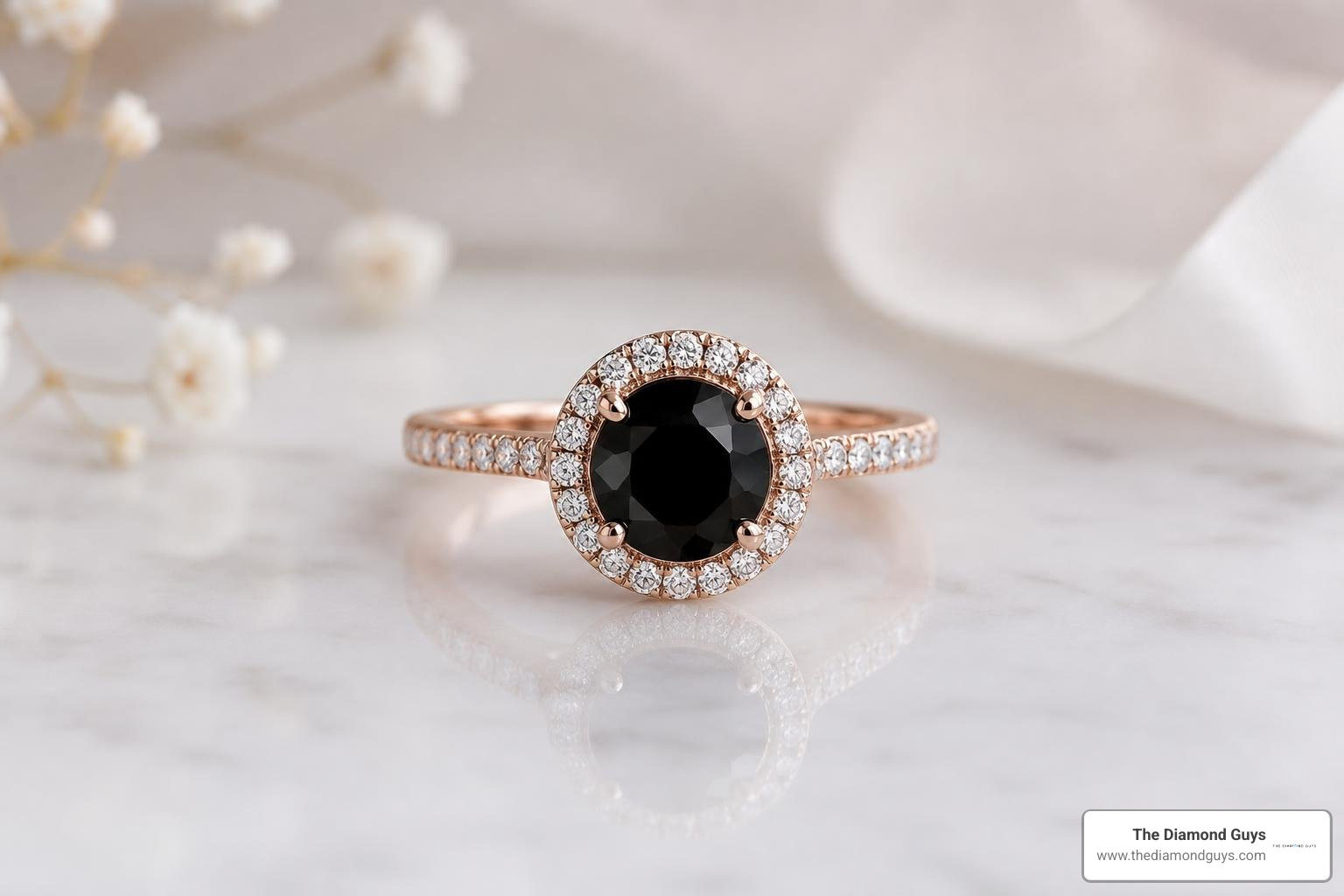
Because a black lab diamond is completely opaque, it does not have "sparkle" in the traditional sense. Instead, it relies on contrast. One of the most popular design strategies is to pair a black diamond with a high-contrast setting. Surrounding a black center stone with a halo of small, colorless lab-grown diamonds creates a breathtaking, dramatic contrast that makes the dark center pop.
Metal choice also plays a massive role:
- Rose Gold: Provides a warm, vintage, and slightly gothic aesthetic that beautifully complements the dark stone.
- Platinum or White Gold: Delivers a sleek, ultra-modern, monochromatic look.
- Yellow Gold: Offers a classic, high-luxury contrast.
If you are interested in creating a bespoke piece, we recommend checking out our guides on Lab Diamond Custom Jewelry and our step-by-step Custom Lab Grown Diamond Ring Guide. For those living in our local areas, you can also explore options through our guides on Lab Created Diamonds Nearby or the Lab Grown Diamonds LA Ultimate Guide.
How the 4Cs Apply to Opaque Gems
The traditional 4Cs (Color, Clarity, Cut, and Carat Weight) used for colorless diamonds apply very differently to black lab diamonds:
- Color: Black diamonds do not receive traditional D-to-Z color grades. Instead, they are evaluated under a colored diamond grading system and assigned a single color grade of Fancy Black. The key is to look for a rich, saturated, and uniform color across the entire stone without any gray or brown patches.
- Clarity: Because these stones are completely opaque, traditional clarity grades (like VS1 or SI2) do not apply. You cannot see into the stone. However, clarity is still important on the surface. You want to inspect the stone for any surface-reaching fractures, pits, or blemishes that could affect its durability or look.
- Cut: Since there is no internal light reflection, the cut of a black diamond is evaluated based on its surface polish and symmetry. A well-cut black diamond will have crisp, symmetrical facets that act like perfect mirrors, creating a glossy, high-luster finish. Popular shapes include rose cuts (which feature a flat bottom and a faceted dome), emerald cuts, and classic round brilliants.
- Carat Weight: Because black diamonds are denser than colorless diamonds, a 1-carat black diamond may look slightly smaller physically than a 1-carat colorless diamond of the same shape.
How to Care for Your Black Lab Diamond
While diamonds are the hardest natural substance on Earth, they are not indestructible. This is especially true for black diamonds. Because their color is achieved through graphitization or because they contain microscopic internal fractures, black diamonds can be more brittle than colorless ones.
To keep your stone safe and beautiful, follow these essential care tips:
- Avoid Ultrasonic and Steam Cleaners: The high-frequency vibrations of ultrasonic cleaners and the intense heat of steam cleaners can put stress on the microscopic fractures inside a black diamond, potentially causing the stone to chip or break.
- Clean with Care: Use only mild dish soap, warm water, and a very soft-bristled toothbrush to gently clean the surface of your ring. Pat dry with a lint-free microfiber cloth.
- Store Separately: Because diamonds can scratch other diamonds, store your black diamond jewelry in a separate soft pouch or a dedicated compartment in your jewelry box.
- Regular Inspections: Have a professional jeweler regularly check the prongs or bezel of your setting to ensure the stone remains completely secure.
Frequently Asked Questions About Dark Diamonds
Are lab-grown black diamonds real diamonds?
Yes! Lab-grown black diamonds are 100% real diamonds. They consist of pure carbon organized in a crystalline lattice, possess a Mohs hardness of 10, and share the exact same physical, chemical, and optical properties as mined diamonds.
Why are lab-grown black diamonds more affordable?
Because they are grown in controlled laboratory environments, the supply chain is highly efficient, predictable, and shorter than traditional mining. This lack of costly mining operations, combined with the ability to consistently produce uniform stones, allows us to offer them at a fraction of the cost of natural black diamonds.
Do lab-grown black diamonds come with a GIA certificate?
Yes, reputable lab-grown black diamonds can be accompanied by a grading report from leading gemological laboratories like the Gemological Institute of America (GIA). A GIA report for a fancy color diamond will verify its identity as a real diamond, state whether it is natural or lab-grown, and disclose any color treatments. For more information on how fancy colors are analyzed, you can read GIA's guide on fancy color diamonds.
Conclusion
A black lab diamond is a bold, sophisticated choice that perfectly blends modern technology with an edgy, timeless style. Whether you are designing a high-contrast engagement ring or a sleek piece of everyday fine jewelry, these dark gems offer unmatched durability, a stunning glossy luster, and incredible value.
At The Diamond Guys, we specialize in helping you navigate the exciting world of natural and lab-grown diamonds. With our 5-star rated showrooms in Scottsdale, AZ and Los Angeles, CA, we are proud to provide expert guidance, ethical sourcing, and a highly personalized shopping experience that sets us apart from big-box retailers.
Ready to compare your options and see these gorgeous dark stones in person? Explore Lab Diamonds vs Real Diamonds and let our expert team guide you to the perfect stone for your unique story.


