

Testing Earth-Mined Gems with the Gemlogis VISTA Natural Diamond Segregator
A Portable First Check for Natural Diamonds
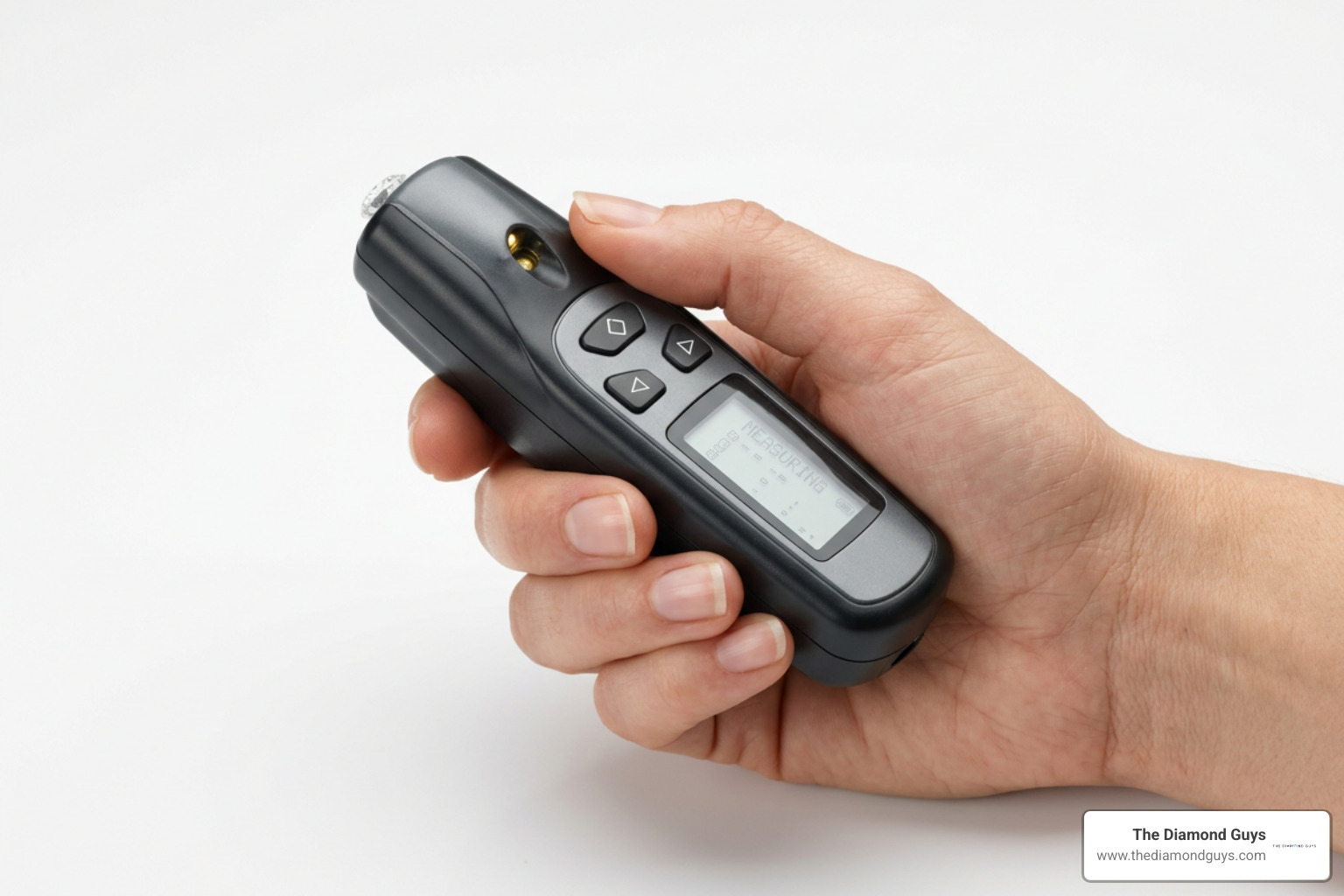
The Gemlogis VISTA Natural Diamond Segregator is a handheld screening tool that helps separate likely earth-mined diamonds from stones that need further review for possible CVD or HPHT lab-grown origin. It can test loose diamonds and many mounted stones, including jewelry with open or closed backs, without removing the gem from the setting.
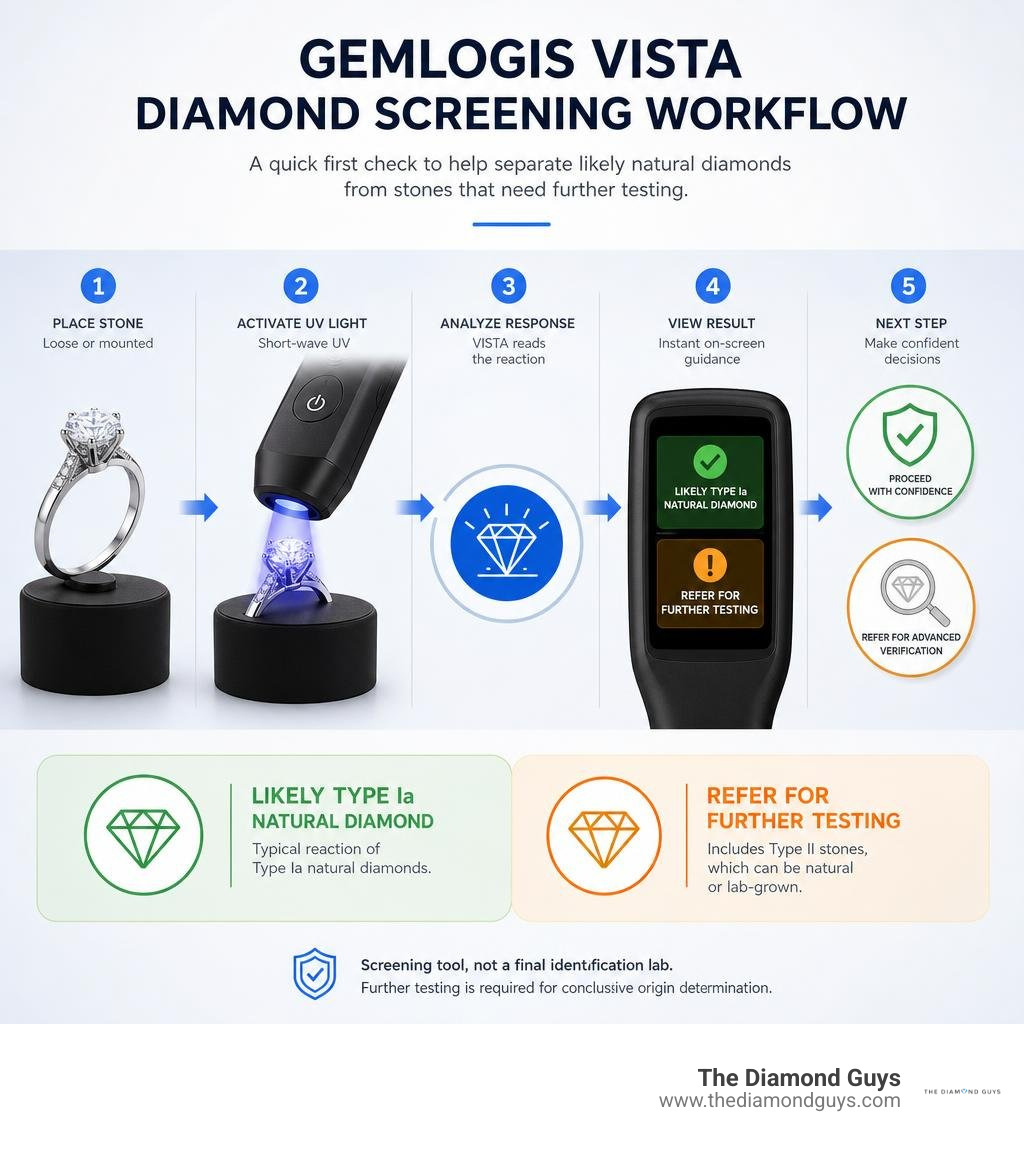
For buyers, this matters because a standard diamond tester may confirm that a stone is diamond, but it does not necessarily tell you whether it is natural or lab-grown. The VISTA adds a useful screening step by using short-wave ultraviolet light to distinguish common Type Ia natural diamonds from Type II stones, which can include lab-grown diamonds.
It is not a final identification lab. A result that refers a stone for further testing is not proof that the diamond is synthetic. It means the stone should receive advanced verification before anyone makes a claim about its origin.
Morgan Price is a white-hat SEO research specialist who helps create clear, evidence-led guides on tools such as the Gemlogis VISTA Natural Diamond Segregator. In this review, Morgan focuses on what the device can screen, where its limits begin, and what results mean for a confident jewelry purchase.
Gemlogis vista natural diamond segregator terminology:
- best natural diamond engagement rings
- biggest natural diamond
- engagement rings with natural diamonds
Gemlogis VISTA Natural Diamond Segregator: Technology and Core Capabilities
In modern gemology, separating natural diamonds from laboratory-grown stones is essential. Because lab-created gems share identical chemical, optical, and physical properties with earth-mined diamonds, basic thermal testers are no longer sufficient. If you are wondering, do lab diamonds pass a diamond tester? The short answer is yes: basic thermal testers will read both as pure diamond because both conduct heat identically.
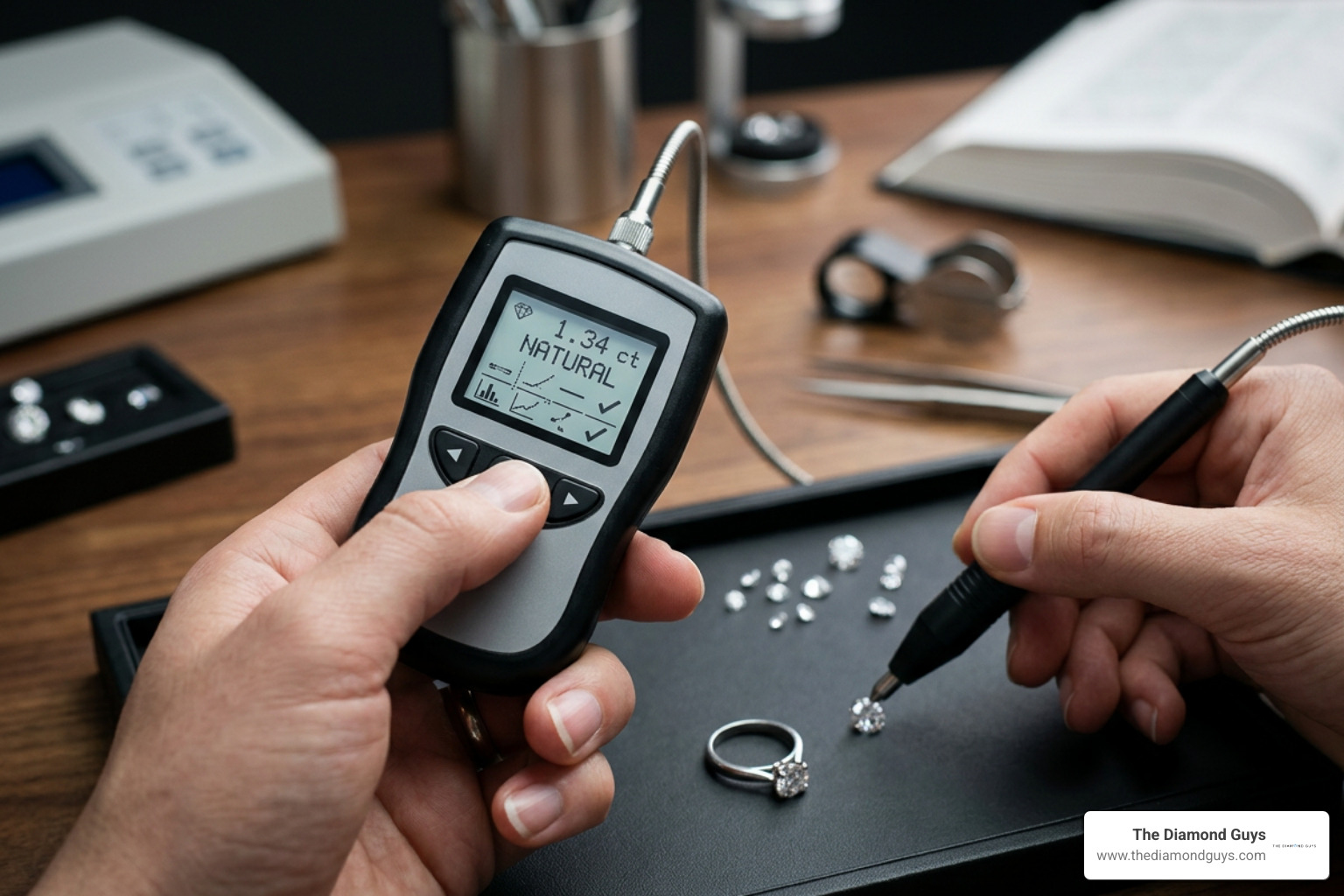
To differentiate them, specialized instruments analyze the atomic structure and chemical impurities of the carbon lattice. Roughly 98% of all natural, earth-mined diamonds belong to Type Ia. These diamonds contain nitrogen clustered in pairs or larger aggregates.
Conversely, chemical vapor deposition (CVD) and high-pressure high-temperature (HPHT) lab-grown diamonds are typically Type IIa (or occasionally Type IIb), meaning they are nearly or completely devoid of measurable nitrogen impurities. The Gemlogis VISTA is built specifically to test this optical boundary, sorting diamonds into standard natural Type Ia stones versus Type II stones that require secondary lab referral.
How the Gemlogis VISTA Natural Diamond Segregator Works
The operational core of the device relies on optical transmission and absorption under Short-Wave Ultraviolet (SWUV) illumination. Utilizing precision engineering, a dedicated Diamond Screening Machine/Screener | Synthetic/Natural | Gemlogis leverages the fundamental truth behind diamond growth:
- Group A (Natural Type Ia): Nitrogen aggregates inside earth-mined diamonds absorb specific wavelengths of SWUV light. When exposed to the beam, little to no SWUV passes through or reflects back to the optical sensor.
- Group B (Type IIa / CVD / HPHT): Because synthetic diamonds lack these nitrogen clusters, they do not absorb SWUV in the same manner. Instead, they transmit or reflect the light directly back into the instrument's sensor matrix.
Understanding these atomic differences clarifies why are lab grown diamonds real diamonds is such a popular question. They are 100% real carbon crystal structures, which is why an optical SWUV segregator like the VISTA is required to analyze subtle atomic differences.
Screening Loose Stones and Mounted Jewelry Settings
A major challenge with many benchtop screening devices is their restriction to loose stones or open-back settings where light can pass straight through the pavilion. The Gemlogis VISTA overcomes this barrier with a patented optical chamber and specialized probe design.
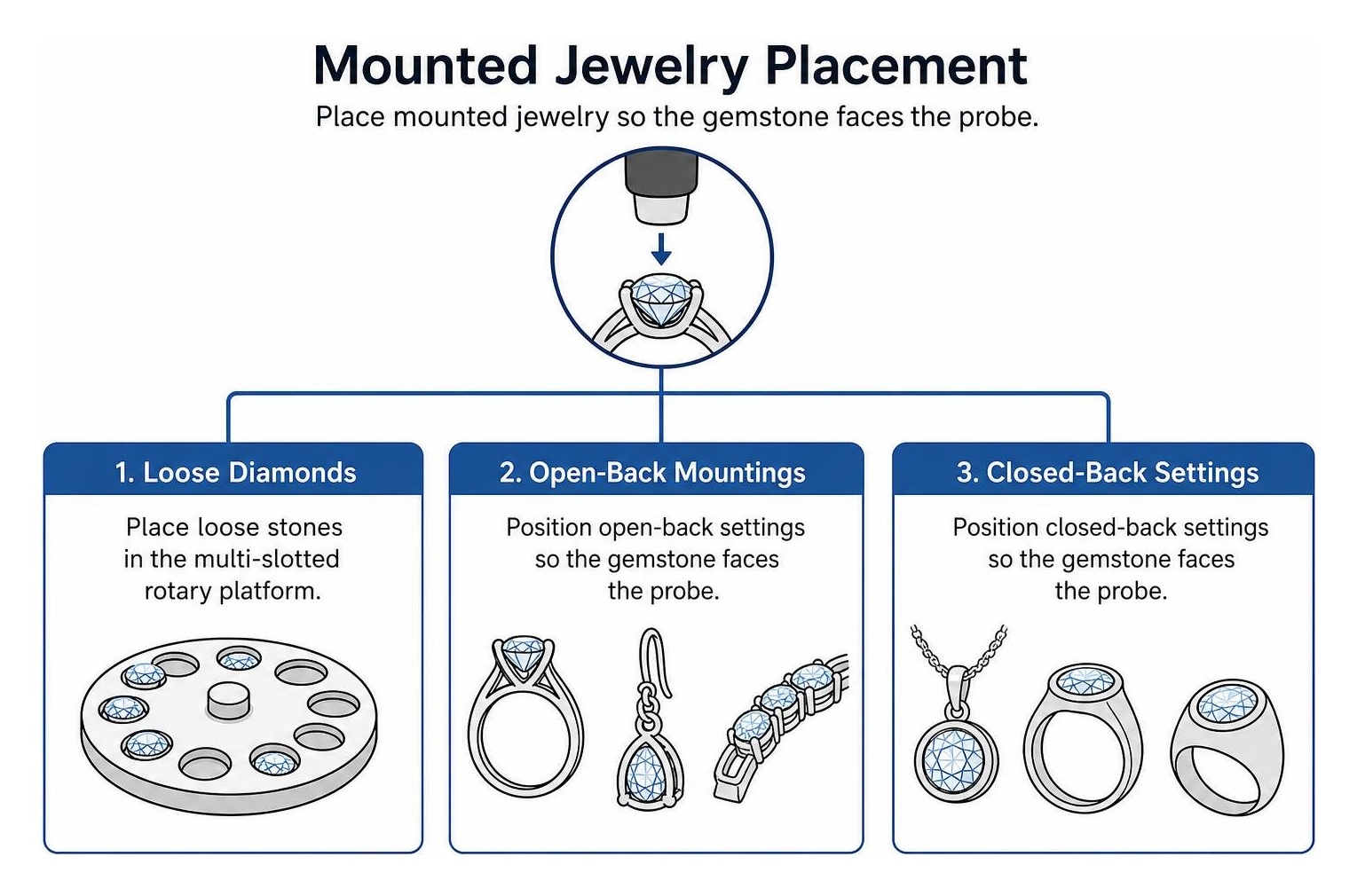
Whether you are evaluating loose parcel melee or complete finished Lab Grown Diamond Jewelry, the device supports:
- Loose Diamonds: Placed securely within a multi-slotted rotary platform.
- Open-Back Mountings: Rings, drop earrings, and open-prong tennis bracelets.
- Closed-Back Settings: Bezel-set pendants, antique mountings, and heavy signet rings where traditional through-beam optical transmission fails.
Technical Specifications and Operational Performance
Engineered for mobile appraisers, bench jewelers, and retail buying counters, the VISTA | Gemlogis combines benchtop accuracy with a compact, handheld form factor.
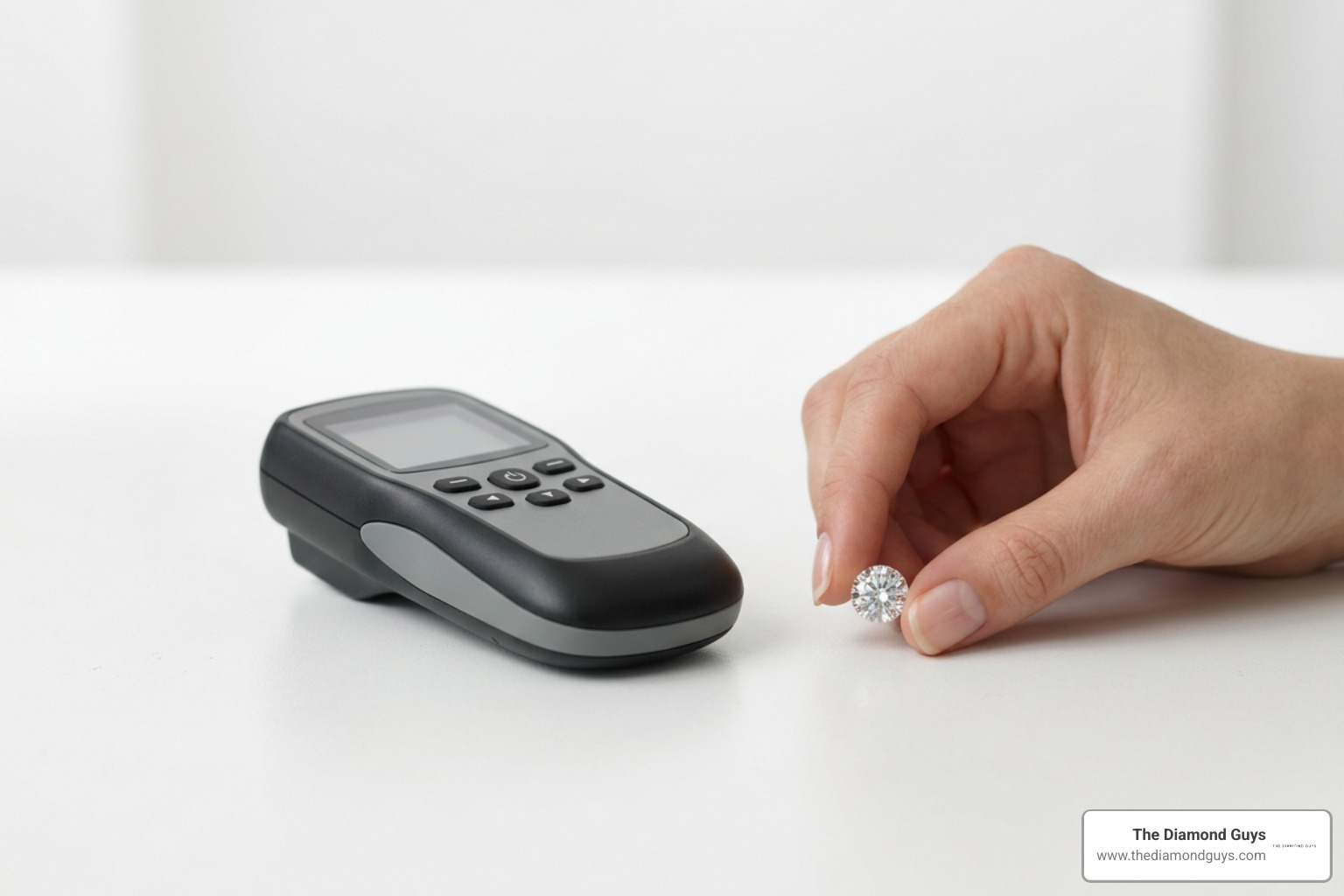
Key hardware and operational specifications include:
- Carat Range: 0.01 ct / 0.02 ct up to 12.0 ct
- Stone Physical Size: 1.5 mm to 15.3 mm
- Color Range Compatibility: Colorless to near-colorless (D through J)
- Testing Speed: Approximately 12 seconds per screening cycle
- Physical Dimensions: 98 mm (L) x 41 mm (W) x 110 mm (H)
- Weight: 300 grams (0.66 lbs)
- Power Source: Built-in rechargeable lithium battery (5 hours continuous runtime, 720 hours standby) with included 110–220V AC adaptor
- Retail Price Point: ~$658.90 USD (available via distributors like GEMLOGIS VISTA NATURAL DIAMOND SEGREGATOR – SEP Tools and Gemlogis Vista Natural Diamond Segregator - Star Struck LLC)
- Warranty: 12-month factory warranty
Evaluating the Gemlogis VISTA Natural Diamond Segregator via ASSURE Testing
The Natural Diamond Council established the ASSURE Program to provide standardized, third-party laboratory evaluations of diamond verification instruments (DVI). Conducted at independent testing facilities such as UL in Canton, Massachusetts, the Gemlogis VISTA was benchmarked across rigorous sample matrices (ASSURE ID: 94513).
The laboratory results highlight the device's screening reliability:
- Diamond False Positive Rate: 0% — The device did not misclassify a single synthetic diamond as natural earth-mined.
- Synthetic Diamond Referral Rate: 100% — All CVD and HPHT lab-grown diamonds were successfully flagged and referred for secondary gemological evaluation.
- Diamond Accuracy: 92.5% — Successfully confirmed 92.5% of earth-mined natural diamonds on the first pass.
- Diamond Referral Rate: 7.5% — Referred a minor fraction of natural Type Ia/IIa diamonds for secondary confirmation to prevent false passes.
Comparing VISTA, VISTA PRO, and BELIZE Models
Gemlogis produces several instruments tailored to distinct workflow demands. The table below outlines how the VISTA compares to its siblings:
| Feature / Model | Gemlogis VISTA | Gemlogis VISTA PRO | Gemlogis BELIZE |
|---|---|---|---|
| Primary Technology | SWUV Optical Absorption | High-Volume SWUV Chamber | Twin Probe (Thermal + Optical) |
| Form Factor | Handheld / Desktop hybrid (300g) | Desktop unit | Pen-style Handheld probe (105g) |
| Stone Compatibility | Loose & Mounted (Open/Closed) | Loose parcels & High volume | Loose & Mounted (Open/Closed) |
| Simulant Detection | Diamond vs Type II only | Diamond vs Type II only | Diamonds, Moissanite, Simulants |
| Testing Speed | ~12 seconds | ~5–8 seconds | Instantaneous touch readout |
| Battery Life | 5 hours continuous | AC Powered / Benchtop | 3 hours continuous |
| Retail Price (Approx.) | $658.90 | Higher tier commercial | $999.00 |
While the BELIZE Natural Diamond Segregator | Gemlogis uses a dual-probe approach to instantly test for moissanite and simulants before checking diamond type, the standard VISTA offers an accessible, highly reliable optical chamber solution for pre-screened diamonds.
Step-by-Step Testing Process and Best Practices
Achieving consistent, laboratory-grade results with the VISTA requires proper stone handling and procedural discipline.
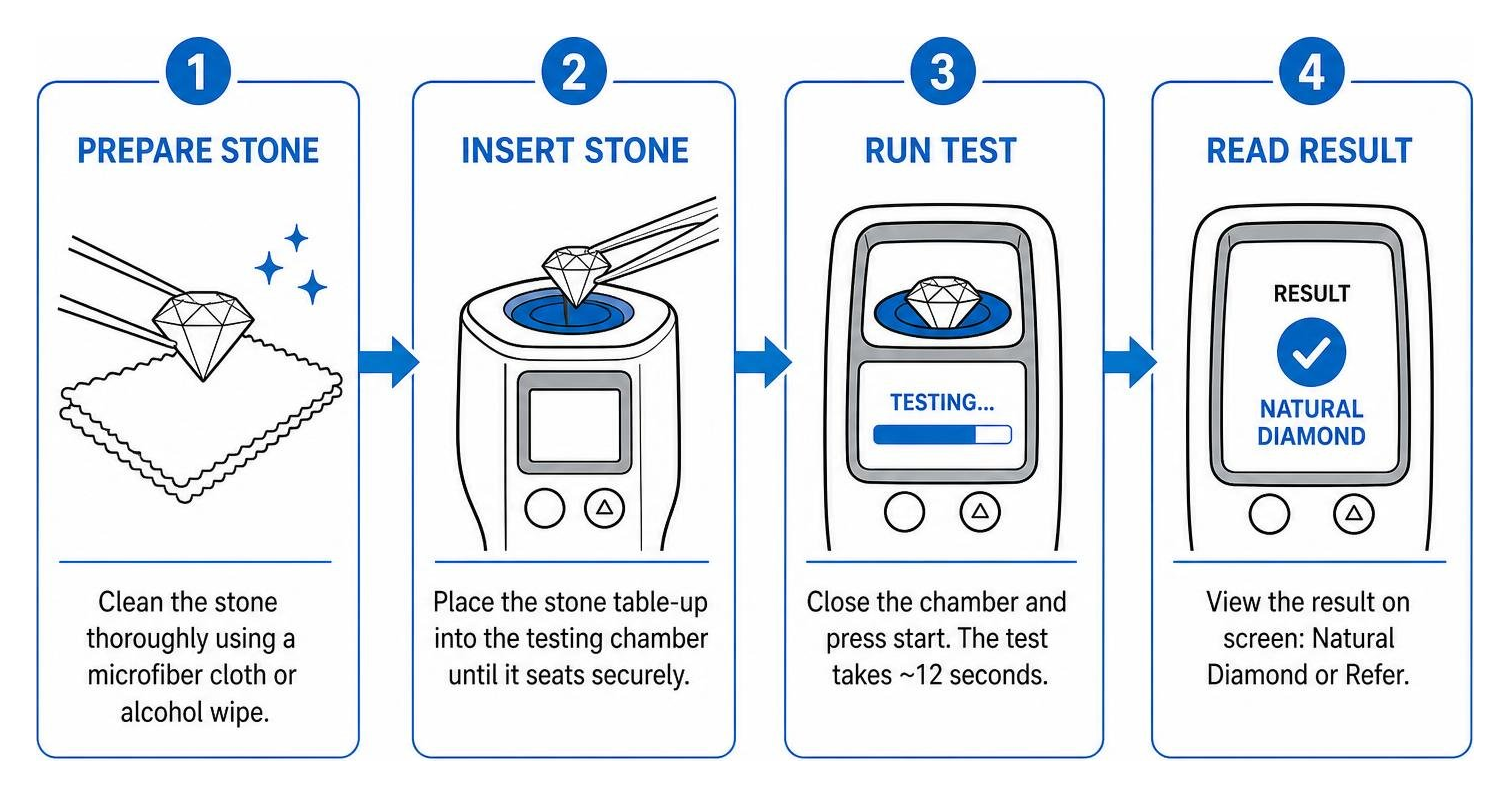
Operating the Device on Loose vs Mounted Diamonds
Follow these standard operating steps:
- Stone Preparation: Ensure the gemstone is thoroughly cleaned using a microfiber cloth or alcohol wipe. Dust, mounting grease, or fingerprints can interfere with optical UV transmission.
-
For Loose Stones:
- Depress the side latch to lift the testing probe.
- Rotate the circular testing platform until a slot matching the stone's diameter (1.5 mm to 15.3 mm) is aligned.
- Place the stone table-facet up inside the slot.
- Slowly release the latch so the probe tip sits flush and centered against the diamond's table.
-
For Mounted Jewelry:
- Depress the latch and place the ring, earring, or pendant flat onto the platform.
- Carefully position the mounted stone directly beneath the optical aperture.
- Release the probe gently onto the table facet.
- Initiating the Test: Close the sample chamber lid completely to prevent ambient room light contamination. Press the POWER / TEST button.
-
Readout: After roughly 12 seconds, the internal logic assesses light absorption and illuminates the result:
- Green LED / "Natural Diamond": Confirmed Type Ia earth-mined diamond.
- Red/Yellow LED / "Type II Diamond (Referral)": Stone flagged as Type II; requires secondary laboratory analysis.
Key Limitations and Secondary Testing Protocols
While the Gemlogis VISTA is an exceptional front-line screener, users must understand its technical boundaries:
- Color Limitations: The instrument is calibrated exclusively for colorless to near-colorless stones (D through J color grades). It should not be used on fancy colored diamonds (yellows, pinks, or blues).
- Pre-Screening for Simulants: The VISTA is a segregator, not a thermal simulant tester. It assumes the sample is already confirmed to be diamond. Non-diamond materials (such as cubic zirconia or synthetic moissanite) should be ruled out first using a standard thermal/electrical tester.
- Interpreting "Referral" Results: A referral does not automatically indicate that a diamond is synthetic. Roughly 1% to 2% of natural earth-mined diamonds are Type IIa. Additionally, certain rare natural stones with unusual nitrogen distribution may trigger a referral. All flagged stones should simply undergo advanced spectroscopic analysis at a certified gemological laboratory.
Frequently Asked Questions about Diamond Segregators
Can the Gemlogis VISTA test diamonds in closed-back mountings?
Yes. Unlike older optical segregators that require an open path for light to shine through the culet and exit the table, the VISTA uses a patented bounce-and-reflect optical sensor array. This allows jewelers and appraisers to screen bezel-set rings, vintage brooches, and closed-back pendant mountings without unsetting the gem.
What is the difference between a standard diamond tester and a natural diamond segregator?
A basic diamond tester measures thermal conductivity and electrical resistance to determine whether a material is diamond, moissanite, or cubic zirconia. However, because lab-grown diamonds are real diamonds, they register as positive diamonds on basic testers. A natural diamond segregator evaluates atomic nitrogen aggregation via short-wave UV light absorption to differentiate natural Type Ia diamonds from Type IIa lab-grown stones.
What does a referral result mean on the Gemlogis VISTA?
A referral result (often indicated as "Type II") means the stone does not exhibit the standard nitrogen absorption profile typical of 98% of natural diamonds. While this includes virtually all CVD and HPHT lab-grown diamonds, some rare natural diamonds are also Type II. A referral simply means the stone cannot be definitively certified as natural on a portable device and requires secondary testing using photoluminescence spectroscopy or laboratory-grade equipment.
Conclusion
The Gemlogis VISTA Natural Diamond Segregator bridges the gap between basic thermal testers and complex, expensive laboratory spectrometers. By offering 0% false positives, 100% synthetic diamond referral in ASSURE testing, and the versatility to evaluate closed-back mounted jewelry, it provides invaluable protection for jewelers, appraisers, and collectors alike.
At The Diamond Guys, our master gemologists in Scottsdale, AZ, and Phoenix, AZ, utilize advanced testing workflows to maintain uncompromising integrity across every piece we touch. Whether you are shopping for bespoke engagement rings or exploring our natural diamond jewelry complete guide, our team is dedicated to providing complete transparency, ethical sourcing, and expert guidance every step of the way.


