

Preserving Sentimental History Through Heirloom Jewelry Repair
Heirloom Jewelry Repair That Preserves the Story
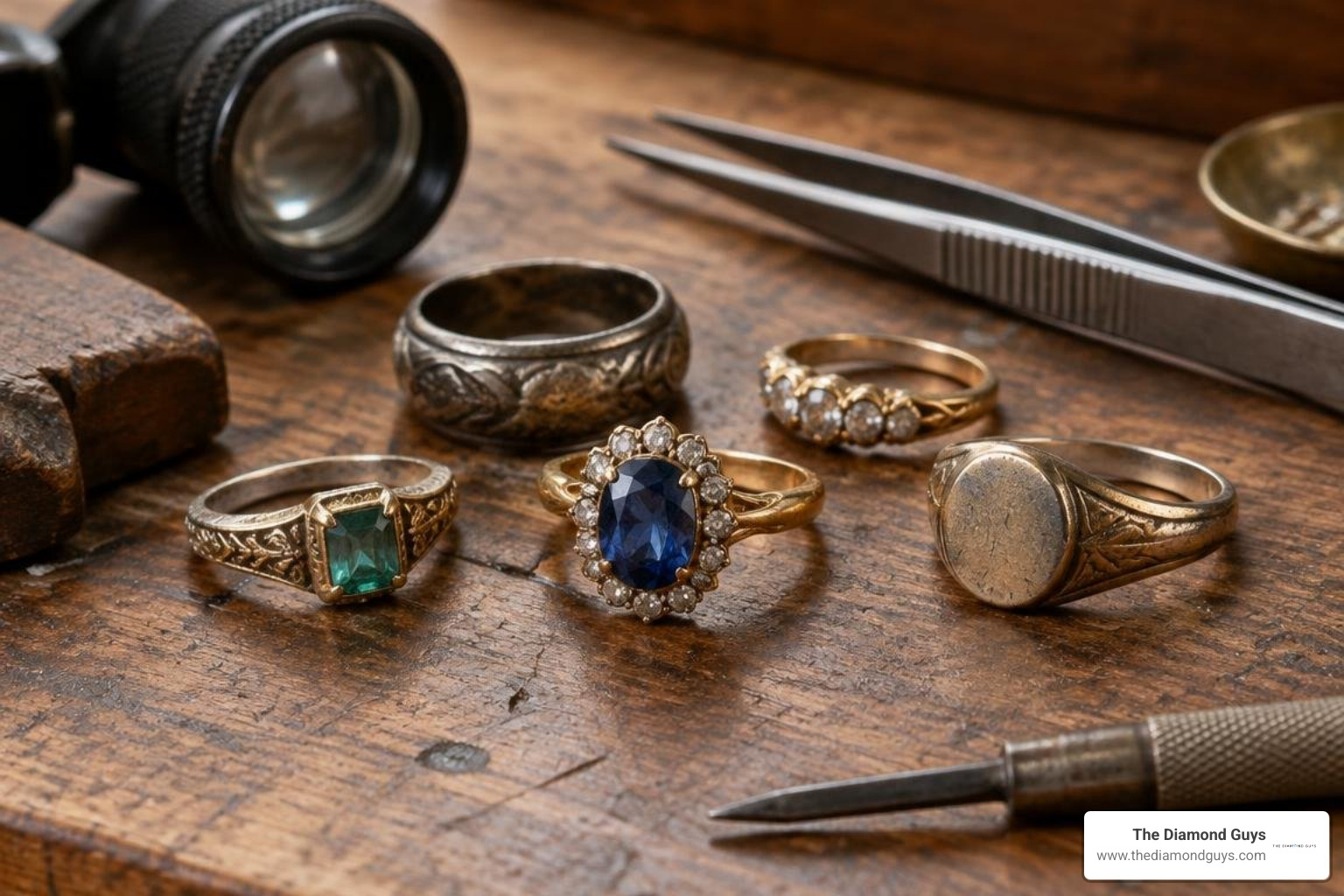
Start with an inspection, not a polish. If a family ring has a loose stone, worn prongs, or a thin band, stop wearing it and ask a jeweler experienced with antique pieces to assess it. Before approving work, request a written plan that explains what will be repaired, what original details will stay, and how the piece will be cleaned.
Heirloom jewelry repair is about making a piece safe to wear without erasing the marks of its history. That can mean securing a stone or reinforcing delicate metalwork while leaving its patina and hand-finished details intact.
I’m Morgan Price, a research-driven outreach specialist who works with content teams to make expert advice easier to find. For this guide to Heirloom jewelry repair, I’ve focused on the questions worth asking before you trust someone with a piece you cannot replace.
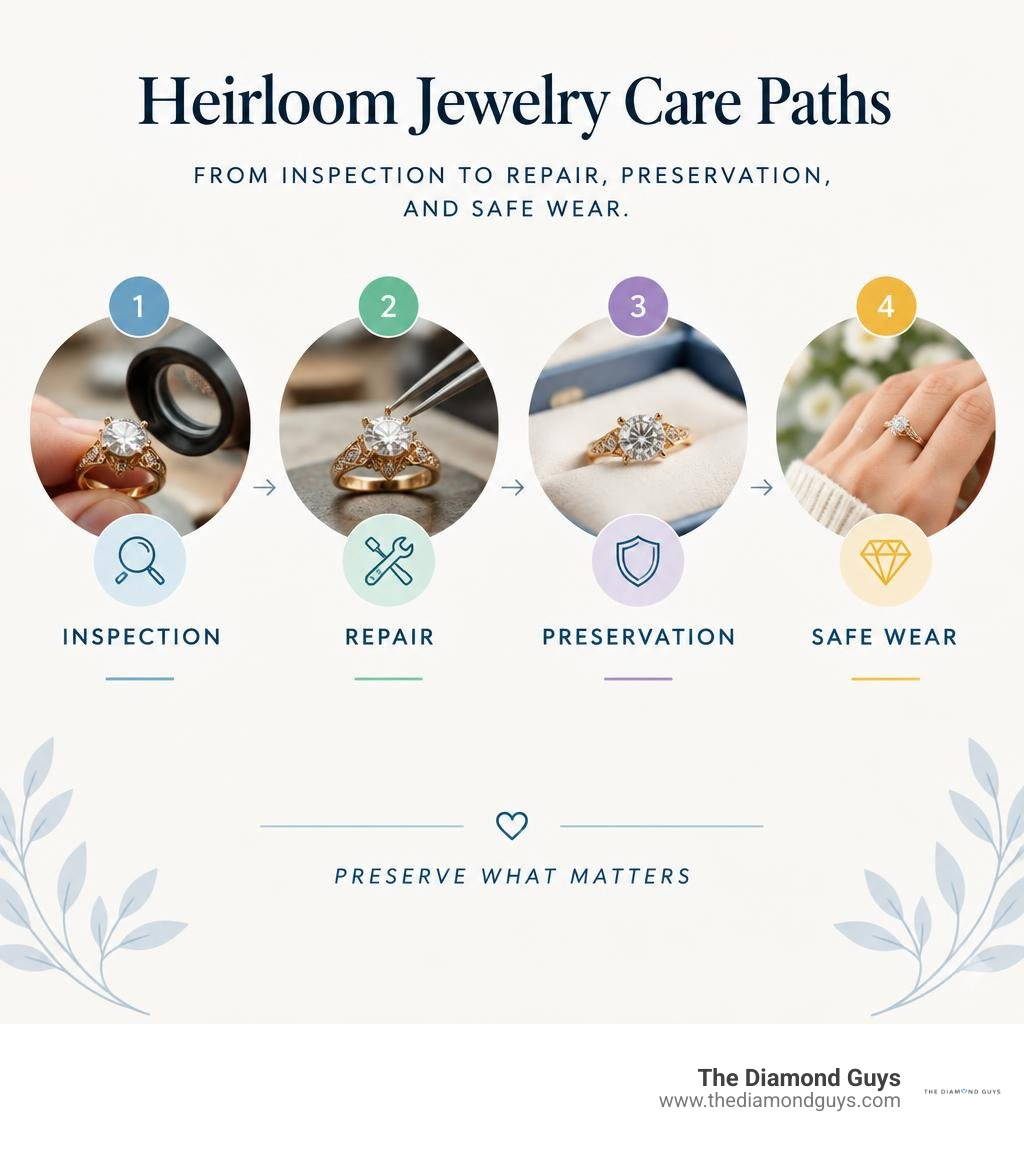
Heirloom jewelry repair helpful reading:
Understanding Heirloom Jewelry Repair vs. Modern Restoration
When you hand an antique ring, Victorian brooch, or Art Deco pendant across a jeweler's counter, you are not delivering a mass-produced item. You are entrusting someone with a physical timeline of your family history. Standard modern repairs prioritize symmetry, factory-perfect lines, and high-shine finishes. In contrast, antique conservation prioritizes historical integrity, metallurgical stability, and structural preservation.
Modern jewelry manufacturing relies on precision casting, CAD modeling, and standardized alloy blends. Historic pieces, however, were hand-fabricated, die-struck, or hand-forged using proprietary metallurgy that behaves very differently under stress. Treating an antique Edwardian ring with standard modern bench techniques can easily result in melted filigree, heat-shocked gemstones, or stripped engravings.
| Restoration Dimension | Standard Modern Jewelry Repair | Antique & Heirloom Conservation |
|---|---|---|
| Primary Goal | Return item to factory-new, high-gloss shine | Reinforce structural stability while retaining historical authenticity |
| Heat Application | Open-flame gas torches across broad working zones | Pinpoint, non-destructive cold-laser welding |
| Metal Handling | Modern standard alloys, often machine-cast | Hand-matched historic alloys formulated to prevent thermal shock |
| Surface Finish | High-speed abrasive wheel polishing | Restrained hand-buffing to protect milgrain, engraving, and natural patina |
| Gemstone Sourcing | Standard modern brilliant cuts | Period-accurate hand-cut stones (Old Mine, Old European, Rose cut) |
Preserving these delicate pieces demands a conservation ethic: restore with intention, reinforce structural weak points, and never alter original decorative details unnecessarily.
Structural Sensitivity of Antique Alloys and Historic Solders
One of the largest hurdles in antique restoration is dealing with historic metallurgy. Victorian-era yellow and rose gold often contain trace alloy mixtures that become brittle over decades. Early 20th-century white gold formulas frequently incorporated nickel or zinc blends that crack easily when subjected to conventional torch heat.
Furthermore, antique jewelers often used lead-based or low-temperature solders during previous generational repairs. When a modern open-flame torch touches lead solder, the lead can contaminate the precious metal lattice, permanently eating a hole through the gold or platinum shank. Consulting our guide to gold jewelry repair in 2026 highlights how proper alloy evaluation prevents catastrophic metal failure at the bench.
Preserving Historic Patina and Hand-Engraved Milgrain
Patina is the gentle, age-earned oxidation that settles into the recesses of hand-engraved metalwork. It gives vintage jewelry its depth, highlighting intricate floral motifs and geometric Art Deco borders.
Standard commercial jewelers often toss drop-off pieces onto high-speed buffing wheels. This aggressive polishing erases crisp hand-engravings and rounds off delicate milgrain—the tiny, beaded metal borders framing antique gemstones. When handling antique white gold, heavy buffing coupled with repeated electroplating can obscure period handiwork. Understanding how long rhodium plating will last helps owners choose conservative, hand-applied finishing protocols that protect historic textures.
Common Wear and Structural Vulnerabilities in Vintage Pieces
Generations of daily wear leave unmistakable signatures on estate jewelry. Prongs wear flat against diamond crowns, ring shanks wear thin from friction, and delicate gallery openwork collapses under pressure.
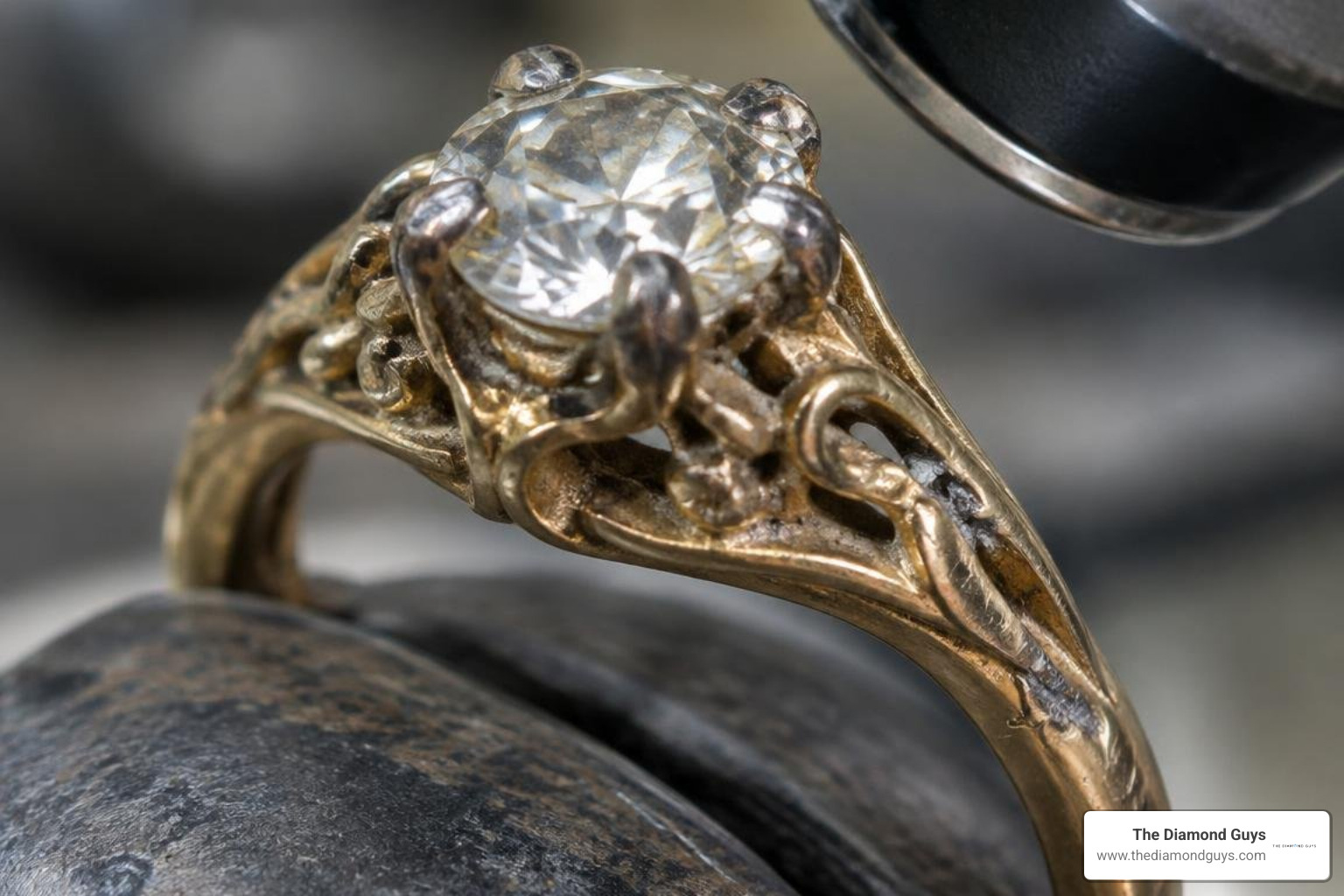
The most frequent structural vulnerabilities we see include:
- Eroded and Flattened Prongs: Prongs act as the structural clamps securing your diamonds. Over decades, clothing fibers and friction grind these metal claws down, leaving gemstones loose.
- Thinning Bottom Shanks: Continuous contact with steering wheels, countertops, and daily tools gradually rubs away metal along the base of a ring, risking fractures.
- Crushed Filigree and Lace Work: Edwardian and Art Deco rings are famous for delicate, pierced openwork that easily bends, tears, or crushes over time.
- Worn Box Clasps and Safety Catches: Antique tennis bracelets and necklaces often feature hand-fabricated tongue-and-groove clasps that lose their spring tension.
- Brittle Platinum Galleries: While platinum is exceptionally durable, historic wire galleries can develop micro-fractures along stress points. Addressing these issues requires specialized platinum ring repair to match the original density of the metal.
Technical Innovations in Heirloom Jewelry Repair
Fortunately, restoration technology has advanced dramatically. The most critical tool in the modern conservation studio is the non-destructive laser welder.
Unlike traditional torches that flood an entire ring with heat—requiring delicate emeralds, pearls, or opals to be unseated—laser welding uses a concentrated, pinpoint beam of light energy. The heat is localized to a fraction of a millimeter for mere milliseconds. This allows master goldsmiths to rebuild crushed filigree, retip prongs next to heat-sensitive stones, and weld antique shanks without burning historic solder lines. Our comprehensive repair services utilize these micro-welding platforms to ensure historic structural stability without compromising delicate metal alloys.
Sourcing Period-Accurate Antique Gemstone Cuts
When an antique ring is missing a stone, dropping in a modern round brilliant cut diamond looks jarring. Modern diamonds feature 57 or 58 mathematically uniform, laser-cut facets engineered for intense white-light reflection. Historic diamonds were cut entirely by hand under candlelight.
To maintain aesthetic authenticity, a restoration specialist sources period-accurate stones:
- Rose Cut (1500s–1800s): Flat bottom with a domed, faceted top resembling a rosebud, casting a subtle, glassy shimmer.
- Old Mine Cut (1700s–late 1800s): Squarish cushion outline, high crown, small table, and open culet with warm, broad light flashes.
- Old European Cut (late 1800s–1930s): Round outline with a high crown, deep pavilion, and prominent open culet, setting the standard for Art Deco glamour.
Historic stones carry unique faceting quirks and natural inclusions. When assessing older gems, understanding whether diamond rings can get scratched ensures owners recognize minor facet abrasions and treat authentic antique stones with care.
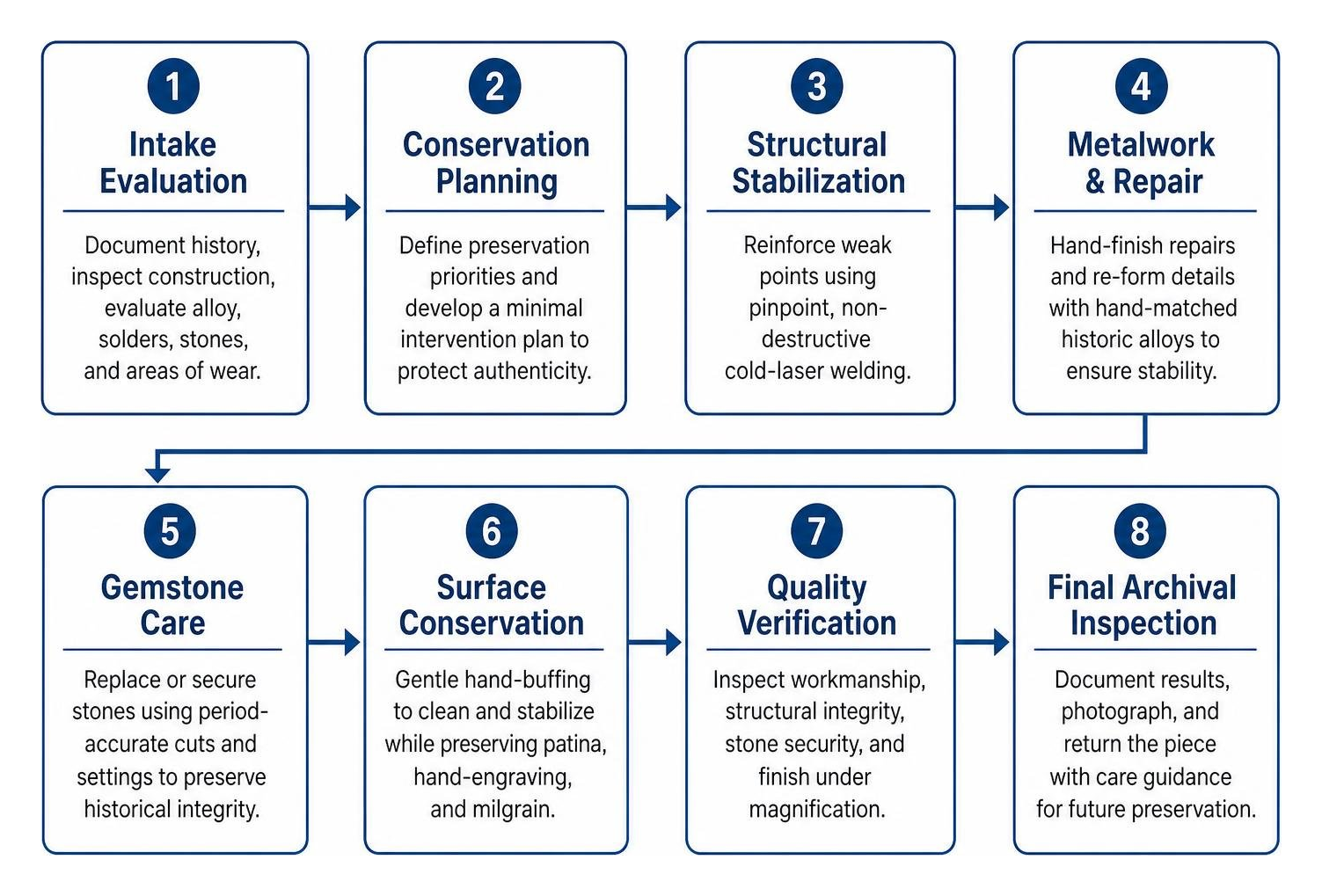
The Multi-Step Heirloom Restoration Protocol
A professional restoration should follow a structured, multi-step conservation protocol. Every stage balances mechanical stability with historical preservation.
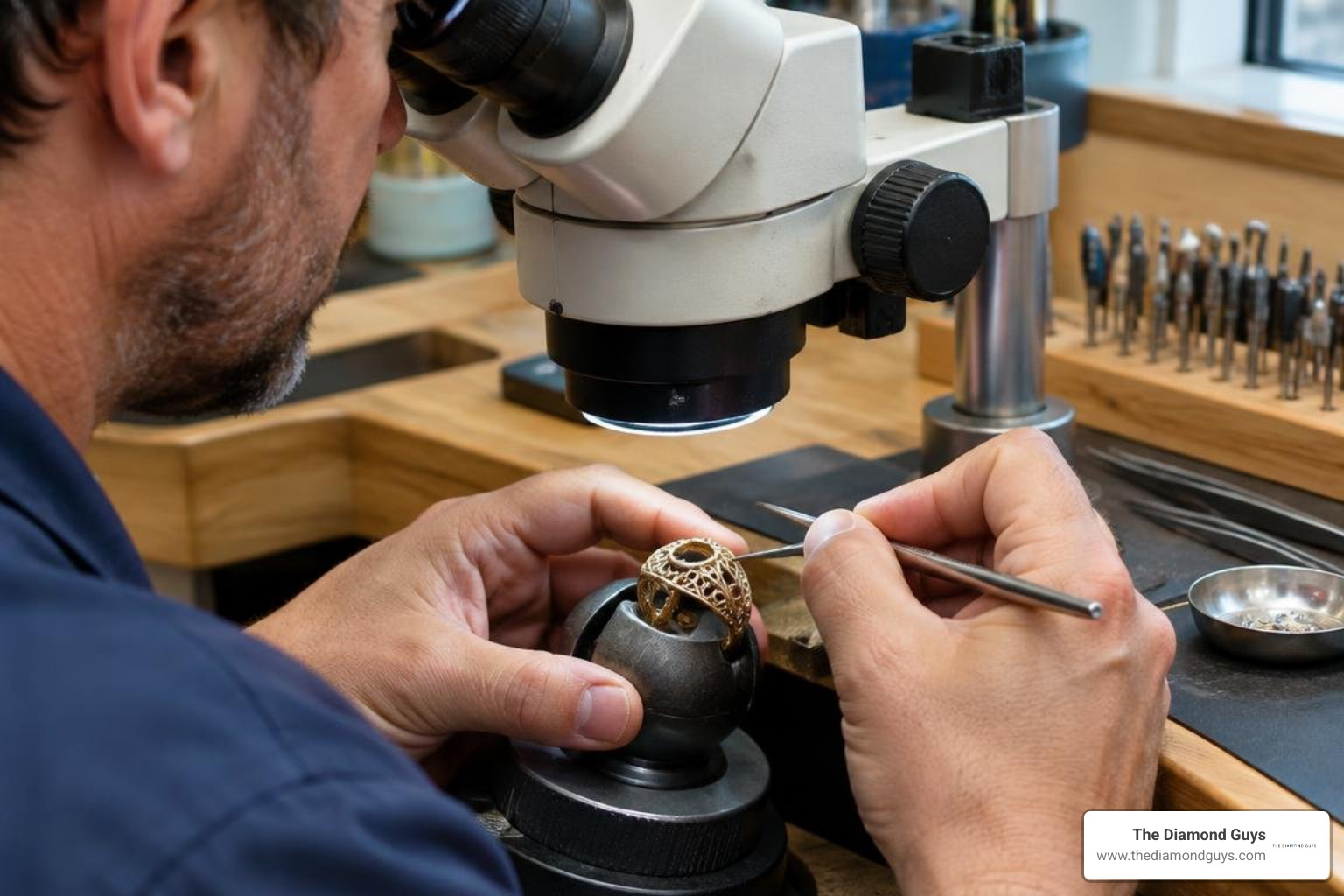
Cleaning, Sizing, and Structural Reinforcement
The hands-on repair process begins with gentle, specialized cleaning. Placing an antique ring with micro-fractures, foil-backed stones, or emeralds into a high-powered ultrasonic machine can shatter stones or loosen settings. Instead, technicians employ warm hand-cleansing baths using mild enzymatic agents and micro-bristle brushes.
When resizing a vintage ring, cutting the shank with a hand-saw and torch-soldering can melt interior hallmarks or warp hand-engravings. Master bench jewelers use cold-laser fusion to splice matching gold or platinum into the band, seamlessly blending the joint. If you need to resize a family piece for daily wear, exploring a professional ring resizing service and reviewing how engagement rings can be resized provides essential clarity on sizing limits for complex vintage settings.
Final Quality Inspection and Structural Validation
Once prong rebuilding, filigree stabilization, and milgrain re-beading are complete, the piece undergoes an exhaustive quality audit. Master setters inspect every prong under high-power stereo magnification, applying tension tests to ensure stones are locked securely in their seats. The finished piece is then archived with high-resolution diagnostic photography, providing owners with a permanent record of their restored treasure.
Choosing the Right Specialist and Avoiding Repair Pitfalls
Big-box mall jewelers and commercial chains are designed for rapid, high-volume modern turnarounds. They frequently ship items out to regional clearinghouses where commercial bench workers treat antique heirlooms like standard production rings. This often leads to over-polished details, melted solder joints, or modern brilliant stones forced into antique prongs.
When researching local restoration experts or browsing a Scottsdale area jewelry repair directory, look for reputable, highly rated custom studios equipped with dedicated in-house benches and documented experience in antique conservation.
Selecting a Qualified Artisan for Heirloom Jewelry Repair
To ensure your family treasure is handled with the expertise it deserves, evaluate potential jewelers using these criteria:
- In-House Master Goldsmiths: Confirm that repairs are executed on-site by experienced jewelers rather than mailed out to third-party contractors.
- Advanced Technology: Look for studios equipped with laser welders and stereo microscopes.
- Transparent Communication: A reputable artisan provides a written diagnostic estimate outlining structural priorities before touching the metal.
- Specialized Geographic Access: Whether you need expert ring repair in Scottsdale, AZ or trusted jewelry repair in Encino, CA, working with seasoned custom jewelers guarantees personalized oversight.
Best Practices for At-Home Maintenance and Long-Term Care
Once your heirloom is restored, mindful daily care keeps it pristine for future generations:
- Avoid Harsh Chemicals: Remove vintage rings before applying lotions, cleaning with bleach, or swimming in chlorinated pools.
- Dedicated Storage: Store antique pieces in individual, fabric-lined compartments to prevent harder diamonds from scratching softer vintage gold or platinum settings.
- Say No to Home Sonic Cleaners: Never put vintage filigree, pearls, opals, or emeralds into home ultrasonic cleaning tanks.
- Annual Check-ups: Bring your heirloom to a professional for annual check-ups. Utilizing a specialized Scottsdale jewelry cleaning service allows goldsmiths to spot loose stones or prong wear before accidents happen.
Frequently Asked Questions About Heirloom Jewelry Repair
Is resizing an antique or vintage ring dangerous?
Resizing can be risky if done using traditional open-flame torches, as intense heat travels through the metal and can fracture stones or melt internal hallmarks. However, when performed by a specialist using modern cold-laser welding, resizing is exceptionally safe. The laser concentrates heat in a microscopic zone, preserving antique engravings and structural integrity.
Will professional cleaning ruin the antique patina and historical value?
Standard, aggressive commercial buffing can strip natural patina and soften hand-cut engravings, reducing historical value. A conservation-focused jeweler cleans antique jewelry by hand using mild enzymatic solutions and soft micro-brushes. This safely removes trapped debris and oil while keeping the deep, age-earned patina in the engraved recesses intact.
How much does heirloom restoration typically cost in 2026?
Investment in vintage jewelry repair varies based on structural complexity. As of 2026, routine ring sizing generally starts around $42 to $79, individual stone setting starts near $49, and basic repair services begin around $39. Complete, complex restorations involving hand-rebuilding crushed filigree, sourcing rare antique-cut diamonds, and prong re-tipping generally range from $150 to $600+. Turnaround times for specialized restoration typically run 3 to 5 business days after approval.
Conclusion: Safeguarding Generational Legacies
Heirloom jewelry connects us to our family history. These pieces carry the vows, milestones, and daily lives of the people who wore them before us. Restoring an antique ring or brooch is not about wiping away its past—it is about reinforcing its structure so it can safely be passed down to the next generation.
At The Diamond Guys, our master craftsmen combine old-world goldsmithing with modern laser technology to breathe new life into cherished heirlooms. Whether you want to stabilize a fragile Edwardian setting, replace an Old European cut diamond, or resize a family wedding band, contact our master jewelers today. For an in-depth breakdown of our workshop capabilities, explore our complete guide to jewelry repair in Scottsdale, AZ and let us help protect your family’s generational legacy.


