

Stop Wondering Who to Trust: A Practical Guide to Reliable Jewelry Repair
Start With Trust Before You Leave Your Jewelry
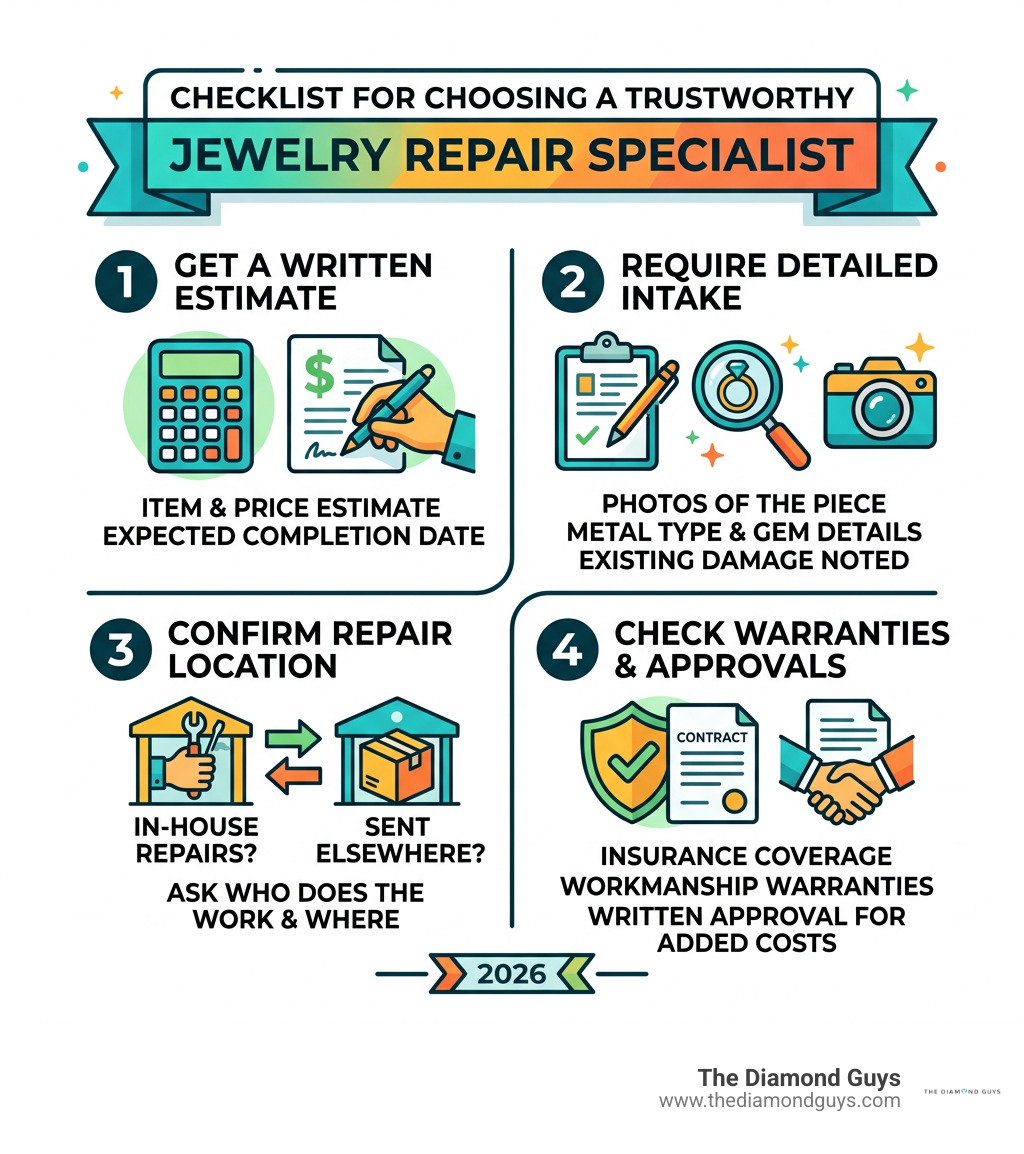
For Reliable jewelry repair, choose a jeweler who can clearly explain who will do the work, where it will be done, what it will cost, and how your piece will be documented and protected. Before you leave anything valuable, ask for:
- A written estimate and expected completion date.
- A detailed intake receipt with photos, metal type, gemstone details, and existing damage.
- Confirmation of whether repairs are done in-house or sent elsewhere.
- Information about insurance, workmanship warranties, and approval for added work or costs.
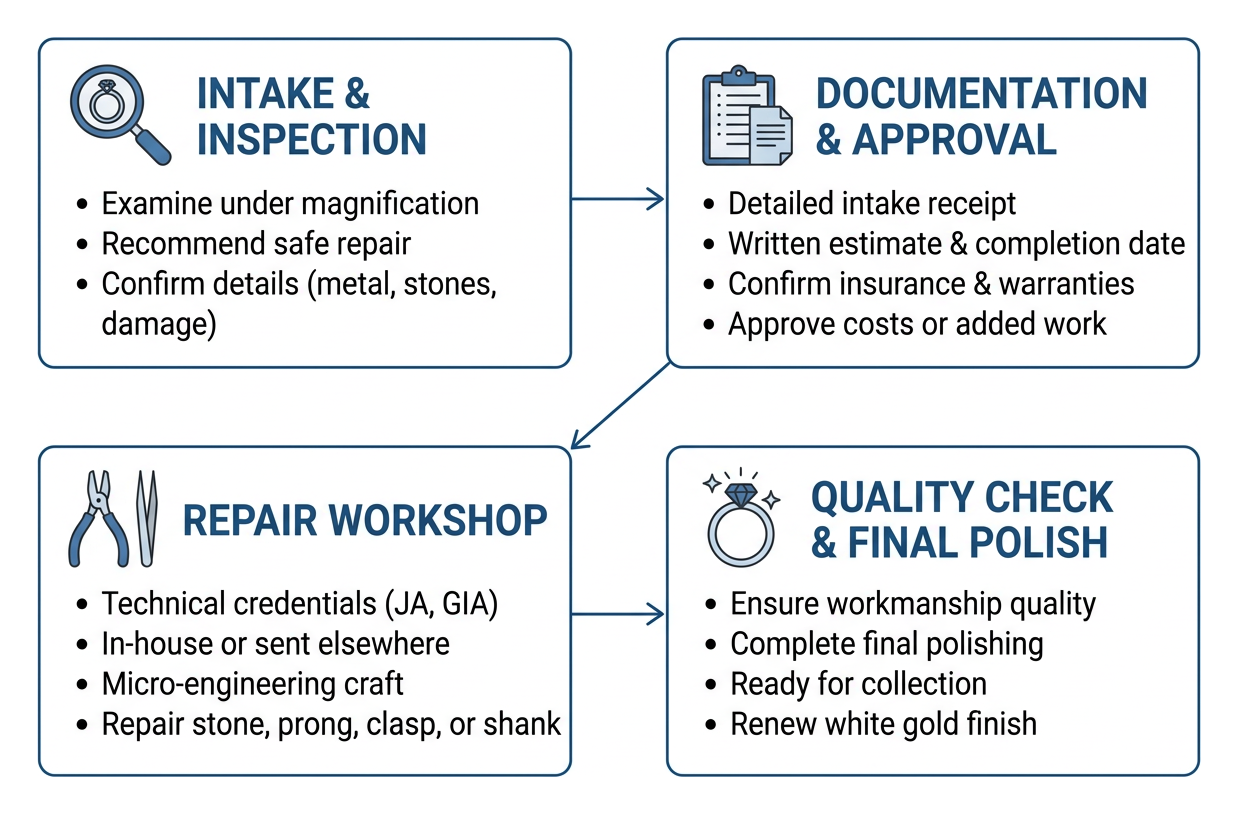
Fine jewelry carries memories as well as value. A loose stone, thin ring shank, worn prong, broken clasp, or dull white gold finish can often be repaired before the damage becomes more serious. The right professional will inspect the piece under magnification, recommend the least invasive safe repair, and give you a clear record of what to expect.
I am Morgan Price, a white-hat SEO and outreach specialist who researches trust signals, transparent service practices, and consumer-first guidance for topics including Reliable jewelry repair. In this guide, I will help you evaluate repair options with the same care you would use when choosing a jeweler for an important purchase.
Reliable jewelry repair glossary:
How to Identify a Reliable Jewelry Repair Specialist
Handing over an irreplaceable engagement ring, a vintage heirloom brooch, or a favorite gold chain requires complete peace of mind. Jewelry repair is a craft that blends micro-engineering with artistry. When searching for the right professional, looking beyond glossy storefront displays is essential. Focus instead on technical credentials, in-house capabilities, community reputation, and clear communication.
Key Credentials and Qualities of Reliable Jewelry Repair
A dependable repair partner demonstrates transparency from the moment you walk through the door. Professional affiliations—such as membership in Jewelers of America (JA) or gemological certifications from the Gemological Institute of America (GIA)—signal that the team follows strict industry standards and ethical codes.
When evaluating a workshop, look for:
- Experienced Master Jewelers: Craftsmen who understand the thermal and structural limits of precious metals, whether working with delicate antique platinum or modern 18k yellow gold.
- Dedicated In-House Benches: Shops equipped with state-of-the-art tools, such as laser welders and digital stereo microscopes, perform repairs under strict quality control.
- Fully Insured Facilities: A professional studio carries comprehensive insurance that protects your fine jewelry against loss or damage while under its care.
- Verified Local Reputation: Explore independent customer experiences, such as feedback for top-rated repair experts in Scottsdale, to see how the shop handles complex custom projects, heirloom restorations, and client care.
Red Flags to Avoid When Choosing a Jeweler
Not every counter service provides genuine bench expertise. If a business exhibits any of the following warning signs, look for a more qualified partner:
- Third-Party Outsourcing Without Consent: Many big-box retail stores lack on-site craftsmen and ship jewelry to off-site regional repair hubs. This creates unnecessary shipping risks and communication bottlenecks.
- Vague, Open-Ended Estimates: Be cautious of vague statements like "we’ll see once we cut it open." Reliable professionals evaluate the piece under magnification and provide a transparent, itemized quote before starting work.
- Missing Documentation: If a shop accepts your fine jewelry with only a handwritten claim slip lacking gemstone weights, stone counts, photographs, and condition notes, their intake security is insufficient.
- No Clear Guarantee: Dependable craftsmen stand behind their repairs. Look for providers that offer written workmanship guarantees, such as a 90-day structural warranty on soldered joints and stone settings. You can research reputable, verified jewelers in Phoenix to ensure you are entrusting your pieces to proven specialists.
Common Jewelry Repair Services and Diagnostic Signs
Precious metals naturally wear down over years of contact with hard surfaces, textiles, and daily movement. Understanding common failure points allows you to address minor structural weaknesses before they result in lost gemstones or broken heirlooms.
Ring Resizing and Structural Shank Repairs
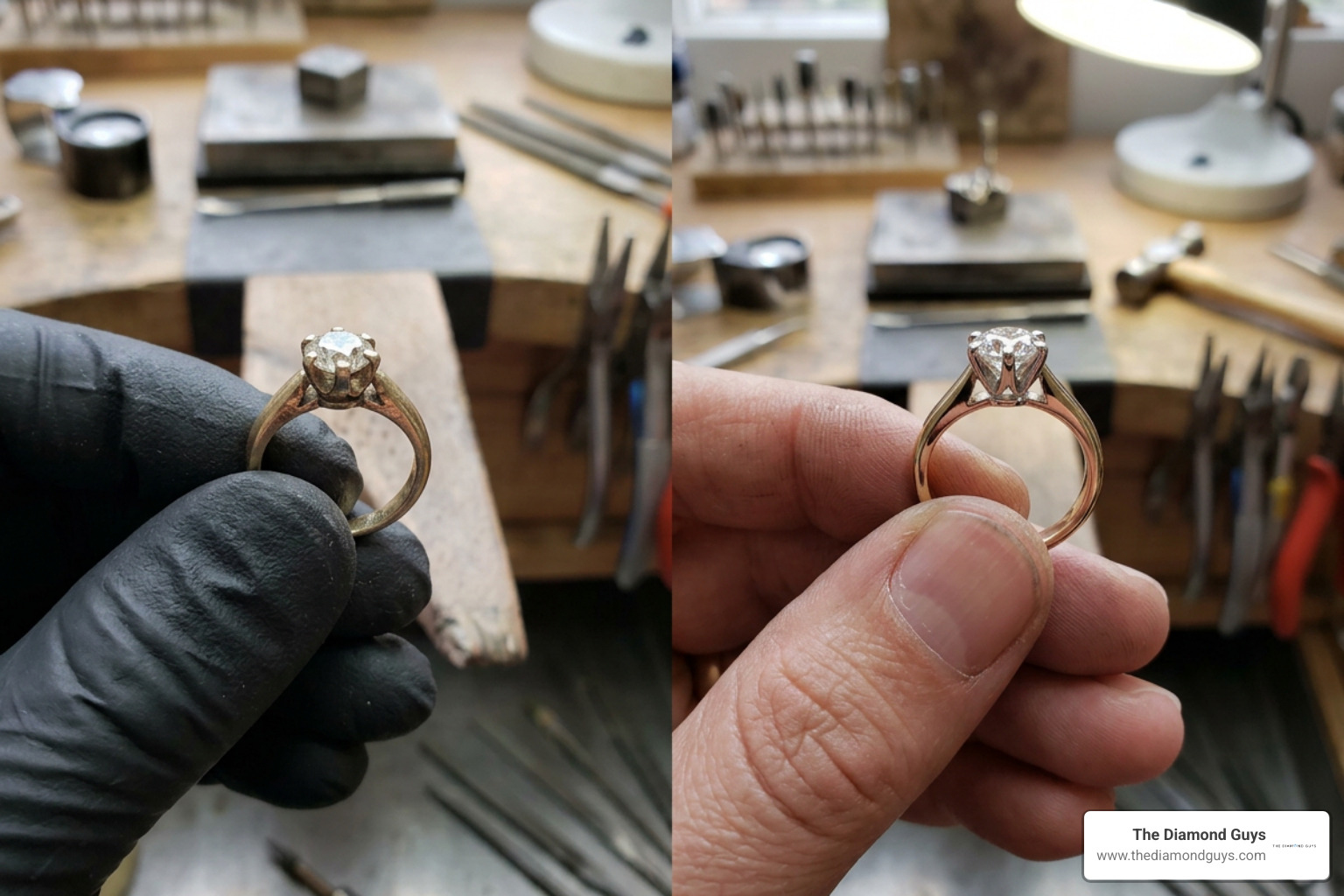
Whether your knuckle size has changed or you inherited a vintage family band, ring resizing requires precise structural calculation. Simply stretching a ring thins the precious metal and compromises channel or pavé settings.
- Sizing Down: The jeweler removes a precise segment from the bottom center of the shank, closes the gap, and welds it securely using a laser or torch before smoothing and polishing the seam.
- Sizing Up: For an undetectable and durable result, the jeweler cuts the bottom of the band, inserts a matching segment of gold or platinum, welds both sides, and blends the contour perfectly.
- Alternative Fit Solutions: For individuals with enlarged knuckles or rings that spin, sizing beads, bridges, or spring inserts provide stability without permanently altering the band's circumference.
To understand metal tolerances and structural considerations, check out our comprehensive ring repair guide for 2026. When you are ready to adjust your piece, schedule an appointment through our professional ring resizing service for an accurate, comfortable fit.
Prong Retipping, Stone Tightening, and Gemstone Care
Prongs act as the miniature metal claws keeping diamonds and colored gems secured to their mountings. Over time, friction from clothing, bedding, and daily impacts flattens these tips, making them vulnerable to catching or snapping.
- The Diagnostic Toothpick Test: If you suspect a stone is loose, gently touch the girdle with the tip of a wooden toothpick under good lighting. If the stone shifts or tilts even slightly, take it to a professional immediately.
- Prong Retipping vs. Rebuilding: When a prong thins down, a master jeweler can laser-weld a fresh bead of matching metal directly onto the tip. If the entire prong is compromised, rebuilding the full post provides better long-term support.
- Handling Chipped Stones: Diamonds are the hardest mineral on earth, but an impact along a natural cleavage plane can still cause chips. Chipped diamonds cannot be simply "glued" or filled; depending on the depth, the diamond must be safely unmounted and professionally recut or replaced.
Pairing stone tightening with our comprehensive jewelry polishing service restores both the structural integrity and original mirror luster of your favorite settings.
Chain Soldering and Pearl Restringing
Necklaces and bracelets endure constant tension, twisting, and friction during daily wear.
- Chain Soldering & Link Reinforcement: When delicate chains snap, precision laser welding rejoins the links without flooding adjacent joints with excess solder. Intricate chain patterns, such as rope, cable, or herringbone, require skilled micro-welding to preserve fluid movement. If your everyday silver chain breaks, a dedicated silver necklace repair restores strength while matching original finishes.
- Pearl Restringing: Fine pearls should always be hand-knotted on pure silk cord. Over time, silk absorbs body oils and moisture, stretching out and weakening. If you notice visible gaps between your pearls, or if the strand stretches excessively when held upright, it requires re-knotting. That fresh, tightly tied knots often shorten the total strand length by ½ inch to 2 inches initially, which relaxes to standard dimensions as the silk settles. Schedule a dedicated pearl necklace repair every 1 to 2 years depending on frequency of wear.
The Step-by-Step Jewelry Repair Process and Security Protocols
A professional repair service should be transparent and traceable from drop-off to final pick-up. Knowing how your jewelry is tracked, examined, and serviced ensures complete peace of mind.
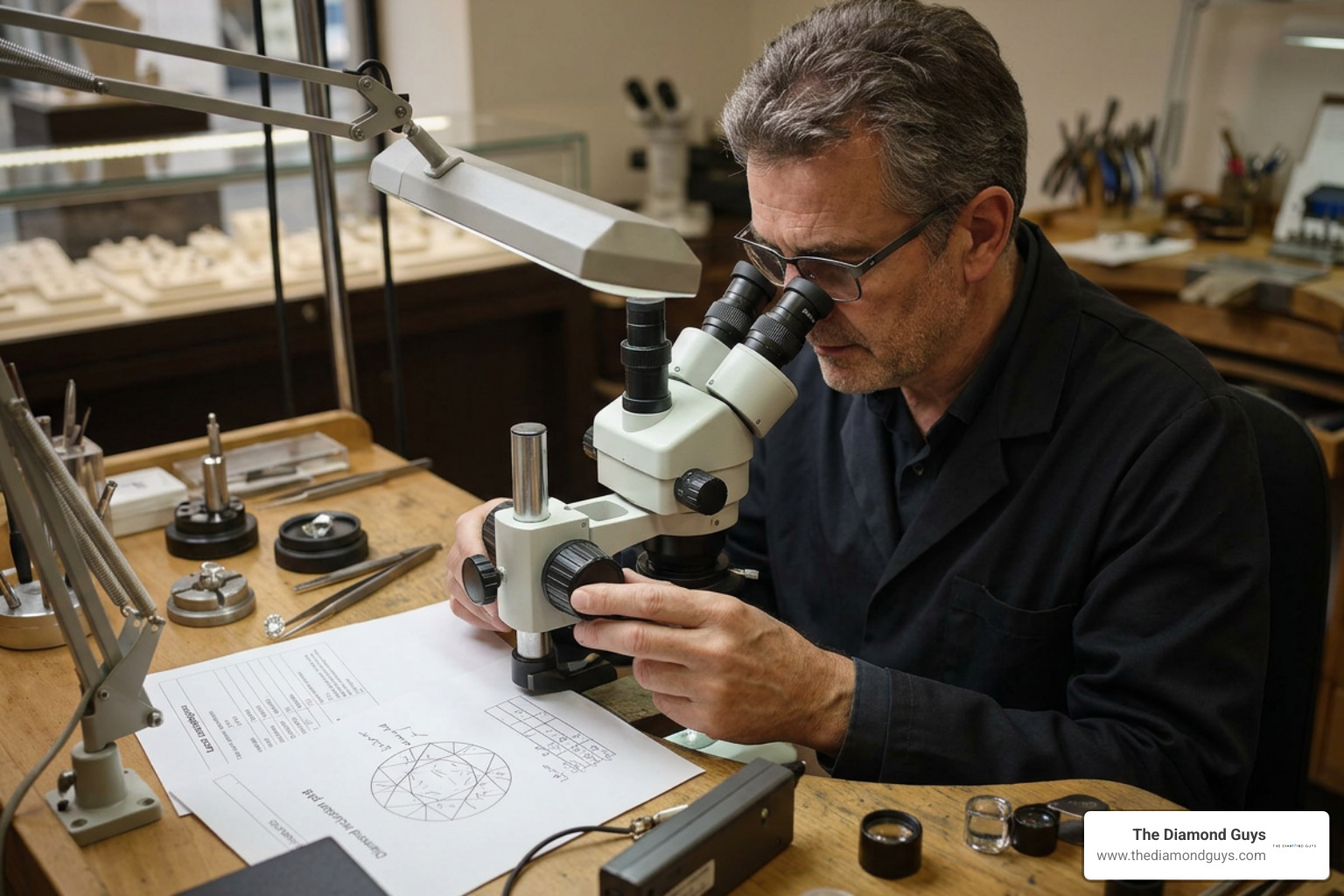
Intake Documentation and Gemstone Verification
When you hand over fine jewelry for evaluation, a trustworthy jeweler follows a structured verification workflow:
- Microscopic Diamond Plotting: Your center diamond is examined alongside you under a digital stereo microscope. The jeweler maps its unique internal "fingerprint"—including natural inclusions, feathers, and crystal formations—onto an intake chart.
- Laser Inscription Verification: If your diamond has a GIA or lab registry number inscribed on its girdle, the jeweler reads and records this code on your intake receipt.
- Condition and Measurement Logging: Metal karat, millimeter dimensions, total piece weight, and any missing accent stones are documented.
- Insured Custody Receipt: You receive an itemized intake copy containing high-resolution photographs, assigned repair numbers, and written insurance valuations protecting your piece while it remains in the vault.
Best Practices for Reliable Jewelry Repair Workmanship
Once intake is complete, your jewelry moves to the jeweler's bench, where specialized restoration steps take place:
- Laser vs. Traditional Torch Welding: Laser welding delivers focused heat to microscopic points, allowing jewelers to repair prongs and weld settings without unmounting heat-sensitive gemstones like emeralds, opals, or pearls.
- Precise Alloy Matching: Quality repairs use matching metal alloys (e.g., 14k plumb gold, 950 platinum) to ensure invisible seams and prevent future galvanic corrosion or color mismatch.
- Rhodium Plating for White Gold: White gold alloys naturally feature a faint warm tint. Applying an electroplated rhodium finish provides that crisp, mirror-white sheen. White gold rings worn daily typically need replating every 1–2 years.
- Ultrasonic and High-Pressure Steam Cleaning: Once bench work is complete, microscopic compound residues are cleared away via high-frequency ultrasonic baths, followed by high-pressure steam drying. For maintaining your yellow and rose gold heirlooms at home between shop visits, reference our expert guide on gold jewelry cleaning.
Costs, Timelines, and Post-Repair Maintenance
Jewelry repair costs depend on metal type, structural complexity, gemstone count, and the labor required to achieve a clean finish.
| Repair Type | Average Cost Range | Typical Turnaround Time |
|---|---|---|
| Simple Ring Downsizing | $25 – $60 | 2 – 5 Business Days |
| Ring Sizing Up (with added metal) | $50 – $150+ | 3 – 7 Business Days |
| Prong Retipping (per prong) | $30 – $75 | 2 – 5 Business Days |
| Broken Chain Solder / Weld | $25 – $55 | 1 – 3 Business Days (Same-day options) |
| Clasp Replacement (Spring Ring / Lobster) | $35 – $120+ | 1 – 3 Business Days |
| Rhodium Replating & Polishing | $45 – $90 | 1 – 2 Business Days |
| Pearl Restringing (Knotted per inch) | $3.00 – $7.00 / inch | 1 – 2 Weeks |
| Complex Antique Heirloom Restoration | $200 – $600+ | 2 – 3 Weeks |
Realistic Repair Pricing and Turnaround Benchmarks
Most routine fine jewelry repairs cost under $300, with basic adjustments starting as low as $25 to $50. Simple inspections, ultrasonic cleanings, and clasp adjustments can often be handled on-site in 15 to 30 minutes. More comprehensive jobs—such as rebuilding structural shanks or sourcing matching antique-cut accent stones—typically average a 2 to 3-week turnaround.
For larger custom design rebuilds or significant vintage restorations, we offer flexible jewelry financing to help bring treasured pieces back to life on terms that fit your budget.
At-Home Care and Preventive Inspection Routines
To minimize the need for major structural repairs, follow these daily jewelry care habits:
- Follow the "Last On, First Off" Rule: Put your jewelry on after applying perfumes, lotions, and hairspray to prevent chemical film buildup, and remove it before bedtime to avoid snagging prongs on sheets.
- Avoid Heavy Mechanical Contact: Always remove fine rings before lifting weights at the gym, doing yard work, or moving heavy furniture to prevent bending the band out of round.
- Store Pieces Individually: Prevent diamonds from scratching neighboring precious metals or softer gemstones by keeping pieces in individual soft fabric pouches or velvet-lined jewelry boxes.
- Schedule Bi-Annual Professional Checkups: The Jewelers of America recommends having fine jewelry professionally inspected and cleaned at least once every six months. Regular bench inspections allow jewelers to catch thinning prongs, loose stones, and worn clasps early.
Frequently Asked Questions About Jewelry Repair
Can I take my jewelry to a different store than where it was purchased?
Yes. You can take your jewelry to any qualified, reputable jeweler regardless of where the piece was originally bought. Independent jewelers with on-site master craftsmen regularly service pieces from international brands, online retailers, and family estates.
Before proceeding, review any original merchant warranties you hold, as third-party repairs can sometimes void specific store plans. Choosing a dedicated local jeweler often provides faster turnaround, clearer communication, and higher-quality in-house bench work.
How do I know I will get my own diamond back after a repair?
Trustworthy jewelers use clear intake and return protocols to verify your center diamond's identity:
- They map internal inclusions under a microscope with you during intake and review the stone together at pick-up.
- If your stone has a laser inscription on the girdle, they verify the registry number under magnification at both drop-off and pickup.
- Reputable shops complete work on-site in secure, insured facilities, ensuring your diamond remains fully traceable throughout the repair process.
How can I tell if my jewelry needs repair before a stone falls out?
Watch for these common warning signs:
- Snagging Prongs: If your ring catches on sweaters, hair, or blankets, a prong has likely lifted or worn thin.
- Audible Clicking or Stone Rattling: Hold the piece close to your ear and tap it gently with your finger. If you hear faint clicking, a gemstone is loose in its seat.
- Flattened or Misshapen Shanks: If the bottom of your ring band appears oval or feels sharp, the metal has thinned from years of wear and risks cracking.
- Discolored Solder Seams: If previous repair joints show dark, visible lines or pitting, the seam has weakened and should be reinforced.
Conclusion
Fine jewelry is meant to be worn, celebrated, and passed down through generations. Daily wear naturally results in minor metal fatigue, worn prongs, or stretched cords, but choosing a dependable jeweler ensures your treasured heirlooms remain safe and structurally sound for decades to come.
At The Diamond Guys, we bring master craftsmanship, state-of-the-art laser technology, and transparent diamond verification to every repair. Whether your engagement ring needs a custom resize, your vintage heirloom requires complete restoration, or your favorite chain needs seamless laser welding, our team is here to assist.
Explore our complete guide to jewelry repair in Scottsdale or visit our showroom for a complimentary microscopic inspection and repair evaluation today.


