

A Realistic Guide to Professional Jewelry Polishing and Scratch Removal
Restore Shine Without Taking Unnecessary Metal Away

A professional Jewelry polishing service can restore the bright finish of a scratched ring, bracelet, chain, or pendant by carefully leveling fine surface marks and then buffing the metal to a clean shine. The safest choice is to have the piece inspected first, especially if it has stones, thin prongs, engraving, or deep damage.
For everyday scuffs, professional polishing can make a major visual difference. But it is not a cure-all: deep dents, gouges, worn prongs, and severe scratches may need metal restoration or laser welding before polishing. Cleaning removes oils and buildup; polishing removes a microscopic layer of metal to reduce surface damage.
The goal is not to make every piece look factory-new at any cost. It is to restore luster while protecting the details, settings, and metal that make your jewelry valuable.
I am Morgan Price, a white-hat SEO and research specialist who helps content teams turn technical topics into useful, trustworthy guides, including Jewelry polishing service research. Next, we'll look at what a professional jeweler actually does from inspection through the final buff.
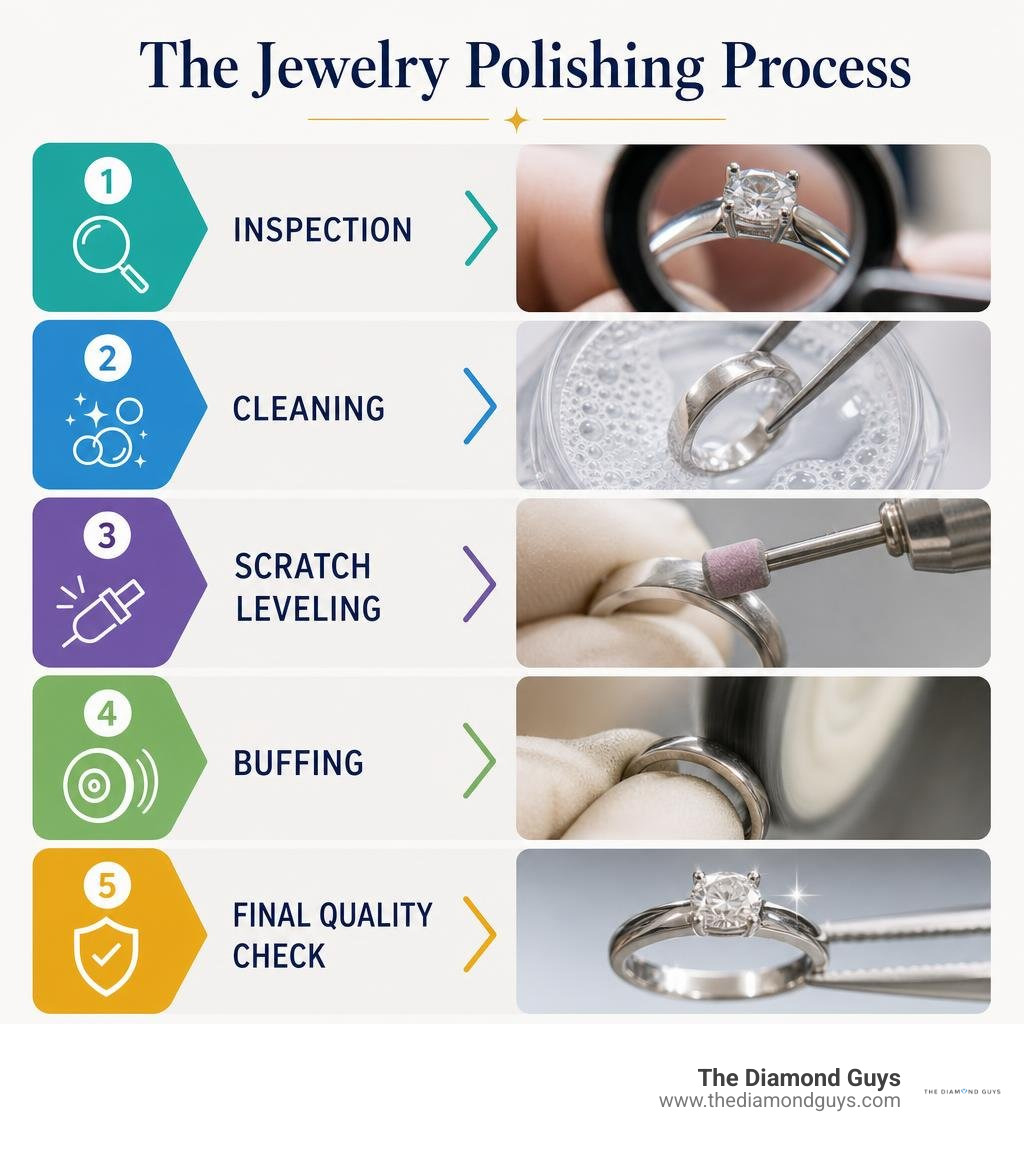
Jewelry polishing service vocabulary:
What to Expect from a Professional Jewelry Polishing Service
When you bring a piece in for restorative care, a professional polisher doesn't just hold it against a grinding wheel and hope for the best. True metal restoration requires a delicate balance between abrasive leveling and structural preservation. Over the course of daily wear, your precious metals collect millions of microscopic abrasions. These tiny valleys scatter light in random directions, turning a mirror finish into a dull, cloudy haze.
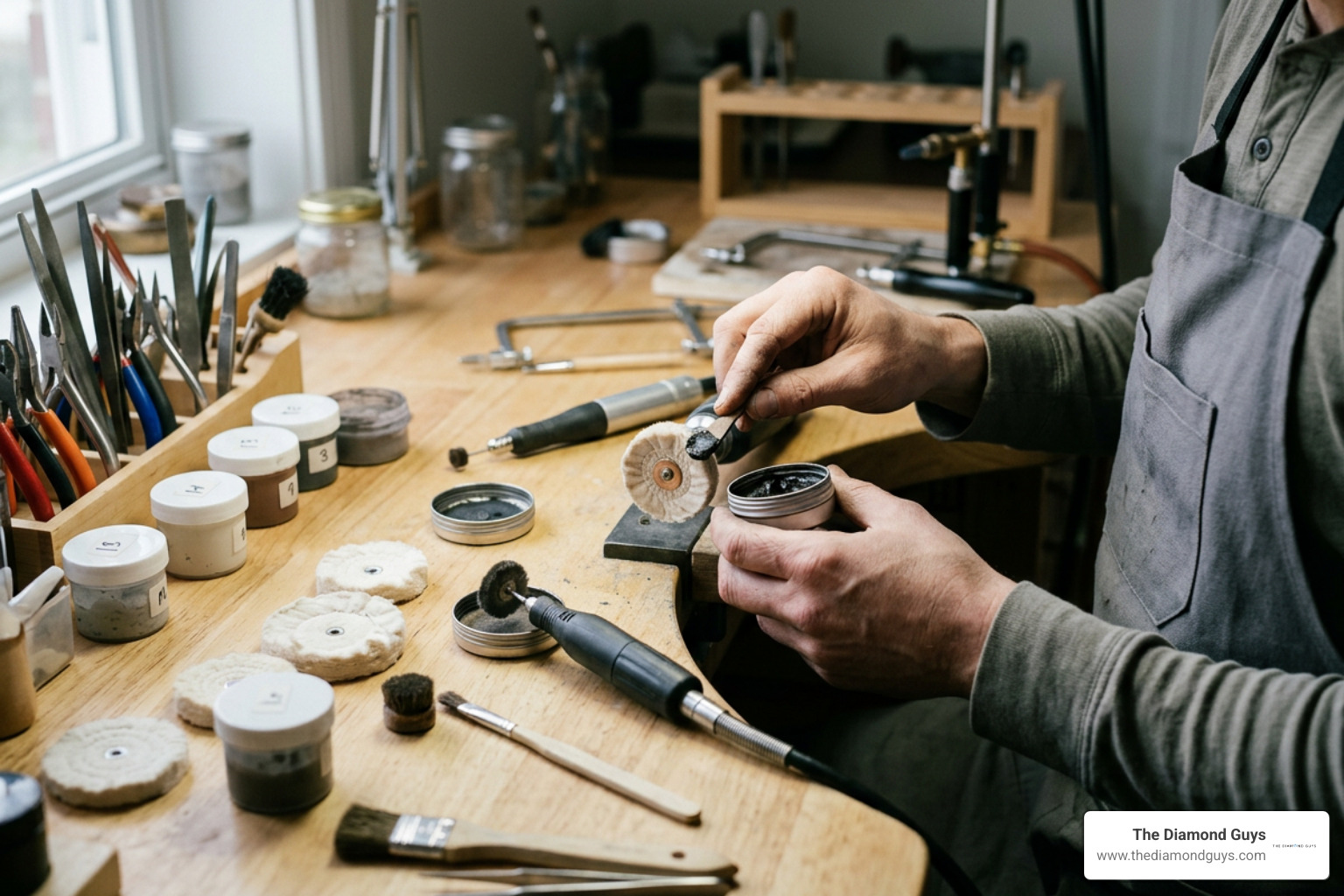
Polishing works by microscopic surface leveling. Using specialized rotary wheels charged with graded cutting compounds, a bench jeweler carefully smooths the metal surrounding each micro-scratch down to the floor of the abrasion. Coarser cutting pastes (such as Tripoli compound) eliminate surface unevenness, while ultra-fine jeweler's rouge creates optical brilliance. If your piece has structural wear or bent settings alongside cosmetic scuffs, consulting our Ring Repair Guide 2026 will help you understand what bench repairs should be addressed alongside a standard polish.
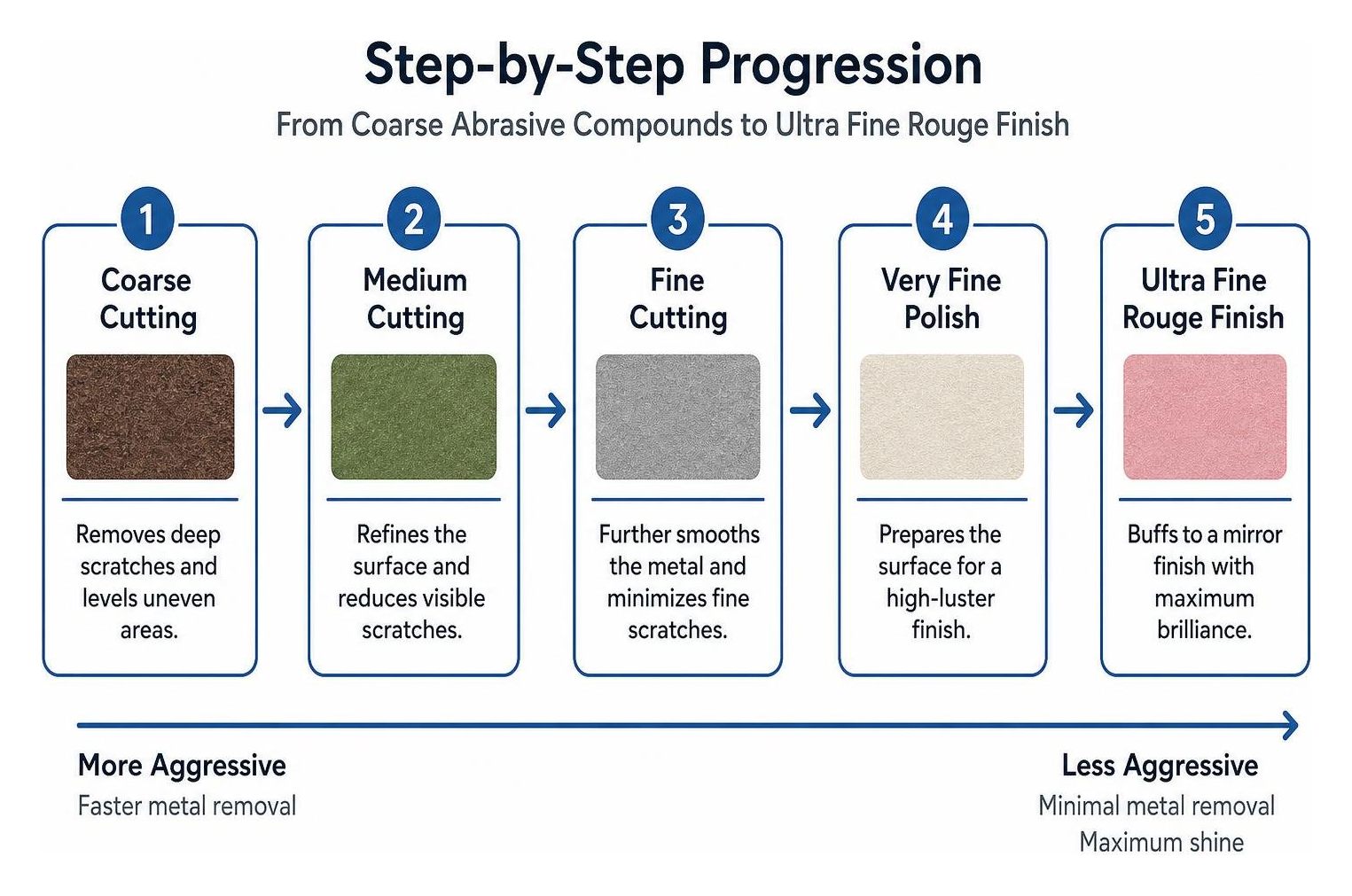
Step-by-Step Metal Restoration and Buffing Techniques
Fine jewelry polishing is an art form mastered over decades at the bench. A typical multi-stage restorative process follows these precise steps:
- Intake and Microscopic Inspection: The jeweler examines the piece under magnification to check prong integrity, stone stability, hallmarks, and the depth of existing gouges.
- Pre-Cleaning and Degreasing: The item is cleaned to remove lotion, skin oils, and dust that could contaminate the polishing compounds.
- Deburring and Coarse Cutting: Using specialized handheld rotary tools or high-speed upright lathes, the polisher uses stiff felt wheels with cutting compounds to level visible scratches.
- Intermediate Luster Buffing: Soft muslin wheels charged with medium compounds smooth out the fine swirl marks left by the initial cutting stage.
- Final High-Luster Rouge Buffing: An ultra-fine jeweler's rouge buffs the metal at high rotational speeds to restore maximum optical reflection.
- Post-Polish Ultrasonic & Steam Bath: The piece is submerged in an ultrasonic cleaner and blasted with pressurized steam to clear away caked-on compound residues.
When dealing with interconnected links or delicate weaves, specialized tension techniques are required. For example, during a Gold Chain Repair, links must be polished individually with soft string buffs or miniature flexible-shaft attachments to prevent catching the chain on the high-speed wheel.
Ultrasonic Cleaning vs. Abrasive Scratch Buffing
Many jewelry owners confuse deep ultrasonic cleaning with mechanical polishing. While both restore sparkle, they address completely different issues:
| Feature / Method | Ultrasonic & Steam Cleaning | Mechanical Abrasive Polishing |
|---|---|---|
| Primary Function | Extracts embedded dirt, body oils, and cosmetics | Levels scratches, dents, and surface abrasions |
| Metal Impact | Zero metal removal; preserves original surface | Removes a microscopic layer of metal (approx. hair's thickness) |
| Tooling Used | High-frequency fluid cavitation & pressurized steam | High-speed rotary lathes, muslin wheels, Tripoli & rouge |
| Tarnish Removal | Minimal (unless paired with chemical tarnish removers) | Completely eliminates oxidation, tarnish, and surface wear |
| Gemstone Safety | Unsafe for porous, oiled, or fractured stones | Safe when stones are masked and checked by a bench jeweler |
| Recommended Frequency | Routine (every few weeks or months) | Moderate (1–2 times per year maximum) |
Basic dirt extraction is often bundled as part of our Complimentary Services when you stop by for a quick checkup, whereas abrasive scratch buffing is a dedicated bench procedure.
Metal-Specific Polishing Considerations: Gold, Platinum, and Silver
Every precious metal alloy behaves differently on the polishing lathe. A compound that brings out a flawless mirror shine on 14k yellow gold could drag or smear across a soft sterling silver pendant or bind against dense platinum.
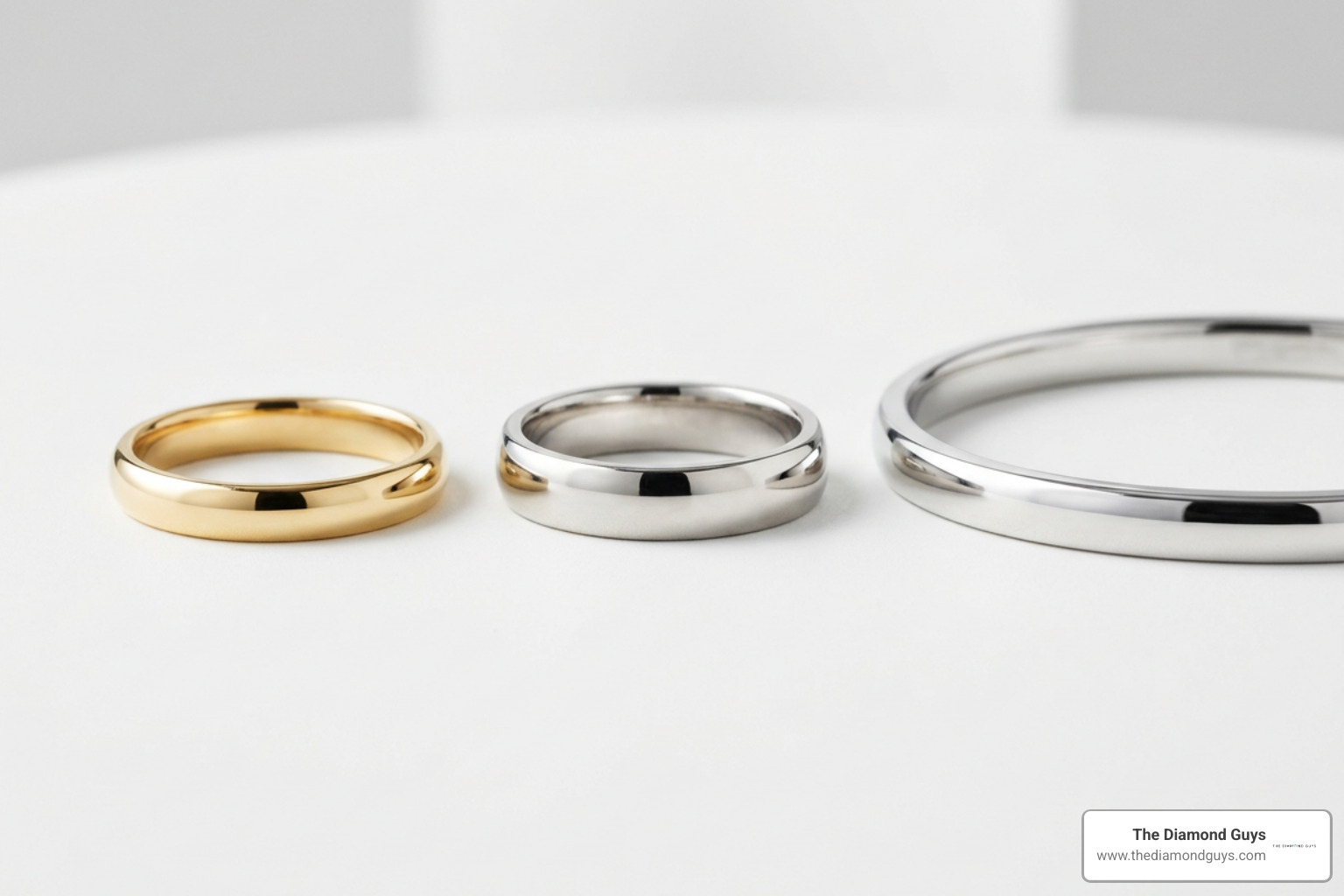
Yellow and rose gold alloys contain copper, silver, and zinc, giving them balanced density and predictable buffing resistance. Sterling silver (.925) oxidizes quickly when exposed to airborne sulfur compounds, requiring aggressive tarnish removal followed by gentle buffing so soft silver details aren't eroded. For complex woven items, our Scottsdale Chain Repair Complete Guide explores how alloy density dictates repair and finishing techniques.
White Gold Refinishing and Optional Rhodium Plating
White gold is naturally off-white with a warm, subtle yellowish undertone due to its natural gold content. To achieve a crisp, bright white mirror look, jewelers electroplate white gold with rhodium—a rare, ultra-reflective metal from the platinum family.
When white gold is polished:
- The existing micro-thin rhodium layer is naturally buffed away along with surface scratches.
- The underlying warm white gold metal is exposed.
- The piece undergoes electro-cleaning and is dipped into a heated rhodium bath with an electric current to bond a fresh, protective white shell.
You can choose to polish white gold without rhodium plating if you love the warmer, unplated champagne hue. However, most owners prefer the brilliant icy-white finish that replating provides.
Platinum Patina and Dense Metal Polishing
Platinum does not wear away like gold. When platinum is scratched, the metal is simply displaced—pushed aside into microscopic ridges—rather than lost. Over time, these micro-scratches accumulate into a soft, satin-gray finish known as a patina.
Polishing platinum requires specialized high-density compounds (such as aluminum oxide or diamond paste) and firmer wheels. The polisher burnishes and redistributes the displaced metal back into a smooth plane. If you are having your ring resized or restored, reviewing our Platinum Ring Resizing Complete Guide illustrates how platinum's unique physical properties influence bench work.
Structural Integrity: Does Polishing Thin Your Jewelry Over Time?
A common fear among fine jewelry owners is that professional polishing will turn their sturdy ring shank into a flimsy wire. The short answer is: not if it is done properly and in moderation.
A master jeweler applying controlled pressure with high-grade rouge removes an imperceptible amount of material—roughly equivalent to the thickness of a human hair (a fraction of a micron). However, aggressive or overly frequent polishing can compromise delicate structural components over decades.
Microscopic Metal Loss and Prong Wear
The most vulnerable parts of any ring are the prongs, bezel edges, and fine filigree wirework. Because prongs are small and narrow, repeated aggressive buffing will gradually reduce their thickness, weakening their grip on your diamond.
To protect your jewelry:
- Never have jewelry polished more than once or twice a year.
- Ensure your jeweler uses micro-cotton buff sticks and precision flexible-shaft handpieces around delicate settings.
- Have prongs checked under magnification before and after every polishing session.
If decades of wear have already left the bottom of your ring thin and fragile, simply buffing it won't solve the underlying weakness. In those cases, exploring Re-shanking a Ring or reading our Resizing Wedding Band Complete Guide will help you understand when metal replacement is necessary.
Laser Welding for Deep Scratches and Gouges
What happens when your ring catches a hard corner and suffers a deep gouge? If a polisher attempted to buff out a deep dent using abrasive wheels alone, they would have to grind away massive amounts of surrounding metal, leaving a noticeable flat spot or weakening the band.
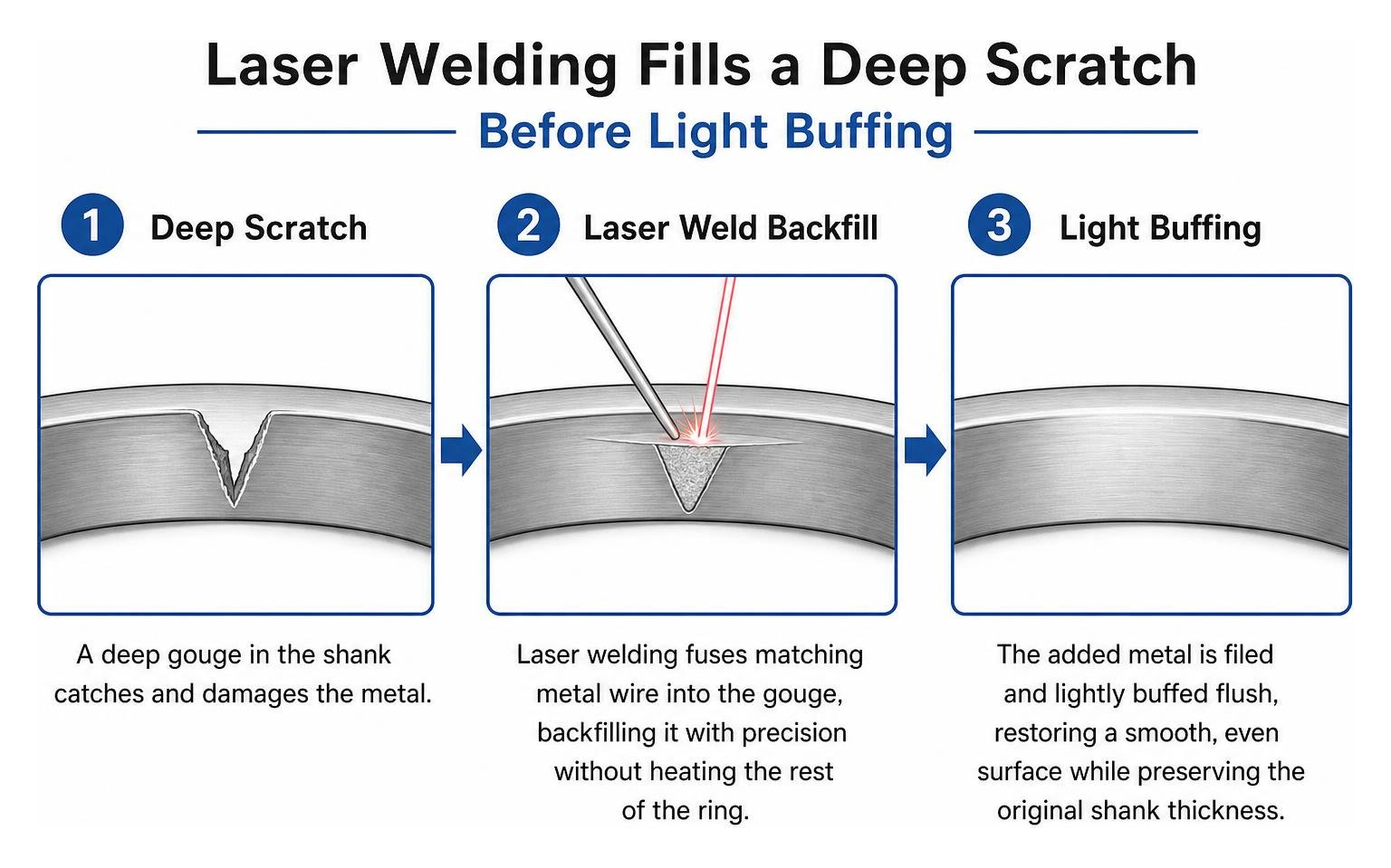
Modern bench jewelers use state-of-the-art laser welders to solve this problem:
- Torchless Precision: Laser welding targets a microscopic point without heating the rest of the piece, keeping heat-sensitive gemstones completely safe.
- Metal Backfilling: The jeweler feeds matching metal wire (14k, 18k, or platinum) directly into the gouge, fusing it with the host metal.
- Targeted Leveling: Only the newly added metal is filed and buffed flat, preserving 100% of the surrounding original shank thickness.
If you are dealing with significant physical impacts, our team providing Jewelry Repair Mesa AZ uses this exact laser restoration approach to restore volume before final polishing.
Costs, Timelines, and Choosing a Local Specialist
Professional jewelry polishing is an affordable maintenance service. Pricing generally starts around $20 to $35 for simple plain bands or small stud earrings, while complex gemstone-encrusted rings, multi-row bracelets, and luxury watch cases typically range from $45 to $75+ per piece. The final cost depends on the piece's surface area, whether white gold rhodium plating is needed, and the labor required to safely buff around delicate gemstones.
If you are researching trusted repair shops across Arizona, you can explore vetted local recommendations through directories like top-rated jewelry repair specialists in Scottsdale or search regional jewelry repair directories in Phoenix.
Selecting an In-House Jewelry Polishing Service vs. Commercial Mail-In
When trusting someone with an irreplaceable engagement ring or family heirloom, always choose a jeweler with a dedicated on-site workshop.
- In-House Master Jewelers: Your piece never leaves the building. The bench jeweler inspects your prongs on the spot, masks internal hallmarks, and handles every abrasive stage personally.
- Commercial Mail-In Services: Many chain jewelers ship your valuables off to centralized regional sorting hubs. This introduces shipping delays, transit risks, and impersonal assembly-line processing.
When you need rapid, secure link repairs and polishing, finding trusted Chain Repair Near Me with in-house benches guarantees accountability.
Turnaround Expectations and Same-Day Jewelry Polishing Service Options
Most standard in-house polishing services can be completed the same day—often in as little as 30 to 90 minutes for simple gold or silver items. Complex jobs involving deep laser gouge filling, multi-metal masking, or full white gold rhodium replating are usually ready within 24 to 48 hours.
Frequently Asked Questions About Jewelry Polishing
How often should daily-wear fine jewelry be professionally polished?
We recommend professional mechanical polishing no more than once or twice a year. Daily-wear items like wedding bands and engagement rings will inevitably acquire light micro-scratches. Limiting abrasive polishing to an annual or bi-annual schedule keeps your jewelry looking brilliant while protecting structural metal thickness over a lifetime of wear.
Is machine polishing completely safe for diamonds and delicate gemstones?
Natural diamonds, sapphires, and rubies are hard enough to withstand normal polishing contact, but soft or heat-sensitive stones (like emeralds, opals, pearls, and tanzanites) require strict precautions. A skilled jeweler will mask delicate stones, avoid high-heat friction, use cool cleaning solutions, and inspect every prong under high magnification before starting the lathe.
Will professional polishing buff away stamped hallmarks or inner engravings?
A master polisher will always mask delicate inner laser engravings, purity hallmarks (like 14K, 750, or PLAT), and maker signatures using heat-resistant protective tape. When polishing the interior of a band, jewelers use soft hand-held felt bobs rather than aggressive high-speed wheels to preserve every custom inscription.
Conclusion
Jewelry is meant to be worn, loved, and enjoyed every single day. While scratches, scuffs, and dullness are natural parts of wearing fine jewelry, you don't have to live with a cloudy finish. By combining routine professional cleanings with moderate, expertly executed polishing, you can keep your treasures gleaming like new without compromising their structural integrity.
At The Diamond Guys, our Scottsdale master jewelers treat every engagement ring, custom piece, and family heirloom with the highest level of craftsmanship. Whether your favorite piece needs a quick luster buff, a fresh rhodium dip, or laser scratch restoration, we provide transparent guidance and meticulous care.
To learn more about our comprehensive bench repair services, read our full guide to jewelry repair in Scottsdale or visit our Scottsdale showroom today.


