

The Science of Sparkle: How HPHT Lab Diamonds are Created
What Exactly Is an HPHT Lab Diamond?
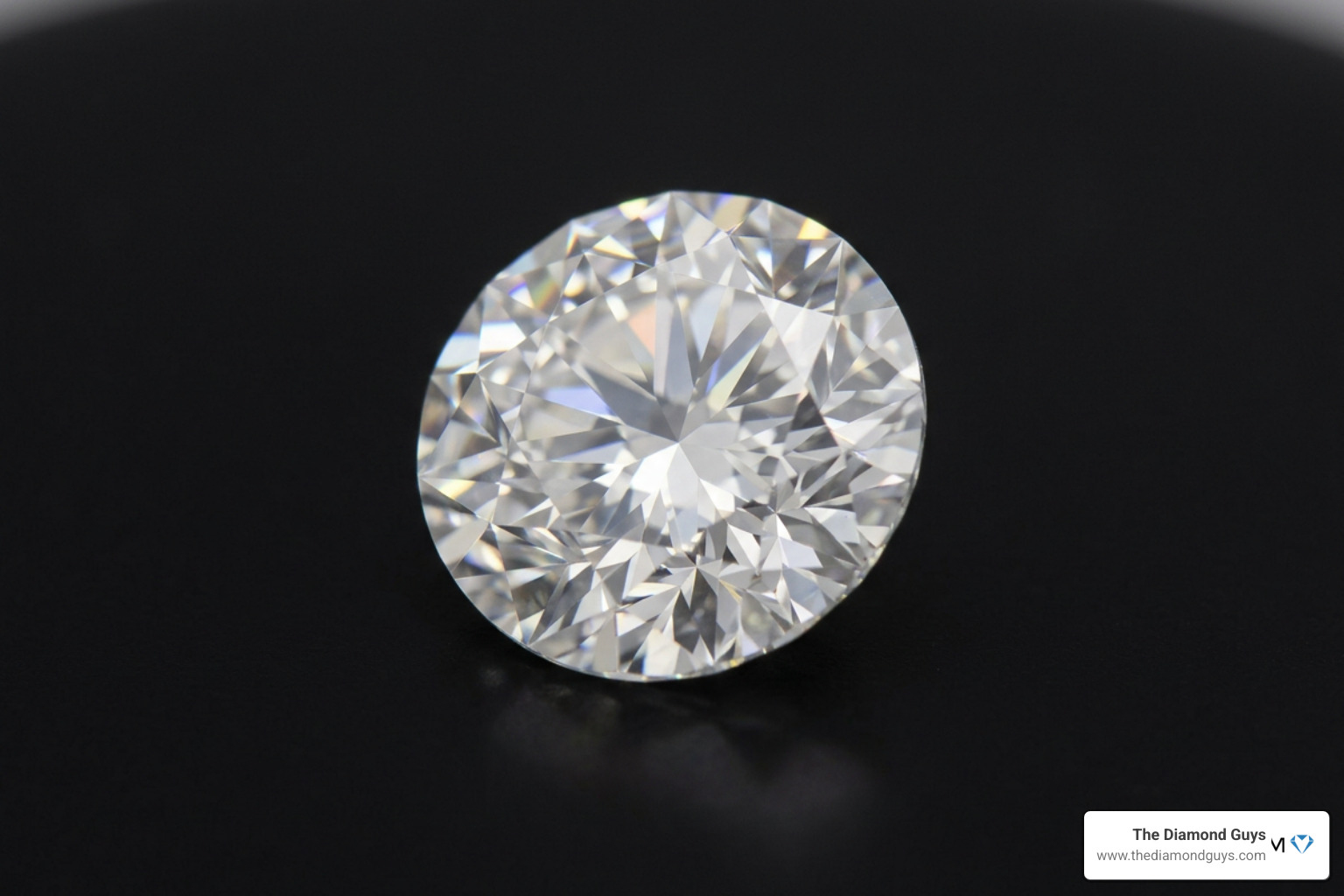
An HPHT lab diamond is a real diamond — grown in a laboratory using extreme heat and pressure that mimics conditions deep inside the Earth.
Here's a quick snapshot of what you need to know:
- Same as natural diamonds: identical chemical composition (pure carbon), hardness (10 on Mohs scale), and refractive index (2.42)
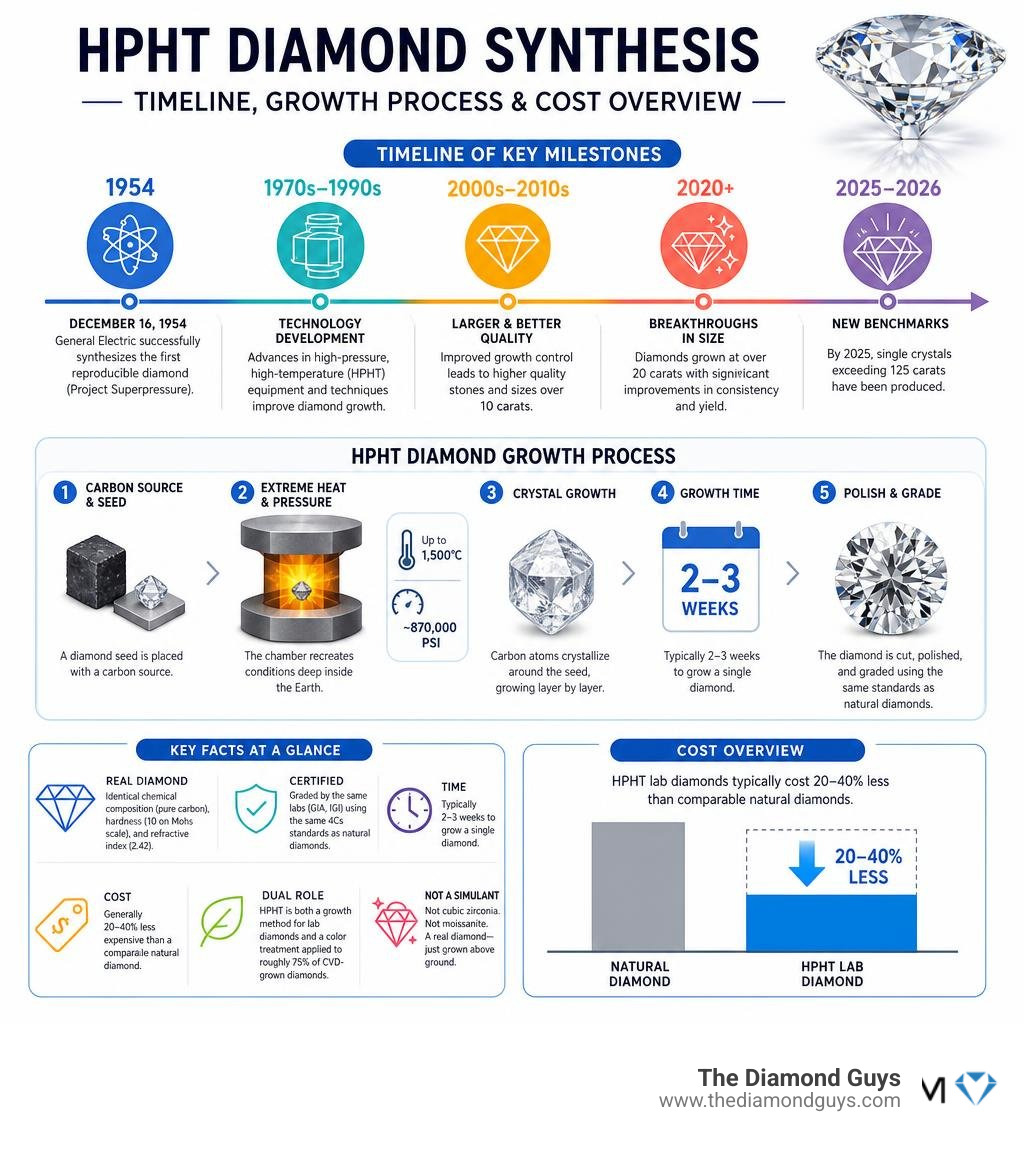
- How it's made: carbon is crystallized around a diamond seed at temperatures up to 1,500°C and pressures of approximately 870,000 PSI
- How long it takes: typically 2–3 weeks to grow a single diamond
- Cost: generally 20–40% less expensive than a comparable natural diamond
- Certified: graded by the same labs (GIA, IGI) using the same 4Cs standards as natural diamonds
- Double role: HPHT is both a growth method for lab diamonds and a color treatment applied to roughly 75% of CVD-grown diamonds
Not a simulant. Not cubic zirconia. Not moissanite. A real diamond — just grown above ground.
The idea of growing diamonds in a lab sounds like science fiction, but it has been a reality since December 16, 1954, when General Electric first successfully synthesized a reproducible diamond through a project called Project Superpressure. Since then, the technology has advanced dramatically — today, HPHT diamonds can be grown at over 20 carats, and by 2025, single crystals exceeding 125 carats have been produced.
For anyone considering a lab-grown diamond for an engagement ring or fine jewelry piece, understanding how an HPHT diamond is made — and how it differs from CVD-grown diamonds — can make a real difference in choosing the right stone with confidence.
I'm Morgan Price, a strategic content and SEO specialist with hands-on experience researching and writing about HPHT lab diamond technology, grading standards, and the lab-grown diamond market. In the sections below, I'll walk you through everything from the science behind the HPHT process to what it means for your buying decision.
HPHT lab diamond glossary:
What is an HPHT Lab Diamond and How is it Made?
To understand how an HPHT lab diamond is made, we have to look at how mother nature does it. Deep within the Earth's mantle, about 150 kilometers below our feet, carbon is subjected to unimaginable crushing forces and blazing temperatures. Over billions of years, this extreme environment forces carbon atoms to bond into a tight, three-dimensional crystal lattice—the hardest substance known to science.
The High Pressure High Temperature (HPHT) process is essentially nature's recipe on fast-forward. Instead of waiting billions of years, modern technology allows us to recreate this geological pressure cooker in a matter of weeks.
The Historic Breakthrough
The quest to create diamonds above ground was a scientific race of epic proportions. While Swedish company ASEA secretly achieved diamond synthesis in 1953, the first publicly documented, reproducible success came on December 16, 1954. Working under General Electric’s "Project Superpressure," physical chemist Tracy Hall designed a "belt press" that could hold extreme temperatures and pressures simultaneously. By placing a carbon source and a metal catalyst inside a pyrophyllite (a type of stone) container, Hall successfully grew the world's first reproducible synthetic diamonds.
For a deeper look into this scientific race, check out our piece on the History of Lab Grown Diamonds How Long Have Lab Grown Diamonds Been Around.
The Modern HPHT Growth Process
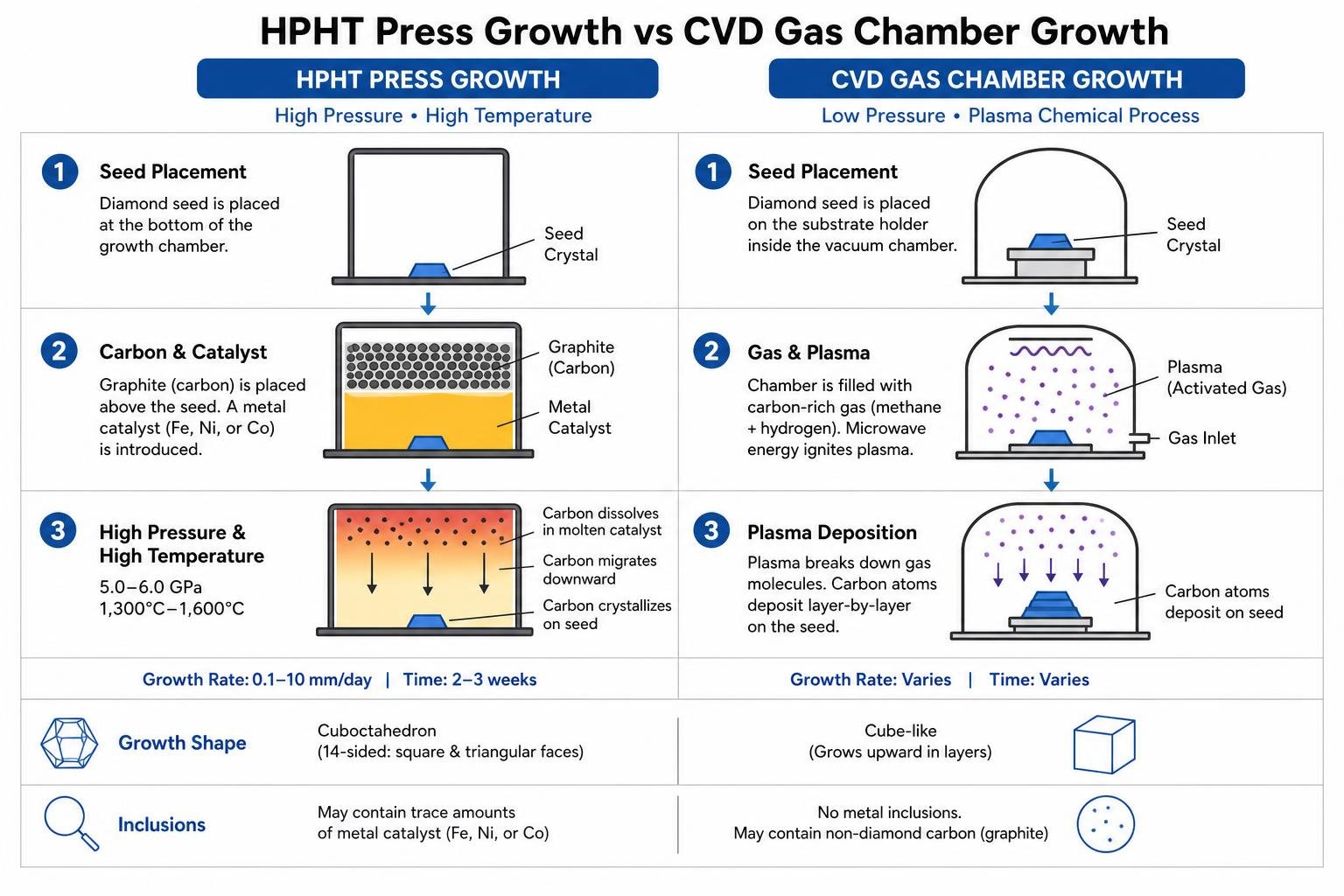
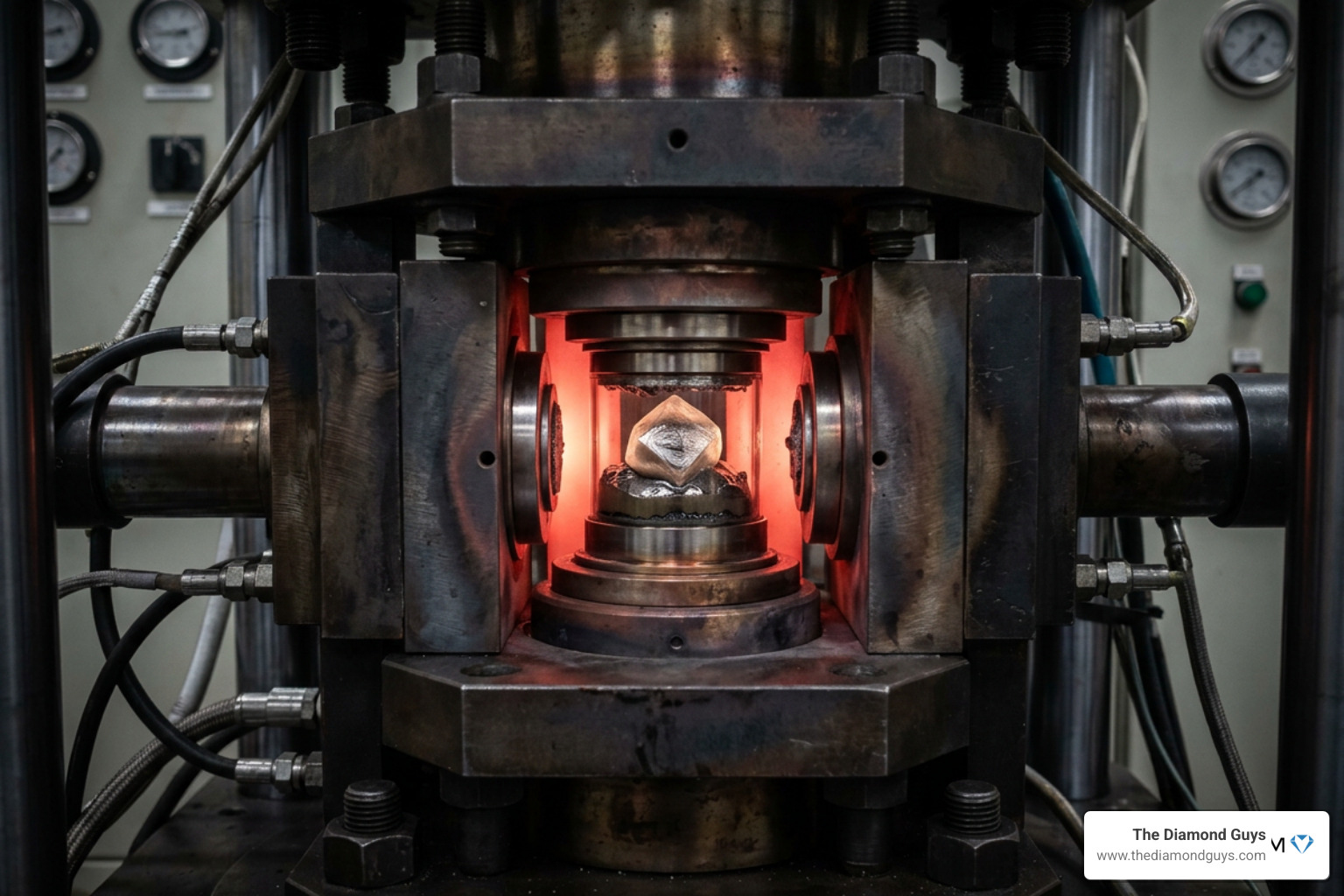
Today, the technology has evolved from Tracy Hall’s original belt press into highly advanced cubic and split-sphere (BARS) presses. However, the fundamental thermodynamics remain the same. The process unfolds in three key phases:
- The Seed Placement: A tiny, microscopic sliver of a high-quality diamond (the seed crystal) is placed at the bottom of a specialized growth chamber.
- The Carbon and Catalyst Recipe: Highly purified graphite (pure carbon) is placed above the seed. A metal catalyst solvent—typically a high-purity alloy of iron, nickel, or cobalt—is introduced. This catalyst is crucial because it lowers the temperature and pressure required to dissolve carbon, making diamond crystallization possible.
- The Crushing Heat and Pressure: The press is sealed. It ramps up the pressure to 5.0 to 6.0 GPa (approximately 870,000 pounds per square inch or 725,000 to 870,000 PSI depending on the specific press configuration). To put that into perspective, 5.0 GPa is equivalent to having a commercial jet airliner land directly on your fingertip! Simultaneously, the temperature is cranked up to 1,300°C to 1,600°C (around 2,700°F).
Under these conditions, the metal catalyst melts, turning into a liquid solvent. The solid graphite carbon dissolves into this molten metal. Because of a carefully maintained temperature gradient (where the top of the chamber is slightly hotter than the bottom where the seed sits), the dissolved carbon atoms migrate downward. As they reach the cooler seed crystal, they precipitate out of the metal solution, bonding atom-by-atom onto the seed.
Depending on the targeted size and quality, the diamond grows at a rate of 0.1 to 10 millimeters per day. The entire process to grow a beautiful, gem-quality rough diamond typically takes 2 to 3 weeks. For those interested in the deeper industrial mechanics of this process, the Technical guide on HPHT manufacturing provides an excellent scientific breakdown.
HPHT vs. CVD: Understanding the Two Primary Growth Methods
If you have spent any time researching lab-grown diamonds, you have undoubtedly run into the acronym CVD, which stands for Chemical Vapor Deposition.
Comparing HPHT and CVD is a bit like comparing steamed wontons to fried wontons—the cooking methods are entirely different, but you end up with a delicious wonton either way. Both methods produce real, chemically identical diamonds, but the machinery and growth dynamics are polar opposites.
While HPHT relies on brute physical force (high pressure and high temperature), CVD is a low-pressure, chemical process. In a CVD reactor, a diamond seed is placed in a vacuum chamber. The chamber is filled with a carbon-rich gas mixture (usually methane and hydrogen) and heated to about 800°C to 1,500°C. Microwave energy or a hot filament is introduced to ignite the gas into a glowing plasma cloud. This plasma breaks the molecular bonds of the methane gas, causing pure carbon atoms to rain down like snow, depositing layer-by-layer onto the diamond seed.
This fundamental difference in growth mechanics leads to distinct physical characteristics in the rough, un-cut crystals:
- Growth Shape: Because HPHT presses squeeze carbon from multiple directions, HPHT diamonds grow into a cuboctahedron shape (a 14-sided crystal with both square and triangular faces). CVD diamonds, growing layer-by-layer in a flat vacuum chamber, grow upward in a cube-like shape.
- Inclusions: HPHT diamonds can sometimes trap tiny traces of the molten metal catalyst inside the crystal. CVD diamonds, which grow in a gas chamber, do not contain metal, but can trap tiny pinpoints of non-diamond carbon (graphite).
To help you visualize these differences, we have laid out a quick comparison table:
| Characteristic | HPHT (High Pressure High Temperature) | CVD (Chemical Vapor Deposition) |
|---|---|---|
| Growth Environment | Extreme physical pressure (5-6 GPa) & heat (up to 1,600°C) | Vacuum chamber with low pressure & plasma gas |
| Raw Materials | Graphite (carbon) and molten metal catalyst (Fe, Ni, Co) | Methane (carbon source) and Hydrogen gas |
| Crystalline Shape | Cuboctahedron (14-sided) | Cubic (flat, block-like) |
| Typical Growth Time | 2 to 3 weeks | 3 to 4 weeks |
| Inclusion Types | Metallic catalyst particles (can be magnetic) | Dark graphite or carbon pinpoints (non-metallic) |
| Color Tendency | Naturally leans yellow or blue (can grow D-F with nitrogen isolation) | Naturally leans brown (often requires post-growth treatment) |
For a highly detailed, side-by-side comparison of how these two methods stack up for consumers, check out our A Comprehensive Guide to Comparing Lab Grown Diamonds.
HPHT as a Post-Growth Color Treatment for CVD Diamonds
Here is one of the most fascinating "plot twists" in the lab diamond industry: HPHT is not just a growth method; it is also a highly effective color-enhancement treatment.
When CVD diamonds are grown, they often grow very quickly, which can cause minor distortions in their crystal lattice. These microscopic structural imperfections trap light, giving the rough diamond an undesirable brownish or yellowish tint.
To fix this, manufacturers take these brown CVD diamonds and put them through an HPHT annealing process. By subjecting the CVD diamond to high heat and pressure after it has finished growing, the carbon atoms inside the crystal lattice are forced to realign, permanently eliminating the brownish tint and turning the stone into a bright, colorless Type IIa diamond.
In fact, about 75% of all CVD diamonds undergo HPHT post-growth color treatment. This treatment is completely permanent, stable, and does not alter the physical integrity of the stone. You can read more about the physics of this process on the Synthetic diamond on Wikipedia page.
Quality, Characteristics, and Performance of HPHT Diamonds
When it comes to the 4Cs (Color, Clarity, Cut, and Carat weight), an HPHT lab diamond performs beautifully. Once cut and polished, an HPHT diamond is visually indistinguishable from a natural diamond. It has the same fire, scintillation, and brilliance because its optical properties—such as a refractive index of 2.42 and a fire dispersion of 0.044—are identical.
If you are looking to purchase loose stones for custom jewelry, you can find incredible variety. For example, options like the 0.40ct 0.50ct 1.0ct VVS VS SI HPHT Loose Diamond showcase just how accessible high-clarity HPHT diamonds have become in today's market.
Color and Clarity Nuances in an HPHT Lab Diamond
While HPHT diamonds are beautiful, the extreme environment of the press can introduce unique, subtle characteristics that gemologists look for under advanced testing equipment.
Nitrogen and the Yellow Hue
The air we breathe is full of nitrogen. If any nitrogen gas leaks into the HPHT growth chamber, those nitrogen atoms will easily substitute themselves for carbon atoms in the diamond crystal lattice. This nitrogen exposure gives the diamond a yellowish hue (Type Ib or Type Ia). To grow highly colorless (D, E, F) HPHT diamonds, manufacturers must use incredibly strict nitrogen isolation techniques, which can extend the growth cycle and increase production costs.
Boron and the "Blue Nuance"
Sometimes, trace amounts of boron are present in the growth chamber. Boron turns a diamond blue (this is the same element responsible for the famous natural Hope Diamond). In lab-grown stones, trace boron can cause a very subtle, light blue tint known in the industry as "blue nuance." While some buyers find this slight blue glow romantic, it is officially graded as a color modifier on laboratory reports.
Metallic Inclusions and Magnetism
Because HPHT diamonds grow in a bath of molten metal catalyst (iron, nickel, or cobalt), microscopic metallic particles can occasionally get trapped inside the crystal. Under a jeweler's loupe, these metallic inclusions may display a reflective, metallic luster.
Even more fascinating: because of these iron-based inclusions, over half of HPHT diamonds tested in a landmark 2012 study registered a detectable magnetic response. Yes, some HPHT diamonds can actually be picked up or spun by a strong neodymium magnet!
Rest assured, these inclusions do not make the diamond look cloudy to the naked eye unless they are very large. To understand how clarity and cloudiness are evaluated in lab stones, read our article: Do Lab Grown Diamonds Get Cloudy.
Size and Carat Capabilities of the HPHT Lab Diamond
In the early days of synthetic diamond production, HPHT presses were primarily used to create tiny diamond grit for industrial grinding. Growing large, gem-quality crystals was incredibly difficult because maintaining a perfectly stable temperature and pressure gradient over several weeks is an engineering nightmare. If the temperature fluctuates by even a few degrees, the crystal can fracture or grow full of heavy metallic inclusions.
However, modern engineering has solved this. Today, HPHT technology can easily grow diamonds of 20+ carats for jewelry use. In industrial and scientific laboratories, single crystal diamonds have reached a mind-boggling 125 carats as of 2025.
Because HPHT presses are expensive to purchase and require immense amounts of electricity to run, the production economics are highly scaled. While HPHT is often reserved for high-quality melee (very small accent diamonds under 0.10 carats, which can be grown in large batches in a single press run), it is also used to grow massive, ultra-high-quality colorless stones.
For instance, the production cost for a 1.0 carat D-VVS HPHT diamond is approximately $435, boasting an impressive yield rate of 92% in modern facilities. This efficiency has made beautiful, certified 1-carat stones widely available to the public. You can explore options like the 1 Carat HPHT IGI Certified Lab Grown Diamonds Round Brilliant Cut or read our pricing breakdown in the 1 Carat Man Made Diamond Price Guide.
Buying Guide: Cost, Certification, and Environmental Impact
If you are shopping for an engagement ring in Scottsdale, AZ, or Los Angeles, CA, choosing an HPHT lab diamond offers incredible practical advantages.
Pricing and Savings
First and foremost is the cost. HPHT lab-grown diamonds are typically 20% to 40% more affordable than natural diamonds of comparable quality—and in some larger carat weights, the savings can be even more dramatic. This allows you to maximize your budget, choosing a larger carat weight or a higher clarity grade without breaking the bank.
Certification and Laser Inscriptions
Just like natural diamonds, high-quality HPHT diamonds are sent to independent gemological laboratories like the Gemological Institute of America (GIA) or the International Gemological Institute (IGI). These labs grade the diamond on the exact same scale as natural stones.
On the grading report, the lab will explicitly state that the stone is "Laboratory Grown" and will identify the growth method as "HPHT." To prevent any confusion or undisclosed mixing, reputable manufacturers laser-inscribe a tiny, microscopic message on the diamond's girdle (the outer edge) along with its unique report number.
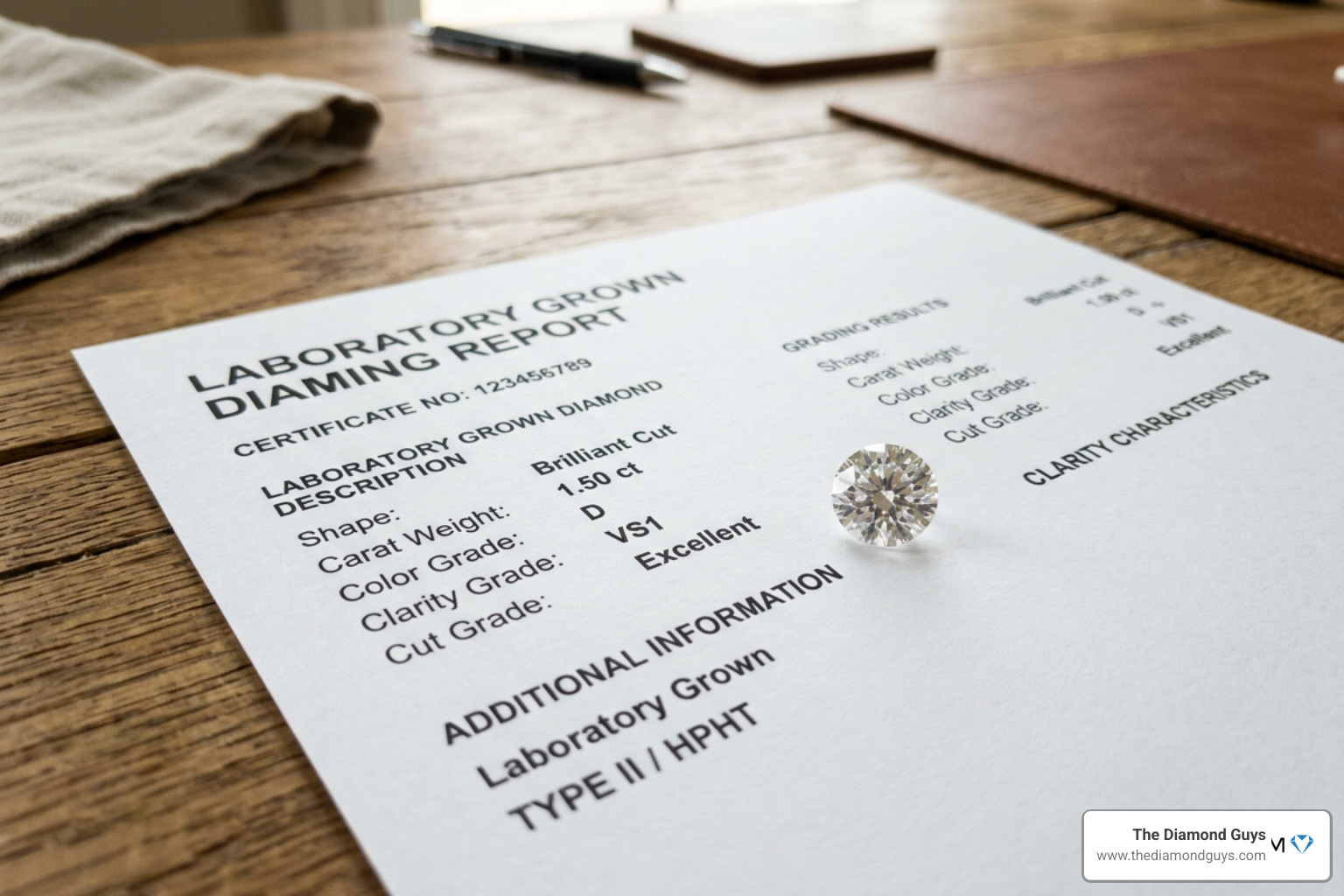
When shopping, always look for these reports. You can learn more about what to look for in our guide on IGI Certified Lab Diamonds.
Environmental and Ethical Considerations
For many modern couples, the appeal of a lab-grown stone lies in its ethical footprint. Traditional diamond mining requires moving tons of earth, which can lead to habitat disruption and heavy carbon emissions from heavy machinery.
HPHT diamonds, being grown in a laboratory, completely bypass the need for mining. Many leading laboratories are now utilizing 100% renewable energy (such as solar or wind power) to run their presses, and some are even certified carbon-neutral through SCS Global Services. This makes them an exceptionally clean, modern, and eco-friendly choice for your jewelry.
Frequently Asked Questions About HPHT Diamonds
Are HPHT diamonds real diamonds?
Yes! HPHT diamonds are 100% real diamonds. They are composed of pure crystallized carbon in a face-centered cubic structure with SP3 bonds. They share the exact same physical, chemical, and optical properties as natural mined diamonds. They are not diamond simulants like cubic zirconia or moissanite. For a detailed breakdown of this topic, read our article: Are Lab Grown Diamonds Real Diamonds.
Do HPHT diamonds pass a diamond tester?
Yes, they do. Standard diamond testers work by measuring thermal and electrical conductivity. Because HPHT diamonds have the exact same thermal conductivity as natural diamonds, they will pass a standard diamond tester with flying colors. For more information on how testers interact with lab-grown stones, see Do Lab Diamonds Pass a Diamond Tester.
What are the industrial uses of HPHT diamonds beyond jewelry?
While they are beautiful in engagement rings, about 98% of the global demand for industrial-grade diamonds is met by synthetic diamonds. Because pure diamond has a thermal conductivity 7.5 times higher than copper, it is incredibly valuable as a heat spreader in high-power semiconductor devices and microelectronics to prevent overheating. They are also used as optical windows in high-power CO2 lasers, and as polycrystalline diamond (PCD) drill bits for heavy mining and construction.
Conclusion
At The Diamond Guys, we believe that selecting a diamond is an deeply personal journey. Whether you are drawn to the incredible natural history of a mined stone or the cutting-edge, eco-friendly technology of an HPHT lab diamond, we are here to guide you every step of the way.
As a premier, 5-star rated jewelry store with locations in Scottsdale, AZ (serving the Phoenix metro area) and Los Angeles, CA, we specialize in crafting stunning custom engagement rings. We bypass the high-pressure sales tactics of big-box retailers to offer a personalized, educational, and warm shopping experience.
If you are ready to explore the brilliant world of lab-grown diamonds, compare HPHT and CVD stones in person, or design your dream custom ring, we would love to help.
For a deeper look into the differences between these stones, read our comprehensive guide: Lab Diamonds vs Real Diamonds. Or better yet, stop by our showroom or contact our expert team today to start designing your legacy!


