

The Ultimate Beginner's Guide to Lab Cultured Diamonds
Understanding Lab Cultured Diamonds: Science and Creation
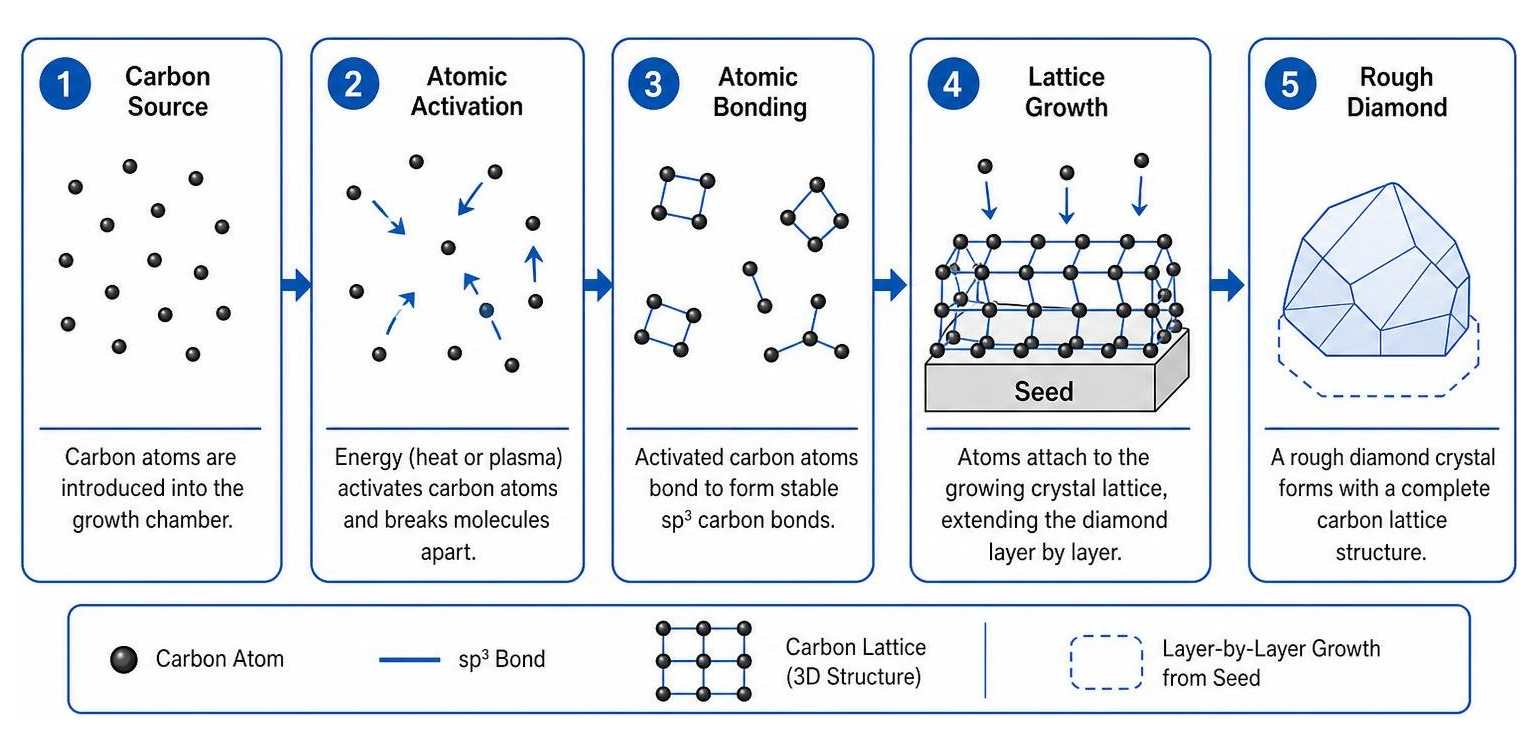
To appreciate lab cultured diamonds, it helps to look inside their atomic structure. At a microscopic level, diamonds consist of pure carbon atoms arranged in an incredibly tight, three-dimensional carbon lattice known as a face-centered cubic crystal structure. This specific atomic alignment contains 100% SP3 carbon bonds, which gives the material its exceptional strength and unmatched optical sparkle.
Whether a diamond crystallizes deep within the Earth's mantle or inside a state-of-the-art laboratory growth chamber, the underlying science remains identical. Advanced lab diamond technology creates the exact physical environment needed for carbon atoms to bond together and form gem-quality rough diamond crystals.
HPHT vs CVD Manufacturing Methods
Modern gemology relies on two distinct methods to grow diamonds above ground: High Pressure High Temperature (HPHT) and Chemical Vapor Deposition (CVD).
- High Pressure High Temperature (HPHT): This method replicates the extreme pressures and scorching temperatures found 100 miles below the Earth's surface. A small diamond seed is placed into a specialized press—such as a cubic press or split-sphere press. The chamber is subjected to pressures exceeding 80,000 atmospheres and heated above 2,400°F. Under these conditions, a pure carbon source melts and crystallizes around the seed, building a rough diamond layer by layer over a few weeks.
- Chemical Vapor Deposition (CVD): CVD technology takes a different physical approach. A thin diamond seed plate is placed inside a sealed vacuum chamber and heated to around 1,400°F. Carbon-rich gas, typically methane combined with hydrogen, is introduced into the chamber. Microwave energy turns the gas into a glowing plasma cloud, breaking the chemical bonds and releasing carbon atoms. These carbon atoms settle onto the seed disk like snow, steadily building a high-purity gem diamond.
To trace how far these technologies have come, explore the fascinating history of lab grown diamonds. Today, both HPHT and CVD methods produce magnificent stones, including top-tier options like 1 Carat HPHT IGI Certified Lab Grown Diamonds Round Brilliant Cut.
Physical and Chemical Equivalence of Lab Cultured Diamonds
A common point of confusion for shoppers is whether lab-created gems are "fake" or synthetic imitations like cubic zirconia. The simple answer is no—are lab grown diamonds real diamonds? Absolutely. They possess identical chemical, physical, and optical characteristics to mined stones.
- Mohs Hardness: Lab cultured diamonds score a perfect 10 on the Mohs hardness scale. This makes them the hardest substance known to science, ensuring exceptional scratch resistance for daily wear. Read more on why are lab grown diamonds as strong as real diamonds.
- Refractive Index & Dispersion: With a refractive index of 2.42 and a fire dispersion rating of 0.044, lab-created diamonds bend and split light into brilliant rainbow flashes identically to mined gems.
- Thermal Conductivity: Because they are composed of pure carbon, lab diamonds transfer heat instantly, allowing them to register positive on professional thermal diamond testers.
Comparing Lab Grown and Mined Diamonds: Quality, Cost, and Ethics
When comparing earth-mined diamonds with laboratory-grown alternatives, the primary distinctions lie in their origin, price tag, and ethical footprint rather than their optical brilliance.
| Comparison Parameter | Lab Cultured Diamonds | Natural Earth-Mined Diamonds |
|---|---|---|
| Primary Growth Engine | HPHT Presses or CVD Plasma Chambers | Volcanic heat & tectonic pressure |
| Growth Timeline | 2 to 4 weeks | 1 to 3.5 billion years |
| Retail Price (Per Carat) | 70% – 85% lower relative cost | Premium pricing due to mining scarcity |
| Surface Excavation Footprint | Zero direct earth displacement | Significant land moving and soil shifting |
| Conflict-Free Assurance | 100% trackable and conflict-free | Requires strict Kimberley Process tracking |
By selecting laboratory-created stones, buyers enjoy extraordinary cost efficiency, allowing them to upgrade their stone's size or quality while maintaining peace of mind.
Comparing the 4Cs in Lab Cultured Diamonds
Just like mined diamonds, lab cultured diamonds are evaluated using the standard 4Cs established by the gemological world: Color, Clarity, Cut, and Carat Weight.
- Color: Graded on a scale from D (colorless) to Z (light yellow or brown). Premium lab diamonds fall primarily into the D, E, and F colorless ranges. Additionally, controlled laboratory environments allow scientists to create spectacular fancy colors, such as lab grown pink diamonds and stunning options covered in our lab created blue diamonds ultimate guide.
- Clarity: Lab diamonds range from Flawless down to Included. Most high-grade options fall in the Very Very Slightly Included (VVS) or Very Slightly Included (VS) categories, meaning any tiny growth characteristics are invisible to the naked eye.
- Cut: The quality of the cut determines how light enters and bounces inside the diamond. Excellent and Ideal cuts unlock maximum sparkle, brilliance, and fire.
- Carat Weight: Because lab growing scale is predictable, finding large, high-carat stones (such as 2-carat or 3-carat diamonds) is far more accessible and affordable than in natural mining.
Environmental Impact and Ethical Sourcing
One of the biggest reasons couples opt for laboratory diamonds is peace of mind. Traditional diamond mining requires excavating thousands of tons of earth, consuming vast amounts of fuel, and disrupting local ecosystems.
In contrast, lab cultured diamonds are grown above ground in controlled laboratory facilities. This eliminates heavy land displacement and drastically reduces ecological footprints. Furthermore, lab-grown origin offers a 100% conflict-free guarantee. Every stone can be traced back to its laboratory source, completely removing concerns over unethical labor practices or illicit trade. Check out a comprehensive guide to comparing lab grown diamonds for a deeper dive into these comparisons.
Essential Buying Tips, Identification, and Certification
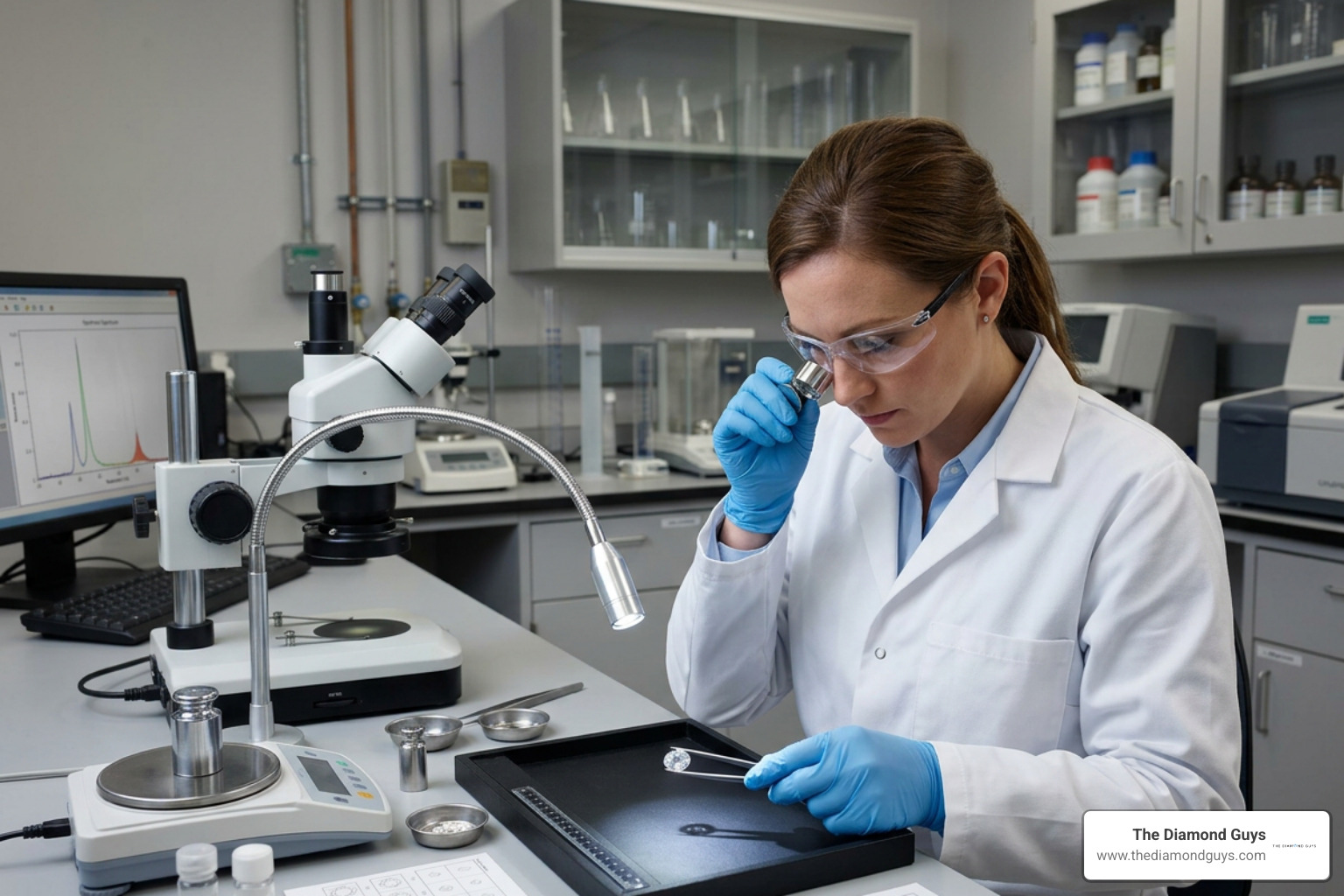
Navigating the market for lab cultured diamonds requires basic knowledge about grading reports, testing procedures, and ring selection.
IGI Certification and Identification Methods
Never buy an uncertified diamond. Reputable lab-grown diamonds are independently evaluated by major gemological laboratories such as the International Gemological Institute (IGI). An IGI lab report documents the exact 4Cs metrics and confirms that the stone is lab-created.
To safeguard consumers, manufacturers use laser engraving technology to micro-inscribe the diamond's unique certificate number directly onto its girdle. This inscription is visible under 10x magnification.
When testing these stones in a retail setting, basic thermal diamond pens will identify a lab diamond as a real diamond because of its thermal conductivity. To distinguish between lab-grown and mined diamonds, professional gemologists utilize advanced laboratory spectroscopy tools that analyze trace elements, microscopic growth patterns, and UV photoluminescence response. For more detail, read our ultimate igi certified lab grown diamonds guide and discover if do lab diamonds pass a diamond tester.
Applications in Custom Engagement Rings and Fine Jewelry
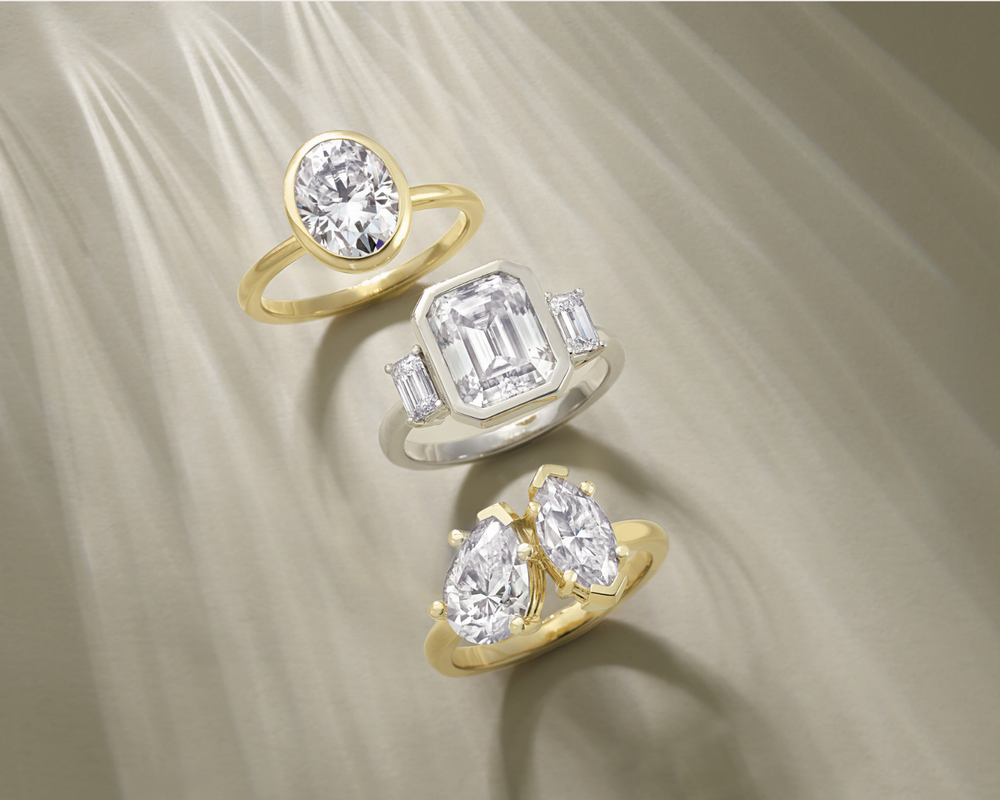
Thanks to their accessible price points, lab cultured diamonds have revolutionized custom engagement ring design. Buyers can dedicate more of their budget to intricate settings, platinum metals, custom accent stones, or elaborate solitaire mountings.
Whether you are designing a classic round solitaire, an elegant oval ring, or a brilliant full-circle eternity band, lab diamonds deliver uncompromised luxury. Discover how to build your ideal piece with our lab diamond custom jewelry design options and check out our updated lab created engagement ring guide 2026.
Beyond fine jewelry, high-purity lab diamonds are widely utilized in industrial optics, laser lenses, and high-performance semiconductors due to their supreme heat dissipation and optical clarity.
Frequently Asked Questions
Can a jeweler tell the difference between lab grown and mined diamonds?
To the naked eye, even a master jeweler cannot tell the difference between a lab-grown and a earth-mined diamond. Both reflect light, display fire, and feel identical. A jeweler can only distinguish between them by using specialized laboratory instruments, such as photoluminescence equipment or powerful microscopic magnification that inspects crystal growth structures and trace nitrogen absorption. Learn more about how experts inspect stones in our guide: can a jeweler tell the difference between lab grown diamonds.
Do lab grown diamonds get cloudy over time or lose brilliance?
No, lab cultured diamonds will never turn cloudy, change color, or lose their brilliance over time. Because they share the exact carbon crystal integrity and Mohs 10 hardness of natural diamonds, their optical clarity is permanent. If your ring ever appears dull, it is simply due to everyday surface buildup like hand lotion or soap residue, which easily washes away with mild soap and warm water. For a detailed breakdown, see our article do lab grown diamonds get cloudy.
Are lab grown diamonds and moissanite the same thing?
No, they are entirely different gemstone materials. Lab-grown diamonds are composed of pure carbon ($C$), whereas moissanite is made of silicon carbide ($SiC$). Moissanite has a different crystal structure, displays a higher double-refraction "rainbow" fire, and measures 9.25 on the Mohs scale compared to a diamond's perfect 10. To compare these options further, check out are lab grown diamonds and moissanite the same.
Conclusion
Choosing the perfect diamond is a meaningful milestone. Lab cultured diamonds offer an exceptional combination of optical beauty, unmatched durability, conflict-free ethics, and accessible pricing. By matching pure physical carbon science with modern innovation, these gorgeous gems allow you to craft the ring of your dreams without compromise.
At The Diamond Guys, located in Scottsdale, AZ, and Los Angeles, CA, we specialize in helping clients navigate certified lab-grown and natural diamonds. Our expert team provides personalized guidance, hands-on education, and custom ring design services in a relaxed, non-pressure environment. Ready to find your ideal diamond? Visit our showrooms or explore our detailed comparison guide on lab diamonds vs real diamonds to begin your journey today!


