

Behind the Sparkle and Why Sourcing Transparency Matters for Lab Diamonds
Why Lab Diamond Source Transparency Matters

A lab diamond can be a more transparent choice than a mined diamond, but it is not automatically ethical. To evaluate a lab diamonds ethical source claim, ask for three things: a respected grading report, clear information about the producer and country of growth, and evidence of the energy and labor standards behind production. Claims such as "eco-friendly," "conflict-free," or "carbon neutral" should be backed by traceable records or independent certification.
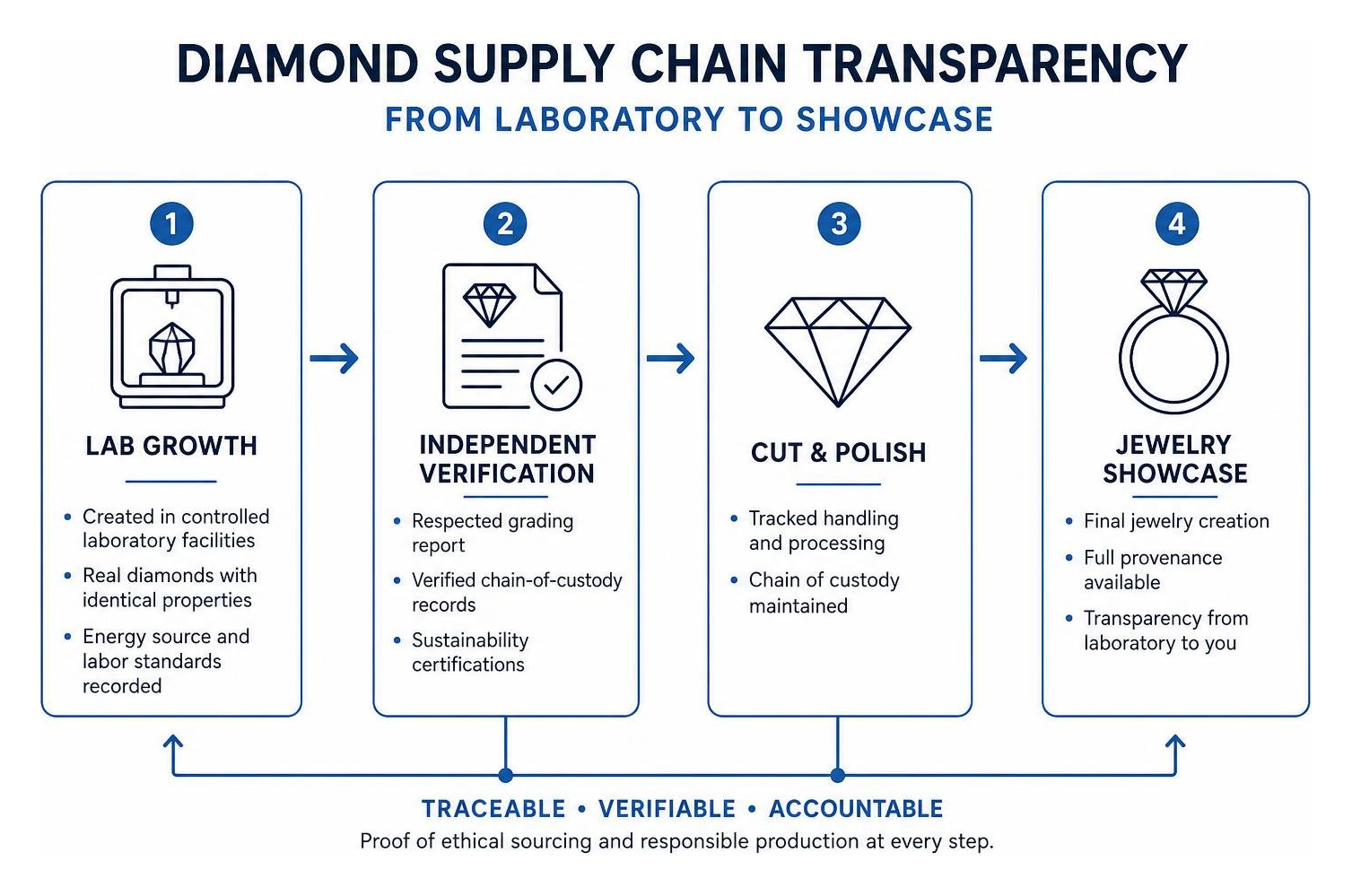
Lab-grown diamonds are physically real diamonds, created in controlled facilities rather than extracted from the earth. This can avoid many mining-linked concerns, including major land disruption, unclear labor conditions, and the risk of diamonds entering supply chains connected to conflict. It also gives buyers a better chance to follow a stone from laboratory to finished jewelry.
Still, the details matter. Growing diamonds requires significant electricity, and the impact changes based on whether the facility uses renewable power or a fossil-fuel-heavy grid. Independent standards, such as SCS-007 sustainability certification and verified chain-of-custody records, can help separate meaningful proof from broad marketing language.
For a significant purchase like an engagement ring, transparency is part of the value. You deserve to know not only a diamond's cut, color, clarity, and carat weight, but also how it was made and who can verify its journey.
I am Morgan Price, a research-focused outreach specialist who helps content teams build trustworthy, evidence-led resources through ethical, white-hat practices. In this guide, I will help you assess lab diamonds ethical source claims with the same practical focus on proof, accountability, and long-term trust.
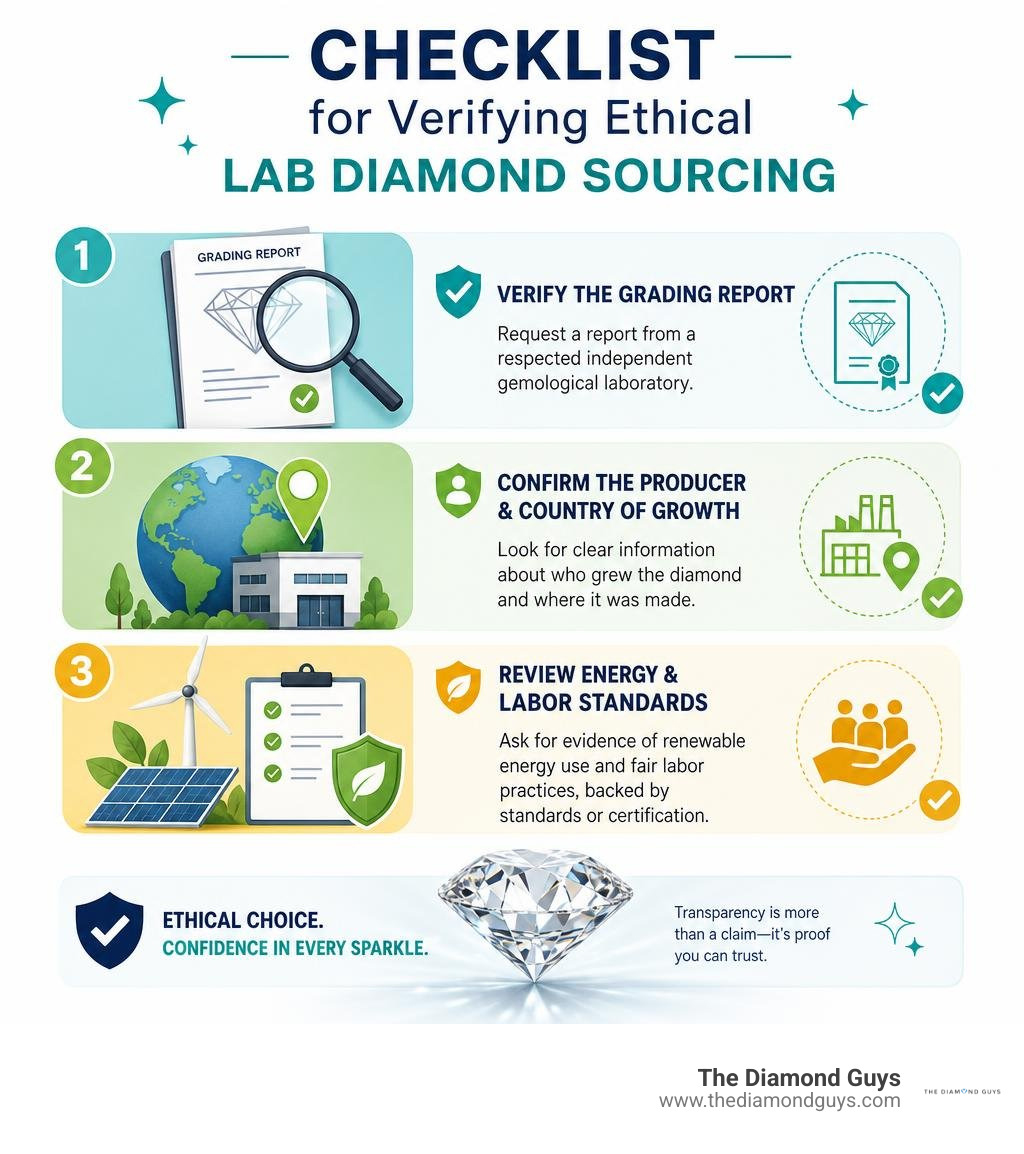
Easy lab diamonds ethical source word list:
As we look at the fine jewelry landscape in August 2026, diamond buyers are more informed than ever. According to a landmark survey by MVI Marketing, 70% of consumers under 40 actively prefer lab-grown diamonds due to ethical and environmental reasons. Furthermore, the global lab-grown gemstone sector is projected to expand at a compound annual growth rate (CAGR) of 8.5% between 2023 and 2030. This shift shows that provenance, worker welfare, and low-impact production are no longer niche preferences—they are defining modern luxury.
Evaluating the Lab Diamonds Ethical Source Movement vs. Mined Diamonds
When comparing earth-extracted gems with laboratory-grown alternatives, the primary discussion often begins with physical composition. There is fundamentally no structural Difference Between Real and Synthetic Diamonds; lab-grown diamonds possess the exact same chemical, optical, and physical properties as mined stones. Both consist of pure carbon crystallized in an isometric cubic system, scoring a 10 on the Mohs hardness scale.
However, the journey from origin to showroom could not be more divergent. For decades, natural diamond mining has carried severe socio-political and humanitarian challenges. The term "blood diamond" emerged to describe rough gems extracted in war zones to finance armed conflict against legitimate governments.
To address international outrage, the United Nations and diamond-producing nations established the Kimberley Process Certification Scheme (KPCS) in 2003. While the KPCS was a noble initial step, it has well-documented limitations:
- Narrow Definition: It strictly defines conflict diamonds as rough gems used by rebel movements to overthrow governments. It does not regulate state-sponsored violence, worker exploitation, or severe ecological damage.
- Paper-Based Vulnerability: Paper certificates can be forged, allowing unethically sourced rough gems to be mixed into legitimate batches during sorting and export.
- Limited Chain-of-Custody Tracking: Once rough parcels enter major cutting and polishing hubs, individual stones lose their country-of-origin identity.
Because lab diamonds originate within secure, high-tech facilities, they bypass these geopolitical vulnerabilities entirely, offering an uncompromised chain of custody.
Key Ethical and Environmental Differences
When couples ask us, "Should I Buy a Lab Grown Diamond Engagement Ring?", we often highlight the dramatic difference in human impact and land transformation.
Traditional open-pit and subterranean mining operations require excavating vast tracts of land. Mining often leads to:
- Severe Ecosystem Disruption: Deforestation, soil erosion, and the displacement of local wildlife.
- Worker Safety Hazards: Deep-shaft miners frequently endure structural collapses, poor ventilation, and occupational lung illnesses.
- Child Labor and Exploitation: In unregulated artisanal mining sectors, vulnerable populations work without formal contracts or fair wages.
Lab creation substitutes deep-earth excavation with advanced scientific metallurgy. Technicians and material scientists operate in clean, climate-controlled environments protected by modern labor standards. This shift virtually eliminates the human exploitation historically tied to mineral extraction.
Traceability and Supply Chain Integrity
A critical advantage of cultivated diamonds is uncompromised supply chain integrity. In traditional mining, a rough stone passes through dozens of intermediaries—artisanal diggers, regional brokers, exporters, international cutters, polishing houses, and wholesalers—before reaching a retail counter.
Because lab-created gems have a direct route from the growing facility to the cutting house, every step is readily documented. Independent institutes verify this journey through precision microscopic laser inscriptions. A unique registry number etched on the diamond's girdle links directly to digital certificates, confirming physical properties, synthetic growth methods, and laboratory origin. For those building a foundational understanding of gem attributes, our guide on Diamond Education details how to read these grading certificates.
How Cultivated Diamonds Are Created and Verified
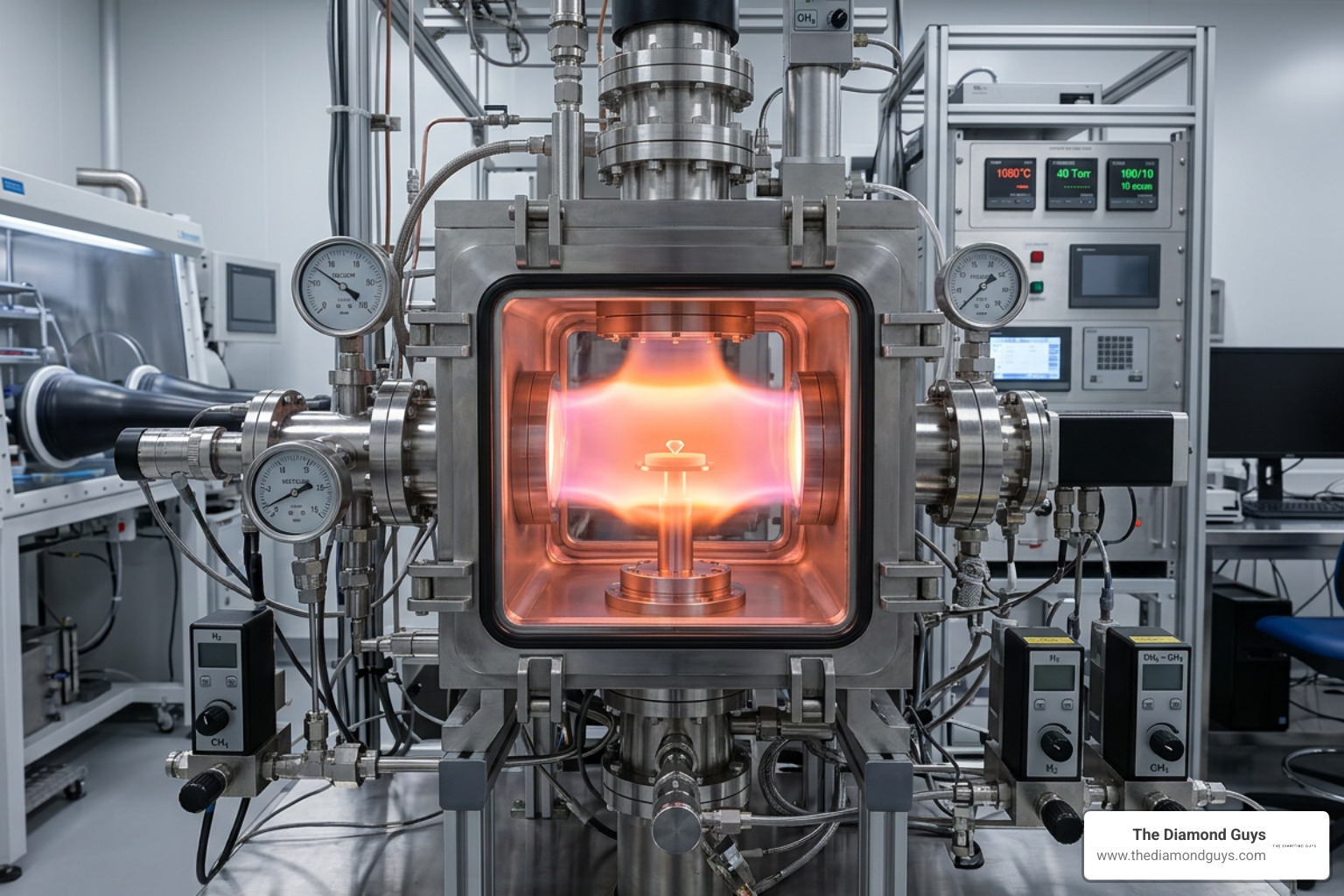
Growing a diamond requires recreating the extreme subterranean conditions of the Earth's mantle: temperatures exceeding 1,500°C and pressures surpassing 50,000 atmospheres. Today, specialized foundries rely on two proven engineering methods.
Regardless of which process is used, gemological laboratories examine the finished stone. The Ultimate IGI Certified Lab Grown Diamonds Guide explains how grading entities verify that a cultivated stone possesses pristine optical fire without non-diamond inclusions.
HPHT and CVD Production Methods
-
High Pressure High Temperature (HPHT):
- A thin diamond seed crystal is placed in a specialized apparatus (such as a cubic press or BARS apparatus).
- Pure graphite carbon is subjected to pressures over 870,000 pounds per square inch and temperatures above 2,000°C.
- A molten metal alloy (iron, nickel, or cobalt) dissolves the pure carbon, precipitating it onto the diamond seed to form a rough crystal over several days or weeks.
-
Chemical Vapor Deposition (CVD):
- A flat diamond seed plate is placed inside a sealed vacuum reactor chamber.
- Carbon-rich gases (typically methane and hydrogen) are introduced into the chamber.
- Microwave generators heat the gases into a glowing plasma ball, breaking down molecular bonds.
- Pure carbon atoms settle onto the seed crystal layer by layer, crystallizing in a vertical pattern.
Standards and Certifications for a Lab Diamonds Ethical Source
To ensure a producer adheres to verified ecological and workplace benchmarks, independent auditing systems have emerged:
- SCS-007 Sustainability Rated Diamond Standard: Developed by SCS Global Services, this is the benchmark for diamond sustainability. It audits five core pillars: verified origin traceability, ethical stewardship, complete climate neutrality, zero-impact manufacturing, and sustainability investments.
- ISO Certifications: Reputable facilities frequently maintain ISO 14001 (Environmental Management Systems) and ISO 9001 (Quality Management) certifications.
- Chain-of-Custody Third-Party Audits: External auditors inspect every stage of the supply chain to verify that no untracked minerals enter production.
For shoppers looking at engagement rings, exploring our Lab Created Diamond Engagement Ring Guide 2026 provides an updated roadmap for matching design aspirations with third-party verified origin credentials.
Environmental Footprint: Energy, Carbon, and Resource Realities
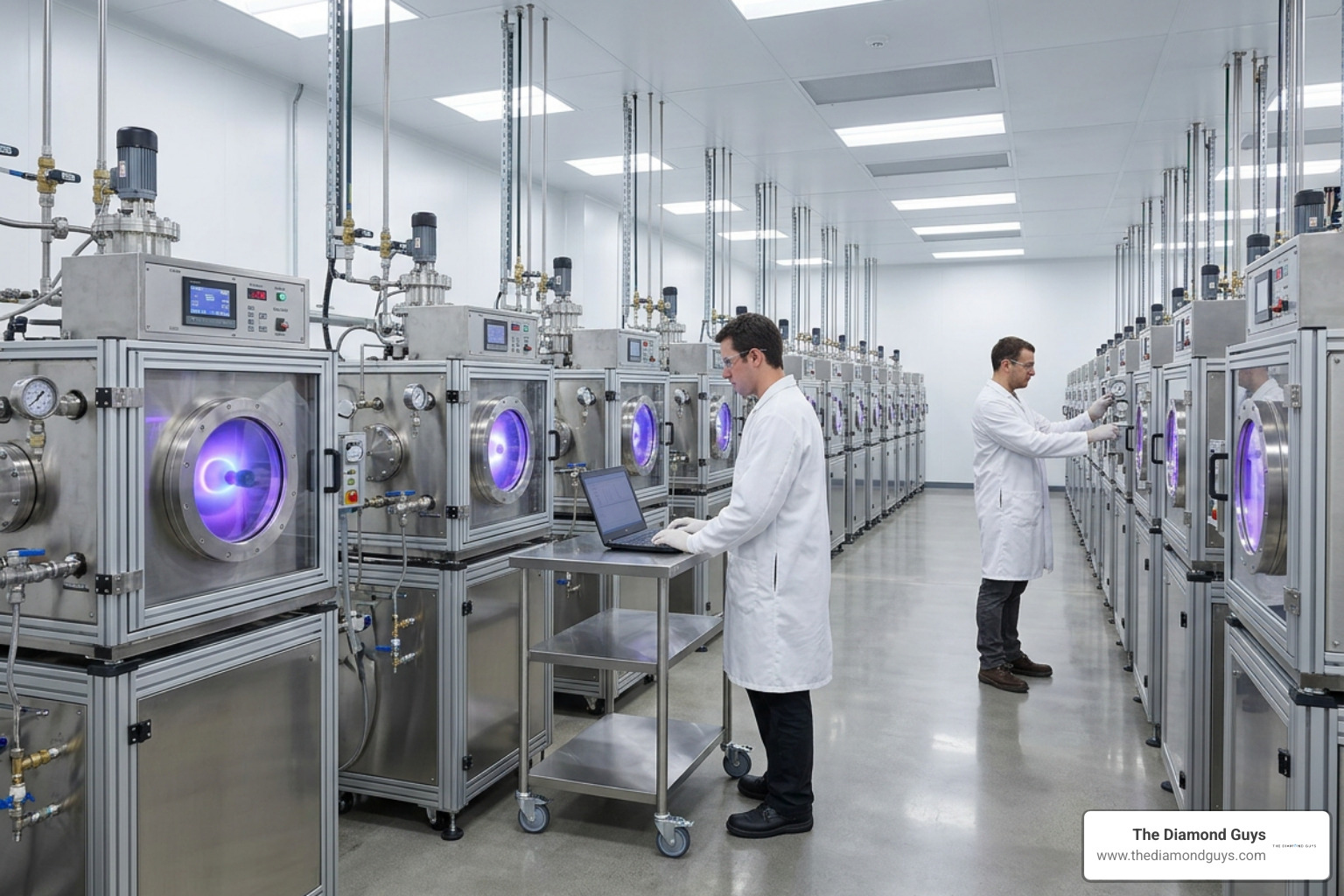
While lab diamonds resolve many humanitarian concerns, assessing their environmental performance requires examining facility energy use. Growing diamonds is energy-intensive. Plasma chambers and hydraulic presses operate continuously for hundreds of hours.
Assessing Carbon Emissions and Renewable Energy Use
According to a 2023 report by the International Grown Diamond Association (IGDA), lab-grown diamonds typically produce a 30% to 40% lower carbon footprint than mined counterparts. Furthermore, advanced facilities are shifting toward dedicated clean energy grids, with over 99% of leading lab-grown diamond producers operating on or transitioning to renewable sources like solar, hydroelectric, and wind.
When a diamond reactor is powered by coal-heavy electrical grids, emissions rise. Conversely, when facilities operate on direct hydroelectric power or dedicated solar arrays, production approaches zero net operational emissions. Discerning buyers should always look for producers who actively invest in clean energy partnerships rather than unverified carbon offsets.
Comparing Land Disruption and Water Usage
The physical footprint difference between mined and lab diamonds is stark:
- Land Disruption: Extracting a one-carat natural diamond typically requires shifting roughly 1,000 tons (two million pounds) of rock, soil, and overburden. Lab diamonds use about 250 tons of earth indirectly per carat via foundational raw materials and equipment manufacturing, representing a 75% reduction in overall land disruption.
- Water Consumption: Natural diamond extraction consumes approximately 126 gallons of water per carat, often causing acid mine drainage that impacts local watersheds. In contrast, modern CVD diamond production uses closed-loop, recycled cooling systems that consume just 18 to 25 gallons per carat without contaminating regional groundwater.
Consumer Guide: Choosing a Verified Lab Diamonds Ethical Source
Finding an ethically produced gem involves looking beyond general marketing terms like "sustainable" or "green." Buyers should expect verifiable evidence of provenance, clean energy usage, and third-party grading.
Whether you are designing custom jewelry or browsing our Custom Lab Grown Diamond Ring Guide, asking focused questions helps ensure your diamond meets strict ethical and quality standards.
Essential Verification Steps for Conscious Buyers
Use this checklist when consulting with a jeweler:
- Demand Independent Origin Grading: Request an IGI or GIA grading certificate confirming the diamond's growth method (CVD or HPHT) and post-growth enhancements.
- Inquire About Power Sources: Ask whether the growing facility uses renewable energy, such as solar, hydro, or wind.
- Verify SCS-007 Certification: Check if the stone qualifies as an SCS-007 Sustainability Rated Diamond, ensuring verified origin and climate neutrality.
- Inspect the Inscription: Use a gemological loupe or digital microscope to confirm the laser inscription on the girdle matches your grading certificate.
- Work with Transparent Specialists: Partner with local jewelers who are open about their sourcing and diamond provenance.
Clients exploring Lab Grown Diamonds in Scottsdale AZ can inspect our stones in person, review their certifications, and trace their origin alongside our gemological team.
Conflict-Free Claims and Fair Trade Provenance
The Federal Trade Commission (FTC) enforces strict jewelry trade guides to prevent misleading eco-claims. "Greenwashing" occurs when sellers use unverified terms like "eco-friendly" or "100% green" without supporting documentation.
Authentic fair-trade provenance means verifying every tier of production:
- Growth: High-tech facilities operating under verified occupational safety and living-wage standards.
- Cutting and Polishing: Modern, safe facilities with dust extraction and fair labor practices, moving away from unregulated sweatshops.
- Setting and Fabrication: Recycled precious metals (such as 100% recycled platinum or gold) paired with conflict-free stones.
If you are shopping from home, scheduling a Virtual Diamond Consultation is a convenient way to inspect high-definition video of stones, review certificates, and discuss origin credentials in detail.
Frequently Asked Questions About Ethical Lab Diamonds
Are lab diamonds guaranteed to be 100% eco-friendly?
Not unconditionally. A lab diamond's environmental impact depends largely on the energy grid powering its growth reactor. Stones grown using coal-fired electricity carry an environmental footprint, whereas those created in facilities powered by solar, wind, or hydroelectric energy are significantly cleaner. Look for third-party certifications like SCS-007 to verify sustainability claims.
What is an SCS-007 certified lab-grown diamond?
An SCS-007 certified diamond has undergone rigorous, third-party scientific auditing by SCS Global Services. This standard verifies five key areas: empirical origin traceability, complete climate neutrality, ethical workplace practices, zero-impact manufacturing benchmarks, and direct investments in environmental sustainability.
How do conflict-free standards differ between mined and lab diamonds?
For mined diamonds, "conflict-free" usually relies on the Kimberley Process, which only tracks rough diamonds to ensure they do not fund rebel insurgencies against recognized governments. It does not address broader labor or environmental issues. Lab diamonds are conflict-free by nature of their origin: they are created in controlled, traceable laboratory settings that avoid conflict financing, forced labor, and mining-related displacement.
Conclusion
Choosing a lab diamond allows you to celebrate life's milestones with a brilliant, durable gemstone that matches your values. By replacing open-pit excavation with modern laboratory synthesis, these diamonds offer clear traceability, reduce land disruption by 75%, and significantly lower carbon emissions when paired with clean energy grids.
True sustainability depends on real transparency. By asking for independent grading reports, looking for certifications like SCS-007, and working with knowledgeable jewelers, you can be confident your ring represents both lasting craftsmanship and ethical sourcing.
At The Diamond Guys, our gemologists are proud to provide expert guidance and transparent sourcing to help you find the perfect stone. Contact our team today to explore our curated selection of lab-grown diamonds and design an engagement ring you will cherish for a lifetime.


