

Everything You Need to Know About Blue Enhanced Diamonds
Blue Enhanced Diamonds: A Quick, Clear Overview
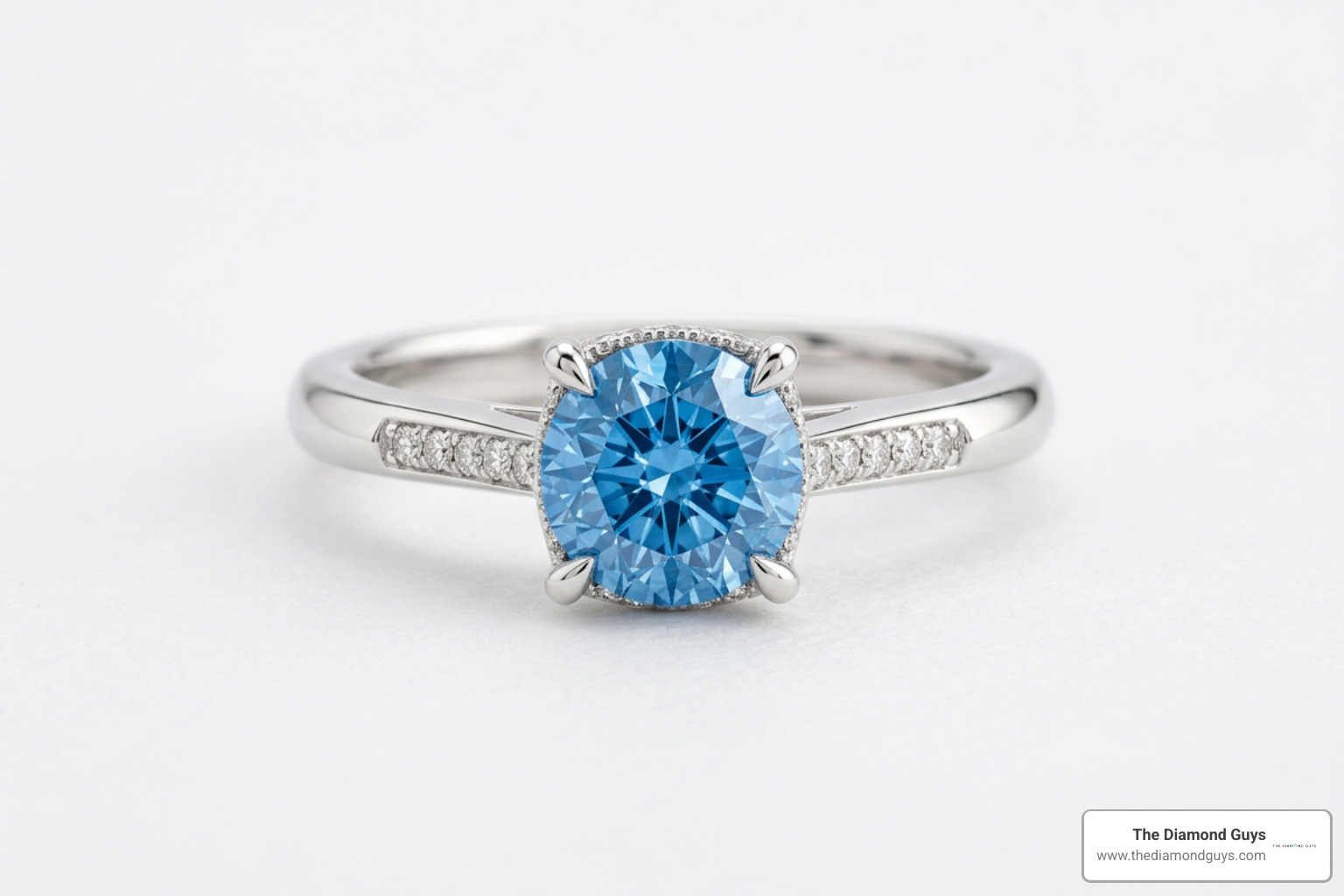
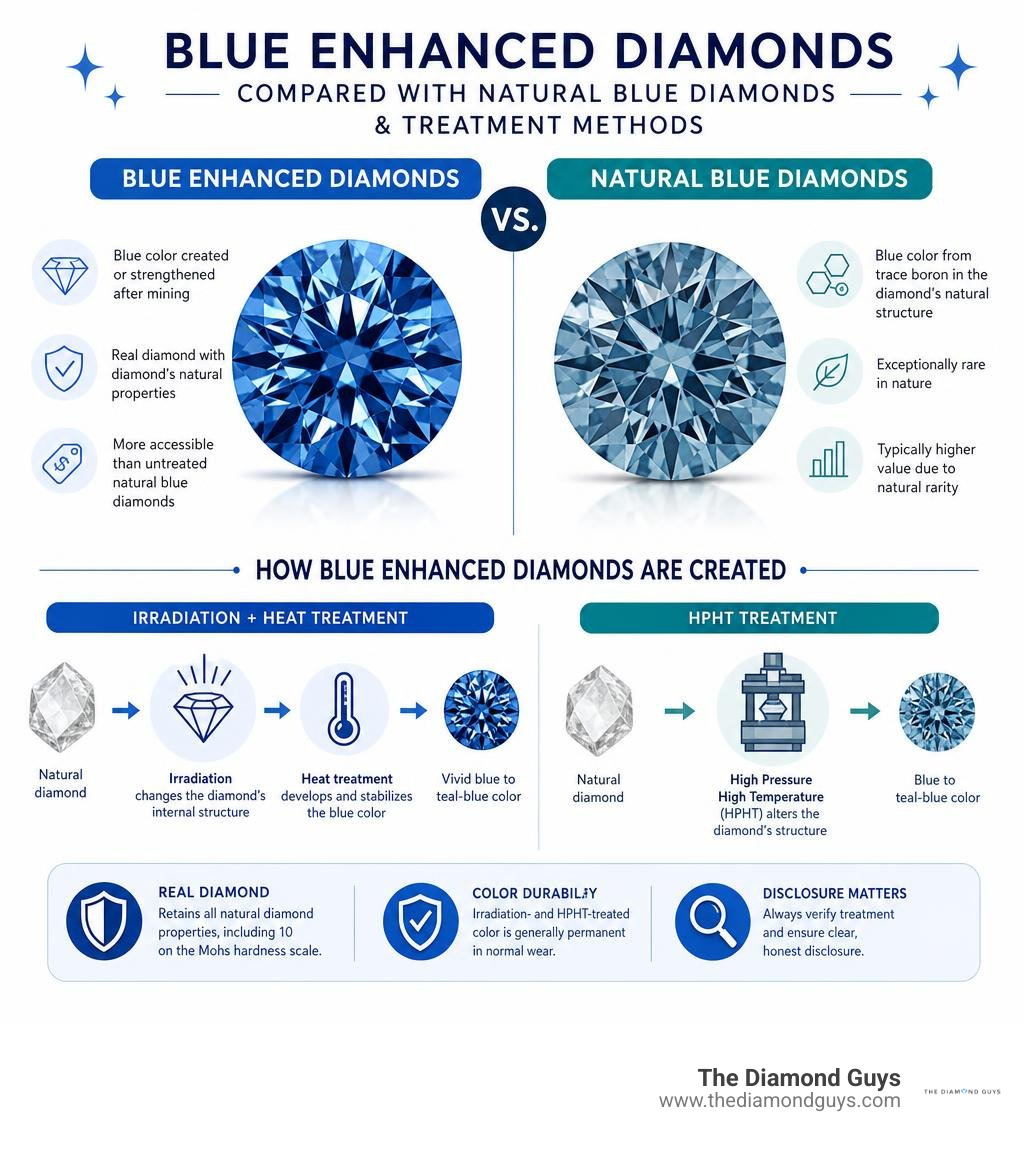
Blue enhanced diamonds are real diamonds whose blue color was created or strengthened after mining, most often through controlled irradiation and heat or high-pressure, high-temperature treatment. These processes can produce vivid blue or teal-blue tones at a far lower price than an untreated natural blue diamond.
| Question | Quick answer |
|---|---|
| Are they real diamonds? | Yes. They retain diamond's physical properties, including a 10 rating on the Mohs hardness scale. |
| Where does the blue color come from? | Treatment changes how the diamond absorbs light. Natural blue diamonds get their color from trace boron. |
| Is the color permanent? | Irradiation- and HPHT-treated color is generally permanent in normal wear, though jewelers should know about the treatment before high-heat repairs. |
| Are they rare? | No. Natural untreated blue diamonds are exceptionally rare, representing less than 0.02% of diamonds found worldwide. |
| Are they a good investment? | They are usually best bought for beauty and wearability, not resale or investment potential. |
Blue diamonds have long carried an aura of rarity, from the 45.52-carat Hope Diamond at the Smithsonian to record-setting auction stones. Enhancement makes that striking look more accessible, but it also makes clear disclosure, independent verification, and fair pricing essential.
I'm Morgan Price, a strategic backlink outreach specialist who researches gemstone topics and helps content teams create accurate, useful buying resources, including guides to blue enhanced diamonds. Next, we'll look at what these treatments do and how they create blue color.
Essential blue enhanced diamonds terms:
- best natural diamond engagement rings
- biggest natural diamond
- engagement rings with natural diamonds
What Are Blue Enhanced Diamonds and How Are They Made?
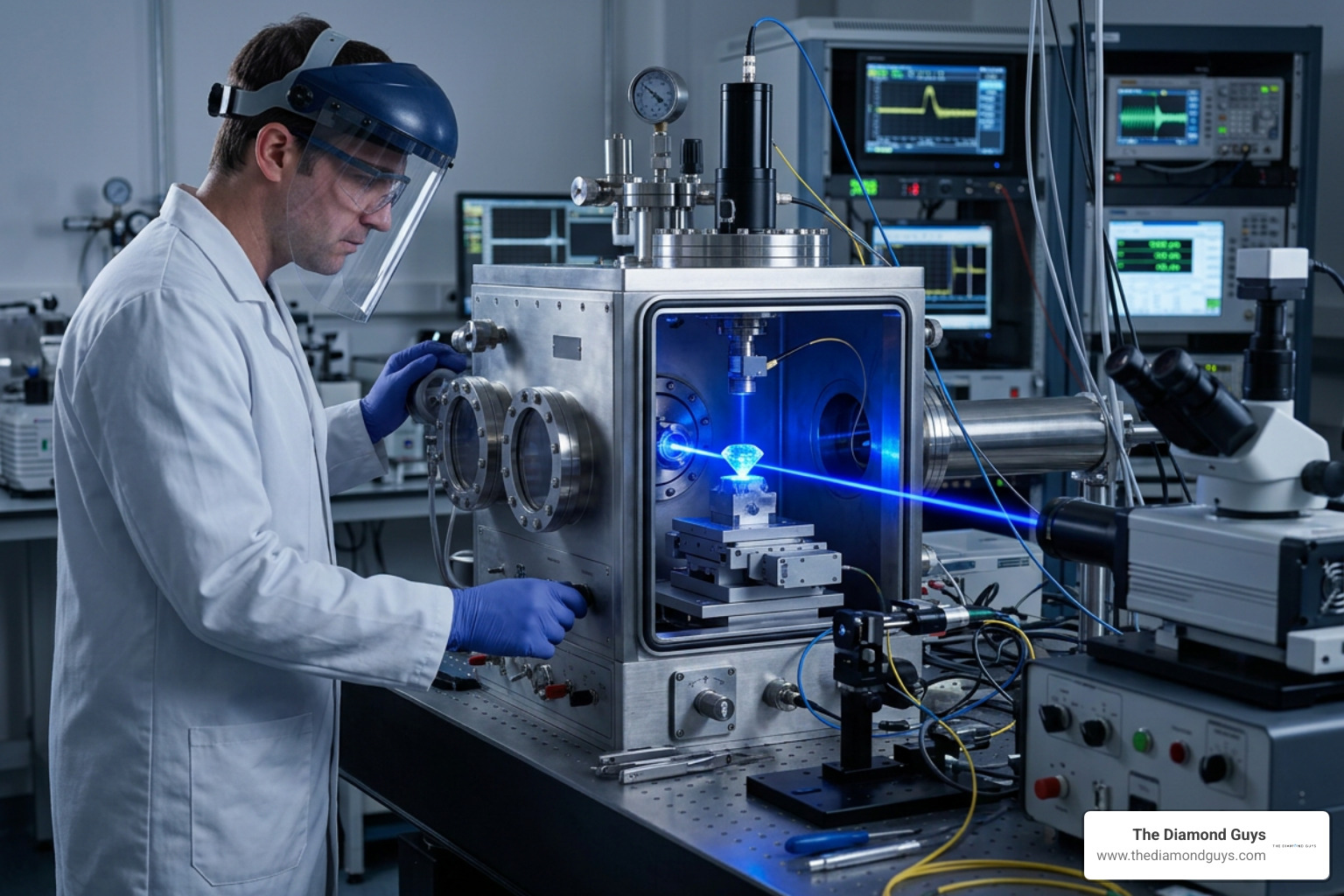
At their core, blue enhanced diamonds start as authentic, earth-mined diamonds. They are not plastic, glass, or cubic zirconia simulants. However, when these diamonds were extracted from the ground, they typically possessed a faint yellow, off-white, or brownish tint that made them less desirable in the traditional colorless market.
Rather than leaving these stones overlooked, high-tech gemological laboratories use advanced treatments to induce a vibrant blue hue. By subjecting the diamond to high-energy laboratory environments, technicians alter the gemstone's structural absorption of light.
If you have ever wondered about structural modifications in natural gems, you might also ask: Are Clarity Enhanced Diamonds Real?—the principle is similar in that the base gemstone is 100% natural diamond, but human ingenuity has refined its final optical appearance.
Common Treatments Used for Blue Enhanced Diamonds
To transform a faint or off-color diamond into a striking blue gem, two primary methods are utilized:
- Irradiation (Electron Bombardment): The natural diamond is exposed to controlled radiation in a lab, usually via high-energy electrons. This process shifts carbon atoms within the crystal lattice out of their original positions. These deliberate vacancies alter how light passes through the diamond, causing it to absorb red and yellow light while reflecting rich blue or greenish-blue wavelengths.
- High Pressure High Temperature (HPHT): This process simulates the extreme geological conditions deep within the Earth's mantle (temperatures above 2,000°C and immense pressure). When applied alongside or after target irradiation, HPHT rearranges atomic structures to stabilize and intensify deep blue or teal color hues.
Color Saturation and Permanent Results
A frequent concern among buyers is whether this gorgeous teal blue or deep ocean blue will fade over time. We can reassure you that laboratory color enhancements in blue enhanced diamonds are permanent. Sunlight, soap, lotion, and daily wear will never wash out or fade the blue shade.
However, heat sensitivity during jewelry repairs is a crucial detail to keep in mind. Extreme temperatures—such as a bench jeweler’s direct blowtorch flame during ring resizing—can cause color shifts or altered saturation in treated stones. Always inform your jeweler that your diamond has undergone color enhancement so they take proper heat-shielding precautions during setting or repair work.
Enhanced vs Natural vs Lab Blue Diamonds: Key Differences
To better understand where blue enhanced diamonds fit into today's market, let's examine how they compare across geological origin, color source, rarity, and price.
| Feature | Natural Blue Diamonds | Blue Enhanced Diamonds | Lab-Grown Blue Diamonds |
|---|---|---|---|
| Origin | Mined naturally deep in Earth's mantle | Mined naturally as faint/off-color diamond | Grown in a laboratory (HPHT or CVD) |
| Color Cause | Natural trace boron impurities | Post-mining irradiation and/or HPHT treatment | Boron added during lab growth process |
| Rarity | Ultra-rare (<0.02% of all mined diamonds) | Abundant (treated from natural off-color diamonds) | Lab-produced on demand |
| Mohs Hardness | 10 | 10 | 10 |
| Relative Cost | Extremely expensive ($50k–$1M+ / ct) | Budget-friendly (often below white diamond prices) | Moderate to affordable |
| Primary Appeal | Collector/Investment valuation | Bold aesthetics at an accessible price point | Sustainable modern tech option |
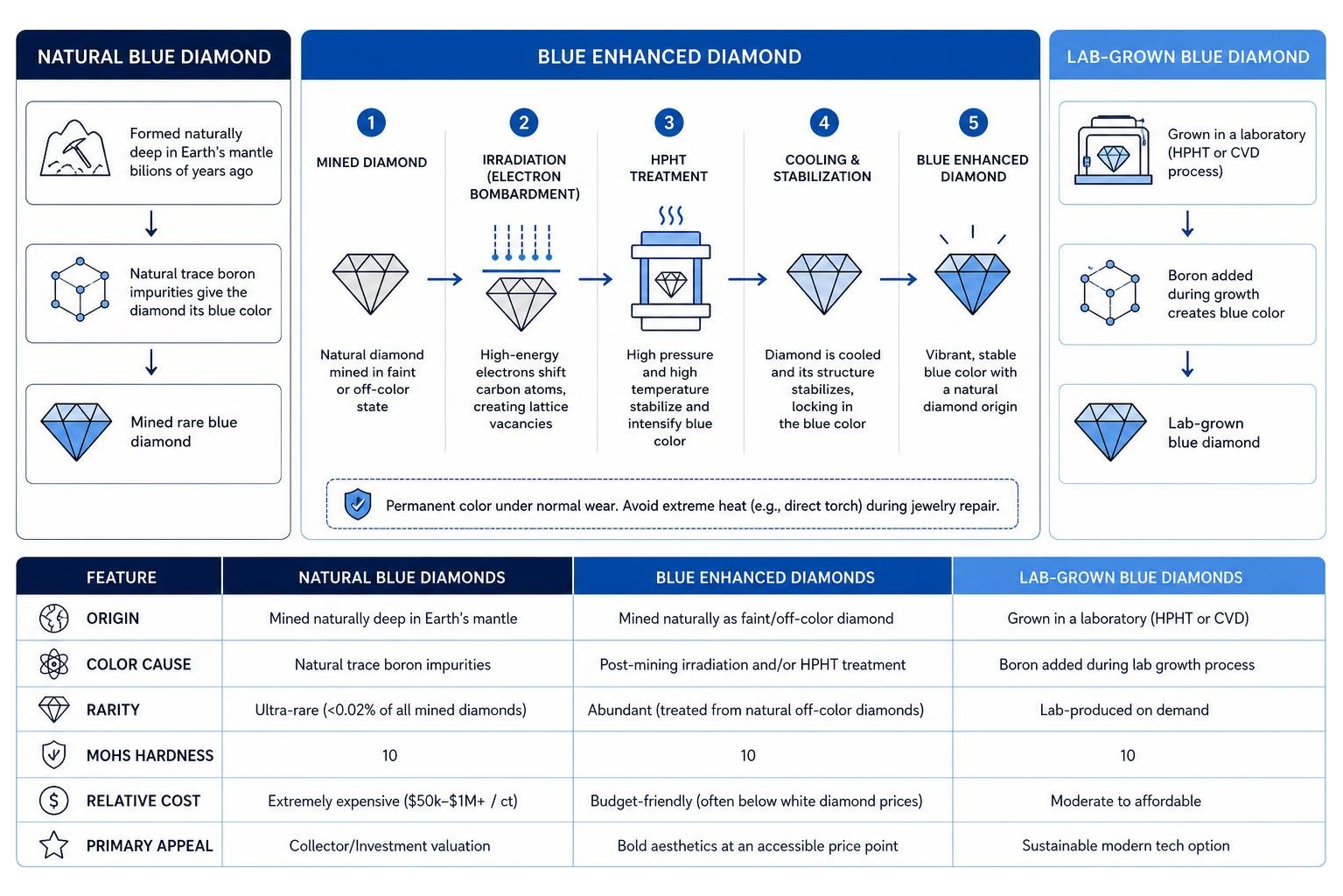
In nature, a blue diamond gets its shade from trace amounts of the element boron trapped inside its crystal matrix billions of years ago. These natural wonders are exceptionally scarce, representing far less than 0.02% of all mined diamonds globally. Legendary gems like the 45.52-carat Hope Diamond owe their museum-worthy status to this natural geological anomaly.
If you are exploring modern lab-created stones created directly with boron in controlled settings, check out our Lab Created Blue Diamonds Ultimate Guide for a full breakdown.
Comparing Rarity, Value, and Investment Potential
Because natural untreated blue diamonds are so extraordinarily rare, their market values reach staggering heights. At elite international auctions, Fancy Vivid Blue diamonds routinely command between $50,000 to over $500,000 per carat, with top-tier museum-grade stones exceeding $1 million per carat.
In contrast, blue enhanced diamonds offer an accessible pathways to owning a genuine earth-mined diamond with intense blue brilliance without a luxury auction budget. Because their baseline color was initially low-tier off-color diamond, enhanced blue diamonds are usually priced competitively—often even less expensive than standard eye-clean white diamonds.
However, buyers must keep realistic expectations regarding investment potential. While untreated natural blue diamonds act as wealth-preservation assets for high-net-worth collectors, color-treated diamonds should be purchased for personal enjoyment, custom fashion design, and personal aesthetic appeal rather than resale value or financial speculation. You can explore more about synthetic options in our guide on the Blue Lab Diamond.
Evaluating Quality: The 4Cs of Blue Enhanced Diamonds

Even though a blue diamond has been color-enhanced, it remains an authentic diamond with all the core physical characteristics that make the gem world famous. It maintains an unyielding 10 rating on the Mohs hardness scale, a high refractive index of 2.418, and identical optical sparkle.
When evaluating blue enhanced diamonds, we still rely on the traditional 4Cs (Color, Cut, Clarity, and Carat Weight), but the emphasis shifts compared to standard white diamonds. To understand how color grading differs generally, read What Is Diamond Color? and consult the expert Blue Diamond Buying Guide.
Evaluating Color and Cut in Blue Enhanced Diamonds
With fancy color gems, color is king. When evaluating enhanced blue stones, look at three key factors:
- Hue: The primary shade (pure blue, teal blue, or greenish-blue).
- Tone: How light or dark the diamond appears.
- Saturation: The strength and intensity of the color saturation.
Cut plays a critical role in color distribution. When cutters work on standard white diamonds, they shape facets strictly to maximize light reflection (brilliance). When shaping blue diamonds, cutters deliberately craft proportions—often utilizing deeper pavilions or adjusted girdle designs—to allow light to travel further inside the crystal, maximizing the intensity of the blue hue.
Clarity Camouflage and Carat Sizing
In colorless diamonds, slight inclusions (tiny mineral spots or internal feather cracks) stand out against a clear crystal backdrop. But intense blue color creates a natural "clarity camouflage." The saturated tone hides minor internal inclusions, allowing lower clarity grades like SI1 or SI2 to appear visually eye-clean to the naked eye.
In commercial markets, loose enhanced blue diamonds are frequently categorized into quality tiers:
- AAA Grade: Intense teal or deep blue tone, slightly included, top-tier aesthetic quality.
- AA Grade: Greenish-blue tone, moderate inclusions visible under magnification.
Additionally, if you are sourcing calibrated round blue diamonds for side settings or custom halo rings, always rely on millimeter dimensions rather than carat weight. Carat weight is a metric of mass (1 carat = 0.2 grams), but minor variation in cut proportions means two 0.10-carat blue stones might have slightly different diameters. Measuring precisely in millimeters ensures a seamless fit in standard jewelry mountings.
Popular Jewelry Styles, Meaning, and Care Tips
Throughout history, blue diamonds have carried profound symbolism. The ocean hue is widely associated with wisdom, tranquility, inner peace, and steadfast devotion. These romantic meanings make blue enhanced diamonds a compelling alternative choice for unique engagement rings, anniversary gifts, and signature fashion pieces.
Popular design styles featuring treated blue diamonds include:
- Halo Engagement Rings: A central blue enhanced diamond framed by a halo of sparkling white diamond accents creates striking optical contrast.
- Three-Stone Rings: Combining a central white diamond flanked by twin blue enhanced side stones (or vice versa) symbolizes a couple's past, present, and future.
- Stud Earrings: For everyday glamour, items like 1 Carat Blue Diamond Earrings bring vivid pop and unmatched diamond durability to everyday outfits.
Care Instructions and Maintenance
Because blue enhanced diamonds rate 10 on the Mohs scale, they resist scratches better than softer blue alternatives like sapphire (Mohs 9), aquamarine (Mohs 7.5–8), or tanzanite (Mohs 6–7). However, keeping them brilliant requires simple home care:
- Regular Cleaning: Fill a bowl with warm water and a few drops of mild liquid dish soap.
- Soak and Brush: Soak your blue diamond jewelry for 10–15 minutes. Use a soft-bristled toothbrush to gently clean beneath the setting and around the pavilion where oils build up.
- Rinse and Dry: Rinse under warm running water and pat dry with a clean, lint-free microfiber towel.
- Professional Maintenance: Bring your ring to a trusted jeweler once a year to inspect prong security. Remind your jeweler about the color enhancement before any resizing or repair work involving extreme torch heat.
Ethical Sourcing and Quality Verification
Transparency is vital when shopping for fine gemstones. Responsible jewelers strictly sell conflict-free natural diamonds that adhere to international ethical sourcing standards.
When purchasing blue enhanced diamonds, insist on full disclosure on receipt documentation. Reputable diamond sellers will clearly state whether a stone has undergone irradiation, heat, or HPHT treatments, alongside independent gemological lab reports verifying its natural origin.
Frequently Asked Questions About Blue Diamonds
Are blue enhanced diamonds real diamonds?
Yes! Blue enhanced diamonds are 100% natural, earth-mined diamonds. They share the exact physical properties, chemical lattice composition (carbon), and 10 Mohs hardness rating as colorless natural diamonds. The only difference is that their striking blue color was activated in a lab using controlled radiation or heat treatments.
Do color treatments on blue enhanced diamonds wear off over time?
No. Irradiation and HPHT color treatments alter the internal crystal structure's light absorption permanently. The blue color will not rub off, wash away, fade in sunlight, or change during daily activity. The only precaution is avoiding direct blowtorch heat during bench jewelry repairs.
Are blue enhanced diamonds a good investment?
No, color-enhanced diamonds are generally not financial investment assets or store-of-value commodities. Unlike untreated natural blue diamonds (which are museum-rare collector items), enhanced stones are modified natural gems produced for fashion beauty, extreme durability, and affordable everyday luxury.
Conclusion
Blue enhanced diamonds offer an extraordinary combination: genuine earth-mined diamond hardness and brilliance paired with rich, captivating color—all at a price point that fits realistic fine jewelry budgets. Whether set into a custom engagement ring, a halo pendant, or classic stud earrings, these treated stones let you express your unique style without compromise.
At The Diamond Guys, operating out of our Scottsdale, AZ showroom and welcoming clients across Phoenix and Los Angeles, CA, we specialize in helping you navigate both natural and lab-grown diamond selections with total transparency and expert personalized care. If you are ready to explore vibrant color jewelry or build a custom design, explore our comprehensive Natural Diamond Jewelry Guide or schedule a private consultation with our diamond specialists today!


