

Look Closely: Why Laser Enhanced Diamonds Deserve a Second Chance
Why Laser Enhanced Diamonds Can Be a Smart, Transparent Choice
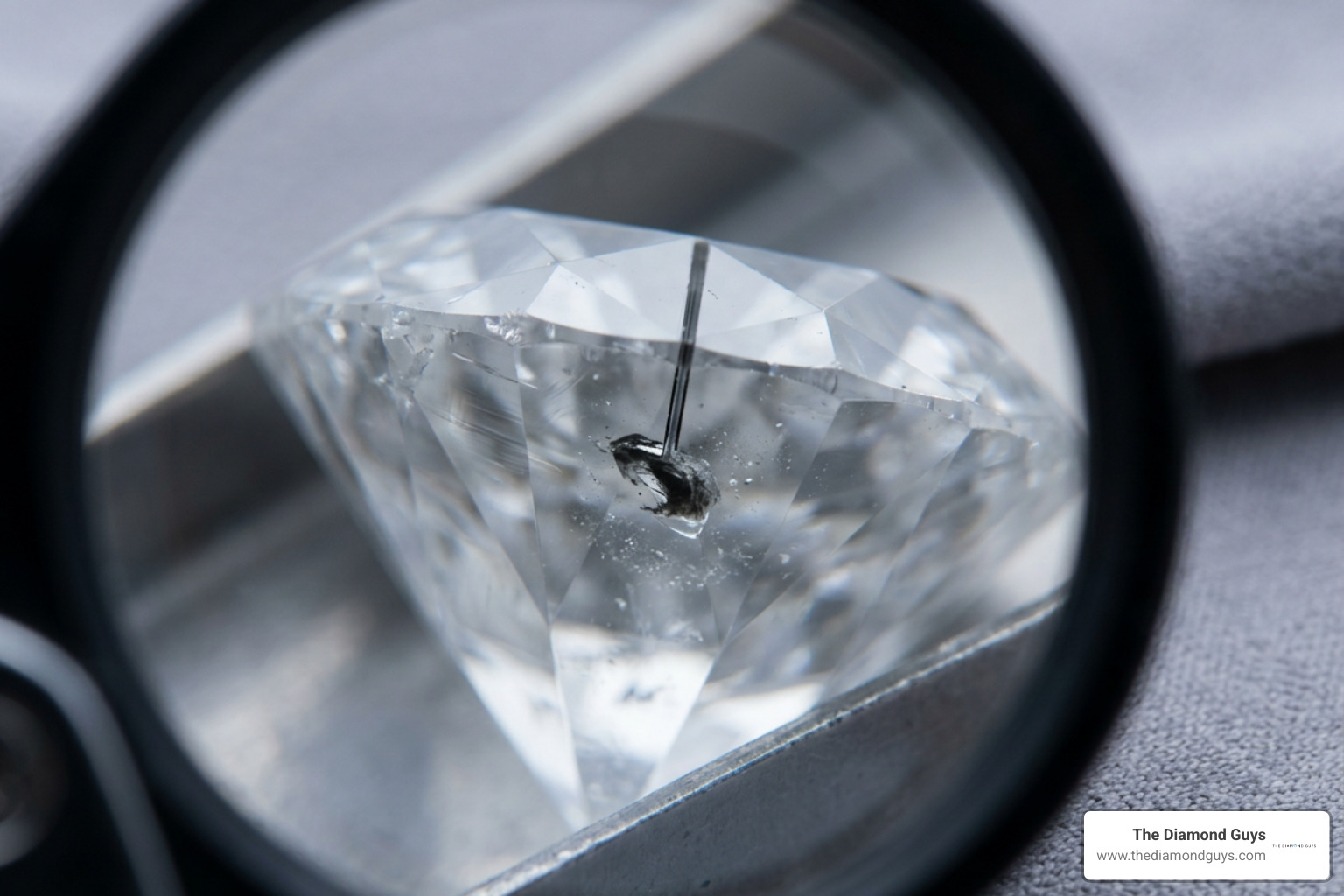
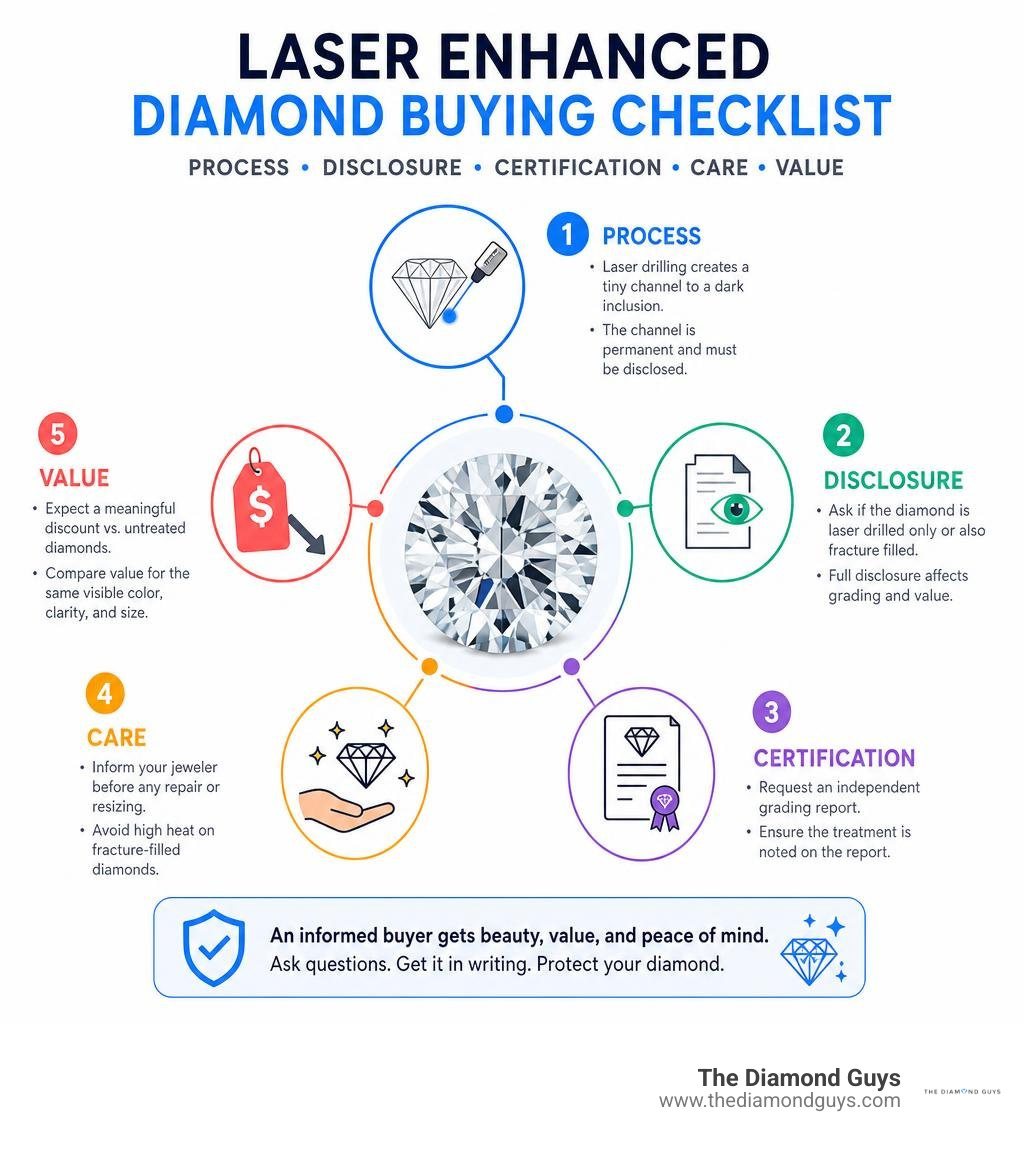
Laser enhanced diamonds are natural diamonds treated to make certain dark inclusions less visible. The most common method, laser drilling, creates an extremely small channel to a dark crystal or carbon spot so it can be lightened with acid. The channel is permanent, but it must be disclosed because it affects value and grading.
For a buyer, the practical takeaway is simple:
- Ask whether the diamond is laser drilled only or also fracture filled.
- Request an independent grading report that notes the treatment.
- Expect a meaningful discount versus an untreated diamond with the same visible color, clarity, and size.
- Tell any jeweler about the treatment before resizing, prong work, or other repairs.
Laser drilling has been used commercially since the late 1960s. A drill channel may be about 0.02 mm wide, yet it can turn an obvious dark inclusion into a much less distracting feature. That can make a natural diamond look cleaner without changing its basic identity or requiring a buyer to pay for a higher untreated clarity grade.
Still, not every enhancement carries the same risk. A laser-drilled diamond is generally far more stable than a fracture-filled diamond, whose glass-like filler can be damaged by high repair heat. Understanding that difference is the key to deciding whether the savings are truly worth it.
I am Morgan Price, a strategic backlink outreach specialist who researches complex subjects and helps content teams create clear, trustworthy resources. In this guide, I will break down laser enhanced diamonds, their disclosure requirements, durability, and the questions to ask before you buy.
Quick laser enhanced diamonds definitions:
The Science and Methods Behind Laser Enhanced Diamonds
At its core, laser enhancement is a targeted surgical procedure performed on a gemstone. Diamond is the hardest known natural material on Earth with a Mohs rating of 10, meaning traditional mechanical cutting tools struggle to make sub-millimeter modifications without substantial material loss. Lasers solve this challenge by applying focused, monochromatic electromagnetic radiation directly into microscopic regions of the stone.
The primary physical mechanism is straightforward: high-energy laser pulses induce a localized phase transformation, converting the diamond's $sp^3$ bonded carbon lattice into an $sp^2$ graphitic phase. Once the graphite forms, it absorbs light more readily, allowing the concentrated energy to vaporize the carbon. As outlined in scientific research on laser processing of diamond materials, keeping the laser energy density carefully calibrated limits thermal damage zones to under 3 micrometers, preserving the surrounding crystal.
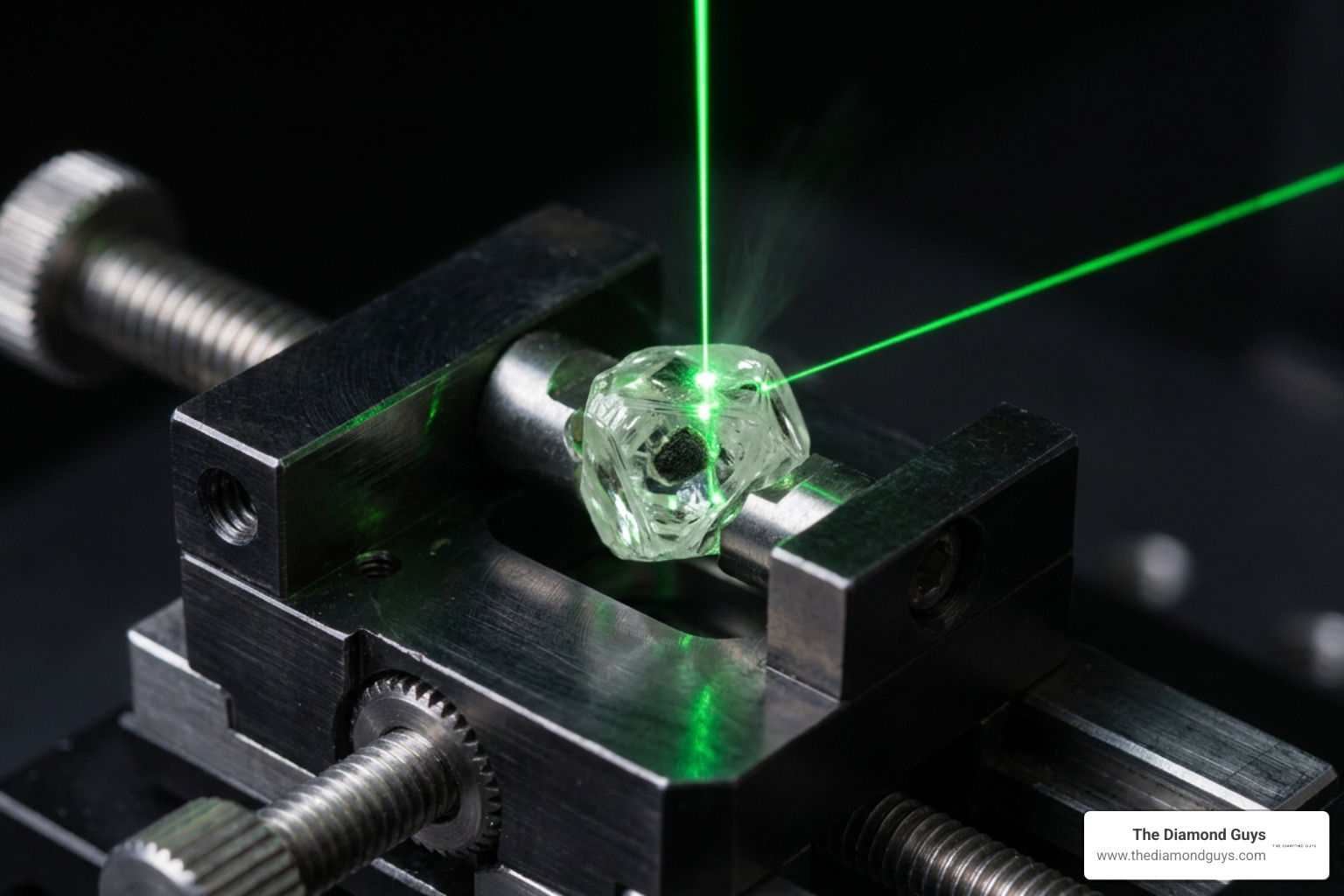
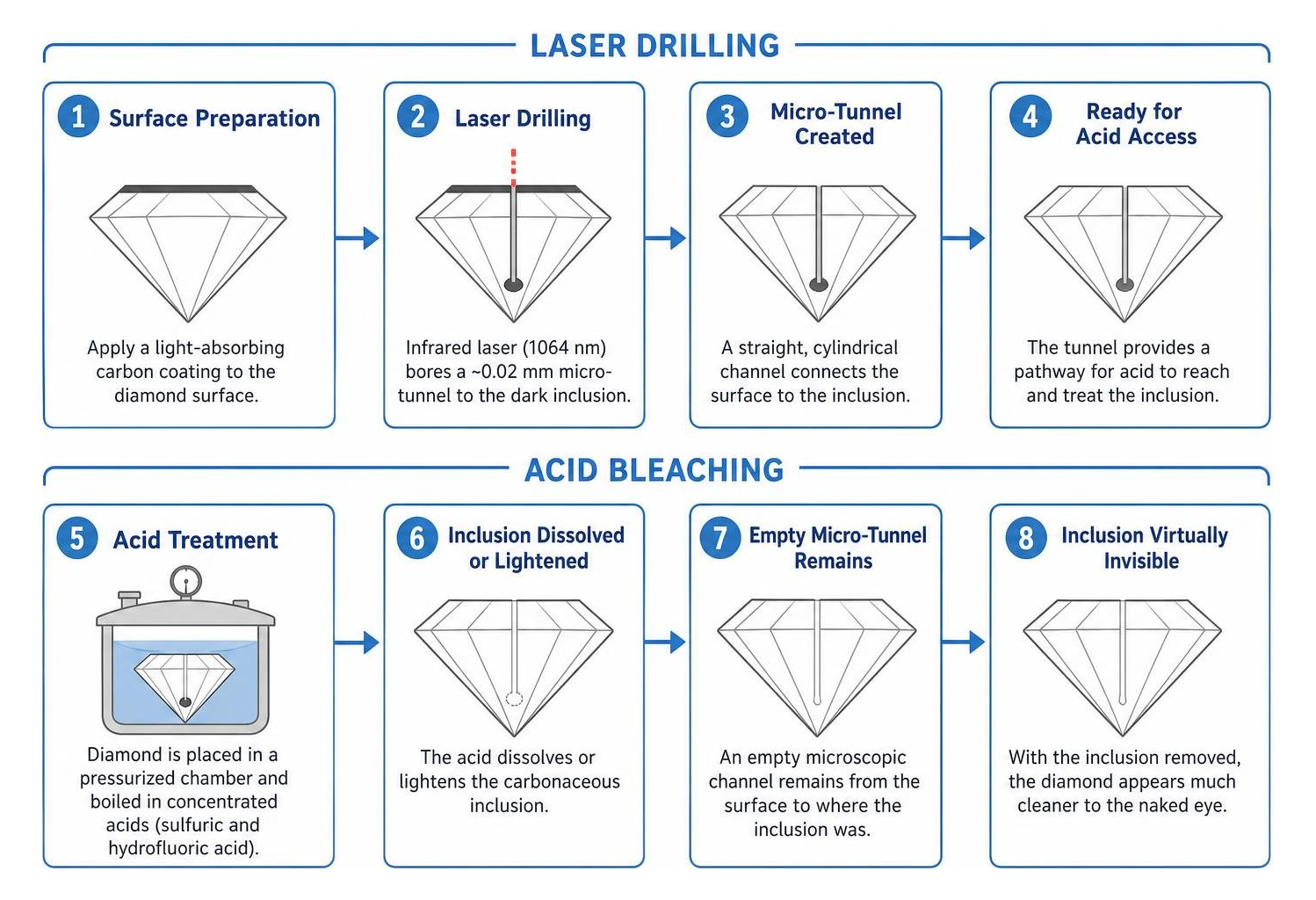
Traditional laser drilling uses infrared lasers operating at a wavelength of 1064 nm. Because pure diamond is transparent to near-infrared light, a light-absorbing medium—such as an amorphous carbon coating applied to the diamond's surface—is used to initiate the drilling process. Once started, the laser bores a micro-tunnel directly to a dark inclusion (frequently hematite, chromite, or graphite).
Following drilling, the diamond undergoes chemical acid bleaching. The gem is placed in a pressurized chamber and boiled in concentrated acids (such as sulfuric and hydrofluoric acid) to dissolve or lighten the inclusion. This leaves an empty, microscopic tube while making the inclusion virtually invisible to the naked eye.
Traditional Drilling vs. KM Internal Laser Techniques
Traditional laser drilling creates a straight, cylindrical channel measuring roughly 0.02 millimeters in diameter from the surface of the diamond straight down to the inclusion. Under a 10x gemological loupe, these entry points resemble microscopic, glass-like needles pointing inward.
To make enhancements even less obvious, the diamond trade developed the KM technique (short for Kiduah Meyuched, or special drilling). Rather than burning an open channel from the outer surface:
- The laser focuses intense energy inside the diamond adjacent to the dark inclusion.
- The sudden, controlled thermal stress creates a series of microscopic, planar internal cleavages (feathers).
- These micro-fractures extend outward until they reach the diamond's surface.
- Acid is then introduced through these narrow cracks to dissolve the carbonaceous inclusion.
Because KM treatment relies on stepped internal fractures rather than a straight cylindrical tube, the resulting pathways blend into the natural inclusions of the diamond, closely mimicking organic feathers.
Laser-Induced Annealing and Color Center Alterations
Lasers are not limited to clarity adjustments; they can also alter optical defect centers in diamonds. Natural diamonds often possess structural impurities, predominantly nitrogen atoms trapped in various cluster configurations (such as single substitutional C-centers, paired A-centers, or aggregated B-centers).
By utilizing ultrashort laser pulses, gemological physicists can induce localized thermal annealing within specific sub-micron zones without subjecting the entire gemstone to extreme furnace heat. As demonstrated in research on femtosecond laser annealing for diamond color centers, combining precise laser pulses with shallow ion implantation enables controlled creation and reconfiguration of optically active vacancies. This process can dissociate nitrogen complexes, manipulate nitrogen-vacancy (NV) centers, or bleach out localized brown and green radiation patches.
Comparing Laser Enhancements to Fracture Filling and HPHT Treatments
When exploring treated diamonds, it is essential to distinguish laser drilling from other post-mining treatments, specifically fracture filling and High-Pressure High-Temperature (HPHT) processing. Each treatment method operates through distinct physical mechanisms, has unique permanence profiles, and commands different market valuations.
| Enhancement Method | Primary Mechanism | Permanence | Thermal & Chemical Sensitivity | Gemological Lab Acceptance |
|---|---|---|---|---|
| Laser Drilling (Traditional / KM) | Laser-bored micro-channel (0.02 mm) + hot acid bleaching | Permanent | Highly stable; unaffected by jeweler torches or ultrasonic baths | Graded by GIA and IGI (drills plotted as inclusions) |
| Fracture Filling (Yehuda / Koss) | Injection of molten high-refractive-index glass (lead oxychloride) | Non-Permanent | Vulnerable; melts/sweats at ~1,400°C; damaged by acids | Refused by GIA; graded with caveats by select labs |
| HPHT Processing | High pressure (up to 70 kbar) and heat (~2000°C) | Permanent | Indestructible under normal repair conditions | Graded by major labs (inscribed as treated) |
Visual and Structural Durability of Laser Enhanced Diamonds
A common concern is whether laser drilling compromises the diamond's everyday structural integrity. The short answer is no. Because the laser drill channel is exceptionally fine (roughly 0.02 mm, a fraction of the width of a human hair), it removes a negligible fraction of the crystal volume.
The microscopic channel does not expand, shift, or weaken the diamond's crystal lattice. Furthermore, because no foreign filler is introduced, a laser-drilled diamond retains diamond's standard thermal conductivity (>2000 W/(m·K)) and chemical resistance. You can clean it in home ultrasonic baths, expose it to steam, and subject it to routine jewelry work without risking the clarity of the stone. When assessing color treatments like blue enhanced diamonds, laser-induced clarity adjustments remain among the most structurally sound interventions available.
Fracture Filling Risks: The Flash Effect and Thermal Vulnerabilities
Fracture filling is fundamentally different from laser drilling. Instead of merely removing a dark crystal, fracture filling injects a molten, high-refractive-index glass compound (typically lead bismuth oxychloride) into open surface feathers or laser drill channels. The glass masks the inclusion by matching the optical refractive index of diamond ($n \approx 2.42$).
While this can make large cracks visually disappear, the treatment introduces significant vulnerabilities:
- Thermal Breakdown: The filler melts around 1,400°C (1,670 K). When exposed to a jeweler's bench torch during routine ring resizing or prong retipping, the filler can vaporize or "sweat" out, leaving the original, stark fracture exposed.
- Acid Degradation: Household cleaning chemicals or jeweler pickling acids can react with the lead-based glass, turning the filler milky, cloudy, or yellow.
- The "Flash Effect": Under magnification and angled light, filled fractures show bright flashes of electric purple, neon blue, orange, or yellow due to optical dispersion differences between the glass and host diamond.
Detection, Gemological Certification, and Legal Disclosure Rules
Transparency is paramount in the gemstone trade. Federal Trade Commission (FTC) guidelines and CIBJO (World Jewellery Confederation) standards require full written disclosure of any diamond treatment at the point of sale. Failing to disclose laser drilling or clarity enhancement is considered deceptive trade practice.
Laboratory Grading Policies: GIA vs. Alternative Certificates
The Gemological Institute of America (GIA) treats laser-drilled diamonds very differently from fracture-filled ones:
- Laser-Drilled Diamonds: GIA does issue standard grading reports for laser-drilled stones. Because laser drilling is permanent, GIA treats the laser drill hole as an internal clarity characteristic, plots it on the report diagram, and factors its presence into the final clarity grade (often assigning an SI1, SI2, or I1 grade depending on its visibility).
- Fracture-Filled Diamonds: GIA strictly refuses to issue grading certificates for fracture-filled diamonds. Because glass filling is unstable and subject to reversal, assigning a fixed clarity grade would be inaccurate.
When shopping, it is helpful to understand the difference between real and synthetic diamonds and review all grading documentation to verify whether clarity alterations are permanent or temporary.
How Professional Jewelers Detect Laser Drill Channels
Trained gemologists can readily identify laser-enhanced stones using standard optical equipment:
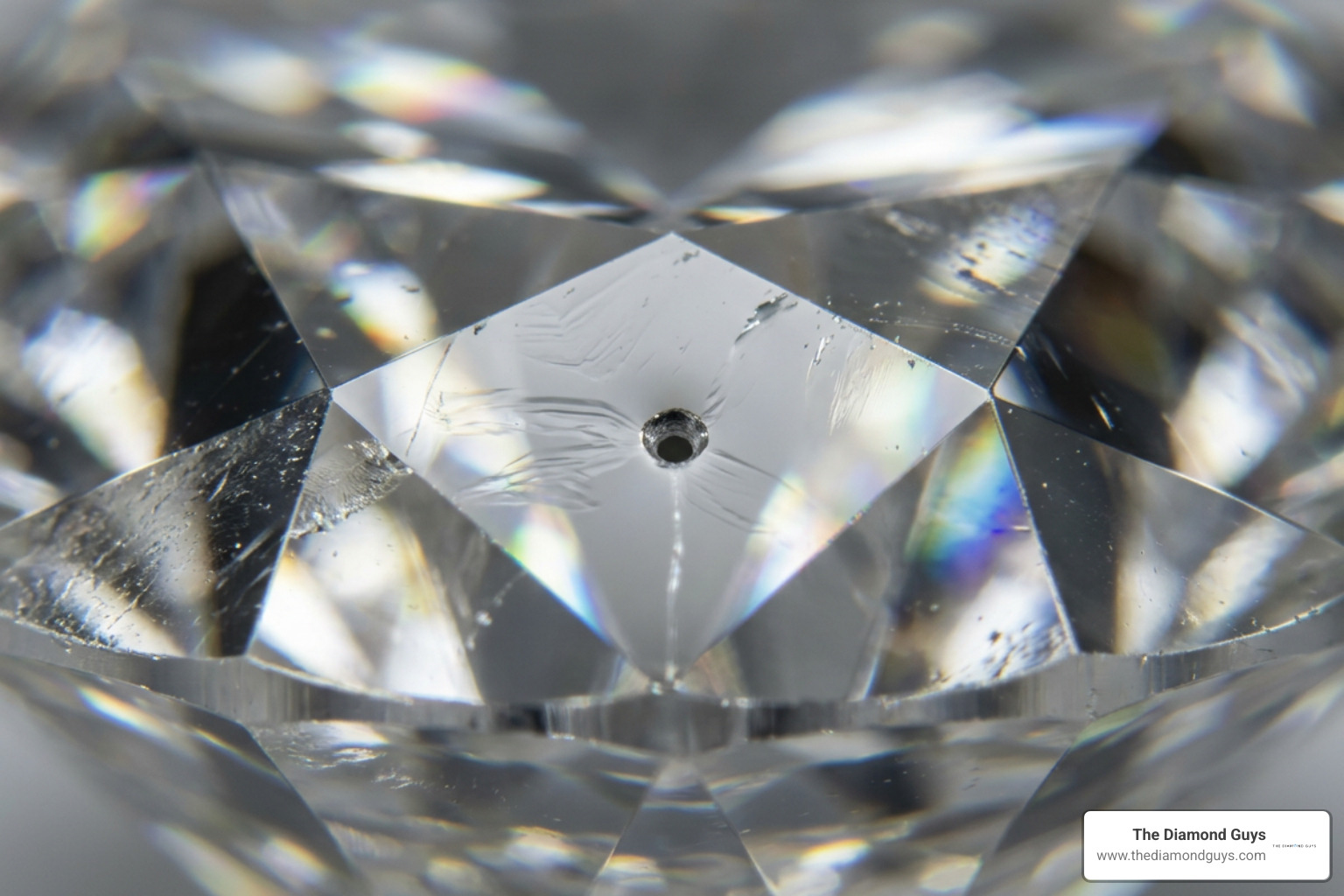
- Darkfield Transmitted Illumination: By illuminating the stone from the side against a dark background under 10x to 40x magnification, the straight, transparent drill tube appears as a white or reflective line terminating at an empty cavity.
- Facet Surface Inspection: Looking at facet reflections under overhead lighting reveals a circular or oval entry pit on the surface where the laser penetrated the diamond's skin.
- 3D Confocal Raman Spectroscopy: In high-end testing labs, micro-Raman spectroscopy maps the diamond's lattice. The structural transition zones surrounding laser-modified tracks can be mapped in 3D to identify KM-drilling patterns or laser-induced annealing without destructive testing.
Economics, Pricing Realities, and Advanced Ultrafast Laser Frontiers
Laser enhancement directly influences diamond pricing, offering an interesting value proposition for informed buyers. When considering what is diamond carat size and how clarity affects cost, laser-treated stones occupy a unique pricing tier.
Financial Analysis: Cost Savings and Trade-In Realities for Laser Enhanced Diamonds
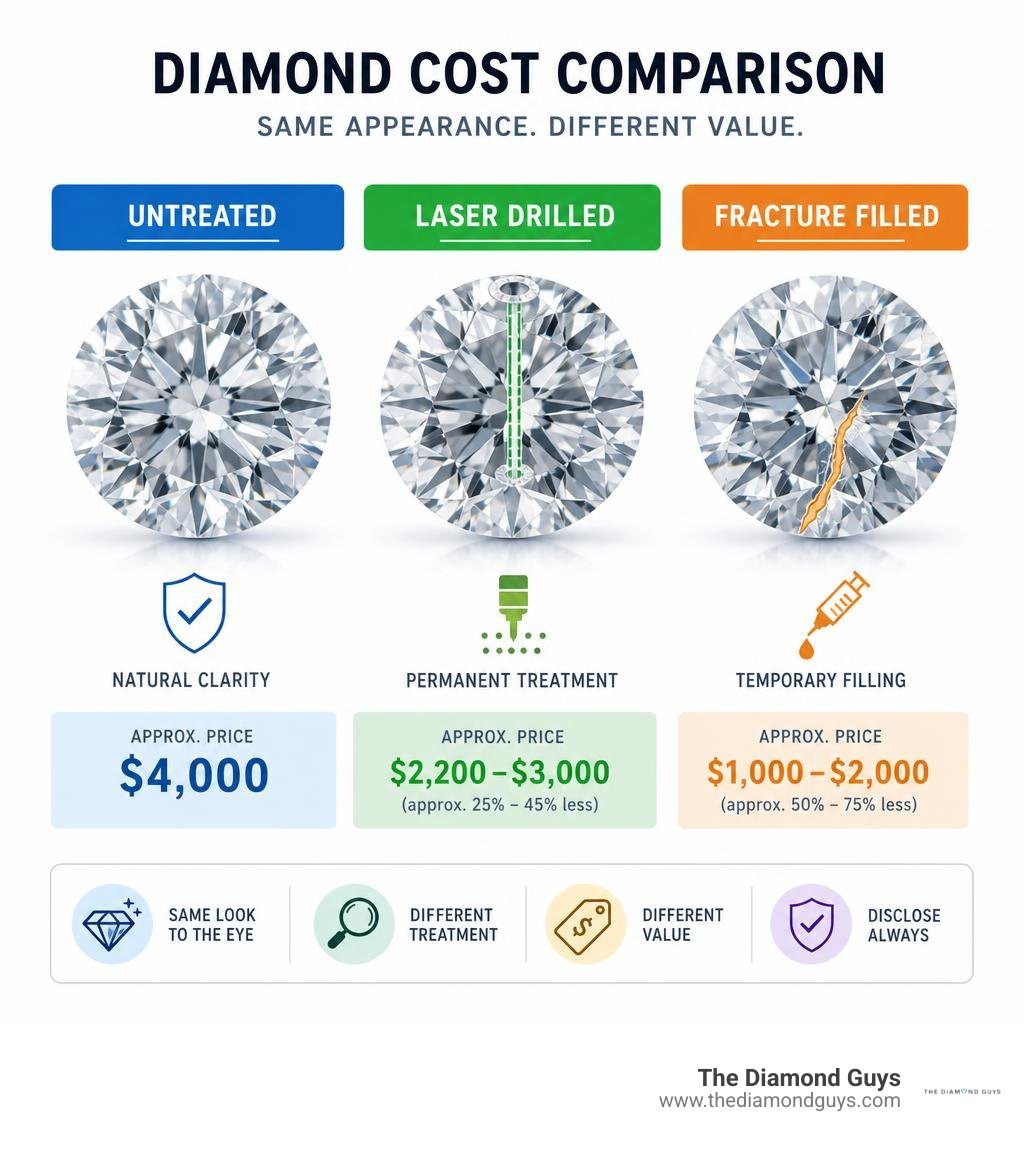
Laser-drilled diamonds trade at a substantial discount compared to untreated diamonds of identical apparent visual clarity:
- An untreated 0.70-carat, D color, SI1 clarity natural diamond typically retails around $4,000.
- An equivalent 0.70-carat, D color, SI1 visual clarity laser-drilled diamond retails around $2,000 (a ~50% savings).
- A 0.70-carat, D color fracture-filled diamond of similar visual clarity retails around $1,500 (a ~62.5% discount).
While this makes a larger, eye-clean natural diamond accessible at a lower price point, buyers should be realistic about resale and trade-in value. Secondary diamond markets trade laser-enhanced stones at their lower baseline wholesale rate, rather than the price of an untreated diamond with the same visual clarity. For shoppers comparing value across different options, evaluating lab diamonds vs real diamonds provides helpful context alongside laser-enhanced natural stones.
Ultrashort Pulse Lasers and Stealth Photoluminescent Inscriptions
Recent breakthroughs in femtosecond laser physics have opened up applications that go far beyond basic drill-and-bleach techniques. Modern ultrafast lasers emit pulses lasting just hundreds of femtoseconds ($10^{-15}\text{ s}$), delivering extreme peak power (exceeding 0.5 MW) without allowing thermal energy to spread into the surrounding crystal.
As detailed in ultrashort pulse laser luminescent diamond encoding research, femtosecond laser irradiation can generate carbon Frenkel defect pairs (vacancies and interstitials) that interact with native nitrogen defects. This enables the inscription of "stealth" micro-markings inside the diamond's bulk without causing graphitization or visible surface holes.
Furthermore, a photoluminescent micromarking in diamonds study showed that focused 515 nm femtosecond laser pulses can increase local N3 center photoluminescence by up to 40% and NV0-center yield by 10-fold. These invisible, non-destructive optical signatures can be read using confocal photoluminescence microscopes, offering permanent provenance tracking, anti-counterfeiting identification, and brand verification without altering the diamond's outward appearance.
Frequently Asked Questions About Laser Enhanced Diamonds
Can a laser-drilled diamond crack or lose its clarity over time?
No. Unlike fracture filling, pure laser drilling does not inject foreign materials that can degrade, discolour, or melt. The microscopic hole and the bleached inclusion are chemically and structurally permanent. Normal wear, ultrasonic cleaning, sunlight exposure, and household chemicals will not alter the clarity outcome over the life of the stone.
Will a jeweler know my diamond has been laser enhanced during routine repairs?
Yes, an experienced bench jeweler using standard optical loupes can spot laser drill channels or KM feathers. However, you should always inform your jeweler beforehand. While laser-drilled stones can handle standard repair heat, knowing the diamond's full history allows the jeweler to avoid direct thermal shock near any pre-existing internal fractures.
Does the GIA certify laser enhanced diamonds?
Yes, the GIA will issue standard grading certificates for laser-drilled diamonds. The institute classifies the drill channel as an internal inclusion, marks it clearly on the clarity plotting diagram, and factors its visibility into the final clarity grade. However, GIA will not grade fracture-filled diamonds due to the temporary nature of the glass filler.
Conclusion
Laser enhanced diamonds offer a balance of real natural diamond heritage, eye-clean beauty, and notable cost savings. As long as the stone has undergone permanent laser drilling rather than impermanent fracture filling—and is backed by proper certification and disclosure—it can be an appealing choice for budget-conscious buyers who prioritize carat size and natural origin.
At The Diamond Guys, we believe every diamond purchase should be guided by transparent education, verified grading, and expert advice. Whether you are searching for an untreated natural gem, a precision-cut modern lab-grown diamond, or custom bridal jewelry, explore bespoke natural diamond jewelry and expert guidance with our team to find the perfect stone for your story.


